
Introduction
The right to health is a core component of human rights law and of any conception of life in dignity. It is specifically recognised in Article 12 of the International Covenant on Economic, Social, and Cultural Rights (ICESCR), which acknowledges the right to enjoy the highest attainable standard of physical and mental health (ICESCR, Art. 12). This right was first articulated in the 1946 Constitution of the World Health Organization (WHO), whose preamble defines health as “a state of complete physical, mental and social well-being and not merely the absence of disease or infirmity” (Constitution of the World Health Organization, Preamble). The preamble also states that “the enjoyment of the highest attainable standard of health is one of the fundamental rights of every human being without distinction of race, religion, political belief, economic or social condition.” The Universal Declaration of Human Rights (UDHR) also recognises health as part of the right to an adequate standard of living (UDHR, Art. 25).
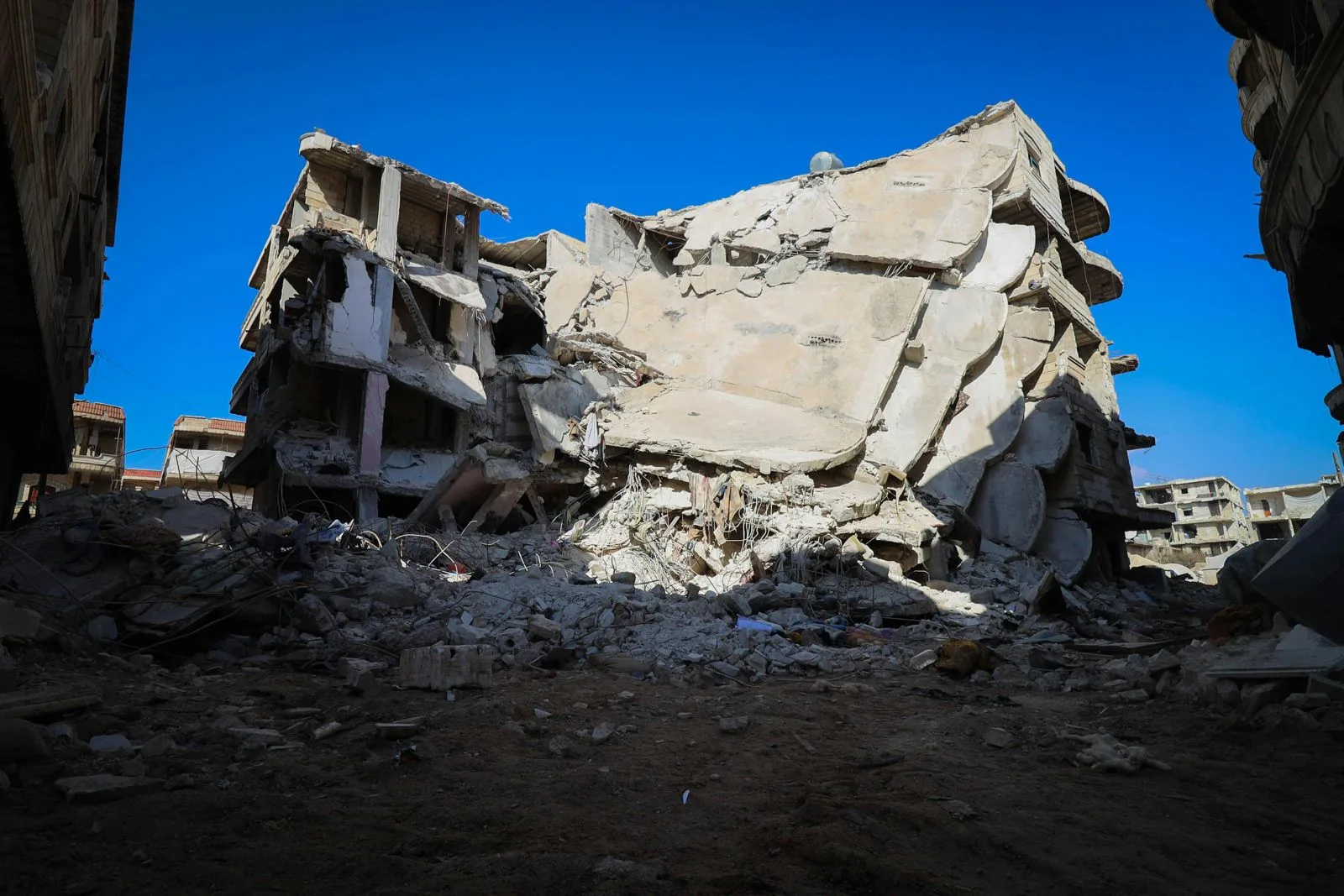
In principle, the right to health applies universally to all States, irrespective of political system or security context, as every state has ratified at least one international human rights treaty that recognises the right to health. However, across the Middle East, from the decimated newborn and maternal health system in Gaza to the Idlib’s bombed-out hospitals and clinics, the right to health is being systematically violated. The systematic destruction that we witness today proves that for many that international law has become little more than empty words. The collapse of healthcare is not just collateral damage in a war zone; it is a choice made by those in power to dismantle the very systems that keep people alive.
This article examines how military forces justify the destruction of healthcare infrastructure and transform a universal right into a tool of strategic control through examples from various Middle Eastern countries. It will also argue that if these violations continue without genuine legal accountability, the right to health will stop being a universal human right, and it will become a conditional privilege that millions in the region can no longer afford.
International Humanitarian Law and the Special Protection of Medical Units
The Geneva Conventions of 1949 and their Additional Protocols of 1977 set a range of minimum standards for the conduct of hostilities. They are based on the fundamental principle of distinction between civilians and other protected persons and those who take direct part in hostilities, meaning combatants. The Geneva Conventions and additional protocols not only protect civilians but also the buildings and health units in situations and conditions where they should not be the target of fire (Gunawan and others, 2025). Article 18 of the Fourth Geneva Convention states that “civilian hospitals organised to give care to the wounded and sick, the infirm and maternity cases, may in no circumstances be the object of attack, but shall at all times be respected and protected by the Parties to the conflict.” Moreover, the Article 19 of the Convention further states that “the protection to which civilian hospitals are entitled shall not cease unless they are used to commit, outside their humanitarian duties, acts harmful to the enemy.” The core intent of these laws is to ensure that even in the chaos of war, the wounded and sick can be treated without becoming targets. But the reality in the Middle East diverges sharply from what the law says.
In the case of Gaza, repeated attacks on healthcare infrastructure by Israeli forces suggest a pattern of conduct that is difficult to reconcile with the obligations imposed by international law. In January 2025, the WHO’s representative for the West Bank and Gaza stated at the UN Security Council that hospitals in the Gaza Strip had “turned into battlegrounds,” while the healthcare system was also “systematically dismantled and driven to the brink of collapse” (United Nations, 2025). In August 2025, a double Israeli strike on a hospital in Gaza killed more than 20 people, including journalists and medical workers (BBC, 2025). Reportedly, the first strike hit the hospital around 10:00 local time, and approximately 10 minutes later, there was another blast in the same spot. The Israeli forces attacked the hospital’s emergency department, inpatient ward, and surgical unit.
As mentioned above, under international humanitarian law, hospitals enjoy special protection and may not be attacked. That protection is lost only under narrowly defined conditions: (1) they are being used, outside their humanitarian function, to commit acts harmful to the enemy, (2) an advance warning was given to cease the acts or evacuate civilians, and it was not heeded, (3) the attack is proportionate in relation to the concrete, direct military advantage anticipated from the attack, (4) the attack is required by military necessity (Opinio Juris, 2025). The IDF justified the strike by claiming that troops had identified a “Hamas camera” on a hospital balcony being used to direct attacks against Israeli forces, however, the investigation later confirmed that the camera actually belonged to a Reuters journalist, who was broadcasting live from the position he had used daily for weeks (Opinio Juris, 2025). Even if there was a military target, International Humanitarian Law still requires an advance warning before attacking a hospital. Eyewitnesses and media organisations confirmed that no such warning was issued before the tank shells hit the building (Opinio Juris, 2025). The Israeli Prime Minister, Benjamin Netanyahu, called this attack a “tragic mishap.” This example is not the only one: since Israel’s full-scale invasion of Gaza, 986 medical workers have died (The Guardian, 2025). Moreover, healthcare workers in Gaza detained by the Israeli military have reported being targeted specifically because of their professional status as doctors (The Guardian, 2025).
Another example in the region is Lebanon. According to the WHO, Lebanon is a lower-middle-income country with a comparatively advanced health system that has nevertheless been severely weakened by the multiple crises in recent years (WHO, 2024). During the 2024 war, the Israeli military repeatedly attacked Lebanese health facilities and medical vehicles, without providing sufficient justifications or specific evidence of military targets present at the strike locations (Amnesty International, 2025). According to the Lebanese Ministry of Health, between October 2023 and November 2024, the Israeli military attacked 67 hospitals, 56 primary health care centers, and 238 emergency medical teams, and killed at least 222 medical and emergency relief workers (Amnesty International, 2025). This evidence of continuing attacks on healthcare, medical staff and patients point out at a broader disregard for international norms on the right to health.
This pattern is not limited to Lebanon: Syria has been one of the worst examples of violence against health care. According to the WHO, a total of 494 attacks on health were confirmed between 2016 and 2019, of which 68% or 337 attacks were recorded in Syria. The total death toll in attacks on health care in Syria between the same period is 470, in addition to the deaths, 968 people were injured by these attacks, many of whom have been left with permanent disabilities (WHO, 2020).
Due to their protection under the Geneva Conventions, attacks on healthcare centers are a violation of international humanitarian law. Moreover, the Rome Statute of the International Criminal Court also classifies them as war crimes. However, the reality is quite different. Reportedly, there were 3,623 recorded incidents in 2024, including 1,111 where health facilities were damaged or destroyed, 927 where health workers were killed, 437 where health workers were arrested, and 140 where health workers were kidnapped, and in most cases, the incidents were attributed to state actors (The Guardian, 2025). Despite being protected by international humanitarian law and multiple conventions, health centers are more frequently targeted during armed conflicts.
Accountability Mechanisms
Despite the above-mentioned legal framework, countless attacks on hospitals and medical staff in armed conflicts around the world are met with impunity. Most of the attacks remain undocumented, and only a few have been litigated in domestic or international criminal courts. Although there are many laws governing armed conflicts and the use of force, the lack of accountability for their violations leads to questioning their utility. However, since 2024, the silence of the international community was broken by a series of legal challenges: the International Court of Justice (ICJ) and the International Criminal Court (ICC) were “forced” to decide whether the “right to health” exists in modern armed conflicts or not.
In December 2023, the Republic of South Africa filed in the Registry of the Court an application instituting proceeding against the State of Israel concerning alleged violations in the Gaza Strip of obligations under the Convention on the Prevention and Punishment of the Crime of Genocide (ICJ, Case 192). South Africa requested the Court to issue preliminary measures and framed its case for the commission of acts of genocide within the broader context of Israel’s conduct towards Palestinians. In January 2024, the ICJ issued provisional measures in Application of the Convention on the Prevention and Punishment of the Crime of Genocide in the Gaza Strip. The ICJ ordered Israel to take all measures within its power to prevent the commission of all acts within the scope of Article II of the Genocide Convention, and to take immediate and effective measures to enable the provision of urgently needed basic services and humanitarian assistance to address the adverse conditions of life faced by Palestinians in the Gaza Strip (ICJ, Case 192, January 2024). In March 2024, the ICJ issued another order. Paragraph 51(2)(a) of the order states that Israel should “take all necessary and effective measures to ensure, without delay, in full cooperation with the United Nations, the unhindered provision at scale by all concerned of urgently needed basic services and humanitarian assistance, including food, water, electricity, fuel, shelter, clothing, hygiene, as well as medical supplies and medical care to Palestinians throughout Gaza” (ICJ, Case 192, March 2024).
At the same time, the ICC moved the focus from states to individuals. In May 2024, Prosecutor Karim Khan took the historic step of seeking arrest warrants for the Israeli leaders. More specifically, on the basis of evidence collected and examined, he believed that the Prime Minister of Israel, Benjamin Netanyahu, and the Minister of Defence of Israel, Yoav Gallant, bear criminal responsibility for multiple war crimes and crimes against humanity committed on the territory of the State of Palestine, in the Gaza Strip (ICC, 2024). The evidence they collected and examined shows that Israel has intentionally and systematically deprived the civilian population in all parts of Gaza of objects indispensable to human survival. From October 8, 2023, people living in the Gaza Strip were arbitrarily deprived of essential supplies, including food and medicine. Moreover, Israel used starvation as a method of warfare, including malnutrition, dehydration, profound suffering, and an increased number of deaths among Palestinians (ICC, 2024).
These court actions may be a massive shift in how the world looks at the destruction of healthcare. We are witnessing the systematic starvation of a population and the denial of basic medicine, treated not just because of war, but as actual evidence of a crime. By going after high-level leaders and demanding that medical care be provided to people in the war zones, the courts are trying to bridge the gap between the promises of international law and the reality on the ground.
Conclusion
The systematic erasure of the right to health in the Middle East is not a series of unfortunate accidents or unavoidable casualties of war; it is a calculated human rights violation. From the targeted destruction of Nasser Hospital to other violations in Syria and Lebanon, we have seen that international law, which was designed to protect the most vulnerable, is being treated as optional by state actors. When the hospitals become battlegrounds, and the doctors who treat them become targets, the special protection that was promised by the Geneva Conventions effectively ceases to exist.
The recent movements within the ICJ and ICC represent a desperate but necessary attempt to breathe life back into these legal frameworks. However, the true test of these laws is not found in the issuance of warrants or the writing of provisional measures, but in their enforcement. If the international community keeps watching as healthcare systems are dismantled with impunity, the right to health will be downgraded from a universal human right to a luxury. Ultimately, restoring the right to health in the Middle East requires a fundamental shift in global accountability where the destruction of a hospital is treated with the same severity as any other crime against humanity.
Bibliography
Amnesty International (2025). Lebanon: Israeli attacks on health facilities, ambulances, and paramedics must be investigated as war crimes. https://www.amnesty.org/en/latest/news/2025/03/lebanon-israeli-attacks-on-health-facilities-ambulances-and-paramedics-must-be-investigated-as-war-crimes/ accessed January 12, 2025.
BBC (2025). Israel’s double strike on Gaza Hospital- what we know. https://www.bbc.com/news/articles/c80d2zrdj7vo accessed January 12, 2025.
Gunawan, A. et al. (2025). Protection of Medical Facilities and Personnel in Armed Conflict.
International Committee of the Red Cross (ICRC) (1949). Convention (IV) relative to the Protection of Civilian Persons in Time of War. Geneva, 12 August 1949: https://ihl-databases.icrc.org/en/ihl-treaties/gciv-1949?activeTab= accessed January 12, 2025.
International Court of Justice (2024). Application of the Convention on the Prevention and Punishment of the Crime of Genocide in the Gaza Strip (South Africa v. Israel): Order of 26 January 2024. https://www.icj-cij.org/node/203447 Accessed January 12, 2025
International Court of Justice (2024). Application of the Convention on the Prevention and Punishment of the Crime of Genocide in the Gaza Strip (South Africa v. Israel): Order of 28 March 2024. https://www.icj-cij.org/node/203847 Accessed January 12, 2025
International Criminal Court (2024). Statement of ICC Prosecutor Karim A.A. Khan KC: Applications for arrest warrants in the Situation in the State of Palestine. https://www.icc-cpi.int/news/statement-icc-prosecutor-karim-aa-khan-kc-applications-arrest-warrants-situation-state Accessed January 12, 2025
OHCHR (1966). International Covenant on Economic, Social and Cultural Rights. https://www.ohchr.org/en/instruments-mechanisms/instruments/international-covenant-economic-social-and-cultural-rights Accessed January 12, 2025
Opinio Juris (2025). A Reminder That Targeting a Hospital is a War Crime. https://opiniojuris.org/2025/11/04/a-reminder-that-targeting-a-hospital-is-a-war-crime/ Accessed January 12, 2025
The Guardian (2025). ‘Healthocide’: experts warn of rise in targeting of health services in conflict. https://www.theguardian.com/world/2025/aug/05/healthocide-doctors-hospitals-targeted-gaza accessed January 12, 2025.
The Guardian (2025). Attacks on healthcare in war zones in 2024 reach ‘new levels of horror’ – report.https://www.theguardian.com/global-development/2025/may/19/attacks-on-healthcare-in-war-zones-in-2024-reach-new-levels-of-horror-report accessed January 12, 2025.
The New Humanitarian (2020). Inside Idilb’s bombed-out hospitals and clinics https://www.thenewhumanitarian.org/photo-feature/2020/1/13/Syria-Idlib-ceasefire-healthcare-hospitals accessed January 12, 2025.
United Nations (1948). Universal Declaration of Human Rights. https://www.un.org/en/about-us/universal-declaration-of-human-rights accessed January 12, 2025.
United Nations (2025). Gaza’s maternal and newborn health system ‘decimated,’ UN warns. https://news.un.org/en/story/2025/12/1166569 accessed January 12, 2025.
United Nations (2025). Security Council debates Israeli attacks on Hospitals allegedly misused by Hamas, as UN Rights Chief urges independent probes. https://press.un.org/en/2025/sc15959.doc.htm accessed January 12, 2025.
World Health Organization (1946). Constitution of the World Health Organization.
World Health Organization (2020). In 4 years, 494 attacks on health killed 470 patients and health staff in Syria. https://www.emro.who.int/syria/news/in-4-years-494-attacks-on-health-killed-470-patients-and-health-staff-in-syria.html accessed January 12, 2025.
World Health Organisation (2024). Lebanon: a conflict particularly destructive to health care. https://www.who.int/news/item/22-11-2024-lebanon–a-conflict-particularly-destructive-to-health-care accessed January 12, 2025.