
Introduction
The system of “Comfort Women” was a practice during the Second World War, in which hundreds of thousands of women across Asia were forced into sexual servitude in Japanese military brothels. The issue continues to generate political tension to this day, as Japan has not issued an official state apology to the survivors. Through the past decades, many recommendations, court rulings and agreements have addressed Japan and South Korea’s relations. Nevertheless, the two countries continue to diverge in their interpretation of the historical context and the present (political) relations of the comfort women.
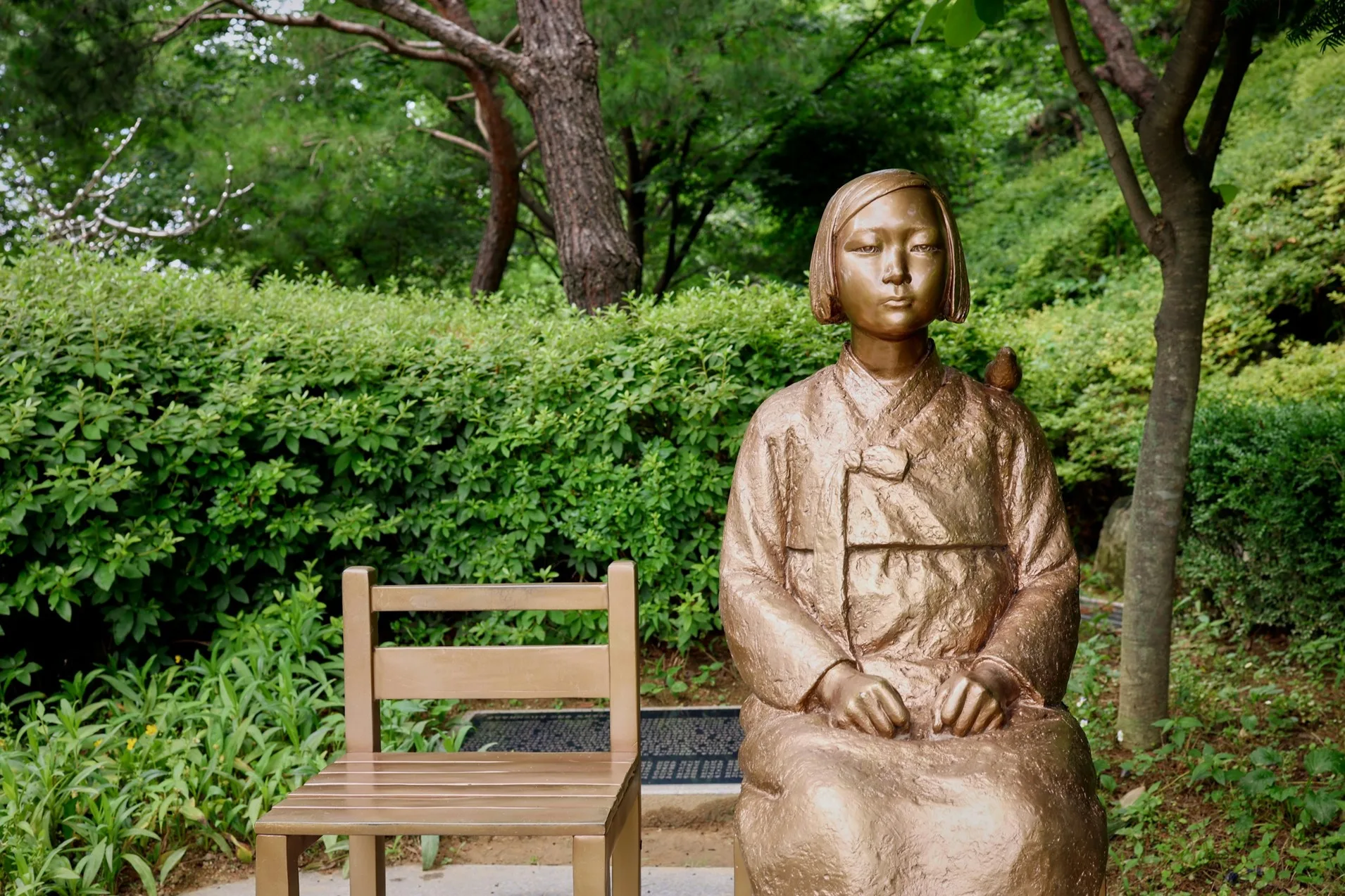
Historical Background
The term “Comfort Women” is used to describe the young women and girls abducted by Japan during World War II, and were forcibly used for sexual slavery and prostitution to entertain Japanese soldiers. While most of these women were abducted from Korea, many others were taken from all around Asia, including China, Vietnam, Indonesia and the Philippines. Between 1932 and 1945, approximately 200,000 women were forced to be comfort women and placed in “comfort stations”, that served as brothels created by Japan specifically by bringing kidnapped women from other Asian countries. These women were subjected to physical, psychological, and sexual abuse on a daily basis, and those who attempted to escape were often beaten, killed, or otherwise punished. Between this period, there were reportedly at least 800 comfort stations that operated on the level of an organised system, where women were forced to live in a room and “entertain” Japanese soldiers.
The issue of Korean comfort women in Japan extends beyond the events of the Second World War. As Japan’s global influence began to grow in the early 1900s, it increasingly directed its attention toward neighbouring Korea, particularly following the 1905 Treaty of Portsmouth ending the conflict between Russia and Japan and strengthened Japan’s position on the peninsula. Korea had been a strategically important country, and due to their inefficient governance and weak military enforcement at the time, it became formally administered by Japan in 1910. This resulted in the Japanese authorities taking control over the internal affairs of Korea, imposing certain limitations to the everyday life of Koreans. For one, upon the beginning of the Second World War, the gender of an individual determined their assigned work: men were forced to work in coal mines, construction sites or in the industrial sector, and women became sexual slaves for the Japanese military.
Women were given Japanese names, and were not allowed to be called by any other names. The brothels had inhumane circumstances, and many women “served” at the direct frontline with the soldiers, where they were exposed to bombings and active gunfire. Survivors shared their experiences explaining how the Japanese comfort system stripped them from their dignity, their families, and their freedom. Comfort stations were finally brought to an end after the defeat of Japan, where the Allied Forces played a role in freeing women and sending them home.
The Japan-South Korea Tension
Despite the passage of several decades, tensions between the two countries persist, in part because Japan has not issued an official apology to the victims of the system. However, many initiations and court rulings show the necessity to talk about these matters, and to provide reconciliation and justice for the victims.
In 1991, a lawsuit was filed against Japan by survivors of the “comfort women” system, in which they demanded an official apology from Japan, a thorough investigation of the case of the comfort women, compensation for their sufferings, revising what Japanese schools teach about Japan’s oppression of Korea, and the establishment of a memorial museum. The Tokyo court refused the compensation demand, as well as the other appeals. Kim Hak-soon, a former comfort woman during the war, became the first woman to share a public testimony of the sufferings she was subjected to along with thousands of other women.
In 1993, the Japanese Chief Cabinet Secretary officially apologised to the victims of the comfort system victims, and two years later, the former Prime Minister, Tomiichi Murayama did the same, and admitted Japan’s fault in causing harm and suffering to women across Asia through the country’s colonial rule and oppression. The government later established the Asian Women’s Fund, which works to provide compensation to the victims in Asia, and therefore to accept their responsibility in the matter of the comfort women system.
In 2015, Japan and South Korea announced that they have reached an agreement that would resolve the issue between the two countries. While the agreement was largely political, as it was necessary for security, economic and national reasons, it consists of an:
Official apology from the Japanese Foreign Minister of the time on behalf of the former Prime Minister Shinzo Abe; Japan’s monetary support of a victim fund for the survivors; South Korea’s addressing the ‘comfort women’ statue in front of the Japanese Embassy in Seoul; and the promise of both parties to raise disputes on the matter among themselves, and not in front of the international community.
(source: Klea Ramaj,‘The 2015 South Korean–Japanese Agreement on ‘Comfort Women’: A Critical Analysis’ [February 2022] (International Criminal Law Review) )
However, the agreement was severely criticised for not involving a victim-centred approach, as it lacked adequate consideration of survivors’ perspectives. The South Korean government was highly criticised for their lack of efforts in including the surviving victims in the process of creating the agreement, and failing to comply with their constitutions’ written duty to support and fight for the rights of victims. The apology statements referred to Japan as “involved [in the case]” and did not take accountability for Japan’s initiation and role in building the “systematic” crime of sexual slavery against hundreds of thousands of women.
The 2015 agreement eventually fell apart, as Japan viewed it as a political arrangement rather than one centred on the needs and healing of the survivors.
Applicable Law and the South Korean Trials
To find an answer as to what legal provisions apply is quite difficult. The issue of the comfort women happened before any current international law was established, and therefore it cannot be applied to past crimes the same way as it exists in a modern conflict. For this reason, Japan has yet not accepted their legal liability in causing and contributing to the pain and suffering of the women forced into sexual slavery.
Japan’s legal argument
Japan argues that the instruments of modern international law cannot apply to the comfort women issue, because these laws and regulations were created after the end of the Second World War. Because the crime took place during the war, Japan did not violate the present international laws and conventions regarding human rights during an armed conflict. Additionally, Japan argues that since Korea was part of the Japanese Empire at the time, the issue is not international, and instead it falls under the scope under Article 2 (2)(a) of the 1930 Forced Labour Convention, as a form of military service and therefore Japan cannot be held legally accountable. Additionally, the comfort women system cannot be considered as sexual slavery, because Japan was not a party to the 1926 Slavery Convention.
The Tokyo Trials held between 1946 and 1948 primarily investigated and convicted officials who were responsible for human rights violations during the Second World War. However, these trials did not address the crimes committed against the comfort women, and therefore no Japanese officials were convicted for these crimes against women after World War II.
In 2001, The Women’s International War Crimes Tribunal For the Trial of Japan’s Military Sexual Slavery published their ruling on the comfort women, stating that the Japanese government and the former Japanese emperor were guilty of committing crimes against thousands of women during the Second World War. The trial was one of the most significant legal developments of the case, as it included judges from all the countries of the victims of the comfort women system, and actively included survivors as witnesses and participants in the court hearings. While the court ruling is not legally enforceable, it is still a significant contribution in fighting justice for the victims of the inhumane comfort system.
The South Korean rulings
In the past years, Japan has rejected several South Korean court rulings regarding the wartime sexual slavery system, specifically about the victim’s compensation and reconciliation. The Japanese government defends its standing point by implying that the South Korean court rulings are in violation of international law, and they reject South Korea’s court orders to provide compensation for comfort women. This case also holds significance under international law, as the case raises questions about state sovereignty, and the extent to which Japan may bear responsibility for acts considered crimes against humanity.
Throughout the years, South Korea has imposed countless court rulings, and alternative dispute resolution methods were held to determine the case of the South Korean comfort women. In 2013, 12 South Korean victims demanded compensation from the Japanese government, however they refused the requests and did not participate in the mediation procedure. The case eventually reached the Seoul Central Court in 2016, which was not appealed by Japan. In 2021 and 2023, the Seoul High Court came to a ruling that excluded Japan’s state sovereignty right and proceeded to agree to the claims of the victims, ordering Japan to pay compensation to the survivors. However, Japan called the ruling “unacceptable and regrettable” and refused to cooperate.
Why the issue remains unresolved today
Despite the efforts to resolve the political dispute surrounding the comfort women issue, a lasting resolution has yet to be achieved.. At the end of August 2025, the South Korean president announced that the conflict will only come to an end if the true history of the comfort women surfaces, and the honour and dignity of women who were a victim to the system is restored.
In September 2025 a group of United Nations (UN) human rights experts submitted letters to the UN, South Korea and the other countries of the victims, as well as to Japan to acknowledge the sexual enslavement of thousands of women during World War II. South Korea welcomed the initiation, and in a letter sent to the UN, reassured its news on the Japanese comfort system and that they will keep fighting for “the honour, dignity and psychological healing of these women”.
Japan’s rejection in accepting their liability for the pain and suffering of the comfort women is not solely political, but sociological and ideological as well. In March of this year, Japan announced that it is going to stop contributing to the funding of the United Nation Convention on the Elimination of All Forms of Discrimination Against Women (CEDAW), a move that reflects the government’s current policy stance. Additionally, CEDAW has proposed several recommendations throughout the years for Japan to ensure the rights of the victims and offer them reparations.
The government of South Korea emphasised that the issue of the comfort women is not only a matter concerning Japan and the victim states, but it is a deeper concern towards universal human rights, and the protection of women from “wartime sexual violence”. The comfort women system has been characterised by human rights bodies as a state-organised form of human trafficking. It has also been compared to modern day cases of sex trafficking, making it an important subject of study within international human rights law and armed conflict.
Conclusion
The tragedy of the comfort women is one of the most significant wartime international human rights issues, given its legal complexity and the enduring political and social implications of the violations committed.. Despite the countless court rulings and the efforts to solve the issue internationally as well as among the two states, Japan and South Korea have yet to come to the same conclusion regarding the comfort women issue, and Japan has not assumed responsibility under the international law applicable at the time of the Second World War.
The comfort women issue serves as a reminder of the importance of state responsibility in addressing sex trafficking and forced sexual slavery, a topic that still remains urgent and relevant nowadays, and it highlights the need for a more victim-centred approach in legal processes concerning such sensitive cases.
Bibliography
Primary sources
The Prosecutors and the Peoples of the Asia-Pacific Region v. […] The government of Japan [2001] The Women’s International War Crimes Tribunal For the Trial of Japan’s Military Sexual Slavery, Case No. PT-2000-1-T
Secondary sources
Chang-Rok, K. ‘Korea’s Court Denies Japan’s State Immunity Again’ [2024 January 13] (Asia-Pacific Journal – Japan Focus) <https://apjjf.org/2024/1/kim>
Columbian Law School, ‘Lawsuit brought against Japan by former Korean “Comfort Women” ‘ <https://kls.law.columbia.edu/content/lawsuits-brought-against-japan-former-korean-comfort-women>
Cosgarea, A. A. ‘Beyond Apologies: an Analysis of Korean-Japanese Foreign Relations Through the Lens of the Comfort Women Issue’ [December 2024] (Studia Europea LXIX, 2, 2024, 47-61)
Gao, M. ‘Why Did Japan Cut Funding to the UN Committee on the Elimination of Discrimination Against Women?’ [2025 March 18] (The Diplomat) <https://thediplomat.com/2025/03/why-did-japan-cut-funding-to-the-un-committee-on-the-elimination-of-discrimination-against-women/>
Hosaka, Y. ‘Why Did the 2015 Japan-Korea ‘Comfort Women’ Agreement Fall Apart?’ [2021 November 18] (The Diplomat) <https://thediplomat.com/2021/11/why-did-the-2015-japan-korea-comfort-women-agreement-fall-apart/>
Jacobellis, J. A. ‘Making Waves: Comfort Women Justice Movements Across Generations’ [2025 February] (City University of New York)
Kim, J., Milner (Lee) Bisland, B. and Shin, S. ‘Teaching about the Comfort Women during World War II and the Use of Personal Stories of the Victims’ [2019] (Education About Asia, Vol. 24 No. 3., 58-63)
Kondoch, B. ‘The So-Called 2015 Agreement between Japan and South Korea and the Korean Comfort Women Issue’ [2022] (Journal of East Asia and International Law, vol. 15, no2, 251-269)
Newton, L. ‘Japan ordered to compensate wartime ‘comfort women’’ [2023 November 23] (BBC) <https://www.bbc.com/news/world-asia-67512578>
Ramaj, K. ‘The 2015 South Korean–Japanese Agreement on ‘Comfort Women’: A Critical Analysis’ [February 2022] (International Criminal Law Review)
Taipei Times, ‘Tokyo, Seoul sexual slavery rift endures’ [2025 September 16] <https://www.taipeitimes.com/News/world/archives/2025/09/16/2003843885>
Vindenes, R. ‘The ‘Comfort Women’ Issue’s Persistence and Salience in South Korea–Japan Relations’ [May 2025] (UiT The Arctic University of Norway)
Yonhap, ‘Korea renews call for Japan to squarely acknowledge wartime sexual slavery’ [2025 September 16] The Korea Times <https://www.koreatimes.co.kr/foreignaffairs/20250916/korea-renews-call-for-japan-to-squarely-acknowledge-wartime-sexual-slavery>