
Introduction
On January 27th, 2026, Global Human Rights Defence (GHRD) attended a European Commission briefing on the status of EU trade agreements across Latin America and the Caribbean. While the EU has made progress toward finalising critical trade frameworks, particularly the Mexico and Mercosur agreements, significant governance gaps remain concerning how these agreements will protect democratic institutions, human rights, and labour rights in partner countries.
Key highlights
Mexico Agreement Moving Forward Despite Delays
The Commission confirmed that the signature of the EU–Mexico agreement is expected before the summer break, with implementation benefits targeted for early 2027. However, the timeline has slipped compared to earlier expectations, largely due to legal/linguistic verification and administrative workload. While administrative complexity is legitimate, extended ratification timelines should not undermine the EU’s commitment to accelerated finalisation once signatures are secured.
Mercosur: Ratification Suspended Pending ECJ Review
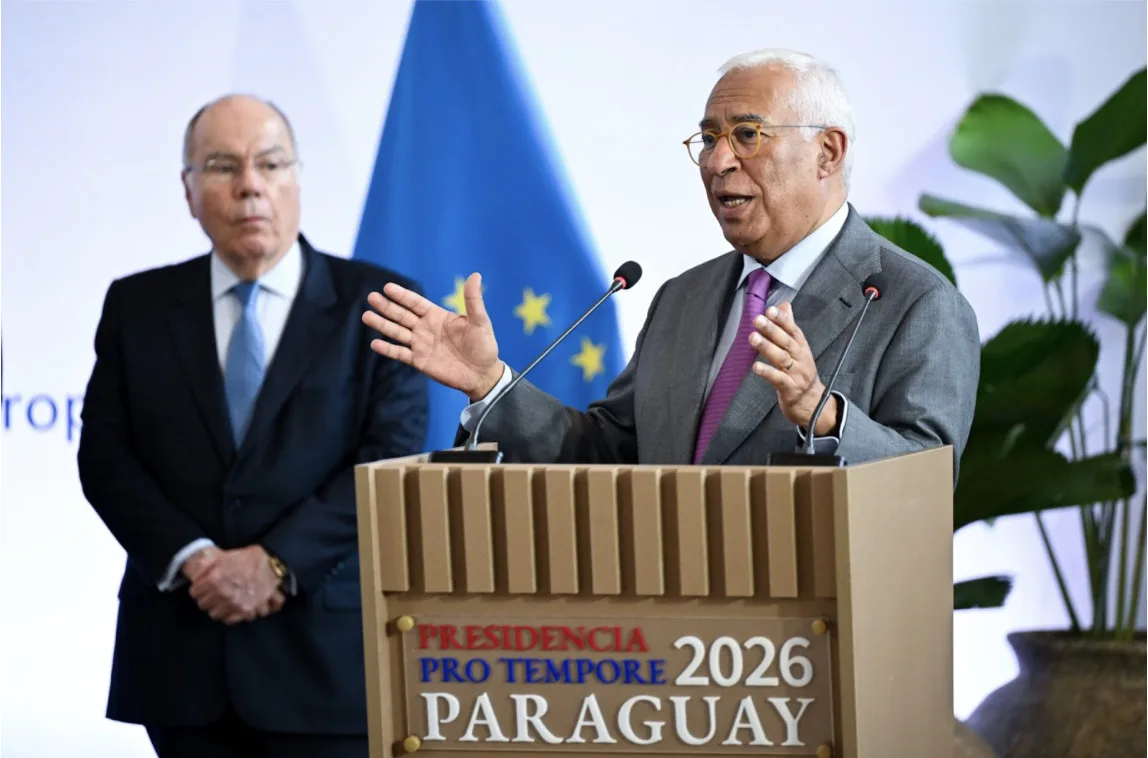
The EU-Mercosur agreement, representing the most significant Latin American trade relationship (280 million people, €110 billion in annual goods trade), was signed on 17 January 2026, in Asunción, following the Council adoption by qualified majority, an unprecedented procedural outcome that itself signals institutional tensions.
However, the agreement’s ratification process is now suspended pending a European Court of Justice opinion on three elements: legal architecture, the precautionary principle framework, and the non-violation complaint mechanism. While the European Parliament’s request for judicial clarity on these constitutional questions, Mercosur partner states (Argentina, Paraguay, and Uruguay) have signalled faster domestic ratification timelines, with extraordinary sessions scheduled for February and March 2026, creating potential asymmetry between EU and regional ratification momentum.
- This dynamic raises governance questions: should the EU provisionally apply the agreement while domestic legal proceedings continue? The Commission described the legal possibility and stressed that no political decision has been taken.
Trade and Sustainable Development: Gap on Labour and Environmental Standards
A key concern across all regional frameworks is the limited partner enthusiasm for upgrading Trade and Sustainable Development (TSD) chapters. Even Chile, described as the “most like-minded” partner, has shown reluctance toward EU proposals on Paris Agreement implementation, TSD sanctions mechanisms, and extensions to trade and gender provisions.
- The Commission acknowledged these negotiations constitute an “uphill struggle,” driven by partner fears of regulatory exposure and general defensiveness. Critically, the speaker confirmed that while TSD reviews are contractually mandated, no direct legal consequences exist if partners refuse to upgrade standards. This creates a governance vacuum. Namely, aspirational frameworks cannot translate into binding commitments.
For Ecuador specifically, the Commission described a newly concluded “sustainable investment facilitation agreement,” framed as establishing “open, transparent, and sustainable” investment conditions alongside labour and environmental commitments. However, civil society raised urgent concerns: Ecuador is currently experiencing democratic backsliding, judicial harassment, institutional weakening, and restricted civic space. In this sense, promoting EU investments under these conditions may risk enabling governance failures rather than the protection of human rights.
Civil Society Participation: Structural Weaknesses in Agreement Monitoring
Civil society organisations raised critical questions about Domestic Advisory Groups (DAGs), a key mechanism for civil society oversight of trade agreement implementation. While Mexico’s agreement mandates a single DAG covering all pillars (enhancing coherence), other frameworks establish separate sectoral DAGs that frequently marginalise genuine civil society in favour of state-selected or industry-aligned actors. The Commission acknowledged these concerns and expressed commitment to “strengthening DAG mechanisms” and exploring expanded civil society participation.
- However, participants noted that despite significant civil society work within DAGs, follow-up on DAG findings and recommendations remains inconsistent and lacks structured visibility. It should then be underscored that the requirement to adequately fund monitoring agreements should include independent civil society participation, not just ceremonial representation.
Institutional Accountability Questions and Democratic Legitimacy
There is a concerning institutional precedent established with Mercosur’s Council adoption. The agreement was passed by a qualified majority rather than by consensus, a first in EU trade policy practice. This signals a willingness to override significant minority objections on trade matters. The structural shift warrants transparent public debate about whether supermajority decision-making adequately protects human rights and sustainability interests in trade policy. Qualified majority approval may accelerate agreements, but risks marginalising scrutiny when significant European interests (labour, civil society, environmental protection) are at stake. For this reason, the following should be taken into account:
- Enforce TSD chapters with binding consequences → The acknowledgement that review processes lack enforcement mechanisms remains insufficient. Future agreements should explicitly define sanctions or corrective measures for non-compliance with labour, environmental, and governance standards.
- Integrate human rights due diligence into investment frameworks → Before finalising investment facilitation agreements, the Commission must conduct and publicly disclose human rights impact assessments. Investments should support genuine democratic development, not enable institutional crisis.
- Fund and protect independent civil society monitoring → DAG mechanisms must receive adequate, multi-year funding and explicit legal protections for independent civil society participation. In this respect, the EU should establish structured follow-up processes for DAG findings and publish findings regularly.
- Align trade policy with stated human rights commitments → The EU positions itself as a values-based partner. This must be enhanced by revising investment ties with countries undergoing democratic backsliding until governance indicators demonstrably improve. Trade should incentivise, not enable, institutional failure.
Conclusion
EU’s engagement with Latin America reflects a strategic interest in values-based partnership and sustainable development. However, the briefing exposed critical gaps, such as TSD chapters’ lack of enforcement, civil society monitoring being underfunded and marginalised, and investment frameworks proceeding even in contexts of governance crisis.
With political will, the EU can design trade agreements that simultaneously advance economic interests and protect human rights, democratic institutions, and labour standards. The Mercosur and Mexico agreements represent an opportunity to do so, but ratification timelines must remain subordinate to accountability mechanisms.