
Introduction and Background: Crisis in the Caribbean
Haiti is not just struggling, it is collapsing. Once celebrated as the first Black republic to win independence through a successful slave revolt, Haiti today finds itself engulfed in a crisis of unprecedented proportions. The 2021 assassination of President Jovenel Moïse marked a critical tipping point, plunging the country into a deepening political vacuum. With no elected president, an absent functioning judiciary and a dissolved parliament, the country’s constitutional order has effectively disintegrated. Public institutions that should provide security, justice and basic services have either shut down or are operating at a bare minimum. Armed gangs have seized this governance void, operating with impunity in key areas, including Port-au-Prince. According to humanitarian reports, more than 80% of the capital is under gang control. These groups are not merely criminal they function as de facto rulers, engaging in widespread abuses such as kidnappings, sexual violence, forced displacement, extrajudicial killings and extortion. Their grip has strangled daily life, blocked aid corridors and paralysed economic, and social activity. Over 360,000 Haitians are now internally displaced and countless others are attempting dangerous migration routes in search of safety. The humanitarian crisis has become acute, with millions lacking access to clean water, food, healthcare and education. In several urban areas, schools have shut down indefinitely, health services have collapsed and law enforcement agencies are either outgunned or complicit.
Yet, despite the severity of the situation, the international community has not mobilised the legal and institutional mechanisms that have been deployed in other global crises. Unlike responses to conflicts in Ukraine, Syria or Myanmar, where fact-finding missions, tribunal proposals and International Criminal Court (ICC) investigations were initiated, Haiti’s descent into chaos has largely been met with diplomatic ambiguity and limited political will. This disparity raises a fundamental question at the heart of international law and justice: Why does a Black-majority nation facing systematic violence, displacement and impunity not merit the same legal urgency as other parts of the world? If international law claims universality, why does it appear to function selectively protecting some lives while ignoring others?
This article aims to explore this legal and ethical blind spot by analysing Haiti’s current crisis through the lens of international justice, with a particular focus on the absence of legal accountability and protection for its most vulnerable populations. As we examine the state collapse, structural inequities and international inaction, the goal is not only to understand what has gone wrong, but to call for a reimagining of how global justice systems treat crises in the Global South.
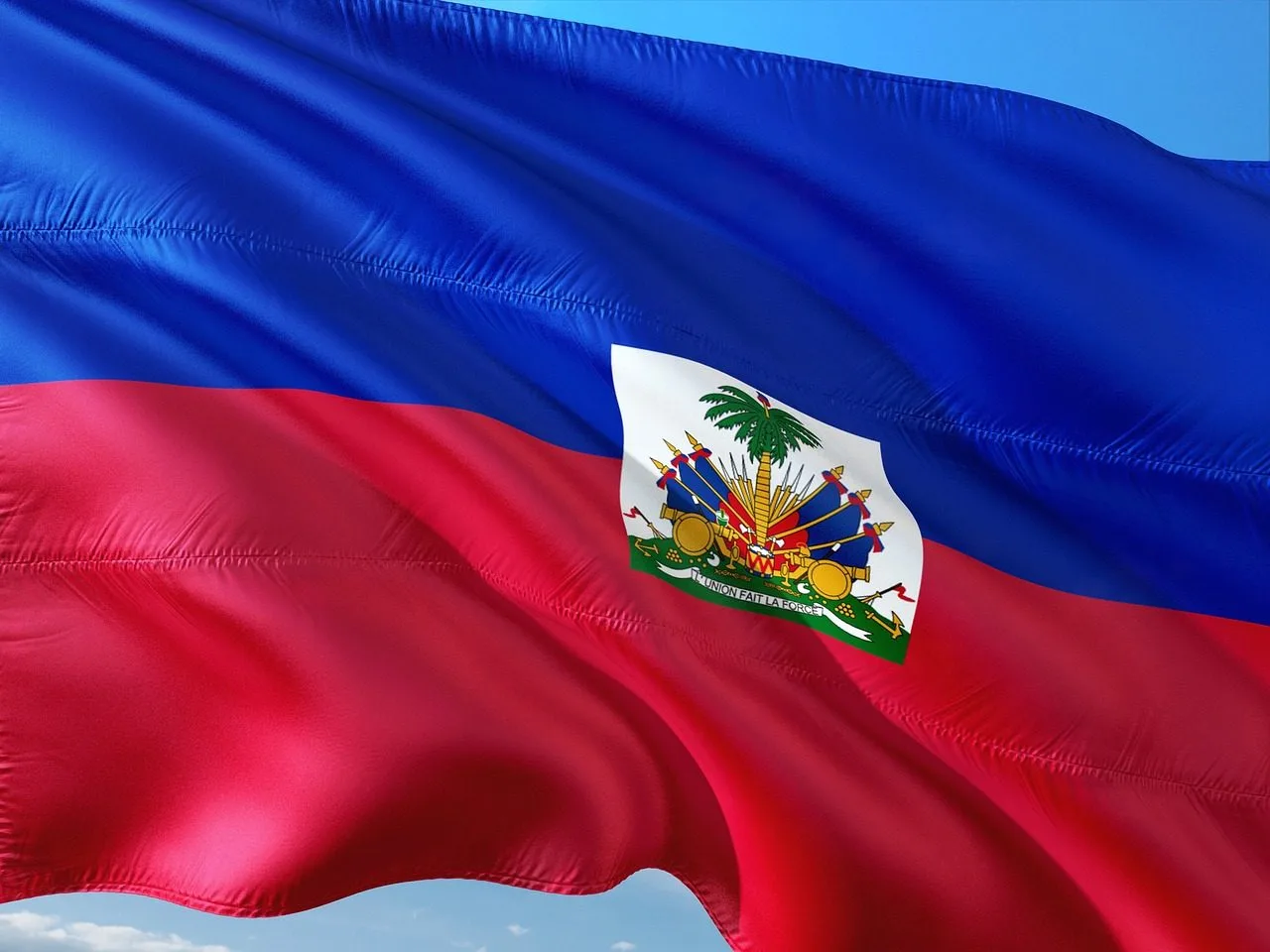
The Collapse of State Structures
Haiti’s institutional decay is both deep and wide-reaching. After decades of political turmoil, economic hardship, natural disasters and foreign interference, the country’s public services and systems of governance have virtually disintegrated. State institutions that are meant to guarantee the rule of law, deliver services and protect citizens have either collapsed or become complicit in dysfunction. The police force is under-resourced, understaffed and increasingly incapable of countering heavily armed gangs. Many officers have fled their posts, been infiltrated by criminal networks or are operating under immense duress without sufficient support. The judiciary, long plagued by inefficiency, corruption and political interference, has come to a near standstill in several regions. Courts are shuttered, legal proceedings are delayed indefinitely and victims of violence or displacement have little to no access to justice or redress. The backlog of cases has overwhelmed the system and the lack of judicial independence means impunity reigns for both state and non-state actors. Public institutions that should offer essential services hospitals, schools and municipal offices have shut down in gang-controlled areas. Armed groups operate with impunity, exacting control over entire neighbourhoods, roads and border areas. They demand ransoms, impose unofficial taxes and terrorise civilians. Aid workers are frequent targets of violence, with humanitarian corridors disrupted by road ambushes, kidnappings and extortion. This has severely limited the ability of NGOs and UN agencies to provide food, medical aid and shelter to those in need.
Despite the breadth and depth of this collapse, the international response remains fragmented and largely political. There is a conspicuous absence of sustained, coordinated legal mechanisms such as international investigations, UN-mandated inquiries or special tribunals. The failure to deploy these tools reflects a broader reluctance to treat Haiti’s unraveling as a legal emergency, rather than just a political or humanitarian one.
Where is international justice?
As the crisis in Haiti intensifies, the question of legal accountability remains conspicuously unanswered. The International Criminal Court (ICC), often viewed as the world’s main avenue for addressing serious crimes such as genocide, war crimes and crimes against humanity, does not currently have jurisdiction over Haiti. Haiti is not a State Party to the Rome Statute, which means the Court can only act if (1) Haiti voluntarily accepts the Court’s jurisdiction through a formal declaration under Article 12(3), or (2) the United Nations Security Council (UNSC) refers the situation under Chapter VII of the UN Charter. Neither of these pathways has been activated. This lack of engagement is glaring when compared to other contexts in which international justice has been pursued despite political and legal barriers. In the case of Syria, for example, where UNSC referrals were blocked due to vetoes by permanent members, the UN General Assembly established the International, Impartial and Independent Mechanism (IIIM) to collect and preserve evidence of serious crimes. For Myanmar, although the country is not a party to the Rome Statute, the ICC was able to exercise jurisdiction based on crimes that extended into Bangladesh as a State Party enabling investigation of the persecution of the Rohingya population. These examples demonstrate that creative legal pathways can be utilised when political will exists. In Haiti’s case, that will has been notably absent. Haiti’s most significant international engagement in recent decades, the United Nations Stabilization Mission in Haiti (MINUSTAH), which operated from 2004 to 2017 left a controversial and damaging legacy. Although the mission was deployed with the stated objective of restoring order and strengthening institutions, it failed to stop the rise of gang violence and arguably contributed to further public disillusionment. Most infamously, MINUSTAH personnel were responsible for introducing a deadly cholera outbreak in 2010, which killed more than 10,000 Haitians and infected hundreds of thousands. The UN initially denied responsibility, later expressing regret but failing to deliver full accountability or reparations to victims. This has significantly eroded trust in international institutions and left Haitian civil society sceptical of external interventions, particularly those not grounded in justice or transparency.
Currently, international actors are prioritising the deployment of a Multinational Security Support Mission (MSS) authorised by the UN Security Council in October 2023 and led by Kenya. While intended to stabilise the security situation and support the Haitian police, this force is not mandated to investigate or prosecute those responsible for serious human rights abuses. Moreover, its deployment has faced legal and logistical challenges, further delaying protection for civilians. Absent from the plan is any clear mechanism to pursue accountability for gang leaders who orchestrate widespread violence, for state officials complicit in corruption and human rights violations or for international actors who have undermined Haitian sovereignty over decades.
This legal void is particularly troubling given the nature of the crimes being committed. Gang-led massacres, targeted killings, systemic sexual violence and the forced displacement of civilians constitute violations of international human rights and, arguably international humanitarian law. However these acts are being treated primarily as security concerns rather than legal violations warranting international scrutiny and prosecution. The silence of the global legal community including international courts, regional mechanisms and transnational civil society networks raises profound questions about selectivity and racial bias in the enforcement of international law. If the law is meant to serve as a tool for global justice, then its near-complete absence in Haiti’s context speaks volumes about who is seen as deserving of protection, and whose suffering is deemed politically inconvenient.
Structural Inequities in the Global Legal Order
Haiti’s marginalisation within the international legal system is not coincidental; it is symptomatic of entrenched racial, colonial and geopolitical hierarchies that continue to shape global governance. As the first Black republic, born from a revolutionary slave revolt in 1804, Haiti has long been punished for its defiance of imperial power. In the aftermath of independence, it was subjected to global isolation, forced to pay a crippling “independence debt” to France and denied meaningful entry into the international system. This legacy persists today in more subtle but equally damaging forms: the chronic underfunding of humanitarian responses, the consistent neglect of Haitian-led initiatives in peacebuilding and recovery and the almost complete exclusion of Haitian voices from international justice mechanisms. Unlike countries deemed geopolitically significant to major powers, Haiti lacks the strategic leverage to compel action from global institutions. International law, though often framed as impartial and universal, tends to follow the contours of power rather than principle. The rapid mobilisation of legal tools for Ukraine including ICC warrants, emergency funding and the proposed creation of a special tribunal starkly contrasts with the silence surrounding Haiti’s descent into lawlessness. This disparity exposes how legal protections are frequently racialised and politicised: victims of violence in Black, post-colonial states are often rendered invisible within the very frameworks that claim to exist for their protection. Haiti’s case challenges the international community to confront the uncomfortable reality that the machinery of global justice often mirrors rather than disrupts the inequalities of the world it claims to govern.
Conclusion: Toward a More Equitable Legal Future
Haiti does not need a paternalistic rescue, it needs justice, inclusion and a genuine respect for its sovereignty, resilience and the dignity of its people. The international community must confront the fact that inaction in Haiti is not due to a lack of legal tools, but a lack of political will to use them equitably. A meaningful response must begin by recognising that Haiti’s crisis is not just a humanitarian or security issue, but a legal emergency that demands urgent accountability and redress.
This includes exploring the potential for ICC involvement, even through creative jurisdictional avenues, as well as activating regional mechanisms such as the Inter-American Commission on Human Rights and the Inter-American Court of Human Rights. In parallel, there must be renewed international pressure on the United Nations not only to acknowledge its past harms such as the cholera epidemic but to support new forms of justice-oriented intervention that centre Haitian leadership and long-term recovery. Proposals for hybrid courts, strengthened domestic prosecution with international oversight, truth-telling processes and survivor-led justice models must be treated not as idealistic aspirations but as actionable steps. Crucially, any path forward must prioritise the voices, experiences and expertise of Haitian people particularly those from historically marginalised communities who continue to bear the brunt of violence, displacement, and exclusion. Their participation is not optional it is central to building sustainable peace and trust in institutions. Efforts must focus on ending impunity at every level from gang leaders to corrupt officials to complicit international actors while also rebuilding public confidence in legal systems and reinforcing local ownership of justice processes.
Haiti’s crisis cannot remain invisible simply because it lacks geopolitical weight. If international justice is to retain any moral authority, it must be applied universally guided not by convenience or power, but by the foundational principle that every human life deserves protection and every violation deserves a response. Only by correcting the systemic neglect and inequality at the heart of global legal frameworks can Haiti’s future and the credibility of international justice itself be reclaimed.
Bibliography
Amnesty International. (2024). Haiti: Displacement and Insecurity. https://www.amnesty.org/en/latest/news/2024/02/haiti-displacement-and-insecurity/
Bartels, S. A. et al. (2022). Cholera in the Time of MINUSTAH: Experiences of Community Members Affected by Cholera in Haiti. International journal of environmental research and public health, 19(9),4974. https://doi.org/10.3390/ijerph19094974
Human Rights Watch. (2025). Haiti On the Edge of Collapse
https://www.hrw.org/news/2025/06/30/haiti-on-the-edge-of-collapse
Human Rights Watch. (2024). Haiti: On the Brink.
https://www.hrw.org/news/2024/03/28/haiti-brink-six-urgent-measures-overcome-human-rights-crisis
International Crisis Group. (2025). Locked in Transition: Politics and Violence in Haiti
United Nations Office for the Coordination of Humanitarian Affairs (OCHA). (2024). Haiti Humanitarian Needs Overview. https://www.unocha.org/haiti