
Introduction
2024 was one of the most challenging years for Georgian civil society. Georgia has long presented itself as a democratic and reform-minded state, especially in its aspirations towards European Union (EU) membership. The Constitution of Georgia even states that “the constitutional bodies shall take all measures within the scope of their competences to ensure the full integration of Georgia into the European Union and the North Atlantic Treaty Organisation” (Constitution of Georgia, 1995). For years, the Georgian people have fought tirelessly for a European future, but that hope was shattered on November 28th, 2024, when the Prime Minister of Georgia announced that the country would remove the opening of accession talks with the EU from its agenda (Al Jazeera, 2024). Becoming a breaking point, outraged people flooded the streets that same night, and have been protesting for more than a year now.
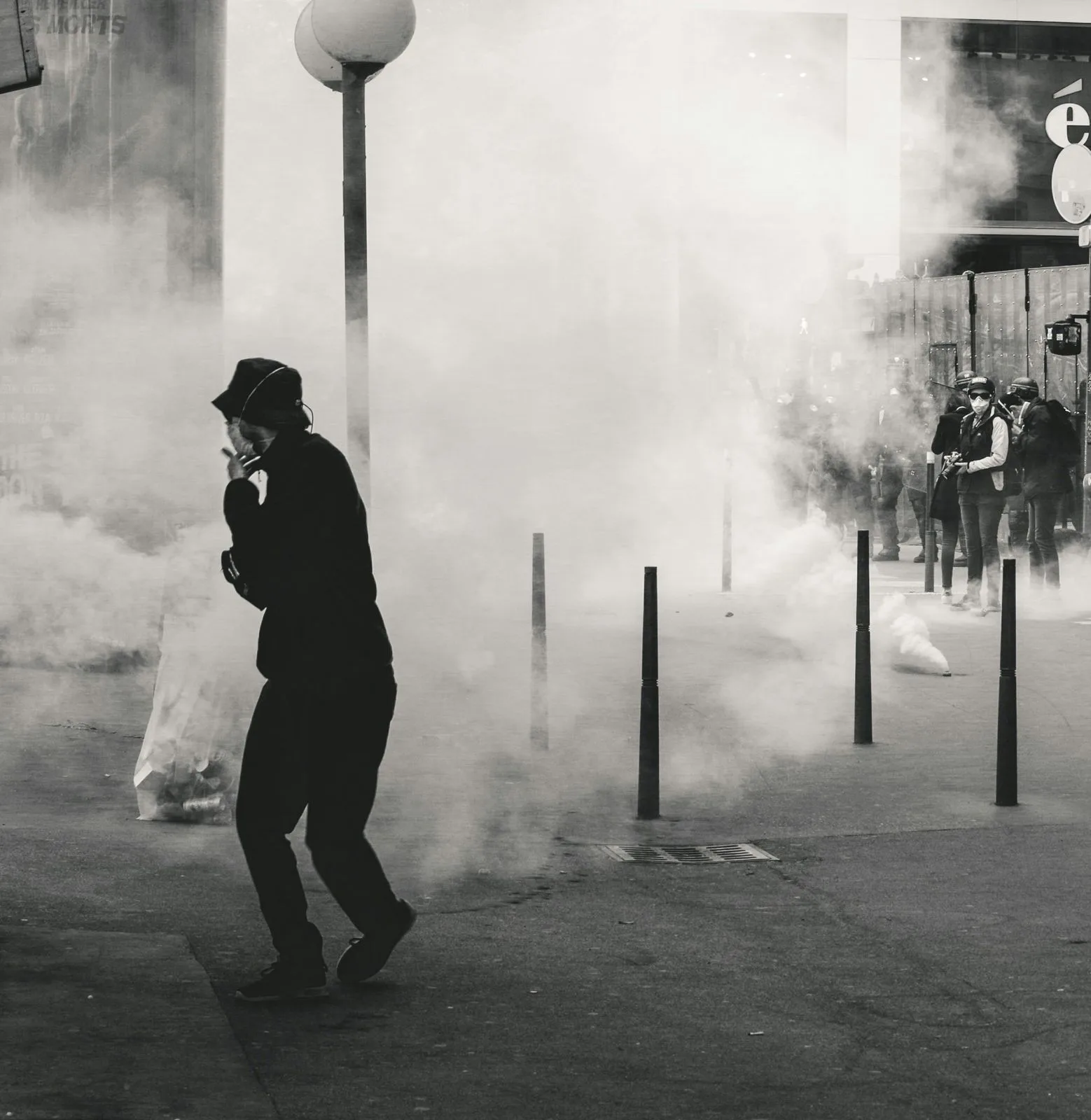
For the first two months of the protest, the government of Georgia used different weapon in its arsenal against peaceful demonstrators, such as tear gas, pepper spray, and rubber bullets (Civil, 2024). This escalated and resulted in violence and mass arrests of demonstrators. Hundreds had been detained on administrative charges, while others faced criminal charges for simply raising their voices. As of today, there are more than 120 political prisoners in Georgia (Politpatimrebi, 2026). The Georgian Dream, the ruling party of Georgia, has been violating the Constitution not only regarding EU integration, but also in terms of human rights.
The use of tear gas and pepper spray by the Georgian government, has resulted in demonstrators reporting complaints about their long-term symptoms, such as fatigue, coughs, shortness of breath, vomiting, and nosebleeds, after attending the demonstration, but no one could find an explanation until the BBC published its documentary, “When Water Burns” (BBC, 2025).
The investigation by the BBC uncovered evidence that suggests that during the protests in Tbilisi last year, the Georgian government used water cannons mixed with a chemical weapon against the people (BBC, 2025). The anti-government demonstrators were likely to have been targeted with “camite”, a chemical agent first used during World War I (WW1). The investigation and documentary revealed the results of a medical study, which showed that nearly half of the respondents, who were among those sprayed by the cannons, suffered long-term effects, like cough, shortness of breath, and skin irritation (BBC, 2025). The BBC also spoke with high-level whistleblowers from inside the Georgian riot police, who helped determine the likely identity of the chemical agents used in water cannons. This included a classified inventory from the Special Tasks Department, which lists two chemicals and gives instructions on how to mix them as a weapon to use against demonstrators.
Although the Georgian government claims that the country’s law enforcement acted “within the bounds of the law and constitution” (Civil, 2025),- the experts in toxicology and chemical weapons believe that this gas could be a camite, an obsolete riot-control agent that was prohibited due to the persistence of its impact (BBC, 2025).
The Chemical Weapons Convention (CWC)
The Chemical Weapons Convention (CWC) is a unique and powerful legal instrument as it bans an entire class of weapons and, at the same time, addresses chemical weapon proliferation concerns (Sipri, 1997). The treaty is perpetual in nature and is far more comprehensive than the 1925 Geneva Protocol, which outlaws the use but not the possession of chemical weapons (Arms Control Association, 2024). CWC prohibits the development, production, stockpiling, and use of chemical weapons and requires the destruction of both chemical weapons production facilities, and the weapons themselves (ICRC, 2993). As a State Party to the CWC, Georgia is strictly prohibited from using toxic chemicals as weapons, except within the narrow bounds of permitted riot control agents (RCAs) for law enforcement purposes, as long as the types and quantities are consistent with such purposes, and they only cause rapid and temporary irritation. Article II(9)(d) lists “law enforcement, including domestic riot control purposes” as a non-prohibited purpose under this Convention (CWC, Article II (9)(d)). By creating this exception, the international community brought domestic law enforcement under the direct supervision of international law.
Article II of the Convention ensures that the prohibition is not limited to a specific list of gases. Instead, the Convention defines chemical weapons more broadly to include any toxic chemicals and their precursor that can cause death, temporary incapacitation, or permanent harm to humans or animals (CWC, Article II (9)(d)). According to Article II(1)(a), “Chemical weapons mean toxic chemicals and their precursors, except were intended for purposes not prohibited under this Convention, as long as the types and quantities are consistent with such purposes”. This means that the legality of a substance depends on the specific intent and way it is applied.
The Convention does recognise that states require certain tools for maintaining internal order, which leads to the distinction of RCAs. RCAs are defined in Article II(7) as chemicals which “can produce rapidly in humans’ sensory irritation or disabling physical effects which disappear within a short time following termination of exposure”. Therefore, when a government uses a chemical agent against its own citizens, it should meet two criteria. First, the substance must meet the definitions of RCA as defined in Article II(7) as chemicals that produce rapidly disappearing sensory irritation or disabling physical effects that vanish shortly after exposure ends. And second, the “types and quantities” of the chemical should be strictly consistent with the stated law enforcement purpose.
The central question in the case of Georgia revolves around whether the allegedly used substance, bromobenzyl cyanide or camite, fits the definition of a permitted RCA or a prohibited toxic chemical. For a chemical to be a legal RCA, its physical effects must be temporary. Moreover, the Organisation for the Prohibition of Chemical Weapons (OPCW)’s Scientific Advisory Board recognises 17 chemicals as RCAs (OPCW, 2017). Some of those RCAs can cause nausea, headache, vomiting, burning, shortness of breath, and other symptoms, but none of them can cause lasting health effects when they are used in an open area at high dilution. Additionally, the OPCW Scientific Advisory Board listed the chemicals that do not meet the criteria of an RCA as defined by Article II (7) of the CWC (OPCW, 2017). According to that list, bromobenzyl cyanide, also known as camite, does not meet the criteria, as it is not classified as an RCA.
Furthermore, the evidence and medical surveys published by the BBC suggest that Georgian people who were at the demonstration in November and December of 2024 experienced severe burns, blistering, headaches, fatigue, vomiting, and respiratory issues lasting for weeks (BBC, 2025). 69 people also found “significantly higher prevalence of abnormalities” in the electrical signals in the heart. Even if the Georgian government claims a “law enforcement” purpose, the CWC requires that the types and quantities of the chemicals used must be consistent with that specific goal. Mixing a high-toxicity, WW1 era agent into water cannons and inflicting lasting injuries rather than simply dispersing a crowd would fail this consistency test. While the CWC permits riot control for domestic stability, it does not grant states the right to use any chemical they want. If a state employs an agent that causes prolonged injury, it risks violating the most crucial international obligations.
A few weeks after the BBC published the investigation, several Georgian civil society organisations informed the Director-General of OPCW, the United Nations (UN) Special Rapporteur, and the Council of Europe Human Rights Commissioner, asking them to review the human rights violations, including “the use of chemicals and experimental crowd-control agents” by law enforcement in November to December 2024 (Civil, 2025). The investigation should examine whether the Georgian government used toxic chemicals that are not permitted for use in law enforcement.
To summarise, the CWC gives states some exceptions under Article II(9)(d), however, this does not permit the state to use any toxic chemical substances against a civilian population. The integrity of this Convention depends on a clear definition of what constitutes a RCA, strictly limited substances with only temporary and non-permanent effects. If the report and the medical data from the 2024 protests are accurate, the use of a WW1 – era agent like camite represents a fundamental failure to adhere to these criteria. By allegedly using an agent that causes prolonged suffering and long-term health problems, the Georgian authorities may have crossed the threshold from permitted crowd control into the use of a prohibited chemical weapon.
International Human Rights Framework
While the CWC sets out the standards for which substances a state can legally possess, international human rights law (IHRL) is the primary legal framework that governs the treatment of a state’s own citizens. IHRL is always applicable, in peace, during armed conflicts, and in situations of domestic protest. In the Georgian context, several pillars of IHRL are particularly important and relevant.
The first and most important rule is the absolute prohibition of torture and other cruel, inhuman, or degrading treatment or punishment. Article 7 of the International Covenant on Civil and Political Rights (ICCPR) states that “no one shall be subjected to torture or to cruel, inhuman or degrading treatment or punishment” (ICCPR, 1966). Moreover, Article 2 of the UN Convention Against Torture says that “no exceptional circumstances whatsoever, whether a state of war or a threat of war, internal political instability or any other public emergency, may be invoked as a justification of torture”. This prohibition is a peremptory norm (jus cogens) of international law, which means that it can never be suspended or ignored, even in times of public emergency or political unrest. The principle of the absolute prohibition of torture and other cruel, inhuman, or degrading treatment or punishment is explicitly protected under the non-derogation clause in Article 4(2) of ICCPR (ICCPR, 1966). Reportedly, several police officers were violent towards Georgian demonstrators (Transparency International, 2024). They were spat on, cursed at, and subjected to degrading verbal abuse. In January 2025, the independent human rights experts called on the government of Georgia to prevent further violence in the policing of protests and to investigate allegations of excessive use of force and torture by law enforcement officials in response to protests in November and December 2024 (OHCHR, 2025). They stated that “the scale of the allegations and the gravity of the harm reportedly inflicted on protesters and those later detained may constitute torture and cruel, inhuman or degrading treatment or punishment”.
The UN Basic Principles on the Use of Force and Firearms (1990) and the UN Code of Conduct for Law Enforcement Officials (1979) set strict boundaries on the use of force. Article 3 of the UN Code of Conduct states that “law enforcement officials may use force only when strictly necessary and to the extent required for the performance of their duty”. The use of force, however, should be necessary under the circumstances for the prevention of crime or in effecting or assisting in the lawful arrest of offenders. Moreover, the use of force by law enforcement officials should be in accordance with the principle of proportionality; the force that is disproportionate to the legitimate objective to be achieved should not be used. Under the Office of the High Commissioner for Human Rights (OHCHR) Guidance on Less-Lethal Weapons, tools like water cannons and chemical irritants, like tear gas, are intended only for temporary incapacitation (OHCHR, 2020). It is unlawful to fire tear gas at an individual at the head or face. It also should not be used in confined spaces, where there is no viable exit or adequate ventilation, as it bears the risk of death or serious injury from asphyxiation. Water cannons should not be targeted at an individual or group of people at a short range because it contains the risk of causing permanent blindness or secondary injuries. When the force is used indiscriminately or as a tool of intimidation rather than for legitimate reasons, it also violates the citizens’ fundamental right to peaceful assembly, which is also enshrined in the Constitution of Georgia and guaranteed under Article 21 of the ICCPR.
In November and December 2024, the law enforcement officials have been using extreme violence against demonstrators and media representatives (Human Rights House Foundation, 2024). Journalists who were covering anti-government protests in Tbilisi have been deliberately targeted by law enforcement, where they were beaten and required hospitalisation (RFE/RL, 2024). One of the journalists suffered a broken collarbone and facial bones after being beaten by police in November 2024. The lawyers from the Legal Aid Network reported that most individuals who were detained were severely beaten, suffering from bruises, facial injuries, fractured noses and jaws, concussions, and multiple hematomas (Transparency International, 2024).
IHRL also imposes a duty of accountability on the state. For example, Article 12 of the Convention Against Torture states that “Each State Party shall ensure that its competent authorities proceed to a prompt and impartial investigation, wherever there is reasonable ground to believe that an act of torture has been committed in any territory under its jurisdiction”. Therefore, whenever force results in injury, the government is obligated to conduct a prompt, independent, and impartial investigation. However, in the case of Georgia, the integrity of the process is questioned since the government, and the State Security Service of Georgia have previously targeted doctors and witnesses who conducted research and provided evidence for the BBC investigation.
Conclusion
The events of November and December 2024 represent a very critical moment for the rule of law and democracy in Georgia. While the government claims that its actions were necessary to maintain order, the international legal framework clearly provides limits on how a state shall or shall not treat its own citizens. By allegedly using a chemical agent like camite, that can cause severe and long-lasting injuries, the authorities have potentially triggered the narrow exception allowed under Article II(9) of the CWC. A chemical that causes weeks of physical suffering does not meet the definition of an RCA.
Furthermore, the scale of force used against protesters and journalists cannot be justified under the principles of necessity and proportionality. The absolute prohibition of torture and ill-treatment is a non-derogable right, and Georgia has acknowledged and accepted the same in its ratification of the ICCPR and the Convention Against Torture. The international human rights framework ensures that “domestic stability” is never used to violate human rights. Given the lack of a transparent domestic process, the only way to determine the truth is through independent international investigations from the OPCW and the UN bodies.
Bibliography
Al Jazeera (November 28, 2024). Georgia to suspend EU accession talks until 2028. https://www.aljazeera.com/news/2024/11/28/georgia-to-suspend-eu-accession-talks-until-2028 accessed January 26, 2026.
Arms Control Association (February 2024). The Chemical Weapons Convention at a Glance. https://www.armscontrol.org/factsheets/chemical-weapons-convention-cwc-glance-0 accessed January 26, 2026.
Basic Principles on the Use of Force and Firearms by Law Enforcement Officials (September 7, 1990). https://www.ohchr.org/en/instruments-mechanisms/instruments/basic-principles-use-force-and-firearms-law-enforcement accessed January 26, 2026.
BBC (December 1, 2025). When Water Burns – BBC Eye investigates the potential use of World War One chemicals against anti-government demonstrators in Georgia. https://www.bbc.com/mediacentre/2025/bbc-eye-when-water-burns accessed January 26, 2026.
BBC (December 1, 2025). WW1 toxic compound sprayed on Georgian protesters, BBC evidence suggests. https://www.bbc.com/news/articles/czrk7g50e1po accessed January 26, 2026.
Chemical Weapons Convention (1997). https://www.opcw.org/chemical-weapons-convention/articles accessed January 26, 2026.
Civil (October 24, 2024). MIA admits mixing tear gas in water canons during protests against the agents’ law. https://civil.ge/archives/629286 accessed January 26, 2026.
Civil (December 2, 2025). Georgian authorities deny use of Camite after BBC investigation. https://civil.ge/archives/713200 accessed January 26, 2026.
Civil (December 22, 2025). CSOs appeal to International Watchdogs to review alleged use of chemicals at 2024 protests. https://civil.ge/archives/715440 accessed January 26, 2026.
Code of Conduct for Law Enforcement Officials (December 17, 1979). https://www.ohchr.org/en/instruments-mechanisms/instruments/code-conduct-law-enforcement-officials accessed January 26, 2026.
Constitution of Georgia (1995). https://matsne.gov.ge/en/document/view/30346?publication=36 accessed January 26, 2026.
Convention against Torture and Other Cruel, Inhuman or Degrading Treatment or Punishment (December 10, 1984). https://www.ohchr.org/en/instruments-mechanisms/instruments/convention-against-torture-and-other-cruel-inhuman-or-degrading accessed January 26, 2026.
Human Rights House Foundation (December 5, 2024). Georgian authorities must immediately halt the use of unlawful force against protestors. https://humanrightshouse.org/statements/georgian-authorities-must-immediately-halt-use-of-unlawful-force-against-protestors/ accessed January 26, 2026.
ICRC (1993). Convention on the Prohibition of the Development, Production, Stockpiling and Use of Chemical Weapons and on their destruction. https://ihl-databases.icrc.org/en/ihl-treaties/cwc-1993 accessed January 26, 2026.
International Covenant on Civil and Political Rights (December 16, 1966). https://www.ohchr.org/en/instruments-mechanisms/instruments/international-covenant-civil-and-political-rights accessed January 26, 2026.
OHCHR (2020). Guidance on Less-Lethal Weapons in Law Enforcement.
OHCHR (January 28, 2025). Georgia must investigate the use of force by police during demonstrations. https://www.ecoi.net/en/document/2121098.html accessed January 26, 2026.
OPCW (March 31, 2017). Response to the Director-General’s request to the scientific advisory board to provide consideration on which riot control agents are subject to declaration under the Chemical Weapons Convention.
Political prisoners in Georgia (2026). https://www.politpatimrebi.ge/ accessed January 26, 2026.
RFE/RL (November 30, 2024). At Georgian protests, journalists say they’re being targeted and beaten. https://www.rferl.org/a/georgian-protests-journalists-targeted-beaten-/33221520.html accessed January 26, 2026.
Sipri (1997). The Chemical Weapons Convention – Fact Sheet.
Transparency International (December 2, 2024). Detained citizens are being physically abused. https://transparency.ge/en/post/detained-citizens-are-being-physically-abused accessed January 26, 2026.