
Introduction: background and context
South Sudan, a country in northeast Africa, has faced ongoing difficulties since its independence in 2011. Before that, the country was part of its northern neighbour, Sudan, which has a predominantly Muslim and Arab population, in contrast to South Sudan’s population, which is mainly composed of groups practising Christian or animist beliefs. After decades of civil war, that was marked by brutality and human rights abuses, the hopes for peace and self-determination that came with the independence on the 9th of July were shattered when, in 2013, only two years after the long-awaited progress that was marked by immense international goodwill and aid as well as high hopes for nation-building, a full-blown civil war broke out once again.
This political dispute between President Salva Kiir (a Dinka) and his former Vice President Riek Machar (a Nuer) was already foreshadowed but only perceived as a political struggle, yet it rapidly expanded along ethnic lines, drawing in various armed groups and communities (Minority Rights Group, 2019).
However, this conflict has since been characterised by violence, human rights abuses and at the same time, ceasefires and peace agreements that often failed. Key milestones include the August 2015 “Agreement on the Resolution of the Conflict in the Republic of South Sudan (ARCSS)” and the September 2018 “Revitalised Agreement on the Resolution of the Conflict in the Republic of South Sudan (R-ARCSS),” which is the current framework for peace (Nyadera, 2018).
The nature of the conflict is complex and characterised by ethnic divisions. While the initial cause of the conflict was political, it has deepened longstanding ethnic differences, particularly between the Dinka and Nuer, but also affecting many other groups. Recruitment into armed groups often followed ethnic lines, fostering a vicious “us vs. them” dynamic. The conflict involves human rights violations that range from targeted civilian killings, sexual and gender-based violence, forced displacement, to the recruitment of child soldiers, millions of internally displaced persons and many people at risk of acute food insecurity. All these atrocities are characterised by a pervasive culture of impunity and accountability deficit, contributing to cycles of revenge and mistrust (International Crisis Group, 2022).
Hence, the importance of transitional justice, a set of judicial and non-judicial measures implemented in countries transitioning from conflict or authoritarian rule, cannot be underestimated. The legacy of atrocities must be addressed in a holistic approach. This can only be achieved if the justice process takes into account four different aspects. In South Sudan, the four pillars of transitional justice, as outlined in the R-ARCSS, focus on addressing past abuses through truth-seeking via the Commission for Truth, Reconciliation, and Healing (CTRH) and ensuring judicial accountability through the Hybrid Court for South Sudan (HCSS). It should also try to provide victim redress through the Compensation and Reparation Authority (CRA) and establish guarantees of non-recurrence through institutional reforms (International Center for Transitional Justice, 2025).
While the R-ARCSS outlines transitional justice mechanisms, this article aims to shed light on the complications and systematic marginalization of South Sudan’s diverse minorities. If the transitional justice process is not adapted to include these communities, the concept of justice for all South Sudanese will stay unfulfilled, risking more cycles of violence and impunity.
Minorities in South Sudan
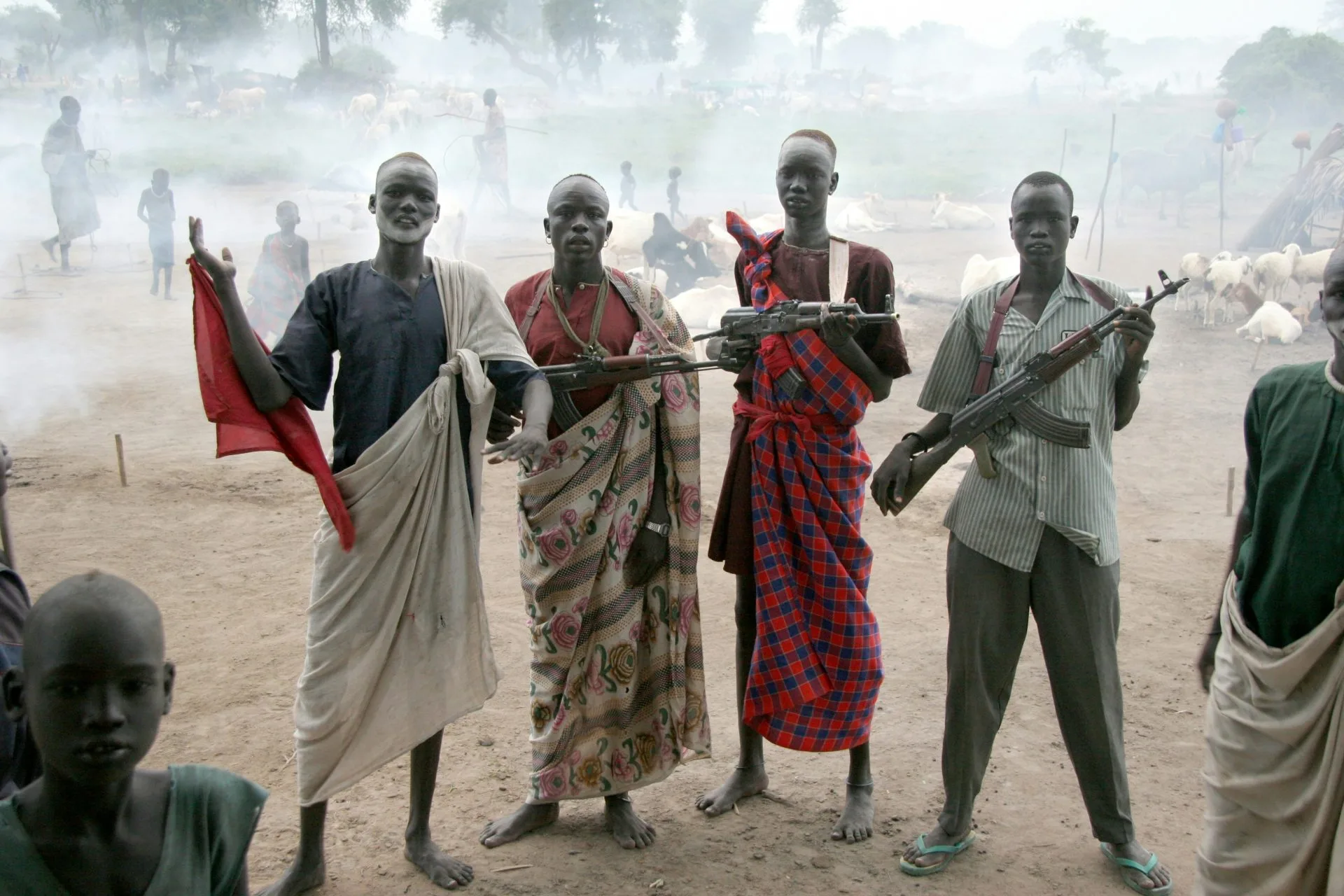
As already touched upon, South Sudan is home to a diverse range of ethnic minorities. Especially in the context of South Sudan, minorities are not only defined by their population size but also by their political power, control over resources, and shifting alliances. Moreover, after gaining independence, the Sudan People’s Liberation Army/Movement‘s (SPLM/A’s) internal power struggles and civil war led to certain ethnic groups gaining dominance, marginalising others, regardless of their quantity in specific regions. Hence, the perception of political and economic exclusion by a dominant group is important to understanding minority struggles.
South Sudan is dominated by two major ethnic groups, the Dinka and Nuer; belonging to those groups has also led to the conflict between the president and former vice president, which contributed to the ongoing violence. Nevertheless, besides these two groups, there are over 60 other ethnic minorities in South Sudan that are somehow caught in the conflict or have suffered human rights violations over the troubled past of the country (Minority Rights Group, 2019).
For instance, there are some Equatorial communities, such as the Bari, Kakwa, Moru, and Azande, that are located in the fertile Equatorial region and often feel marginalised by perceived Dinka domination. They also face concerns over land ownership and experience significant conflict and displacement. Furthermore, the Murle, who mainly live in Jonglei state, often face inter-communal violence, especially cattle raiding, and frequently see themselves as neglected by the government. The Shilluk in Upper Nile state were historically a kingdom and therefore feel that their traditional lands and political structures are under threat, but they have also experienced fierce fighting and accusations of ethnic cleansing (Kulang, 2021).
However, the smaller minorities in South Sudan not only experience tension with the bigger groups but also among each other, which is further fuelled by resource scarcity and historical grievances. The socio-political marginalisation that leads to a systematic disadvantage is something all minorities are struggling with. Due to prevailing political exclusion and the distribution of power often occurring through patronage networks, the situation is reinforced for smaller minorities. This is paired with economic disadvantage and security vulnerabilities, which directly impact the experiences with conflict and access to justice (Kwori, 2022).
Transitional Justice in the Peace Agreement
After violence broke out again in 2016, South Sudan’s competing parties signed the R-ARCSS in 2018, which established the Revitalised Transitional Government of National Unity (RTGoNU). This unity government was intended to lead a 36-month transitional period, culminating in democratic elections, which were initially scheduled for 2022 but have since been postponed twice. New elections are now set for late 2026 (Centre for Transitional Justice, 2025).
While two key laws—the TRT & Reconciliation Act and the Compensation/Reparation Act—were passed and signed into law in late 2024, and a selection panel was formed in May 2025, both the CTRH and HCSS are still not fully operational. However, persistent delays, especially regarding implementing key transitional justice provisions, have put the peace process at risk. The setbacks are caused by political instability, as well as the late re-formation of the legislative assembly, limited technical capacity, and lack of progress on critical reforms (Human Rights Watch, 2025).
While the R-ARCSS has been established as a comprehensive state-building agreement aimed at redefining the state and establishing a rule of law that incorporates human rights and justice for all, the R-ARCSS, like many peace agreements before, struggles to address the root causes of conflict. Despite the importance of peace agreement provisions to post-conflict statebuilding, these texts have not been analysed as acts of statecraft. In fact, the idea that statebuilding and peacebuilding are equivalent has faced criticism from both practitioners and scholars in the field of transitional justice. Nevertheless, the agreement indeed established a “systematic and participatory process” of institutional reform, which puts emphasis on a pursuit of an inclusive state.
As already mentioned in the introduction, the R-ARCSS has some key mechanisms for transitional justice incorporated, like the CTRH and HCSS. The CTHR, a truth-seeking commission, is designed with the input of civil society to ensure the incorporation of experiences and documentation of all kinds of genders and segments, including marginalized minorities, in the transition process. Moreover, the HCSS is also trying to achieve justice for the most serious crimes, including gender based violence, with the aim of establishing a lasting legacy free from recurring injustice (Carolan, 2020).
Additionally, the agreement explicitly recognizes marginalized groups, such as ethnic minorities, women, and civil society actors. It aims to ensure their participation in constitution-making, economic management, and security sector reform. It also encourages having 35% women on the national executive and involves women actively participating in important reform efforts (Chigwenya, 2021).
Despite all these promising efforts for transitional justice in the peace process, the R-ARCSS is criticised for not learning from past failures to build an inclusive state. It does not really try to challenge the President’s centralised control and fails to introduce new voices into executive positions. The power-sharing formula continues to concentrate power among the main armed parties, reducing space for “other political parties” and civil society. This concentration of power among elites risks entrenching them in the state apparatus, potentially causing further conflict and hindering genuine accountability and inclusion for all, especially marginalised groups.
The minorities’ experience of conflict
While, as already touched upon, the conflict started initially as a political dispute, it quickly evolved into a multisided conflict along ethnic lines and hence directly impacted minorities, exacerbating their systematic vulnerabilities and fuelling their suffering. Ethnic identity became both a basis for targeted violence and also a driver to mobilise forces. Armed groups from various sides have committed atrocities, and political elites often utilised pre-existing ethnic divides to rally support and gain an advantage (United States Institute for Peace, 2021).
Throughout the conflict, ethnic minorities apart from the two big groups, Dinka and Nuer, like the Kuku, Kakwa, Kaliku, and Azande, have been systematically faced with a pattern of atrocities and displacement. The widespread human rights abuses committed against ethnic minorities that were caught in the conflict and being drawn in by various actors, ranging from SGBV, torture, and forced displacement to targeted killing, and the UN Commission for Human Rights in Sudan even found that the targeting of ethnic minorities amounts to ethnic cleansing (OHCHR, 2025).
Moreover, the violence is causing millions of people to be displaced, which is disproportionately targeting ethnic minorities, creating a vast number of internally displaced persons (IDPs) and refugees in neighbouring countries. For example, the minority group Murle has experienced historical and ongoing inter-communal violence involving the Murle, often characterised by cycles of cattle raiding, child abductions, and massacres. There have even been reports of armed groups threatening to “wipe out the entire Murle tribe,” which highlights the genocidal rhetoric and violence they have faced (Amnesty International, 2023).
However, several systemic factors similarly affect ethnic minorities and fuel vulnerability. Firstly, the ongoing fighting is destroying livelihoods, which is leading to famine and widespread food insecurity due to the lack of adequate agriculture. Furthermore, impunity of perpetrators who used proxy actors from ethnic minorities thereby deepens ethnic division and fuels the cycle of violence while drawing minorities in. Lastly, the lack of protection from national security forces for ethnic minorities that are often perceived as partisan or ethnically biased, while also belonging to the dominant ethnic groups in South Sudan, leaves minorities vulnerable to community militias and attacks from rival armed groups (Kumoi, 2024).
Silenced in Justice: Barriers for Minorities
Despite transitional justice processes being underway in South Sudan, there remain significant barriers, particularly for minorities, on the way to justice. As already touched upon, pervasive impunity remains, despite well-known and widespread human rights abuses committed by all parties throughout the conflict. Particularly, minorities that find themselves often as victims, struggle to speak up due to the perpetrators facing no accountability and belonging to the ethnic majority, which discourages victims from seeking redress and fosters a culture of continued violence.
While a justice system is on the way with the HCSS, the implementation of the rule of law remains fragmented, especially in rural areas where most already marginalised ethnic minorities live, customary legal systems are often inconsistent and inaccessible. Moreover, judicial independence is undermined by political interference and corruption, which is dominated by elites and hinders fair and effective proceedings, especially for ethnic minorities. Additionally, the justice system that is being developed is often not tailored to intercommunal violence and may not fully accommodate the cultural nuances, languages, or traditional dispute resolution methods of diverse minority groups. It would, therefore, require more customary justice to bring people-to-people peace and reconciliation processes to smaller communities (International Centre for Transitional Justice, 2024).
Furthermore, women as a minority group across all ethnicities face notable vulnerabilities and barriers to justice, especially in cases of sexual violence and related abuses, with very limited avenues for redress. Additionally, and not only regarding women but also other marginalised minorities, they often have limited or no representation in key political and judicial institutions. This means their specific grievances, cultural contexts, and needs are less likely to be considered or prioritised in the design and implementation of justice mechanisms, making the system less responsive to their experiences (Search for Common Ground, 2018).
This is an exaggerated but deeply rooted trust in ruling elites, which arises from a history of perceived or actual state bias, discrimination, and the direct involvement of state or allied actors in violence against their communities, leading them to believe the system will not deliver impartial justice for their suffering (Hutton, 2018).
Conclusion
As it became apparent, there is a dire need for transitional justice in South Sudan. However, to also achieve justice for minorities, it is crucial to address the issue of delinking politics from ethnicity. Without this, justice mechanisms risk being undermined by existing power structures. Until now, the ruling elites have used resource and rights allocation to manipulate and shape ethnic dynamics, which is playing a hindering role in inclusive governance and justice for ethnic minorities. The processes of power operate on various levels, but the blurring of lines between domestic/traditional institutions and formal state institutions contributes to the challenges. Consequently, achieving justice requires a comprehensive approach that considers how power operates at various levels and also incorporates ethnic minorities to ensure transitional justice for all.
Hence, it is not sufficient to address only ethnic extremism or violence. Genuine progress in transitional justice requires confronting the underlying ‘material systems” that allow ethnic injustices and extremism to thrive. Obstacles such as unequal resource distribution, land ownership disputes, and economic marginalisation disproportionately impact minorities.
To ensure a successful and sustainable transitional justice process that includes all minorities and fosters lasting peace and inclusive justice, the ruling regime must shift away from ongoing violent ethnic extremism. A fair society must be built on mutual respect and fundamental human rights for each and every one. Achieving this depends on genuine cooperation among marginalised groups, including all minorities and moderate political forces, highlighting the importance of inclusivity in any effective transitional justice process.
Bibliography
The Sudd Institute. (2014). South Sudan’s Crisis: Its Drivers, Key Players, and Post–conflict Prospects. Sudd Institute. http://www.jstor.org/stable/resrep11045
International Crisis Group. (2022). South Sudan’s Splintered Opposition: Preventing More Conflict. International Crisis Group. http://www.jstor.org/stable/resrep40156
Minority Rights Group International. (2019). South Sudan. Retrieved July 14, 2025, from https://minorityrights.org/country/south-sudan/
Nyadera, I. N. (2018). South Sudan conflict from 2013 to 2018: Rethinking the causes, situation and solutions. African Journal on Conflict Resolution, 18(2), 59-86.
International Center for Transitional Justice. (2025). South Sudan. Retrieved July 14, 2025, from https://www.ictj.org/location/south-sudan
International Center for Transitional Justice. (2024) Some level of peace: Addressing intercommunal violence through customary justice in South Sudan (Research Report No. ?): Agatha Ndonga [PDF]. Retrieved July 16, 2025, from https://www.ictj.org/sites/default/files/2024-11/ictj_report_south-sudan-customary-justice_2024.pdf
Asiedu, M. (2018). Spotlight on Africa: The South Sudan Conflict — 2018 Khartoum Peace Agreement. Global Political Trends Center (GPoT). http://www.jstor.org/stable/resrep19584
Kulang, T. T. (2021). Ethnic conflicts and statehood in South Sudan (Doctoral dissertation, Kampala International University, College of Humanities and social Science).
Kwori, M. W. (2022). Effects of decentralization on ethnic conflict resolution in South Sudan: A case study of Juba county. Social Sciences & Humanities Open, 6(1), 100369.
Carolan, G. (2020). Statebuilding in the Peace Agreements of Sudan and South Sudan. Journal of Intervention and Statebuilding, 15(1), 1–24. https://doi.org/10.1080/17502977.2019.1703492
Human Rights Watch. (2025). South Sudan: 3 years on, no justice for abuses in southern Unity. Retrieved July 15, 2025, from https://www.hrw.org/news/2025/05/13/south-sudan-3-years-no-justice-abuses-southern-unity
Chigwenya, C. (2021). Is the revitalised agreement on the resolution of the conflict in the republic of South Sudan (R-ARCSS) old wine in new bottles. Witwatersrand University, 1-19.
United States Institute of Peace. (2021). Conflict and crisis in South Sudan’s Equatoria (Special Report No. 493) [PDF]. Retrieved July 15, 2025, from https://www.usip.org/sites/default/files/2021-04/sr_493-conflict_and_crisis_in_southudans_equatoria.pdf
Office of the United Nations High Commissioner for Human Rights. (2025, March). Statement by Yasmin Sooka on behalf of the Commission on Human Rights in South Sudan. Retrieved July 15, 2025, from https://www.ohchr.org/en/statements-and-speeches/2025/03/statement-yasmin-sooka-behalf-commission-human-rights-south-sudan
Amnesty International. (2023). Violent conflicts in South Sudan almost always involve human rights violations and abuses and crimes under international law. Retrieved July 15, 2025, from https://www.amnesty.org/en/latest/news/2023/03/violent-conflicts-in-south-sudan-almost-always-involve-human-rights-violations-and-abuses-and-crimes-under-international-law/
Kumoi, T. (2024) Legal Mechanisms For Minority Rights Protection In South Sudan: Theoretical Perspectives And Challenges Of Enforcement. Stardom Scientific Journals Of Law And Political Studies. 2 (4), 1–31.
Search for Common Ground. (2018). Access to justice: Endline assessment final report [PDF]. Retrieved July 16, 2025, from https://documents.sfcg.org/wp-content/uploads/2018/10/SFCG-Access-to-Justice-Endline-Assessment_Final-Report-1.pdf
Hutton, L. (2018). Blurring the lines: Ethnicity, governance, and stability in South Sudan (Special Report No. 4). Africa Center for Strategic Studies. Retrieved July 16, 2025, from https://africacenter.org/spotlight/blurring-the-lines-ethnicity-governance-and-stability-in-south-sudan/