
Introduction
For centuries, the Global North has relied on the forced removal of minerals and physical labour from the Global South to fuel rapid industrialisation (Hickel et al., 2022). In the 21st century, this pattern has evolved into “digital colonialism” (Kwet, 2019; Muldoon & Wu, 2023). In this contemporary iteration of coloniality, the Global South is once again reduced to a site of low-cost and high-risk labour. This systemic exploitation is most visible in the emergence of “data sweatshops”, in which millions of individuals serve as “ghost workers” to label datasets and moderate graphic content for the flagship Artificial Intelligence (AI) models of Silicon Valley (Coleman, 2025; Gray & Suri, 2019; Hammer & Park, 2021).
In Nairobi, Kenya, the long-celebrated “Silicon Savannah”, a significant countermovement has emerged. In 2023, hundreds of outsourced “ghost workers formed a unified legal and political front. This movement led to the creation of the African Content Moderators Union (ACMU), the first union of its kind on the continent (Pidoux et al., 2025; Mathenge, 2024; Mutemi, 2025). The influence of this movement soon crossed borders and sparked the formation of the Global Trade Union Alliance of Content Moderators. This alliance has brought together workers from Kenya, Europe, and the Americas in an internationally coordinated effort to fight for digital labour rights (Global Union, 2025).
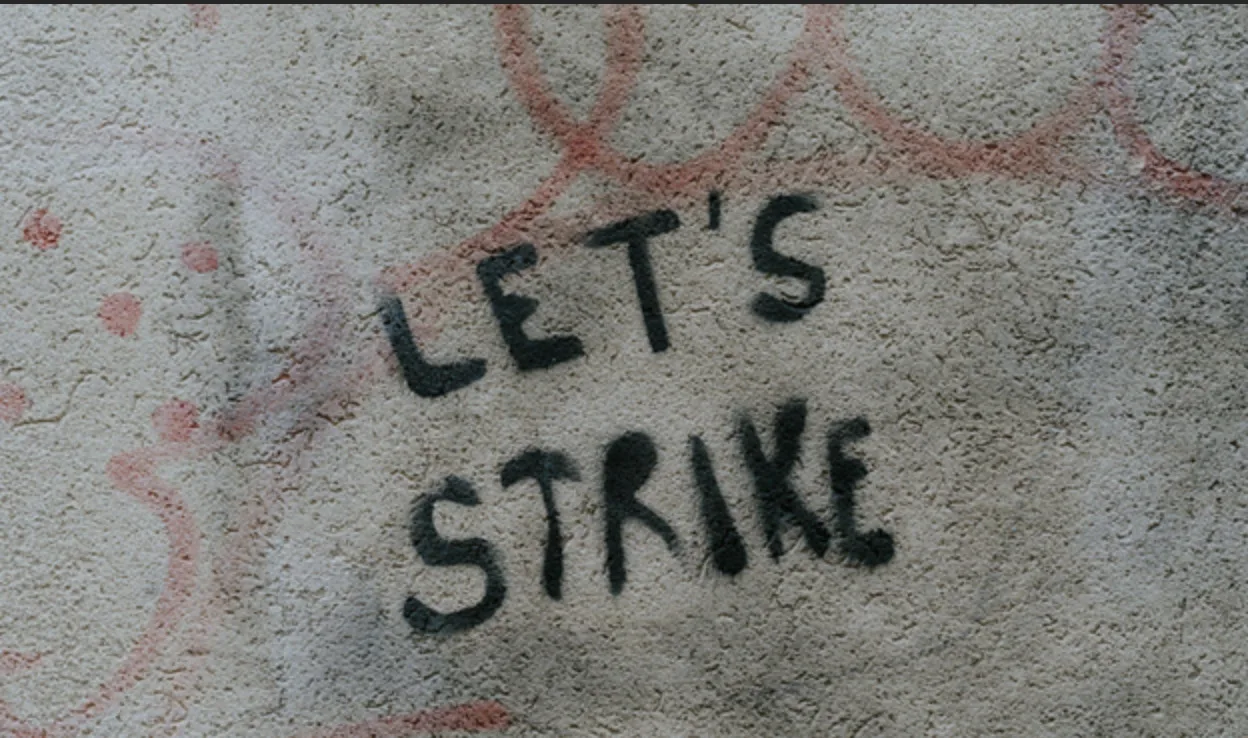
This article argues that the ACMU and its global partners are not just involved in a labour dispute that is still going on today, but are leading a landmark human rights movement. The struggle of these workers represents a direct rejection of a system that treats individuals as disposable assets.
From Ghost Work to Global Resistance
In 2019, Meta had utilised the San Francisco-based outsourcing firm Sama as its regional hub for content moderation. Although Sama marketed itself as an “ethical AI” provider to secure contracts with tech leaders like Google, OpenAI, and Nvidia, its operations relied on a workforce sourced from across Africa through predatory recruitment strategies (Elswah, 2024; Muldoon & Wu, 2023; Regilme, 2024). Many employees were sourced from conflict-prone regions, such as Tigray in Ethiopia and the Democratic Republic of Congo, and were lured to Nairobi under the false pretence of securing stable “customer service” and “data entry” positions. Upon arrival, these workers discovered that they were actually hired as moderators tasked to filter the internet’s most graphic and disturbing content, often involving content ranging from explicit depictions of physical violence and self-harm to Child Sexual Abuse Material (CSAM) and hate speech (Abdelkadir et al., 2026; Elswah, 2024; Wamai et al., 2023).
Once they began, the moderators were placed in highly controlled environments characterised by constant surveillance and intense psychological pressure. The job requires reviewing thousands of graphic images and videos daily, often with less than a minute to decide on each item. This high-speed exposure prevents workers from emotionally processing what they see, leading to chronic trauma. To ensure maximum productivity, companies use automated software to track every second of a worker’s shift, including their breaks and keystrokes. To maintain this pace, moderators were often subjected to “precision monitoring”, where their performance is measured against a target accuracy rate, usually above 95 per cent. Accumulating too many errors could lead to immediate termination, creating a climate of constant fear. Furthermore, the physical workspace was often restricted. Former moderators have confessed that they were working in rooms where they are prohibited from having pens, paper, or phones to prevent the leakage of sensitive data (Booth & Kimeu, 2024; Drootin, 2021; Elswah, 2024; Kgomo, 2025).
In early 2022, Daniel Motaung, a former moderator of Sama, filed a landmark petition in the Employment and Labour Relations Court in Nairobi. Motaung claimed that he was fired after attempting to lead a strike over poor working conditions and inadequate mental health support (Bookman, 2023; Coleman, 2025; Mbioh, 2025; Motaung v. Semasource Kenya EPZ Limited, 2023). Motaung and his legal team argued that the recruitment process constituted human trafficking and forced labour, asserting that Meta exercised direct control over the moderators’ daily tasks and should be held legally responsible for their welfare (Semasource Kenya EPZ Limited, 2023). As international backlash mounted and internal pressure intensified from a collective of workers formally documenting labour violations, Sama abruptly announced in January 2023 that it would terminate its contract with Meta, resulting in the mass layoff of hundreds of workers (Ambrose, 2023; Elswah, 2024; Coleman, 2025).
The subsequent transition of Meta operations to a new vendor, the Luxembourg-based vendor Majorel, further exposed the retaliatory nature of this restructuring. Evidence emerged that Majorel used a “blacklist” to reject any applicant previously employed at the Sama hub, effectively excluding the litigants from the industry (Ambrose, 2023; Pidoux et al., 2025). This exclusionary policy pushed the workers, leading 182 moderators to file the landmark case Arendse & 182 others v Meta Platforms, Inc & 3 others. In a significant jurisdictional win, the Kenyan court asserted authority over Meta despite the company lacking a physical registration in the country and issued an injunction to halt the contract terminations (Meta Platforms, Inc & another v Samasource Kenya EPZ Limited t/a Sama & 185 Others).
This legal success provided the momentum necessary to officially form the ACMU (Elswah, 2024; Pidoux et al., 2025). Eventually, in late 2023, Meta entered court-mandated mediation with the ACMU to negotiate mental health funds, redundancy compensation, and an end to blacklisting. However, these negotiations collapsed in October 2023 when the ACMU refused a settlement that failed to provide long-term psychiatric accountability (Global Union, 2025; Bhalla & Thomson Reuters Foundation, 2023; Vallance, 2023). The collapse of the negotiations internationalised the conflict, prompting the ACMU to establish the Global Trade Union Alliance of Content Moderators (Global Union, 2025). As the legal battle with Meta extended through 2024 and into 2026, Meta engaged in procedural appeals to delay final judgments, yet the ACMU continued its advocacy. Union reports from 2025 underscored that the predatory recruitment and traumatic exposure used to train initial AI models were being replicated in the development of contemporary flagship Large Language Models (LLMs), cementing the Nairobi conflict as a global blueprint for digital labour resistance (PersonalData.io & African Content Moderators Union (ACMU), n.d.).
Exposing the Lack of International Safeguards
The Nairobi conflict transcends the boundaries of a conventional industrial dispute. At the core of the ACMU’s legal and political strategy lies a confrontation with the fundamental limitations of the applicability of international law on the private sector (Lane, 2023). Historically, the architecture of international human rights law has been designed by states for states; private corporations have been excluded, hence, binding treaties that specifically address corporate liability and human rights abuses have proven largely ineffective. To illustrate, the International Covenant on Economic, Social and Cultural Rights (ICESCR) establishes universal standards on dignity and fair labour (UN General Assembly, 1966). Nonetheless, it does not possess the jurisdictional reach to compel private entities to adhere to their mandates. By contrast, it relies on the “duty to protect”, which places an obligation on the host state of a corporation to regulate conduct (Tiruneh, 2023). In a global digital economy, this creates a significant regulatory imbalance. Should a state lack the resources or the political leverage to challenge multi-billion-dollar tech corporations, international law offers no binding alternative for workers to appeal. This also means that the International Labor Organisation (ILO) Declaration on Fundamental Principles and Rights at Work and its Follow-up remains an aspiration because the ILO does not have the power necessary to sanction individual firms that violate its core values (International Labour Organisation, 2022).
This “state-centric” model has created a significant enforcement gap. Although the UN Guiding Principles on Business and Human Rights (UNGP) attempts to close this, it is still a “soft law” instrument that relies on corporate voluntarism (Assenza, 2025; Rasche & Waddock, 2021; United Nations, 2011). This lack of direct and binding corporate accountability at the international level creates immense hurdles when attempting to enforce labour standards at the domestic level. Specifically, multinational corporations utilise Business Process Outsourcing (BPO) models to ensure that the legal responsibility for labour violations remains tethered to local contractors, while the parent company retains absolute control over the production process and the resulting profit (Kapania et al., 2026; Mittal et al., 2026). Central to this strategy is the exploitation of the principle of “separate legal personality” and the jurisdictional fragmentation of their supply chains to insulate the parent company from local litigation (Micheler, 2024). In the context of the Nairobi hub, this allowed Meta and its contractors to be perceived by law as entirely different legal “persons”. Meta leveraged this distinction as its primary defence to argue that as a foreign entity with no physical presence, assets or employees in Kenya, it cannot be held liable for the labour practices of a third-party contractor (Meta Platforms, Inc & another v Samasource Kenya EPZ Limited t/a Sama & 185 Others). Thus, Meta effectively claimed that it is immune to judicial oversight, demonstrating how “soft” international norms are easily circumvented by “hard” corporate structures.
Furthermore, the reliance on voluntary compliance mechanisms, such as Corporate Social Responsibility (CSR) reports and “Ethical AI” charters often have the opposite effect. These initiatives are frequently ineffective because they lack enforceable standards and allow corporations to frame human rights as a matter of discretionary policy (Pistilli et al., 2023; Tamvada, 2020). Nonetheless, despite these systemic failures at the international level, a growing wave of state-level initiatives suggests a shift toward more aggressive corporate regulation. For instance, the European Union (EU) introduced the Corporate Sustainability Due Diligence Directive (CSDDD) which mandates corporations to identify and mitigate human rights abuses within their global supply chains (European Parliament & Council of the European Union, 2024). This directive represents a significant departure from voluntary norms by creating a legal requirement for parent companies to account for the labour conditions of their international partners. Irrespective of the willingness to challenge the exploitation perpetuated by multibillion-dollar corporations, landmark court cases like Arendse in Kenya, emerging litigation in Ghana and other countries, or legislation like the one introduced in the EU, are not enough. Regardless of their significance, these are a fragmented response to a unified global problem. To truly secure the rights of the digital underclass, the global community must move toward a unified, binding framework that codifies transborder corporate liability. Until a formal treaty is established that pierces the corporate veil, and holds parent companies directly accountable for the psychiatric and physical welfare of their entire workforce, technological progress will remain tethered to an exploitative model of digital colonialism.
Conclusion
To conclude, the struggle of the Nairobi content moderators serves as a definitive turning point in the history of digital labour, signalling a potential end to the “ghost worker” era and the rise of a politically conscious digital underclass. The ACMU has successfully challenged the structural invisibility of the digital supply chain. This movement demonstrates that corporations can no longer shield themselves from accountability with impunity. It also constitutes a demand for a global economy where human dignity is treated as a core non-negotiable requirement for technological progress.
Bibliography
Abdelkadir, N. A., Yang, T., Kapania, S., Malgi, K. I., Berhane Gebrekidan, F., Dinika, A. A., . . . Chancellor, S. (2026, April). Beyond Content Exposure: Systemic Factors Driving Moderators. In Proceedings of the 2026 CHI Conference on Human Factors in Computing Systems.
Ambrose, T. (2023, August 16). CEO regrets her firm took on Facebook moderation work after staff ‘traumatised’. The Guardian. Opgehaald van https://www.theguardian.com/technology/2023/aug/16/sama-ceo-regrets-firm-took-on-facebook-moderation-work-kenya-staff-allege-exposure-graphic-content.
Assenza, E. (2025). Chapter 1: From International “Soft” Law to Law in Business and Human Rights: The Role of the UNGPS in the Development of Formal Sources of International Law. In Business and Human Rights: Emerging Challenges, Issues, and Trends (pp. 13-54). Brill | Nijhoff.
Bhalia, N. (2023). FEATURE-Mental trauma: African content moderators push Big Tech on rights. Thomson Reuters Foundation. Opgeroepen op May 03, 2026, van Reuters: https://www.reuters.com/article/markets/commodities/feature-mental-trauma-african-content-moderators-push-big-tech-on-rights-idUSL4N3BB27W/.
Bookman, P. K. (2023). If Not Here, Where? Transnational Litigation against US Tech Giants around the World. NYUJ Int’l L. & Pol., 56, 29-44.
Booth, R., & Kimeu, C. (2024, December 18). PTSD, depression and anxiety: why former Facebook moderators in Kenya are taking legal action. The Guardian. Opgehaald van https://www.theguardian.com/world/2024/dec/18/why-former-facebook-moderators-in-kenya-are-taking-legal-action.
Coleman, T. E. (2025). Coleman, Theophilus Edwin. “The Silent Price of Artificial Intelligence: Labor and Personal Jurisdiction in the Global South. Vand. J. Transnat’l L., 58, 1223-1273.
Drootin, A. (2021). ” Community Guidelines”: The Legal Implications of Workplace Conditions for Internet Content Moderators. Fordham L. Rev.,, 90(3), 1197-1244.
Elswah, M. (2024). Moderating Kiswahili Content on Social Media. Center for Democracy and Technology.
European Parliament & Council of the European Union. (2024). Directive (EU) 2024/1760 of 13 June 2024 on corporate sustainability due diligence and amending Directive (EU) 2019/1937 and Regulation (EU) 2023/2859. Official Journal of the European Union. Opgehaald van https://eur-lex.europa.eu/eli/dir/2024/1760/oj/eng
Global Union. (2025, April 30). Content Moderators Form First Global Alliance. Opgeroepen op May 02, 2026, van Content moderators launch first-ever global alliance, demand safe working conditions and accountability from tech giants: https://uniglobalunion.org/news/moderation-alliance/
Global Union. (2025, June 18). Global content moderators alliance demands Mental Health Protocols in Tech supply chain. Opgeroepen op May 03, 2026, van Global Union: https://uniglobalunion.org/news/tech-protocols/
Gray, M. L., & Suri, S. (2019). Introduction: Ghosts in the Machine. In Ghost Work: How to Stop Silicon Valley from Building a New Global Underclass (pp. ix-xii). Houghton Mifflin Harcourt.
Hammer, R., & Park, T. M. (2021). The Ghost in the Algorithm: Racial Colonial Capitalism and the Digital Age. In Global Historical Sociology of Race and Racism (pp. 221-249). Emerald Publishing Limited.
Hickel, J., Dorninger, C., Wieland, H., & Suwandi, I. (2022). Imperialist appropriation in the world economy: Drain from the global South through unequal exchange, 1990–2015. Global environmental change, 73, 102467.
International Labour Organization. (2022). ILO Declaration on Fundamental Principles and Rights at Work and its Follow-up. 2nd. Opgehaald van https://www.ilo.org/declaration/thedeclaration/textdeclaration/lang–en/index.htm.
Kapania, S., Yang, T., Abdelkadir, N. A., Scheuerman, M. K., Miceli, M., Taylor, A. S., & Fox, S. E. (2026). The plan is just survival’: Data Work in Kenya and the Regime of Entrapment.
Kgomo, S. (2025, February 13). I was a content moderator for Facebook. I saw the real cost of outsourcing digital labour | Sonia Kgomo. The Guardian. Opgehaald van https://www.theguardian.com/commentisfree/2025/feb/12/moderator-facebook-real-cost-outsourcing-digital-labour.
Kwet, M. (2019). Digital colonialism: US empire and the new imperialism in the Global South. Race & class, 60(4), 3-26.
Lane, L. (2023). Artificial intelligence and human rights: Corporate responsibility in AI governance initiatives. Nordic Journal of Human Rights, 41(3), 304-325.
Mbioh, W. R. (2025). Resisting Meta: content moderation, diffraction and the constitutive power of Kenyan law within the Global South. International Journal of Law in Context, 21(4), 711-729.
Micheler, E. (2024). Separate legal personality–an explanation and a defence. Journal of Corporate Law Studies, 24(1), 301-329.
Mittal, S., Dang, T. T., & Jeffery, D. (2026). The Hidden Costs of Outsourcing: Labour Exploitation and Ethical Dilemmas. In Legal and Ethical Dimensions of Contemporary Work and Education (pp. 51-80). IGI Global Scientific Publishing.
Muldoon, J., & Wu, B. A. (2023). Artificial intelligence in the colonial matrix of power. Philosophy & Technology, 36(4), 80-104.
Mutemi, M. (2025, April 01). African workers are taking on Meta and the world should pay attention. Opgeroepen op May 02, 2026, van Al Jazeera: https://www.aljazeera.com/opinions/2025/4/1/african-workers-are-taking-on-meta-and-the-world-should-pay-attention.
Perrigo, B. (2023). Exclusive: OpenAI Used Kenyan Workers on Less Than $2 Per Hour to Make ChatGPT Less Toxic. (18). Time Magazine.
PersonalData.IO. (sd). DATA4MODS. Opgeroepen op May 03, 2023, van PersonalData.IO.: https://personaldata.io/en/data4mods-2/.
Pidoux, J., Kypraiou, S., Kgomo, S., Malgwi, K. I., Mathenge, R. M., Okinyi, M., . . . Tighanimine, M. (2025). Mapping Data Labour Supply Chain in Africa in an Era of Digital Apartheid: a Struggle for Recognition. (preprint), 1-32.
Pistilli, G., Muñoz Ferrandis, C., Jernite, Y., & Mitchell, M. (2023). Stronger together: on the articulation of ethical charters, legal tools, and technical documentation in ML. In Proceedings of the 2023 ACM Conference on Fairness, Accountability, and Transparency. 343-354.
Posada, J. (2022). Embedded reproduction in platform data work. Information, Communication & Society, 25(6), 819-834.
Rasche, A., & Waddock, S. (2021). The UN guiding principles on business and human rights: Implications for corporate social responsibility research. Business and Human Rights Journal, 6(2), 227-240.
Regilme, S. S. (2024). Artificial intelligence colonialism: Environmental damage, labor exploitation, and human rights crises in the Global South. SAIS Review of International Affairs, 44(2), 75-92.
Tamvada, M. (2020). Corporate social responsibility and accountability: a new theoretical foundation for regulating CSR. nternational Journal of Corporate Social Responsibility, 5(1), 2-14.
Tiruneh, W. (2023). Providing Remedy for Corporate Human Rights Abuses Committed Abroad: The Extraterritorial Dimension of Home States’ Obligation under ICESCR. Utrecht J. Int’l & Eur. L., 38, 14-24.
UN General Assembly. (1996). International Covenant on Economic, Social and Cultural Rights. Treaty Series, 993.
United Nations (Office of the High Commissioner for Human Rights). (2011). Guiding principles on business and human rights: Implementing the United Nations “Protect, Respect and Remedy” framework. United Nations.
Vallance, C. (2023, October 16). Settlement talks collapse in Kenya Facebook redundancies case. British Broadcasting Corporation (BBC). Opgeroepen op May 03, 2026, van BBC: https://www.bbc.com/news/technology-66741637.
Wamai, J. W., Kalume, M. C., Gachuki, M., & Mukami, A. (2023). A new social contract for the social media platforms: prioritizing rights and working conditions for content creators and moderators. International journal of labour research, 12(1-2), 98-108.
Zhang, B. Z., Yang, T., Miceli, M., Haimson, O. L., & Thomas, M. (2025). The Making of Performative Accuracy in AI Training: Precision Labor and Its Consequences. CHI ’25: Proceedings of the 2025 CHI Conference on Human Factors in Computing Systems (pp. 1-19). New York, NY, United States: Association for Computing Machinery.
Zhang, B., & Guo, R. (2026). Ghost Workers, Visible Failures: How Annotator Agency Shapes AI System Behavior. (Preprint), 2-18.