
Introduction
The Bolivarian Republic of Venezuela has been entrenched in a deep and protracted socio-political crisis marked by economic collapse, human rights violations, and a severe deterioration of living conditions. What began as a gradual erosion of democratic institutions under Hugo Chávez escalated dramatically under his successor, Nicolás Maduro. Since 2013, Venezuela has faced hyperinflation, shortages of basic goods, widespread corruption, and the near-total breakdown of public services, prompting millions to flee the country and generating one of the largest migration crises in the region’s history.
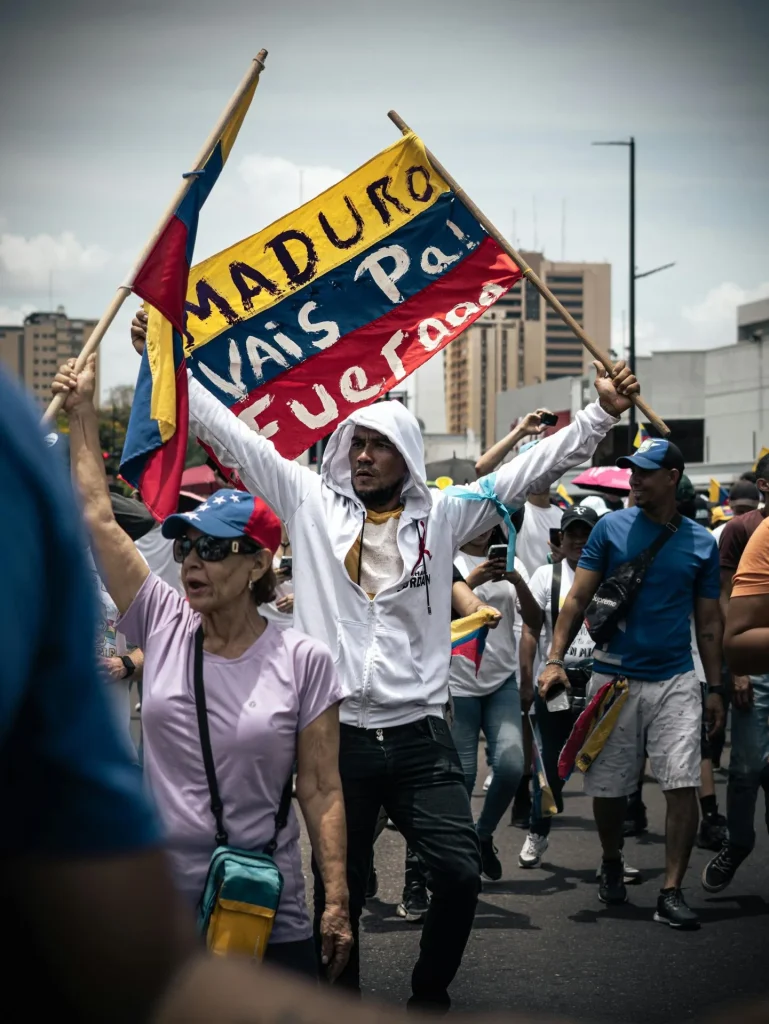
The political dimension of the crisis has been no less severe. Security forces have met mass protests, notably in 2014 and 2017, with excessive force, arbitrary arrests, torture, and extrajudicial killings, while independent media outlets have been shut down and opposition leaders persecuted or exiled. In 2023 alone, the Venezuelan Observatory of Social Conflict documented over 4,300 protests, underscoring persistent discontent. Judicial authorities, rather than protecting rights, have often facilitated repression, reinforcing what Transparency International has ranked as one of the most corrupt systems in the world.
Against this backdrop, the International Criminal Court (ICC) has become a focal point of international attention. Since Venezuela’s ratification of the Rome Statute in 2000, the Court has had jurisdiction over crimes committed on its territory, and in 2018 it launched a preliminary examination into alleged crimes against humanity. The “Venezuela I” investigation, now ongoing, focuses on crimes such as arbitrary detention, torture, and persecution of civilians by state authorities, security forces, and pro-government armed groups known as colectivos.
The case of Venezuela represents an example of how the ICC intersects with the efforts of civil society organisations that continue to advocate for accountability, justice, and democracy in a context where national institutions have largely ceased to function independently. At the same time, it highlights not only the promise but also the limitations of certain ICC approaches, particularly the reliance on positive complementarity, whereby the Court seeks to encourage or assist state authorities in addressing systematic abuses and combating impunity (Taraciuk Broner, 2025).
The ICC and Venezuela
Venezuela’s engagement with the ICC began in 2000, when it ratified the Rome Statute, thereby recognising the Court’s jurisdiction over crimes committed on its territory or by its nationals since 2002. The ICC, designed as a court of last resort, acts only when national authorities are unable or unwilling to investigate and prosecute crimes such as genocide, war crimes, and crimes against humanity. Early complaints concerning Venezuela, received in the mid-2000s, did not advance due to insufficient grounds. However, as political tensions and repression escalated, particularly during the mass protests of 2014 and 2017, allegations of widespread human rights violations prompted closer international scrutiny. These patterns suggested conduct that could qualify as crimes against humanity. In February 2018, then-Prosecutor Fatou Bensouda announced the opening of a preliminary examination into Venezuela, focusing on abuses committed in the context of the protests (Dib and Woo, 2023). Later that year, Argentina, Canada, Chile, Colombia, Paraguay, and Peru jointly referred the situation to the Court, the first time a group of States Parties collectively referred another state under Article 14 of the Statute (ICC, 2018b). The referral requested the Prosecutor to investigate crimes including murder, imprisonment, torture, rape, persecution on political grounds, and enforced disappearances. Over the following three years, the Office of the Prosecutor gathered information from international organisations, NGOs, and victims’ groups. In December 2020, it concluded there were reasonable grounds to believe that crimes against humanity had been committed in Venezuela since at least April 2017, with responsibility attributed to state authorities, members of the armed forces, security forces, as well as pro-government colectivos acting alongside them (The Office of the Prosecutor of the ICC, 2020).
In November 2021, Prosecutor Karim Khan announced the formal opening of an investigation, known as Venezuela I, and signed a memorandum of understanding with the government of Maduro. The memorandum aimed to promote domestic accountability efforts while facilitating cooperation with the ICC. However, in 2022, Venezuela invoked Article 18(2) of the Rome Statute, requesting a deferral of the investigation because its judiciary was already addressing these crimes. The Office of the Prosecutor reviewed the state’s submissions and conducted on-site visits but found significant shortcomings: investigations were limited to low-ranking perpetrators, lacked progress on crimes involving sexual violence and discriminatory motives, and failed to consider the responsibility of senior officials. Moreover, several cases remained inactive for years, and the judiciary showed no intention of addressing crimes against humanity as such.
In 2022, the Prosecutor requested authorisation to resume the investigation. Nearly 8,900 victims and their representatives submitted observations supporting its continuation, highlighting the central role of civil society in the process (Dib and Woo, 2023). In June 2023, the Pre-Trial Chamber authorised the resumption of the investigation, emphasising the inadequacy of Venezuela’s domestic proceedings. Furthermore, the Prosecutor and the government agreed to open a field office of the ICC Prosecutor in Caracas, intended to facilitate technical assistance, legislative reforms, and monitoring under the principle of positive complementarity. Despite this step, doubts remain about the judiciary’s capacity and independence, which had been undermined since the political takeover of the Supreme Court in 2004 (Taraciuk Broner, 2022).
Alongside Venezuela I, a second preliminary examination, Venezuela II, was opened in 2020 at the request of the Venezuelan government, which alleged that U.S. sanctions against them amounted to crimes against humanity. While formally under consideration, most observers and the ICC’s practice suggest that these claims lack merit under International Law, leaving Venezuela I as the core case (Taraciuk Broner, 2025). At the same time, civil society organisations, international experts, and regional bodies have continued to provide evidence, press for accountability, and support victims’ participation in the proceedings.
Limits of positive complementarity
However, this ICC approach in Venezuela, centred on the principle of “positive complementarity,” has so far proven insufficient to deliver justice or deter ongoing crimes against humanity. Positive complementarity seeks to balance the ICC’s independent mandate with support for domestic justice systems, encouraging States to investigate and prosecute serious international crimes themselves, while reserving ICC intervention for situations where national authorities are unwilling or unable to act. In practice, this has included technical assistance, legal guidance, and oversight aimed at strengthening domestic accountability mechanisms. However, in Venezuela, this approach has largely stalled meaningful justice as the judiciary has been under political control, functioning as an arm of the executive, shielding high-ranking officials from accountability, and prosecuting primarily low-level perpetrators. Domestic investigations have consistently ignored crimes driven by political discrimination, sexual violence, and other serious abuses, leaving victims without recourse. Victims, their families, the Venezuelan democratic opposition, the ICC’s Office of Public Counsel for Victims (OPCV), and human rights organisations have repeatedly called for concrete action, demanding tangible results. (Taraciuk Broner, 2025).
While restoring judicial independence is critical, meaningful reform cannot occur under a dictatorship, making it essential to raise the political and personal costs of repression (Molano Ayala, Valencia Cortès, 2024). In the absence of a coordinated international response from democratic leaders, the ICC must play a central role: moving forward with independent investigations, issuing arrest warrants where appropriate, and holding perpetrators at all levels accountable. Positive complementarity may strengthen domestic justice mechanisms, but it cannot substitute for decisive action; without the Court asserting its mandate, crimes against humanity in Venezuela will continue unchecked, impunity will persist, and victims will remain without access to justice (Taraciuk Broner, 2025).
Therefore, despite the ICC’s efforts and its reliance on the principle of positive complementarity, the Venezuelan government’s lack of genuine motivation to investigate crimes, in this context, civil society organisations (CSOs) play an indispensable role: they document human rights violations, provide a platform for victims’ voices, and advocate for both national and international accountability.
Civil Society Organisations as a true complementarity
CSOs and NGOs have been pivotal in bridging the gap between the ICC and the victims of human rights violations in Venezuela. Their involvement has been essential due to the Venezuelan government’s systemic obstruction of domestic justice mechanisms. From the earliest stages of the ICC’s preliminary examination, CSOs documented widespread abuses, collecting detailed evidence and preserving victim testimonies. This documentation has been critical for the ICC, as it provides both factual and legal foundations necessary for investigations, especially in a context where state institutions are compromised.
NGOs such as FORO Penal, Acceso a la Justicia, CEPAZ, Provea, and international partners like Amnesty International, Human Rights Watch, WOLA, and FIDH, have acted as intermediaries between victims and the ICC. They provide legal guidance, representation, and support throughout the proceedings, ensuring that victims understand their rights and can meaningfully participate in the justice process. CSOs have also countered state-led disinformation campaigns that seek to delegitimise both the ICC and the testimonies of victims, clarifying technical judicial language and exposing governmental attempts to manipulate public perception. By doing so, they ensure the integrity of the investigative process and prevent misinformation from undermining victim participation or influencing the Court’s decisions.
Throughout the ICC’s stages, CSOs have consistently acted as facilitators, advocates, and watchdogs. They mobilise public awareness, encourage victim engagement, and monitor both the Venezuelan government and the ICC to ensure accountability, transparency, and adherence to the Rome Statute. CSOs also provide strategic advice, such as advocating that the ICC prioritise victims over state narratives, ensuring that international justice mechanisms are responsive to those most affected (Acceso a la Justicia, 2022). Their proactive engagement demonstrates the critical intersection between local civil society action and international legal processes: without the support of CSOs, the ICC would face severe limitations in accessing evidence, engaging victims, and sustaining international attention in the face of a repressive regime.
Moreover, the relationship between CSOs and the ICC is both complementary and corrective. While the ICC possesses legal authority to investigate and prosecute crimes against humanity, its limited resources and reliance on state cooperation make it vulnerable to obstruction. In doing so, they ensure that the ICC’s work is grounded in the realities of Venezuelan victims and that justice is pursued despite domestic institutional failures (Canon Nogales, 2023).
In essence, CSOs operationalise the ICC’s mandate in Venezuela. They transform international legal authority into actionable support for victims, maintain transparency, mitigate government interference, and advocate for procedural fairness and accountability. Their continuous monitoring, advocacy, and victim engagement underscore that international justice in contexts like Venezuela cannot succeed without robust civil society involvement. Venezuelan NGOs, therefore, are not merely facilitators; they are active partners whose work sustains the ICC’s credibility, ensures victims’ voices are heard, and bridges the divide between international legal norms and the realities of a state unwilling or unable to deliver justice. In this sense, civil society is not merely a support system but a critical partner that enables the ICC to fulfil its mandate in practice, ensuring victims’ voices are heard and that crimes against humanity do not go unchallenged (Canon Nogales, 2023).
Conclusion
The Venezuelan case illustrates a stark and interesting reality that cannot be overlooked anymore: international justice cannot function effectively in isolation from local actors when domestic institutions are compromised. The ICC’s approach so far, centred on positive complementarity, has been constrained by its dependence on state cooperation, slow procedural timelines, and the political obstruction of Venezuelan authorities, limiting its capacity to deliver timely accountability for crimes against humanity. But of course, this is a massive limitation when national institutions are marred by unwillingness and ongoing alleged crimes against humanity against their population. Nevertheless, civil society organisations have proven to be a powerful corrective force, stepping into the gaps left by an incapacitated state. Through documentation, legal guidance, advocacy, and the safeguarding of victims’ voices, NGOs have transformed international legal mandates into practical avenues for justice, ensuring that the realities of repression are neither ignored nor misrepresented. Moving forward, the ICC must adopt a more proactive role, while sustaining deep collaboration with CSOs, whose knowledge, networks, and resilience are essential for meaningful justice. In this sense, Venezuelan civil society does not merely supplement international efforts; it embodies the “real complementarity,” operationalising accountability on the ground, protecting victims, and ensuring that international law is not only applied but felt in the lived experiences of those affected.
Bibliography
Acceso a la Justicia. (2022). Víctimas venezolanas pueden hacerse oír en La Haya. https://accesoalajusticia.org/victimas-venezolanas-pueden-hacerseoir-en-la-haya
Cañón Nogales, C. (2023). Assessing the role of civil society organisations in human rights and international justice: The case of the International Criminal Court’s investigation into crimes against humanity in Venezuela (Master’s thesis, University of Padua). https://unipd-centrodirittiumani.it/storage/media/a8/62/Claudia_CanonNogales_2046776_2.pdf
Coalition for the International Criminal Court. (n.d.). Venezuela. https://www.coalitionfortheicc.org/es/node/869
Fitzgerald, A. M. (2018). Can the ICC bring justice to Venezuelan victims? University of Miami International and Comparative Law Review, 26(1), Article 5. https://repository.law.miami.edu/cgi/viewcontent.cgi?article=1319&context=umiclr
ICC. (2018a). Statement of the Prosecutor of the International Criminal Court, Fatou Bensouda, on the referral by a group of six States Parties regarding the situation in Venezuela. https://www.icc-cpi.int/news/statement-prosecutor-international-criminal-court-fatou-bensouda-referral-group-six-states
ICC. (2018b). ICC referral by Argentina, Chile, Colombia, Paraguay and Peru. https://www.icc-cpi.int/itemsDocuments/180925-otp-referralvenezuela_ENG.pdf
ICC. (2021). ICC Prosecutor, Mr Karim A.A. Khan QC, opens an investigation into the Situation in Venezuela and concludes Memorandum of Understanding with the Government. https://www.icc-cpi.int/news/icc-prosecutor-mr-karim-aa-khan-qc-opens-investigation-situation-venezuela-and-concludes
Molano Ayala, P., & Valencia Cortés, P. A. (2024). Justice in tension: The role of the ICC in Venezuela’s repression. Dejusticia. https://www.dejusticia.org/en/justice-in-tension-the-role-of-the-icc-in-venezuelas-repression/
Stahn, C. (2025). When the whole becomes more than the sum of its parts: How the ICC re-invented itself through complementarity. In Unity in diversity: Perspectives on the law of international organizations. Brill. https://doi.org/10.1163/9789004699939_020
Taraciuk Broner, T. (2022, December 8). In Venezuela, a delicate balance for the ICC. Americas Quarterly. https://www.americasquarterly.org/article/in-venezuela-a-delicate-balance-for-the-icc/
Taraciuk Broner, T. (2025). The ICC has a chance in Venezuela, it must take it. JusticeInfo.net. https://www.justiceinfo.net/en/142286-icc-chance-venezuela-must-take-it.html
The Office of the Prosecutor of the ICC. (2020). Report on preliminary examination activities 2020. https://www.icc-cpi.int/sites/default/files/itemsDocuments/2020-PE/2020-pe-report-eng.pdf
WOLA. (2023, July 27). Combating disinformation in Venezuela: The International Criminal Court’s role. Washington Office on Latin America. https://www.wola.org/analysis/combating-disinformation-venezuela-international-criminal-court/