
Introduction
International Humanitarian Law (IHL) specifically states that during armed conflicts, the attacks must be strictly limited to military objectives, and civilian objects may not be the object of attacks or reprisals (AP I, Art. 52(1)). According to the Additional Protocol I (AP I), civilian objects are those that do not meet the criteria of military objectives (AP I, Art. 52(1)). The same Article states that military objectives “are limited to those objects which by their nature, location, purpose, or use make an effective contribution to military action and whose total or partial destruction, capture or neutralisation, in the circumstances ruling at the time, offers a definite military advantage” (AP I, Art. 52(2)). If there is doubt whether an object normally used for civilian purposes, such as a place of worship, a house, or a school, is being used to make an effective contribution to military action, it must be presumed not to be so used (AP I, Art. 52(3)).
In recent years, the increase in armed conflicts has been accompanied by a rise in attacks on schools. In 2025, the experts presented data showing that attacks on schools increased by 20% (EiE Hub, 2025). Furthermore, the Global Coalition to Protect Education from Attack (GCPEA) documented over 1000 reports of military use of schools and universities across 30 countries in a two-year period (TRACE, 2024). The alarming surge highlights the gap between international legal frameworks and the realities of modern warfare. Under (IHL) schools are protected as civilian objects and may not be deliberately targeted as long as they retain their civilian character, if the school loses its protected civilian status, it becomes a lawful military objective because it is actively used to support military operations. According to the International Committee of the Red Cross (ICRC), armed forces and non-state groups very often use educational facilities to convert classrooms into barracks, store munitions there, and use rooftops as observation posts or sniper positions (ICRC, 2023). Once a school is militarised, it is stripped of its protection and becomes vulnerable to lawful attacks, putting children and teachers at a significant risk (Lieber Institute, 2024).
Consequences of these violations extend far beyond the immediate physical destruction of infrastructure. The data also indicates that in conflict zones, roughly one in three school-aged children are currently out of school (Save the Children, 2024). Deprived of the protective environment of the classroom, children are at risk of severe psychological trauma, child labour, early marriage, and forced recruitment by armed forces or groups (Save the Children, 2024).
This article aims to explore the legal framework protecting educational facilities, examine the devastating long-term impacts of the attacks on the civilian population, and discuss the most recent examples of schools being targeted and attacked in armed conflicts.
Legal Framework
IHL establishes a robust framework aimed at protecting civilians and civilian objects from the effects of armed conflict. At the core of this framework is the principle of distinction, which governs the conduct of hostilities. It requires -parties to the armed conflict to always distinguish between the civilian population and combatants, and similarly, between civilian objects and military objectives (AP I, Art. 48). Accordingly, IHL provides that attacks may only be directed against military objectives, namely those objects that by their nature, location, purpose, and use, contribute effectively to the adversary’s military action and whose destruction, capture, or neutralisation offers the attacker a definite military advantage (Melzer, 2016). Educational facilities, by their very nature and primary function, are unequivocally classified as civilian objects, and they are granted comprehensive protection from attack under both the Geneva Conventions, and customary IHL.
A critical safeguard embedded within IHL is the legal presumption of civilian status, which is particularly relevant in the chaotic environment of warfare. Customary international law and AP I to the Geneva Convention provide that, in case of any doubt regarding whether an object normally dedicated to civilian purposes is being used to support military operations, it must be presumed to retain its civilian character (AP I, Art. 52(3); CIHL, Rule 9). This legal threshold places the burden on the attacking party to verify that a target qualifies as a military objective. Commanders may not rely on mere speculation, but must base their decision on sufficiently reliable information, reasonably available at the time, indicating that the school makes an effective contribution to military action. The protections of a school are not entirely absolute, and it ceases if the facility becomes a military objective. Schools are targeted for takeover by armed forces because they often are the largest and structurally strong building. By “occupying” schools to store munitions, troops, detain prisoners, or establish some command centres, the facility automatically shifts from a place of learning to an active contributor to military operations. By doing so, schools, which are the civilian objects in this case, lose their immunity and turn into military objectives,-a lawful military target under IHL.
Even if a school is legally reclassified as a military objective due to its “occupation” by armed forces, the parties to the conflict are not granted unrestricted freedom to attack it. IHL stands not only on the principle of distinction, but two additional and crucial principles: the one of proportionality and that of precautions in attacks, both of which provide a check to military operations.
According to AP I, “in the conduct of military operations, constant care shall be taken to spare the civilian population, civilians and civilian objects” (AP I, Art. 57(1)). This provision applies both to the attacking party, which must do everything in their power to avoid inflicting incidental harm as a result of its operations, including carefully selecting the means and methods of warfare, and to the party being attacked, which must take all necessary measures to protect the civilian population under its control (Melzer, 2016). Furthermore, whenever circumstances allow, attacking parties must issue effective advance warnings to the civilian population, and allow them a genuine opportunity to evacuate the school or any surrounding areas before hostilities begin. Whenever the infliction of incidental harm on civilians or civilian objects cannot be avoided, it is subject to the principle of proportionality. Under IHL, those who plan or decide on an attack must refrain from launching, or must suspend “any attack, which may be expected to cause incidental loss of civilian life, injury to civilians, damage to civilian objects, or a combination thereof, which would be excessive in relation to the concrete and direct military advantage anticipated” (AP I, Art. 51(5) (b)). The notion of excessiveness is central to discussion. IHL does not establish a threshold above which the infliction of incidental harm would be excessive, however, targets with a comparatively high military value will justify greater incidental harm than targets with a comparatively low military value (Melzer, 2016). Moreover, when assessing excessiveness of incidental harm, the foreseeable second and third-order effects of an attack must also be taken into account. Finally, the anticipated military advantage must be concrete and direct and not hypothetical or speculative.
When the above-mentioned principles are deliberately ignored by the parties, the destruction of educational facilities constitutes a grave breach of international criminal law. The Rome Statute of the International Criminal Court explicitly codifies accountability-, ensuring that such acts are prosecutable on the global stage. Under Articles 8(2)(b)(ix) for international armed conflicts and 8(2)(e)(iv) for non-international armed conflicts, intentionally directing attacks against a building dedicated to education, art, science, or religion that does not conceal military objectives, is explicitly classified as a war crime.
While -IHL provides the fundamental legal framework, the international community has sought to strengthen the protection of education through the adoption of the Safe Schools Declaration. Although the Safe Schools Declaration is not a legally binding Treaty, it constitutes a relevant political commitment to protect education from attacks. The Declaration shifts the focus from managing attacks to preventing militarisation-, and urges state armed forces and non-state actors to refrain from commandeering educational facilities for military purposes.
Despite a growing normative framework, attacks on schools continue to be reported in numerous conflict settings. The UN and legal scholars have called for a commitment to end the attacks on schools and to ensure that educational institutions are never used for military purposes (OHCHR, 2025).
What is Happening in the Middle East?
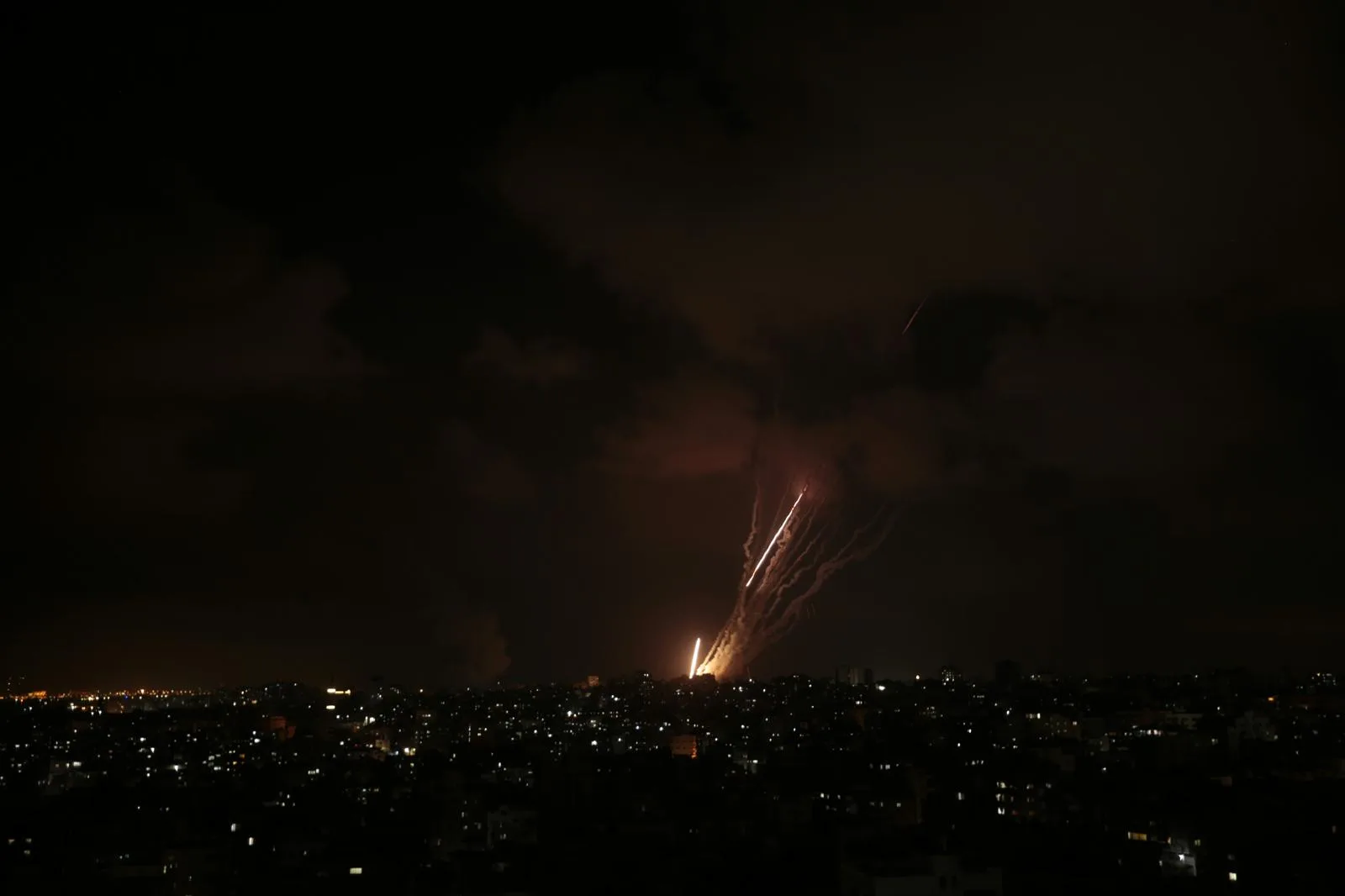
The discussed theoretical protections by IHL are facing one of the most severe tests in the Middle East, where the rapid escalation of armed conflicts has turned educational institutions, into the epicentres of attacks. As the Middle East delves deeper into a multi-front war, the foundational distinction between military objectives and civilian objects or infrastructure has collapsed.
Recent reports from the Middle East paint a horrifying picture of how heavy airstrikes and drone attacks in crowded neighbourhoods are tearing apart everyday civilian life (BBC, 2026). In the midst of chaos, schools are being destroyed at an alarming rate. The human cost of the violation of these laws has become impossible to ignore in early 2026, as the world saw one of the deadliest strikes on a school in recent years. Video footage, satellite imagery, and interviews with different sources with direct information about the situation in Minab, Hormozgan province, Iran, indicate that an air strike hit an elementary school on the morning of February 28, 2026, killing and injuring civilians, including children, parents, and teachers, and causing extensive damage and destruction (Amnesty International, 2026). Amnesty International’s analysis of visual evidence of the attack indicates that a US-manufactured Tomahawk missile was likely used for the attack (Amnesty International, 2026). Reportedly, the school was in the Shahrak-e Al-Mahdi neighbourhood of Minab and was adjacent to a compound belonging to the Seyyed al-Shohada Asif Missile Brigade of the Islamic Revolutionary Guard Corps (IRGC) navy force responsible for coastal defence along southern Iran (Amnesty International, 2026). This clearly points to a failure by US forces to take all feasible precautions to avoid civilian harm in carrying out the attack, a serious breach of IHL. The fact that the school building was directly targeted and was previously part of the IRGC compound, raises concerns that US forces may have relied on outdated intelligence and, at the same time, failed to do everything to verify that the intended target was a military objective. According to the Iranian authorities, 168 people were killed in this attack, at least 110 of them were school children (Amnesty International, 2026).
What makes this recent Minab strike even more disturbing is that it clearly is not an isolated event, but just one of the deadliest examples of a much wider picture of destroying civilian infrastructure. The number of schools being hit shows that attacking forces are routinely failing to treat these buildings as protected civilian spaces. According to recent numbers from humanitarian groups, the ongoing US and Israeli bombing campaigns have damaged or completely destroyed nearly 500 schools in Iran alone, along with hundreds of hospitals and residential neighbourhoods (Truthout, 2026). The head of the Iranian Red Crescent stated that “attacks on these facilities and equipment are not merely destruction of buildings or vehicles, but a direct assault on the lifelines that save human lives” (Truthout, 2026). The US officials claim that the US military does not target civilians or civilian objects, however, even if civilian structures are not the sole target of their strikes, or are targeted accidentally, it may still be a war crime to damage or destroy them (Truthout, 2026).
Looking closely at what is happening in the Middle East right now, forces us to question the laws of war. If international Treaties and the Geneva Conventions cannot stop a primary school from being bombed, and if the world does not hold powerful countries accountable when they cross these lines, then what will stop it? The destroyed classrooms in Minab and hundreds of other attacked and ruined schools across the region should be a very harsh wake-up call for the international community.
Conclusion
IHL is unequivocal in its mandate: educational facilities are civilian objects, and children should be protected from the ravages of war. Through the principles of distinction, proportionality, and precaution, the legal framework explicitly shields civilians and civilian objects, such as students and schools. Yet, as the statistics of attacked schools and devastating realities in the Middle East demonstrate, these legal safeguards are routinely failing on modern battlefields.
Very often, we see that during armed conflicts, the armed forces and non-state armed groups strip schools of their protected status by militarising them, using the school buildings to store their weapons, or building sniper posts. On the other hand, the very same armed forces or non-state armed groups are failing to take precautions before attacking, launching strikes based on outdated intelligence, or demonstrating a disregard for the proportionality of civilian harm.
Ultimately, the laws of armed conflicts and political commitments like the Safe Schools Declaration are only as effective as the international community and countries want to enforce them.
Bibliography
Amnesty International (March 16, 2026). USA/Iran: Those responsible for deadly and unlawful US strike on school that killed over 100 children must be hedl accountable. https://www.amnesty.org/en/latest/news/2026/03/usa-iran-those-responsible-for-deadly-and-unlawful-us-strike-on-school-that-killed-over-100-children-must-be-held-accountable/ accessed March 29, 2026.
Geneva Global Hub for Education in Emergencies (April 7, 2025). Protecting Education in Conflict: Policy, Practice and Voices from the Ground. https://eiehub.org/news/protecting-education-in-conflict-policy-practice-and-voices-from-the-ground accessed March 29, 2026.
Global Coalition to Protect Education from Attack (GCPEA). Safe Schools Declaration and Guidelines on Military Use. https://ssd.protectingeducation.org/safe-schools-declaration-and-guidelines-on-military-use/ accessed March 29, 2026.
International Committee of the Red Cross (ICRC) (1977). Protocol Additional to the Geneva Conventions of 12 August 1949, and relating to the Protection of Victims of International Armed Conflict (Protocol I). https://ihl-databases.icrc.org/en/ihl-treaties/api-1977?activeTab= accessed March 29, 2026.
International Committee of the Red Cross (ICRC) (2023). Protecting education from attack during armed conflict. https://blogs.icrc.org/law-and-policy/2023/09/13/protecting-education-from-attack-during-armed-conflict/ accessed March 29, 2026.
International Committee of the Red Cross (ICRC). Customary IHL. https://ihl-databases.icrc.org/en/customary-ihl/v1 accessed March 29, 2026.
International Criminal Court (ICC). Rome Statute of the International Criminal Court.
Lieber Institute (July 17, 2024). Protecting schools in armed conflict. https://lieber.westpoint.edu/protecting-schools-armed-conflict/ accessed March 29, 2026.
Nils Melzer (2016). International Humanitarian Law: a comprehensive introduction.
OHCHR (October 24, 2025). Education during armed conflict offers a lifeline, protection, stability, and hope, says UN expert. https://www.ohchr.org/en/press-releases/2025/10/education-during-armed-conflict-offers-lifeline-protection-stability-and accessed March 29, 2026.
Save the Children (December 27, 2024). One in three children in conflict and fragile countries out of school – new analysis. https://www.savethechildren.net/news/2024-review-one-three-children-conflict-and-fragile-countries-out-school-new-analysis accessed March 29, 2026.
TRACE. Attacks on education dataset. https://tracedataportal.org/data/attacks-on-education-dataset/ accessed March 29, 2026.