
Introduction
The post-World War II era witnessed a profound transformation of the global political landscape, driven by the systematic dismantling of colonial empires and the codification of new legal norms. Yet, decades after the United Nations (UN) established the framework for decolonisation, the case of Western Sahara remains an unresolved issue. Frequently cited in international forums and official committee records as Africa’s last colony (UN Special Committee on Decolonisation, 2014), this expansive territory on the continent’s Atlantic coast represents a critical subject in international law and diplomacy. At the centre of this enduring dispute are the Sahrawi people and their pursuit of the right to self-determination, a foundational, peremptory norm (jus cogens) of international law, which represents peoples’ legal and moral rights to freely choose their sovereignty and international political status without external compulsion or interference (St. Mary’s Law Journal 2025).
The root of the ongoing situation dates to 1975, following the sudden withdrawal of the Spanish colonial administration under the contested Madrid Accords. This agreement was later affirmed by the UN Legal Counsel not to transfer sovereignty or alter the territory’s non-self-governing status (UN Security Council, S/2024/684). Rather than transitioning toward independence, as was the normative trajectory for non-self-governing territories under UN oversight, outlined in the Declaration on the Granting of Independence to Colonial Countries and Peoples (UN General Assembly Resolution 1514, 1960), Western Sahara became the subject of competing territorial claims and subsequent military occupation, primarily by the Kingdom of Morocco.
There has been an armed conflict ever since between Morocco and the Popular Front for the Liberation of Seguia el-Hamra and Rio de Oro, known as the Polisario Front, an independence movement representing Sahrawis (Human Rights Watch, 2026). In 1991, the UN brokered a ceasefire between Morocco and the Polisario Front and established the UN Mission for the Referendum in Western Sahara to monitor the ceasefire and organise the referendum that would allow eligible Sahrawis to choose between state independence and integration with Morocco (UN Peacekeeping Mission-Minurso, 1991). The referendum never materialised. Morocco claimed that establishing a voter list was impracticable and rejected independence as a referendum option, while the Polisario Front insisted on including independence as an option (Africa News, 2025). Decades later, that democratic exercise remains unrealised and leaves the political status of the territory in a state of limbo.
This article aims to delve deeper into the historical background and international law to examine its position on the right to self-determination. It will also discuss the 2025 UN Security Council Resolution 2797 on Western Sahara and Morocco’s claims to the territory.
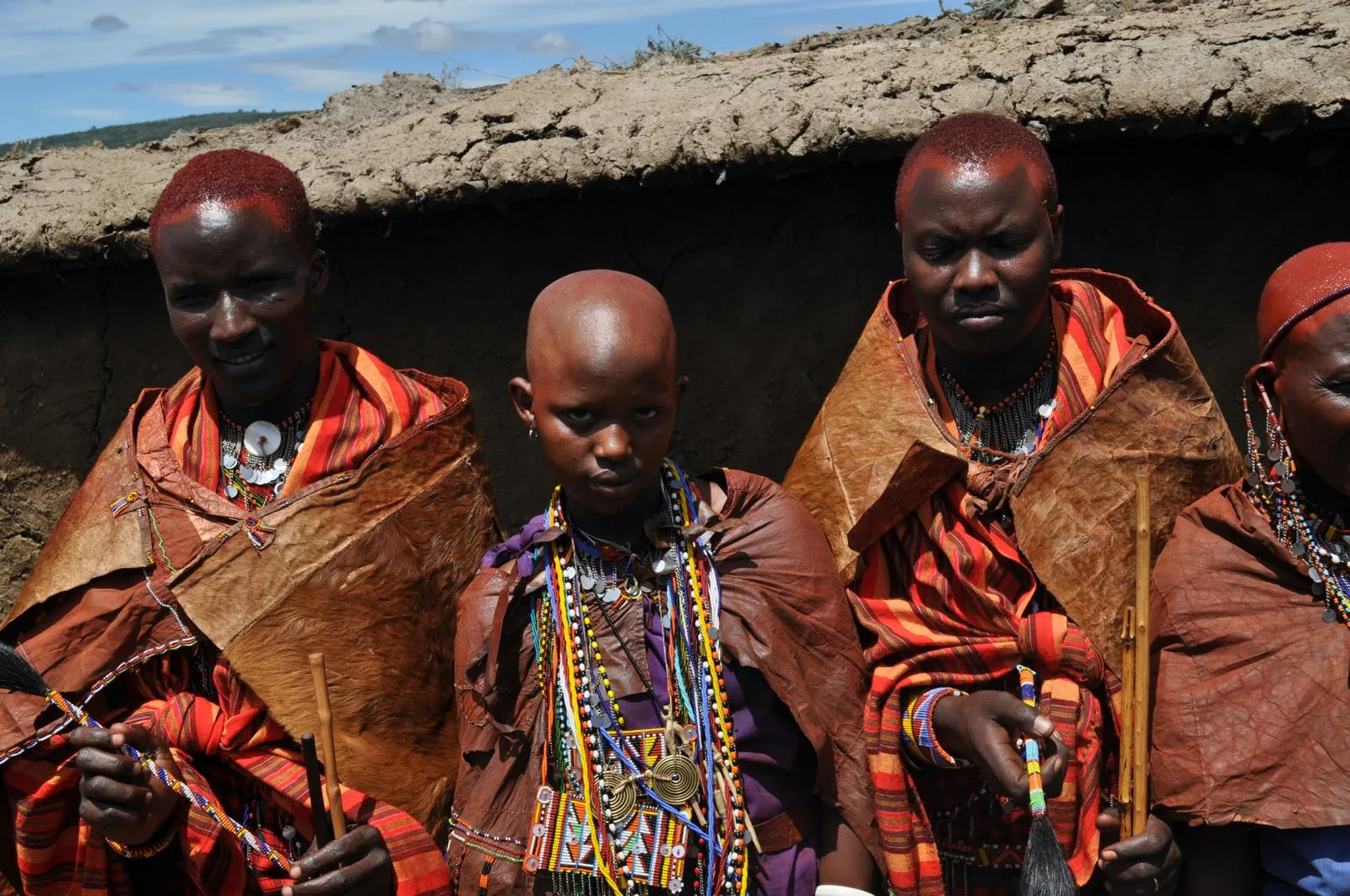
Historical Background
To fully understand why Western Sahara is often called Africa’s last colony, it is necessary to examine the complex process of European decolonisation. In 1963, the UN explicitly flagged the region as a territory that needed to be decolonised and handed back to its people (Human Rights Watch, 2026). But when Spain finally decided to leave in 1975, it did not transfer power to the Indigenous Sahrawi population. Instead, amid domestic instabillity following the death of dictator Franco, the Spanish government folded under regional pressure and divided the land between Morocco and Mauritania. This move completely ignored a landmark ruling from the International Court of Justice (ICJ) issued in 1975, which clearly stated that neither neighbouring country had historical claims strong enough to override the Sahrawi people’s right to self-determination (Foreign Policy in Focus, 1998).
When Spain withdrew, a brutal war began. Moroccan and Mauritanian troops rolled into the territory and faced fierce resistance from the Polisario Front, the armed liberation movement representing the Sahrawis (cfr, 2024). Mauritania eventually cut its losses, signed a peace treaty with Polisario, and pulled its forces out in 1979. After that, Morocco annexed the territory (cfr, 2024). By that time, the U.S. and its Western allies were terrified of a left-leaning, independent state popping up under the Polisario. Therefore, by 1987, with large-scale American military support, Morocco succeeded in conquering the entire territory, including the former Mauritanian sector (Foreign Policy in Focus, 1998). The US also blocked the enforcement of the 1975 UN Security Council Resolution demanding Morocco’s withdrawal and recognising Western Sahara’s right to self-determination (Foreign Policy in Focus, 1998).
Consequently, tens of thousands of Sahrawis were forced out of their homes, fleeing across the border into southwestern Algeria, where the Polisario Front set up its base in the town of Tindouf (Human Rights Watch, 2026). Today, over 173,000 Sahrawi refugees are still stuck in those remote desert camps, relying entirely on international aid while their homeland remains occupied. Meanwhile, Morocco actively encouraged settlement by its own citizens in Western Sahara (Human Rights Watch, 2026).
For a brief moment in 1991, it looked like there was a way out. The UN successfully brokered a ceasefire and set up a mission, United Nations Mission for the Referendum in Western Sahara (MINURSO), specifically to run a referendum where Sahrawis could finally vote on whether they wanted independence or integration (cfr, 2024). However, that vote never occurred, as it was repeatedly delayed due to objections from Morocco, particularly regarding voter eligibility (cfr, 2024). By 2007, Morocco officially took independence off the table and offered a localised autonomy plan instead (Human Rights Watch, 2026). In 2020, the Moroccan military cracked down on a major Sahrawi civilian protest, triggering the Polisario Front to state that it would no longer abide by the terms of the UN plan over the claims that Morocco had violated the ceasefire. The Polisario Front renewed attacks on Moroccan positions in the region, and military clashes continue, with the two sides exchanging drone strikes and shell fire (cfr, 2024). The UN envoy to Western Sahara proposed dividing the disputed territory between Morocco and the Polisario Front, but neither party accepted the terms (Reuters, 2024).
The collapse of the MINURSO referendum and the return of armed conflict are direct, inevitable results of decades spent treating the Sahrawis’ right to self-determination as a negotiable diplomatic inconvenience rather than a fundamental human right.
International Legal Framework
If all political manoeuvring, proxy conflicts, and diplomatic deals are set aside, the dispute over Western Sahara rests on a relatively clear legal foundation. In international law, the right to self-determination is what legal scholars call a peremptory norm, a jus cogens. It is a supreme, foundational rule of international law that no country is allowed to break, ignore, or negotiate.
The whole framework for this was established in 1960 when the UN General Assembly passed Resolution 1514. This resolution unequivocally states that all peoples have the right to freely determine their political status, and that subjecting people to alien subjugation or exploitation is a direct denial of fundamental human rights (UN General Assembly Resolution 1514, 1960). Under this exact framework, the UN officially classified Western Sahara as a non-self-governing territory, which meant that the territory was unequivocally owed a process of decolonisation that had to end with the Sahrawi people deciding their own future, entirely freely from outside coercion. Moreover, the right to self-determination is also affirmed in the Declaration on Principles of International Law concerning Friendly Relations and Co-operation among States in accordance with the Charter of the United Nations, which states that
every state has the duty to refrain from any forcible action which deprives peoples referred to in the elaboration of the principle of equal rights and self-determination of their right to self-determination and freedom and independence (UN General Assembly Resolution 2625, 1970).
The right to self-determination is also enshrined in the UN Charter and under international human rights law. For example, the International Covenant on Civil and Political Rights (ICCPR) and the International Covenant on Economic, Social, and Cultural Rights (ICESCR) both state that “all people have the right to self-determination. By virtue of that right, they freely determine their political status and freely pursue their economic, social, and cultural development” (Article 1, ICCPR; Article 1, ICESCR). Furthermore, the UN Human Rights Committee has stated in its General Comment 12 that all states are obligated to respect and promote the realisation of a population’s self-determination (General Comment 12, The Right to Self-determination of peoples). The African Charter on Human and Peoples’ Rights is yet another legal document stating that “All peoples shall have the right to existence. They shall have the unquestionable and inalienable right to self-determination. They shall freely determine their political status and shall pursue their economic and social development according to the policy they have freely chosen” (Article 20, African Charter on Human and Peoples’ Rights).
These foundational guarantees set the stage for what would become the central element of the Sahrawi legal case in 1975, as Spain was preparing to abandon the territory. Before the Spanish withdrawal, the UN General Assembly asked the ICJ to weigh in on who owned the land before European colonisation (Western Sahara, Advisory Opinion, ICJ, 1975). The Court stated that while there were some historical ties of allegiance between certain local tribes and the Sultan of Morocco, those ties did not amount to territorial sovereignty. The Court further stated that Morocco never owned Western Sahara. The Court concluded that nothing could override the core principle of Resolution 1514, that the Sahrawi people had an absolute right to self-determination, and that this right had to be fulfilled through the “free and genuine expression of the will of the peoples of the Territory”.
Nevertheless, a critical limitation remains for the Sahrawi people, having the law entirely on your side does not mean much if the global powers in charge refuse to enforce it. The international legal framework surrounding Western Sahara seems to be airtight, as it clearly outlines the illegality of the occupation and the absolute necessity of a democratic referendum, however, this legal truth exists in sharp contrast to the political reality. Ultimately, this stark divide between law and political reality in Western Sahara raises profound, wider concerns for the entire international legal system. By consistently privileging so-called workable outcomes shaped by raw power and geopolitical backing, the UN Security Council risks normalising long-standing violations. As international legal scholars highlight, this approach sets dangerous precedents that weaken global legal coherence and actively dismantle the classical doctrine of decolonisation (El Independiente, 2025). The Sahrawi case perfectly illustrates how, under the weight of asymmetric power and bias toward regional stability, fundamental laws can shift through pragmatic reinterpretation, potentially serving as a grim model for other global conflicts. The clearest manifestation of this shift is the Security Council’s Resolution 2797, which will be explored more thoroughly in the next chapter of the article.
Resolution 2797 (2025)
Resolution 2797, passed in 2025, perfectly captures a massive, fundamental shift in how the international community is handling Western Sahara. For decades, the UN operated on the logic of a “just peace”, meaning a strict adherence to the classic rules of decolonisation, where a referendum with an option for full independence was the ultimate goal (Global Campus on Human Rights, 2026). That was the main reason for the 1991 ceasefire and for the creation of MINURSO in the first place, but after more than thirty years of gridlock, the Security Council decided to change its tune. They swapped the pursuit of a “just peace” for a “possible peace”. Instead of fully realising the Sahrawi people’s legal rights, the UN’s priority has shifted to simply containing the dispute and preserving whatever stability they can find, even if it completely guts their past legal commitments.
When reading the text of Resolution 2797, one can observe how this new reality plays out. It does not formally repeal the right to self-determination, and it does not officially cancel the referendum; instead, it circumvents the referendum by completely dropping it as the actual, operative plan. It pays lip service to self-determination in the abstract. It reduces the referendum from an operational goal to merely a piece of historical trivia about why MINURSO was originally founded. At the same time, the Resolution pulls a clever trick by creating an implicit hierarchy of what is considered “feasible” outcomes. It explicitly notes that many UN Member States back Morocco’s autonomy proposal and pushes for negotiations along those lines.
Thus, while it does not legally force autonomy, it acts as the only internationally legitimised framework. Independence is quietly shoved off the table, pushed outside the realm of politics, and while MINURSO gets its mandate extended, it is granted no additional mechanisms to implement the original 1991 settlement plan. Probably the sneakiest and most damaging move in the entire resolution is a single choice of words, swapping the “right to self-determination” for the “principle of self-determination”. This is not a minute detail; when referring to a “right”, it establishes a mandatory legal duty that anchors Western Sahara firmly as an unfinished decolonisation case that requires an open democratic outcome. However, when it is downgraded to a “principle”, it becomes mere guidance. It turns a non-negotiable human right into a flexible variable that can be traded away or balanced against things like regional security.
Ultimately, Resolution 2797 signals a total paradigm shift. It does not outright deny self-determination, but it hollows it out, redefining it as mere local self-government under pre-established Moroccan sovereignty. Furthermore, it sets out a terrifying precedent for the rest of the world, demonstrating how a fundamental human right can be preserved in speeches and UN documents, right up until the exact moment it is quietly redefined out of existence in practice.
Conclusion
For half a century, the Sahrawi people have been trapped in a cruel paradox where they hold all the necessary legal cards but almost none of the geopolitical power. The historical record, the foundational UN Charters, and the highest Courts in the world have repeatedly validated their absolute right to self-determination. Yet, generations remain stranded in harsh desert camps, living under occupation, and waiting for a democratic promise that the global community simply refuses to keep.
If the international community continues to permit the erosion of the right to self-determination through political inaction and strategic interests, it risks setting a deeply disturbing precedent. It will send a signal to the rest of the world that international law is not a universal shield, but a flexible set of suggestions that can be rewritten if an occupying force is patient and well-connected enough. The never-ending struggle of the Sahrawi people reminds us that until they are offered the right kind of support to step up and freely dictate their own political destiny, Western Sahara will remain a permanent stain on the conscience of international law.
Bibliography
Africa News. (October 27, 2025). Polisario Front says Morocco’s autonomy plan should go to a referendum. https://www.africanews.com/2025/10/24/polisario-front-says-moroccos-autonomy-plan-should-go-to-referendum/ last accessed April 11, 2026.
African Union. (1981). African Charter on Human and Peoples’ Rights.
Council on Foreign Relations (December 18, 2024). What Does the Western Sahara Conflict Mean for Africa? https://www.cfr.org/articles/what-does-western-sahara-conflict-mean-africa accessed April 11, 2026.
El Independiente (November 15, 2025). Why autonomy is not and will never be the solution, unless the Sahrawi people freely decide it. https://www.elindependiente.com/opinion/2025/11/15/por-que-la-autonomia-no-es-ni-sera-nunca-la-solucion-si-no-la-deciden-libremente-los-saharauis/ accessed April 11, 2026.
Foreign Policy in Focus (December 1, 1998). Morocco and Western Sahara. https://fpif.org/morocco_and_western_sahara/ accessed April 11, 2026.
Global Campus of Human Rights (February 26, 2026). Self-determination without choice: how Western Sahara signals a quiet shift in international law. https://www.gchumanrights.org/preparedness/self-determination-without-choice-how-western-sahara-signals-a-quiet-shift-in-international-law/ accessed April 11, 2026.
Human Rights Watch (April 7, 2026). Sudan: Arbitrary Detention by Army, Security Forces. https://www.hrw.org/news/2026/04/07/sudan-arbitrary-detention-by-army-security-forces accessed April 11, 2026.
Human Rights Watch (March 25, 2026). UN: Western Sahara Peoples’ Self-determination at Risk. https://www.hrw.org/news/2026/03/25/un-western-sahara-peoples-self-determination-at-risk accessed April 11, 2026.
International Court of Justice (1975). Western Sahara, Advisory Opinion of 16 October 1975.
Reuters (October 17, 2024). UN envoy proposes Western Sahara partition plan. https://www.reuters.com/world/africa/un-envoy-proposes-western-sahara-partition-plan-2024-10-17/ accessed April 11, 2026.
St. Mary’s University (October 9, 2025). Peremptory Norms and the Right to Self-Determination: The Case of Puerto Rico.
United Nations (1981). The Right to Self-Determination: Historical and Current Development on the Basis of the United Nations Instruments.
UN General Assembly (1970). Resolution 2625 (XXV). Declaration on Principles of International Law concerning Friendly Relations and Co-operation among States in accordance with the Charter of the United Nations.
UN Human Rights Committee (1984). General Comment No. 12: Article 1 (Rights to self-determination). https://www.refworld.org/legal/general/hrc/1984/11735 accessed April 11, 2026.
UN Office of the High Commissioner for Human Rights (1960). Declaration on the Granting of Independence to Colonial Countries and Peoples. https://www.ohchr.org/en/instruments-mechanisms/instruments/declaration-granting-independence-colonial-countries-and-peoples accessed April 11, 2026.
UN Office of the High Commissioner for Human Rights (1966). International Covenant on Civil and Political Rights. https://www.ohchr.org/en/instruments-mechanisms/instruments/international-covenant-civil-and-political-rights accessed April 11, 2026.
UN Office of the High Commissioner for Human Rights (1966). International Covenant on Economic, Social, and Cultural Rights. https://www.ohchr.org/en/instruments-mechanisms/instruments/international-covenant-economic-social-and-cultural-rights accessed April 11, 2026.
UN Peacekeeping (1991). MINURSO. https://peacekeeping.un.org/en/factsheet/minurso accessed April 11, 2026.
UN Security Council (1991). Resolution 690.
UN Security Council (2025). Document S/2025/620.
UN Security Council (2025). Document S/2025/664.
UN Security Council (2025). Resolution 2797.
UN Special Committee on Decolonisation (2014). Statement by Mr.Fadel Kamel Mohamed.