
Introduction
Homelessness has long been treated as a matter of social policy, an unfortunate but inevitable consequence of economic hardship, and therefore best left in the hands of charitable aid or temporary accommodation. However, across Europe, this perspective is shifting. Homelessness is increasingly recognised, not merely as a social concern but as a profound human rights issue implicating dignity, non-discrimination and the right to an adequate standard of living. This shift is reflected in key European legal instruments: Article 31 of the Revised European Social Charter obliges states to “prevent and reduce homelessness with a view to its gradual elimination”, and to ensure access to adequate and affordable housing for those without sufficient resources. Similarly, Article 34(3) of the European Union (EU) Charter of Fundamental Rights recognises the right to social and housing assistance “to ensure a decent existence for all those who lack sufficient resources”. The reorientation is further supported by initiatives at the EU level. In 2021, Member States launched the European Platform on Combatting Homelessness, committing to work towards ending homelessness by 2030. This commitment exposes a growing consensus that homelessness is a solvable problem and not an inevitable by-product of poverty.
A strong argument can also be made that the failure of the state to provide for positive measures to eliminate homelessness may amount to a violation of the European Convention on Human Rights, particularly Article Eight, which provides for the right to respect for private and family life. Courts have increasingly interpreted this right as encompassing aspects of one’s home environment, security, and personal identity. As such, the systemic denial of stable housing can be viewed as a structural infringement of individual autonomy and human dignity. In an evolving legal environment, homelessness is no longer viewed as a marginal issue but as a test of a society’s commitment to fundamental rights and social justice.
This article provides an overview of homelessness in Hungary and France, two states often perceived as representing opposite ends of the spectrum in terms of legal protection. Hungary has drawn widespread criticism for embedding the criminalisation of homelessness into its constitutional framework, while France is widely regarded as a pioneer in recognising the right to housing in law. Yet, both countries are confronting a rapidly escalating housing affordability crisis, marked by soaring property prices and growing pressures on social infrastructure. By examining these two case studies, this article explores how rising housing costs are widening the gap between legal promises and lived experience, challenging the capacity of national systems to uphold basic human rights in practice. By placing these two countries in direct comparison, this article aims to uncover not just differences in legal form but common challenges in implementation.
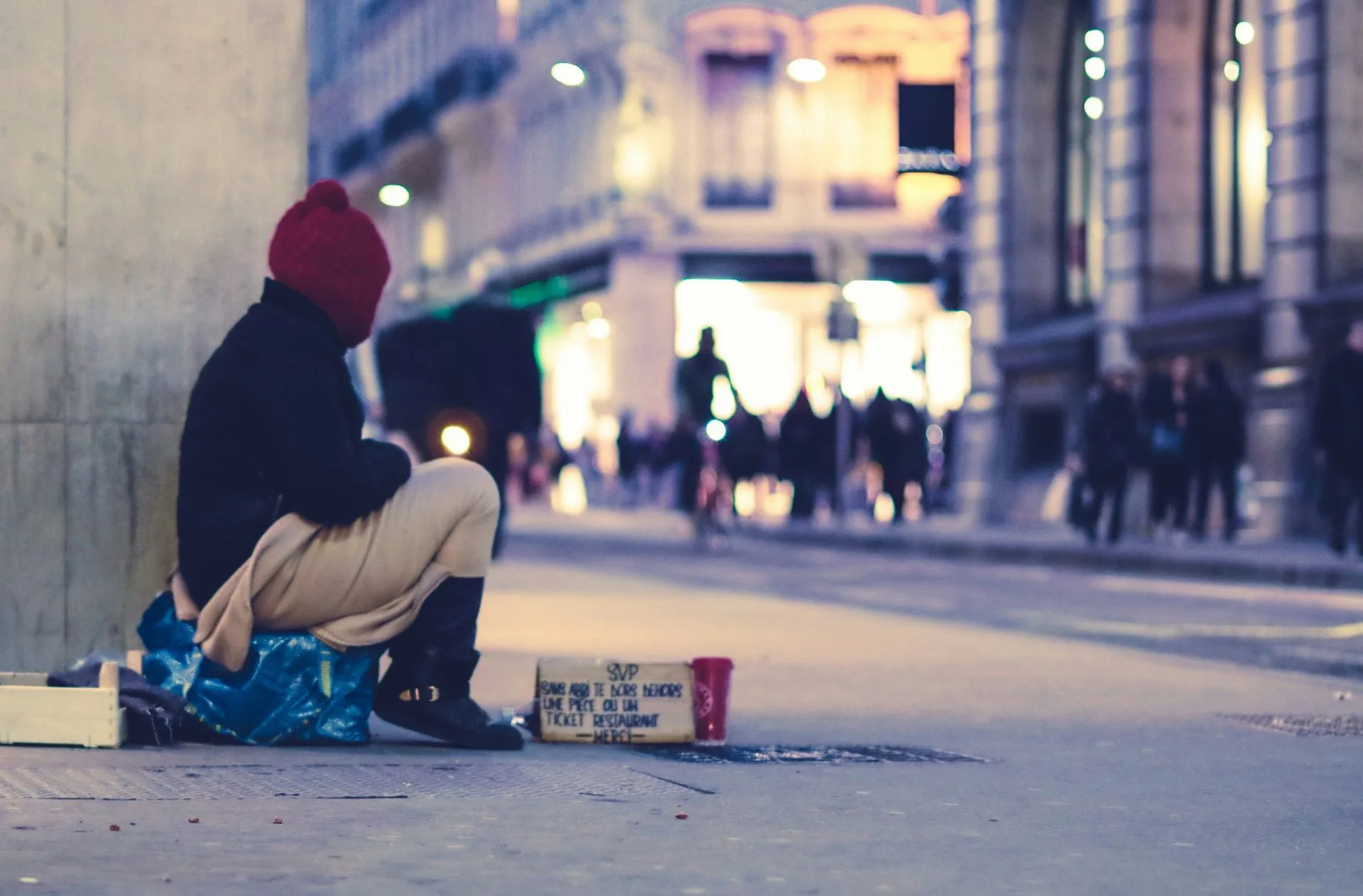
Hungary: No Shelter, No Statistics
In 2018, a legal ban on homelessness came into force in Hungary, following years of judicial pushback. The bill previously being halted by the Constitutional Court and Hungary’s Supreme Court in 2016. Yet these rulings proved to be only temporary setbacks, with the ban taking the form of a constitutional amendment coupled with implementing legislation.
Article XXII(3) states that ‘Using a public space as a habitual dwelling shall be prohibited’ and is enforced by punitive measures, including the imposition of a fine or community service. In the case of non-compliance, and at the discretion of a judge, these measures may be converted into custodial sentences. This criminalisation of homelessness stands in stark contrast to the preceding clauses of the same article. While Section (1) proclaims that the State shall provide legal protection for homes and “strive to ensure decent housing conditions”, Section (2) places a similar aspirational duty on both the State and local governments to create accommodations for those without housing. The language used is deliberately non-committal, ensuring that no enforceable right to housing requiring positive action by the State can be inferred from the provision. The result is a legal framework in which the State absolves itself of responsibility to resolve homelessness yet imposes penalties on individuals for the visible consequences of that unresolved crisis. Moreover, the supplementary implementing legislation stipulates that the mere presence of a homeless individual in a public space, accompanied by their personal belongings, constitutes a ‘lifestyle in a public place’—a definitional threshold for criminal liability that is particularly vulnerable to arbitrary and subjective interpretation.
The support for the criminalisation of homelessness in Hungary has been attributed to the rise of the populist movement in Hungary by prominent Non Government Organisation Feantsa. They suggest that the ruling Fidesz party has engaged with a “divisive us versus them” rhetoric, justifying the crackdown on homeless lifestyles through portraying the community as dangerous (Feantsa, 2024). This narrative was heavily utilised by Hungarian politician David Vitézy, who further perpetuated prejudices against the homeless community by urging citizens to report homeless individuals who ‘smell’. At the time of the bill’s passing, the Deputy Minister at the Ministry of Human Resources, Bence Rétvári, asserted that the law served the best interests of homeless individuals, claiming it would function as an incentive to establish temporary shelters and prevent people from freezing to death (DW, 2018). This was done, however, in the absence of an accompanying national policy to increase funding for emergency accommodation or the expansion of affordable housing.
The number of homeless individuals in Hungary remains largely speculative, as there is no government-mandated system for monitoring, reporting or maintaining official statistics on homelessness. However, in 2024, a survey conducted under an EU-funded programme included data collection in 15 European cities, one of which was Budapest. The survey was carried out in cooperation with the Shelter Foundation, Városkutatás Kft, the Budapest Methodological Social Centre, and the Municipality of Budapest. It found that 460 individuals were present in public spaces in central Budapest on a single night (HVG, 2024). Estimates from this initiative suggest that between 1,000 and 1,500 people sleep rough across the city each night, with a further 5,000 relying on shelters, many of which only offer one-night stays (Euronews, 2024). Despite these statistics clearly indicating the need for a comprehensive data framework to address the issue, the government continues to rely on NGOs and ad-hoc surveys. Furthermore, there is little credible data on homeless populations outside of the Hungarian capital.
This crisis, regrettably, has little chance of abating. Hungary is simultaneously facing a rapidly escalating housing affordability crisis that threatens to further exacerbate homelessness. According to data from the National Statistical Institute, housing prices in Hungary have increased by 17 percent year-on-year, with a monthly rise of four percent as of March 2024 (Fakti, 2025). This relentless increase in prices, partially driven by foreign investment in residential properties, has prompted the government to consider legislative intervention. Lawmakers are expected to introduce measures enabling local municipalities to restrict foreign property ownership and provide preferential purchase rights to returning Hungarian nationals, tied to local residency requirements. Yet, such action is not enough to address the issue at its root. Without significant state intervention in the form of social housing, rent regulation, and income-based housing support, the economic pressures of a congested housing market will likely expand the population at risk of homelessness. This condition is not only defined by the absence of shelter but is also shaped by a hostile policy environment that criminalises, rather than supports, and by a public narrative that lacks empathy for those in the most vulnerable situations.
France: ‘Housing First’ in Theory, Eviction in Practice
France has long been hailed as providing one of the most progressive protections against homelessness in Europe. In 2007, France became the second European country, following Scotland, to adopt substantive legislation that establishes and enforces the right to housing (Clauzier, 2017). Yet, despite robust safeguards, both the volume and the holistic well-being of the homeless population in the state have skyrocketed. As of 2024, an estimated 350,000 people remain without stable housing – a staggering increase from 143,000 in 2020 (Statista, 2025).
Chapter V of the French Code of Social Action and Families (“Accommodation and Social Reintegration Centres”) entitles individuals suffering housing difficulties to social assistance in private or public accommodation. It further provides for a ‘social monitoring system’ to accommodate homeless individuals, which assesses critical factors contributing to the deterioration of their wellbeing, including their mental, physical, and social circumstances. These provisions ensure the unconditionality of accommodation and reflect the principle of continuity of reception, permitting those residing in an emergency accommodation structure to remain there until they are able to obtain personalised support. The language used by the drafters, albeit translated from French, is remarkably inclusive and extends safeguards not merely to providing a guarantee of emergency shelter but to guaranteeing a minimum of holistic well-being for the most vulnerable members of society. In 2023, the French authorities released their second five-year plan for their ‘Housing First’ scheme. Among other initiatives, key objectives of the plan included:
- A target of 25,000 new social housing units to be built and 10,000 boarding house places by 2027.
- Increased use of tax incentives (Loc’Avantages) to enable private landlords to rent their property at below-market value.
- Introducing a youth-specific Housing First programme (Un chez-soi d’abord Jeunes) to intervene earlier and prevent youth homelessness.
- Providing support directly from the street, with continuity after housing, through the creation of 500 new jobs in outreach teams, day centres (which offer basic services), and the SIAO coordination system to ensure sustained, person-centred support before and after rehousing (Délégation Interministérielle à L’hébergement et à L’accès au Logement, 2023).
Recent NGO statistics suggest that, despite these protections, homelessness and its catastrophic impacts are continuing to escalate in the state. In 2023 alone, approximately 735 individuals died while experiencing homelessness. In the same report, the Collectif les Morts de la Rue highlighted two particularly alarming trends: a rise in suicides among the homeless population and the increasing ageing of homeless individuals, underscoring a systemic failure to provide long-term support and intervention (Collectif les Morts de la Rue, 2024). While not directly cited as a direct cause of these trends, the Collective expressed criticism of the anti-homeless policies being enacted at the municipal level, such as anti-begging ordinances in Charleville-Mézières, Angoulême and Amiens, and the rise in anti-homeless architecture.
There is evidence to suggest that forced evictions, assisted by police intervention, are commonplace in some regions and have been largely legitimised by the “Kasbarian-Bergé” law adopted on February 2nd, 2023. The legislation, officially titled the Law to Strengthen Measures Against Illegal Occupation of Housing (translated), introduced harsher penalties for squatters, significantly reduced eviction notice periods and expanded the ability of property owners and public authorities to initiate expedited eviction procedures (Housing Rights Watch, 2023). Those who remain in the premises two months following a forced eviction may be punished with a 7,500 euro fine. These accelerated processes of evictions have a detrimental impact on tenants living in regions such as Hauts-de-France, which suffers from a shortage of affordable housing and emergency accommodation (Fondation Pour Le Logement, 2023). With insufficient and unresponsive support mechanisms, such legislation has predictably had devastating consequences for the most impoverished and at-risk individuals, paving the way for the criminalisation of precarious tenants and those living in substandard or insecure housing. Housing Rights Watch noted the stance of French Ombudsperson Claire Hedon prior to the bill undergoing both Chambers, who explicitly affirmed that the law would amount to an unnecessary and disproportionate infringement on the right to family life of illegal occupants, protected by Article Eight of the European Convention (Housing Rights Watch, 2023). This particular assertion is highly contested.
In Brittany, the predicted repercussions have become reality, with emergency accommodation services increasingly overwhelmed. Over the past six years, the rate of positive responses to the 115 emergency hotline in Ille-et-Vilaine has dropped sharply, from 45 percent to just 17 percent as of February 2025. The region is a heart-breaking testament to the congestion of social housing in the public sector, with 98,400 applications for only 15,900 allocations in 2024 (Fondation Pour Le Logement, 2025). Despite policy commitments, one cannot simply ignore recent data underscoring a worsening situation. According to a UNICEF report, the number of homeless children in France increased by 120 percent between 2020 and 2024, highlighting a significant deterioration in child housing security (Radio France Internationale, 2024).
Government disillusionment is rampant and distrust in police enforcement is mounting. Legal professionals have expressed their dismay with the escalation of evictions, with French lawyer Maître Bonaglia arguing that remanding the occupants into police custody and returning the property to the landlord prior to the offence being proven amounts to illegal eviction (FEANTSA, 2024). Targeted municipal decrees criminalise a vast number of behaviours associated with the lifestyle and survival of homeless people, including “prolonged occupation of public spaces; sitting or lying down in certain areas; littering or disrupting public order; using communal facilities in a way that hinders shared use; gatherings, however small, accompanied by music or loud voices; groups of dogs, even if leashed and with their owners; consuming alcohol in public spaces outside café and restaurant terraces; wild camping or bivouacking; storing or setting up equipment on public streets without permission; and rummaging through bins” (FEANTSA, 2024). With their livelihoods under attack, individuals have been more reluctant to actively seek assistance, opting instead to take isolated refuge in polluted and occasionally dangerous zones (Franceinfo, 2024).
Structural deficiencies have transformed France from one of the most progressive states in recognising homelessness to a country where meaningful action remains increasingly illusory. Yet it cannot be said that all hope is lost, with the High Committee for the Right to Housing warning that the structural underfunding of the housing sector due to insufficient budgets results in a “logic of managing shortages to the detriment of the law”. One of said shortcuts appears to be a transition to a declaration and subsidy structure from the previous authorisation mechanism, weakening the financial security of housing associations in the process.
As a result, in May 2025, the Committee issued a series of key recommendations aimed at addressing systemic shortcomings in funding and governance. It called for the establishment of a multi-year programming law grounded in actual needs, coupled with a transparent and reliable budget from the initial finance bill. The Committee also advocated for a return to the authorisation regime for structures in the reception, accommodation and integration sector in order to guarantee secure monthly funding. Additionally, it recommended the creation of territorialised funders’ conferences to coordinate public actors, streamline related support mechanisms, and promote greater transparency and coherence in the allocation of resources (Haut Comité Pour Le Droit Au Logement, 2025). Needless to say, it is abundantly clear that the future of France’s legal framework on homelessness now rests largely in the hands of budgetary decision-makers and municipal policymakers.
Concluding Remarks
The cases of Hungary and France tell two very different stories about how European states are dealing with homelessness, but both expose a similar problem. Despite legal frameworks and political promises, the lived reality for people without homes continues to deteriorate. In Hungary, homelessness has, for all practical purposes, been effectively criminalised. Rather than offering support, the state imposes criminal penalties on those sleeping rough, while at the same time failing to establish any kind of comprehensive system to monitor or understand the true scale of the issue. France, by contrast, has what looks like one of Europe’s strongest housing rights frameworks. On paper, it guarantees shelter, promotes Housing First policies, and sets targets for social housing development. In practice, the reality doesn’t really live up to the policy narrative. Emergency accommodation services appear overstretched, evictions are becoming more common, and local authorities have quietly adopted measures that make life harder for the homeless.
What this shows is that recognising housing as a human right isn’t the same as delivering it. Both countries, in their own way, fall short. Not because they lack laws, but because they lack the political and financial will to make those laws count. With housing prices rising across the continent, the gap between rights and reality is only getting wider. If this trend continues, legal guarantees risk becoming little more than symbolic gestures, statements of principle with no weight behind them. Without concrete action, Europe’s promise of housing as a human right will remain, for many, an empty one.
Bibliography
Ane Claire, ‘French Government Announces More Resources for Homeless Accomodation’ (Le Monde, 21 June 2023) https://www.lemonde.fr/en/france/article/2023/06/21/french-government-announces-more-resources-for-homeless-accommodation_6034674_7.html accessed 6 June 2025
Avocats Sans Frontières, Fondation Abbé Pierre & FEANTSA, Homeless not Guilty: Ending the Criminalisation of Homelessness in Europe (Policy Brief, 19 December 2024) https://www.feantsaresearch.org/en/report/2024/12/19/ accessed 6 June 2025
Bogdanova Milena, ‘Record Housing Price Increase in Hungary’ (Fakti.bg, 12 May 2025) https://fakti.bg/en/imoti/970296-record-housing-price-increase-in-hungary accessed 6 June 2025
Collectif les Morts de la Rue, ‘Publication of the 2024 Report’ (Collectif les Morts de la Rue, 28 October 2024) https://www.mortsdelarue.org/publication-du-rapport-2024/ accessed 8 June 2025 (translated from French)
Fondation Pour Le Logement, ‘In Brittany, an Explosive Context’ (Fondation Pour Le Logement, 28 March 2025) https://www.fondationpourlelogement.fr/actualites/en-bretagne-un-contexte-explosif accessed 6 June 2025
Fondation Pour Le Logement, ‘In the Haut-de-France, Tenants are Increasingly Vulnerable’ (Fondation Pour Le Logement, 28 March 2025) https://www.fondationpourlelogement.fr/actualites/dans-les-haut-de-france-des-locataires-sont-de-plus-en-plus-fragilises accessed 6 June 2025 (translated from French)
Franceinfo, “‘It’s a Little Quieter’: Many Homeless People Are Sheltering in the Woods in the Paris Region” (Franceinfo, 25 January 2024) https://www.radiofrance.fr/franceinfo/podcasts/les-documents-franceinfo/c-est-un-peu-plus-tranquille-de-nombreux-sdf-s-abritent-dans-les-bois-en-region-parisienne-2523285 accessed 8 June 2025 (translated from French)
Haut Comité Pour Le Droit Au Logement, ‘Publication of the Notice on the Finance of the Accommodation Policy’ (Haut Comité Pour Le Droit Au Logement, 26 May 2025) https://www.hclpd.gouv.fr/parution-de-l-avis-relatif-au-finacement-de-la-a255.html accessed 6 June 2025 (translated from French)
Housing Rights Watch, ‘New Bill in France Will Toughen Penalties on Squatting’ (Housing Rights Watch, 3 February 2023) https://www.housingrightswatch.org/news/new-bill-france-will-toughen-penalties-squatting accessed 7 June 2025
HVG.hu, ‘The First Numbers of the “Homeless Census” Have Arrived: 460 People Were Found in the Inner Parts of Budapest in a Single Night’ (HVG, 15 October 2024) https://www.hvg.hu/itthon/20241015_Megjottek-az-elso-szamok-a-hajlektalan-nepszanlalasrol-Budapest-belso-reszein-egyetlen-ejszaka-460-embert-talaltak accessed 5 June 2025 (translated from Hungarian)
RFI, ‘More than 2,000 Children in France Still Sleeping Rough: Unicef’ (RFI, 29 August 2024) https://www.rfi.fr/en/france/20240829-more-than-2-000-children-in-france-still-sleeping-rough-unicef accessed 7 June 2025
Jelinek C, Czirfusz M and Pósfai Z, ‘Social Housing and Empty Spaces Landscapes in Hungary’ (Periféria Policy and Research Center and Habitat for Humanity International, Europe and the Middle East, 9 February 2025)
Kiss Gábor, ‘Census for Collecting Homeless Data Begins in Budapest’ (Euronews, 4 October 2024) https://www.euronews.com/2024/10/04/census-for-collecting-homeless-data-begins-in-budapest accessed 7 June 2025
Nemeth Martin, ‘Shocking: Stunning Rise in Hungary’s Housing Prices Outpaces All of Europe’ (Daily News Hungary, 14 November 2024) https://dailynewshungary.com/hungary-housing-price-europe/ accessed 7 June 2025
Statista Research Department, ‘Number of People Without a Home in France from 2017 to 2024’ (Statista, 5 May 2024) https://WWW.statista.com/statistics/1085952/number-homeless-france/ accessed 8 June 2025
Verseck Keno, ‘Hungary: When Poverty Becomes a Crime’ (DW, 15 October 2018) https://www.dw.com/en/hungarys-homeless-ban-when-poverty-becomes-a-crime/a-45900111 accessed 8 June 2025