
Introduction
In 2009, the International Crimes Tribunal of Bangladesh (ICT-BD) was established to address the grave crimes committed during the country’s 1971 Liberation War. For over a decade, its mandate was clear: bring those responsible for genocide, war crimes, crimes against humanity, and crimes against peace during that conflict to justice. However, the mass student protests and political upheaval of July-August 2024 have led to a significant expansion of the tribunal’s structure, procedures, and scope. This article examines the origins, evolution, and legal and procedural changes following the 2024 events, as well as the implications for justice and the rule of law in Bangladesh.
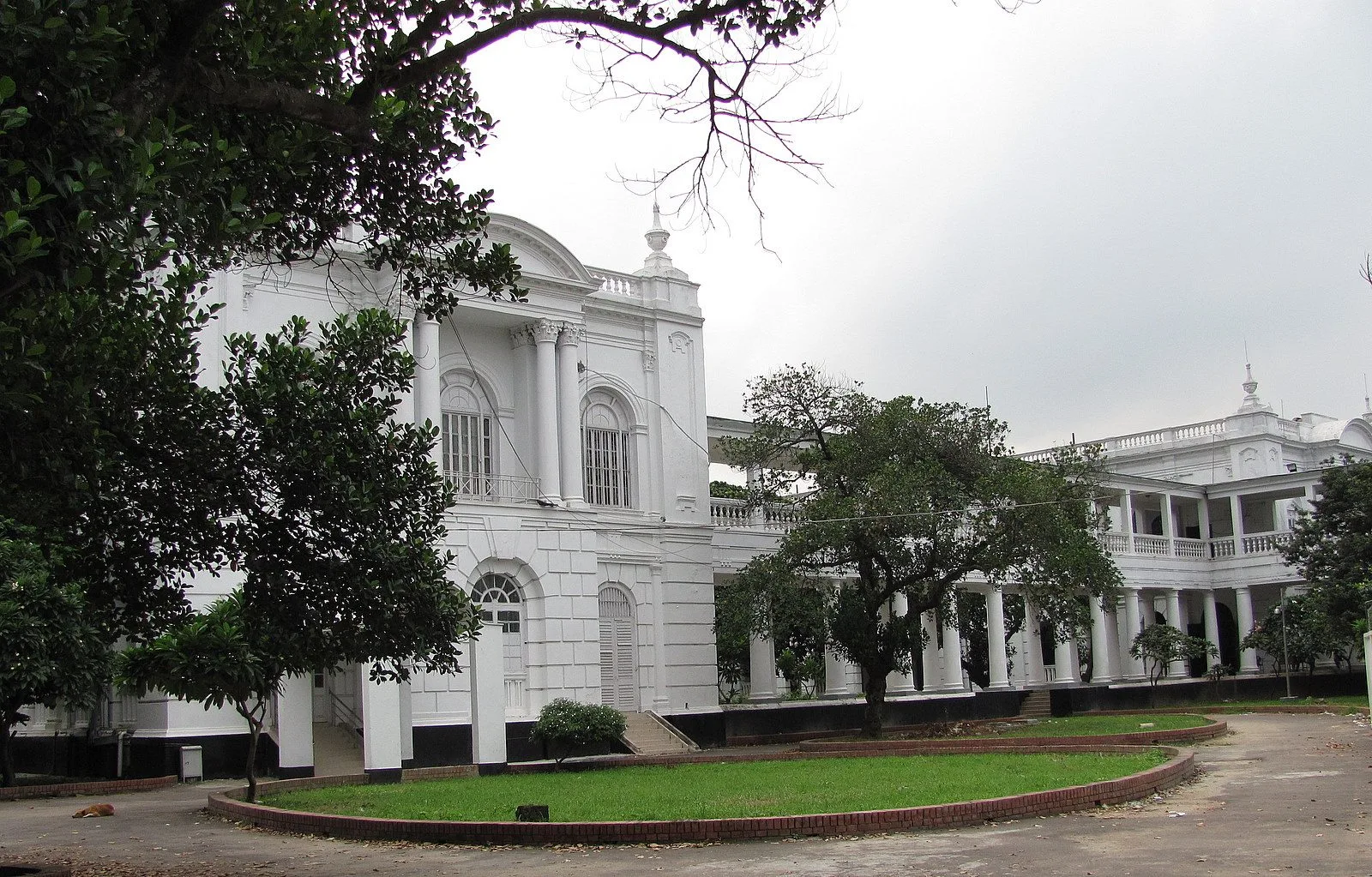
The ICT-BD’s Original Mandate
The ICT-BD was established in 2009 under the International Crimes (Tribunals) Act (ICTA) 1973. The Act was an attempt by a newly independent nation to affirm its commitment to ending impunity and ensuring justice for the atrocities of 1971, despite the complex geopolitical landscape of the Cold War era. The tribunal’s primary focus was to investigate and prosecute individuals accused of genocide, war crimes, crimes against humanity, and crimes against peace, particularly the then Pakistan Army and their local auxiliary forces.
Over the years, the ICT-BD prosecuted several high-profile cases, including those against members of the Jamaat-e-Islami and Bangladesh Nationalist Party. By February 2024, ICT-1 had rendered judgement in 44 cases and ICT-2 in 11 cases. Of the 55 adjudicated cases, 30 involved allegations of genocide, with 21 leading to convictions. The tribunals were noted for concluding cases in a reasonable timeframe, despite limited resources compared to international or hybrid criminal tribunals.
To enhance the tribunal’s legitimacy and compliance with international human rights standards, Bangladesh amended the ICTA’s Rules of Procedure in 2011. These amendments ensured certain rights for the accused, including the presumption of innocence, the right to a fair and public hearing, the right to counsel of their choice, and the right to apply for bail, among others. The amendments also prohibited double jeopardy. Nonetheless, certain shortcomings persisted, such as the permissibility of the death penalty, limited rights for defence counsel, and the conduct of trials in absentia. The ICTA would be amended once again after the summer 2024 events.
The July-August 2024 Uprising
In July-August 2024, a student-led protest movement in Bangladesh erupted after the Supreme Court reinstated a controversial quota reserving 30 percent of government jobs for descendants of 1971 independence war veterans. The decision revived long-standing grievances about economic exclusion, youth unemployment, and political repression under Prime Minister Sheikh Hasina’s increasingly authoritarian rule. Hasina’s inflammatory response to the protests, calling students ‘traitors’, triggered a brutal government crackdown, including curfews, internet shutdowns, and military violence.
What began as a movement against the quota rapidly transformed into a nationwide call for democratic reform, culminating in Hasina’s resignation. An interim government was formed, pledging to restore order and investigate the violence. The scale of the unrest and the alleged atrocities committed during this period prompted a reevaluation of the ICT-BD’s role and mandate.
Legal and Procedural Expansion of the ICTA/ICT-BD
On November 24th, 2024, Bangladesh enacted significant amendments to the ICTA, applying them retroactively from January 6th, 2009, to modernise and expand the tribunal’s jurisdiction. One of the most notable changes is the extension of the tribunal’s reach beyond Bangladesh’s borders, empowering it to prosecute crimes committed by Bangladeshi citizens abroad and by foreign nationals for offences committed at least partly within Bangladesh. However, the law still requires some nexus to Bangladeshi territory for foreign nationals, as clarified in Section 1(4)(b).
The amendments also broaden the tribunal’s subject matter jurisdiction. Incitement and conspiracy to commit crimes are now prosecutable, and the definition of crimes against humanity has been extended to include acts such as forcible transfer of population, sexual exploitation, enforced disappearance, human trafficking, sexual slavery, enforced prostitution, forced pregnancy, and enforced sterilisation, aligning definitions with Article 7 of the Rome Statute, which Bangladesh has ratified. Notably, the definition of genocide now excludes acts against political groups, mirroring international conventions.
Procedural reforms are substantial. The law now guarantees the accused several rights, including timely trials, adequate time for preparation, free communication with counsel, interpreter services, and protection from arbitrary detention and torture under the Torture and Custodial Death (Prevention) Act 2013. The prosecution must disclose exculpatory evidence to the defence, and the tribunal can transfer cases outside its remit to other courts. Digital evidence, including CCTV and electronic records, is now broadly admissible, provided it is not obtained through serious human rights violations.
Additional changes include the introduction of interlocutory appeals, virtual hearings for witnesses, the participation of foreign counsel (with Bar Council approval), and enhanced victim compensation and witness protection. The tribunal may also record and broadcast hearings for transparency, and representatives from the United Nations (UN) and human rights organisations may attend public proceedings.
Despite the positive developments, there are still issues to be considered. First, the continued use of the death penalty by the ICT-BD is a major source of debate. While Bangladesh’s laws allow for capital punishment and the tribunal has issued death sentences in several cases, international human rights organisations argue that using the death penalty for international crimes undermines the tribunal’s credibility.
Second, the ICT-BD’s continued practice of holding trials in absentia–meaning proceeding without the accused being present–has raised serious concerns about the right to a fair trial. International courts such as the International Criminal Court (ICC) and the International Criminal Tribunal for the former Yugoslavia (ICTY) generally do not allow trials in absentia, recognising the accused’s right to be present at their own trial as fundamental. Critics argue that this practice in Bangladesh risks denying defendants a proper opportunity to defend themselves, which can undermine confidence in the tribunal’s judgements.
Third, the tribunal has not made full use of amicus curiae briefs–expert legal opinions submitted to assist the court on complex issues. While the tribunal’s rules allow for these briefs, they have never been used. Fourth, constitutional protections for the accused remain limited. Article 47A of Bangladesh’s Constitution restricts certain fundamental rights for those prosecuted under the ICT-BD. Additionally, there are still no clear protections for minors or people with mental disabilities, which is out of step with international standards and Bangladesh’s own criminal procedure code.
Fifth, the tribunal is no longer limited to addressing the legacy of 1971 but is now empowered to prosecute a much wider range of international crimes, committed both within and beyond Bangladesh, by individuals, organisations, and political parties. Finally, a new team of prosecution units was formed. Following the amendment to the ICTA, these units issued arrest warrants against top leaders of the previous regime. The aforementioned have marked not only a significant expansion of the tribunal’s structure and procedures but also its scope, which has now moved beyond the 1971 war crimes to address recent acts of violence and alleged crimes.
Implications for Justice and the Rule of Law
The expansion of the ICT-BD has profound implications for Bangladesh’s legal system. On the one hand, it reflects a desire to ensure accountability for recent atrocities. Given the number of complaints that were filed after the July-August 2024 events, the prosecution of those responsible for the violence is arguably seen by many as a necessary step toward national healing and democratic renewal.
On the other hand, the use of a tribunal originally designed for historic war crimes to prosecute contemporary political violence raises complex legal and ethical questions. There is a risk of politicisation, and without robust safeguards for due process and judicial independence, there is a danger that the tribunal could be used to settle political scores rather than deliver impartial justice.
Despite the significant progress, legal scholars and international human rights organisations have called for further reforms to align the ICTA/ICT-BD with international standards. These include amending sections of the ICTA to allow broader interlocutory appeals, ensuring the rights of the accused are protected, and establishing a comprehensive victim and witness protection plan. There are also calls to adopt a moratorium on the death penalty and to repeal constitutional provisions that limit the protection of fundamental rights for the accused.
Concluding Remarks
The 2024 amendments to Bangladesh’s ICTA significantly expanded the ICT-BD’s jurisdiction and procedural framework, enabling it to address not only historic but also recent crimes. While these changes may enhance accountability and reflect a commitment to justice, they also raise serious concerns. The risks of politicisation, the continued use of the death penalty, and the practice of trials in absentia challenge the tribunal’s legitimacy and alignment with international standards.
To preserve the rule of law and safeguard human rights, experts and international human rights organisations argue that further reforms are deemed essential, particularly in ensuring due process, abolishing capital punishment, and strengthening protections for vulnerable accused persons. Without such safeguards, the tribunal’s extended mandate may undermine rather than promote genuine justice.
Bibliography
Primary Sources
International Crimes (Tribunals) Act 1973 (Bangladesh).
UN Office of the High Commissioner for Human Rights, Fact-Finding Report: Human Rights Violations and Abuses Related to the Protests of July and August 2024 in Bangladesh (2025).
Secondary Sources
Policy Briefs
Angotti, A., Genocide and Constitutionalism in Bangladesh, Policy Brief Series No 113 (Torkel Opsahl Academic EPublisher 2020).
Hosain, Md Mostafa, The International Crimes Tribunals of Bangladesh: Past, Present and Future, Policy Brief Series No 160 (Torkel Opsahl Academic EPublisher 2024).
Media/Websites
Adnan K K, ‘Trial in Absentia under the Bangladesh International Crimes Tribunals Act 1973’ EJIL: Talk! (2025) <https://www.ejiltalk.org/trial-in-absentia-under-the-bangladesh-international-crimes-tribunals-act-1973/> accessed 13 June 2025.
Alam, J, ‘Protests and violence break out again in Bangladesh amid calls for the government’s resignation’ AP News (2024) <https://apnews.com/article/hasina-bangladesh-student-protests-quota-a02a81cfc43f8254aa828c9fe25cfc3b> accessed 12 June 2025.
Baul, T., and Banyal, A., ‘Religion and Genocide: Perspectives from the International Crimes Tribunals Bangladesh’ Opinio Juris (2022) <https://opiniojuris.org/2022/06/15/religion-and-genocide-perspectives-from-the-international-crimes-tribunals-bangladesh/> accessed 12 June 2025.
Bergman D, ‘The second life of Bangladesh’s International Crimes Tribunal’ JusticeInfo (2025) <https://www.justiceinfo.net/en/141852-second-life-bangladesh-international-crimes-tribunal.html> accessed 14 June 2025.
BSS, ‘ICT Gets Five New Prosecutors’ Dhaka Tribune (2024) <https://www.dhakatribune.com/bangladesh/363105/ict-gets-five-new-prosecutors> accessed 13 June 2025.
Corea, H. and Erum, M., ‘What Is Happening at the Quota‑Reform Protests in Bangladesh?’ Amnesty International (2024) <https://www.amnesty.org/en/latest/news/2024/07/what-is-happening-at-the-quota-reform-protests-in-bangladesh/> accessed 12 June 2025.
Foysal, Q O, ‘The future of international crimes prosecution in Bangladesh’ The Daily Star (2025) <https://www.thedailystar.net/opinion/views/news/the-future-international-crimes-prosecution-bangladesh-3849881> accessed 13 June 2025.
Human Rights Watch, ‘Bangladesh: Guarantee Fair Trials for Independence-Era Crimes’ (2011) <https://www.hrw.org/news/2011/07/11/bangladesh-guarantee-fair-trials-independence-era-crimes> accessed 12 June 2025.
Human Rights Watch, ‘Bangladesh: Review Laws and Protect Human Rights Standards’ (2025) <https://www.hrw.org/news/2025/05/21/bangladesh-review-laws-and-protect-human-rights-standards> accessed 13 June 2025.
Huq, C and Miller, C, ‘The Bangladesh Student Movement That Transformed a Nation’ LPE Project (2024) <https://lpeproject.org/blog/the-bangladesh-student-movement-that-transformed-a-nation/> accessed 12 June 2025.
Hussain, S and Drury, F, ‘Muhammad Yunus Sworn in as Interim Bangladesh Leader’ BBC News (2024) <https://www.bbc.com/news/articles/clyg7we8xvno> accessed 12 June 2025.
International Criminal Court, Bangladesh (ASP states-parties page, signature & ratification details) <https://asp.icc-cpi.int/states-parties/asian-states/bangladesh> accessed 13 June 2025.
Kibria, K, ‘ICTA Amendments: Enhanced Justice, Expanded Jurisdiction’ The Business Standard (24 November 2024) <https://www.tbsnews.net/thoughts/icta-amendments-enhanced-justice-expanded-jurisdiction-1020021> accessed 13 June 2025.
Special Correspondent, ‘ICT Act: Prosecution hails gazette with provisions to punish political party’ Prothom Alo (2025) <https://en.prothomalo.com/bangladesh/4lahktqmju> accessed 13 June 2025.
Staff Correspondent, ‘Amended ICT law to allow trial of security personnel’ The Daily Star (2024) <https://www.thedailystar.net/law-our-rights/news/amended-ict-law-allow-trial-security-personnel-3760981> accessed 13 June 2025.
VDB Loi, ‘Key Amendments to the Tribunal Act: Expanded Jurisdiction, Enhanced Victim Protection, and Retroactive Provisions’ (2024) <https://www.vdb-loi.com/bd_publications/key-amendments-to-the-tribunal-act-expanded-jurisdiction-enhanced-victim-protection-and-retroactive-provisions/> accessed 13 June 2025.