
Introduction
Marriage out of kidnapping is a common practice in Central Asia and certain Sub-Saharan African countries, but remains most predominant in Kyrgyzstan. Its Kyrgyz name ala kachuu literally translates into ‘taking a young woman and running’ (Kleinbach et al., 2005) and it comes in a variety of forms ranging from pre-discussed and agreed upon elopement up to violent practices of kidnapping. This report focuses on the latter, defined by UN Women (2011) as the act of “kidnapping a woman without her consent in order to force her to marry one of her captors”, to conceptualise it as a human rights violation related to early/forced marriage and domestic violence. Although the practice is illegal under the Kyrgyz 1994 Criminal Code and punishable by law by up to ten years in prison, the prevalence of ala kachuu has only increased in the era of post-Soviet independence. Its recognition as a form of gender-based violence (GBV) has been overshadowed by the auspices of ‘tradition’ (Kim & Karioris, 2020). This article aims to understand the scope and origins of ala kachuu before highlighting to what extent legal provisions are insufficient in protecting women where legal inaction and patriarchal beliefs continue to penetrate all strata of society. It is becoming increasingly necessary to shed light on ala kachuu internationally and to question the acceptance of the practice so that Kyrgyz women are enabled to claim their fundamental human rights.
Context
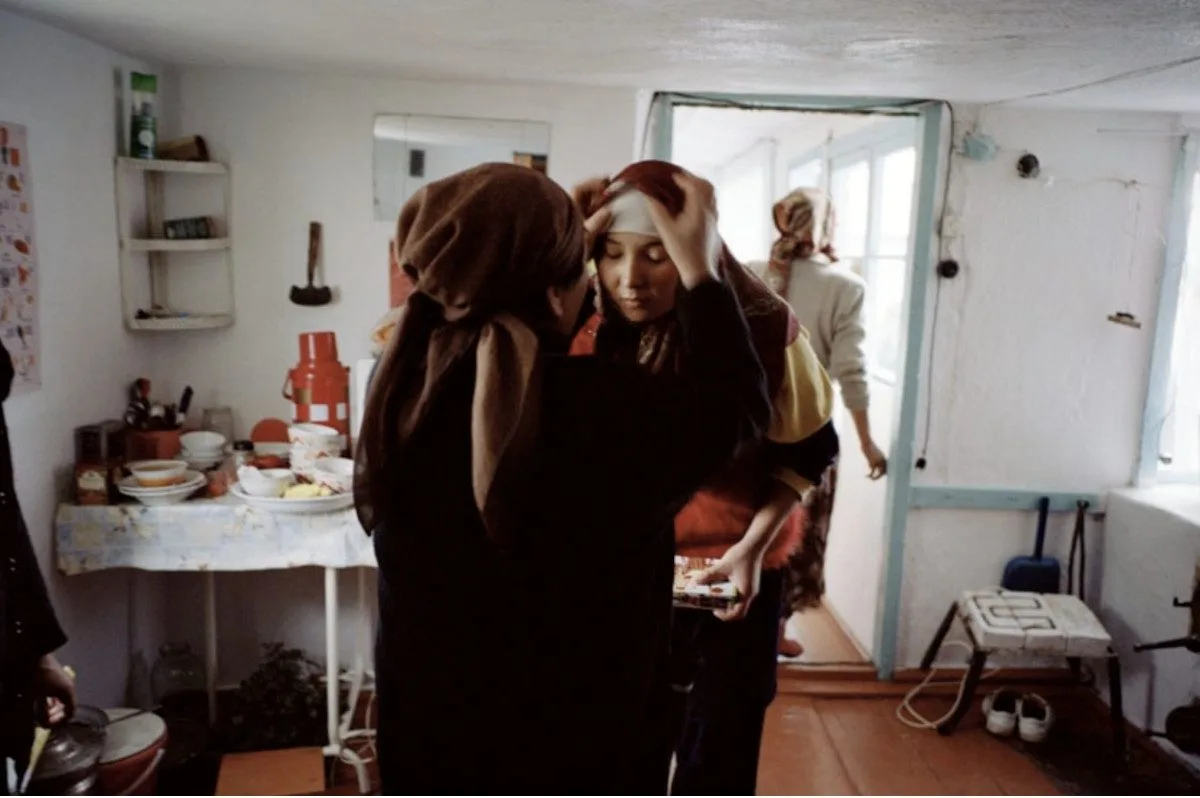
In Kyrgyzstan, ala kachuu usually abides to the following modus operandi: a young woman under the age of 25 – although she may also be a minor (HRW, 2015) – is attacked when walking outside alone by her future groom accompanied by a group of male relatives. Even though the groom may also be an acquaintance, in 35 percent of cases the abduction is carried out by a stranger who oftentimes uses a mode of deception and physical violence to lure the women into their car (HRW, 2015; Kim & Karioris, 2020). Then, the abductor, who is usually intoxicated, drives the woman to the groom’s family home where is kept in a room. In the majority of cases, she is repeatedly raped, physically forced and/or psychologically coerced into accepting the marriage. Concretely, submission is symbolised by a joluuk shawl wrapped around her head (HRW, 2015).
In certain extreme cases, such a practice may result in death. Such was the case of Aizada Kanatbekova in April 2021, which brought national and international attention to the prevalence of wife kidnapping. While she was walking down the streets of Bishkek, Aizada was forced into a car by several men in broad daylight. Two days later, her body was found just outside the city and police confirmed that she had been strangled to death. The pleas of both a witness and her own mother had been laughed off by authorities. Her abduction was the second incident in four years where a woman in Bishkek died in the hands of her abductor. Similarly, Buralai Turdaaly Kyzy was stabbed to death in 2018 when she was left unsupervised in police custody alongside her two-times kidnapper (Margolis, 018). Both cases sparked national protests mostly centred on the police’s inability to properly address these crimes.
On the other hand, the number of marriages finding their roots in ala kachuu remains controversial. Especially because of its illegality, engaged families are unwilling to confess to doing so, and such marriages are typically not registered (UNFPA, 2016). Furthermore, victims are oftentimes reluctant to report their case to the police for reasons ranging from fear of their abductor, the well-founded belief that police will be reluctant to intervene, up to the lack of shelter spaces or other services for victims (HRW, 2006). In 2018, the Kyrgyz Ombudsman reported that approximately five to seven thousand families annually were formed as such. In this sense, it has been estimated that this amounts to just over one-third of all marriages (Nurkiyazova, 2022).
While international organisations and national governments are increasingly incorporating the commitment to prevent GBV in their respective conventions and legal frameworks, this extends to Kyrgyzstan as well, which has made efforts in ratifying the Convention on the Elimination of All Forms of Discrimination Against Women (CEDAW) and updating its criminal code to illegalise ala kachuu. Yet these legal steps have proven insufficient: the prevalence of ala kachuu has only seen an upward trend since Kyrgyz independence, increasing ten percent from 1994 to 2004 and becoming increasingly non-consensual (Kleinbach & Salimjanova, 2007). Even when complaints are taken seriously by prosecutorial authorities, there is little to no follow up: out of 92 cases reported in 2020, only eight reached the court (Mukhamejan & Zhakypbekova, 2022). Note, the number of cases reported will differ significantly from the actual number of cases occurring.
Origins and Contributory Factors
It has been argued that the origins of ala kachuu are to be found in tribal traditions where it was commonplace for tribes to steal each other’s horses and wives (Werner et al., 2018). It is for this reason that the practice enjoys a certain amount of social acceptance, as proponents regard it as a national tradition which was suppressed by succession to the USSR. The demarcation of ‘tradition’ has however been proven false, as pre-Soviet kidnappings were extremely rare (Werner et al., 2018). It further carries with it the extreme danger that ala kachuu will be regarded as standing higher than the law, making governments reluctant to effectively restrict the practice (HRW, 2006). It is thus increasingly necessary for it to be regarded as a violent expression of male power and a violation of women’s rights.
Under Soviet Rule, women enjoyed the same rights as men, had professional predominance in multiple sectors and could rely on State-provided childcare and welfare services to lighten the load of the second shift (Mukhamejan & Zhakypbekova, 2022). Independence of the Kyrgyz State went coupled with neoliberal restructuring which led to the erosion of such services and a significant reduction in women’s employment opportunities. In this perspective, experts have found that it provided impetus for a new Kyrgyz identity as far removed as possible from what was regarded as a Soviet and Western imposition of gender equality, thereby providing a window of opportunity for a patriarchal state which re-emphasised the importance of bride kidnapping as a form of (re)gaining control over women’s bodied and fostering male independence (Kleinbach et al., 2005; Mukhamejan & Zhakypbekova, 2022; Werner et al., 2018). This enabled a culture of hegemonic masculinity which manifests itself in the idea that for a man to be successful, he must be married to a necessarily subordinate and home-bound wife (HRW, 2006). As according to traditional gender roles in family life, women are excluded from political and/or economic participation and they are expected to take responsibility in childbearing and domestic labour. This goes coupled with the consensus that, for a woman to find happiness, she must first find love and not aspire for more than a role as wife and mother (Kim, 2020). Human Rights Watch research on this matter (2006; 2015) highlighted that women are expected to retain their purity and virginity (sic) for their future husbands. Moreover, they are educated from the earliest age to accept being abducted and that they are not allowed to leave the groom’s house out of ofear of bringing shame and ‘eternal unhappiness’ to their families were they to return. The social stigmatisation of unmarried or divorced women runs so deep that they risk being cut off from their social network and family if they reject the marriage. Additionally, the justification for kidnapping may rest on economic motivation and factors of poverty, if the groom cannot afford to pay for a wedding ceremony as expected under Muslim religion (HRW, 2006). Finally, it is important to note that especially older generations in Kyrgyzstan, mostly in rural regions, continue to support ala kachuu on the grounds that it constitutes an acceptable tradition (Hofmann & Chi, 2021). Elders may play a significant role in forcing their (grand)daughter to get married.
Normalisation of Women’s Rights Violations
Marriage by kidnapping falls under the UN definition of trafficking in human beings as well as forced marriage (UN Women, 2011). When the abducted girl is a minor, it also falls under the definition of child marriage. From the perspective of international human rights treaties ratified by the Kyrgyz State, ala kachuu violates those principles in the Universal Declaration of human Rights, the International Covenant on Civil and Political Rights and CEDAW pertaining to domestic violence, human trafficking, and early/forced marriage (OHCHR, 2018; HRW, 2015). Furthermore, as mentioned before, the practice is considered a crime under the 1994 Criminal Code on the grounds of the freedom deprivation it entails for women. It is however not only the act of kidnapping which poses a fundamental threat to women, but also the life which they are expected to, or forced to, live afterwards. The social stigmatisation surrounding unmarried or divorced women mentioned above also goes coupled with the prevalent mindset that a girl should get married as soon as possible and take on the full burden of household duties (HRW, 2015), pertaining to the normalisation and embeddedness of normative standards of gender roles in family and public life. According to the tradition of kelinism (Akisheva, 2021), a newly married woman enters a subordinate position in the household, and she must immediately plunge herself into family life: she is expected to discontinue either her education or work, have children as soon as possible, and then take on full responsibility for childcaring and domestic labour, including cooking, cleaning, and caring for her husband and the elderly (HRW, 2015). This significantly reduces any opportunities she may have to finish her education or partake in the labour force. As a housewife, she becomes completely economically dependent on her husband. Moreover, women are oftentimes victims of rape and domestic violence. Research has well established that Kyrgyzstan continuously faces a significant domestic abuse epidemic, where a so-called ‘Kyrgyz mentality’ contributes to the normalisation of domestic abuse of women’s everyday life: men are taught from a young age onwards that women are subordinate and therefore should be beaten if they disobey. Although legislation on domestic abuse has improved over recent years, this same mentality emphasises the family as a necessary unit of development and laws favour familial reconciliation over women’s protection (GIWPS, 2022; HRW, 2015). The culture of shame surrounding divorced women and their economic dependence disables women from leaving their abuser. This, thus, has severe consequences on their physical and mental wellbeing.
Violent Expression of Male Superiority
Although steps have been taken to recognise ala kachuu and its sequential domestic abuse as a human rights violation, this alone is inadequate in ensuring that the Kyrgyz State fulfils its obligations under international treaties protecting the rights of vulnerable women. Legal provisions remain ineffective if the context in which they are supposed to be enforced persists embedded in the traditional understanding of women’s roles in society. Male superiority has taken a stronghold of individual police officers and other authorities supposed to enforce these laws that when cases are reported, women are oftentimes forced to withdraw their case and barely see legal action directed at the perpetrator (HRW, 2006; Kleinbach et al., 2015). This was evident in both cases mentioned above in which witness statements and calls of the family were directly ignored and where police refused to intervene (Margolis, 2018). This amounts to what the UN Committee on the Elimination of Discrimination against Women (2018) terms a “culture of abduction, rape, and forced marriage”. Ala kachuu must thus also be viewed as a violent expression of male power centred on the conviction that women are necessarily subordinate. This calls for transformative action that ensures that all appropriate measures are taken to stop such practices.
Conclusion
International attention towards and national resistance to the issue of ala kachuu has been increasing over the past few years, and the appeal to international human rights instruments has been key in the fight against it. But this article also highlighted that laws act as mere band-aid solutions if the climate in which they are supposed to be enforced is one entrenched in patriarchal beliefs. If the idea that kidnapping is a necessity for women to fulfil their social roles remains status quo, radical transformative action will be necessary to halt this human rights violation (Mukhamejan & Zhakypbekova, 2022). This could take the form of recommendations made by Human Rights Watch (2006) and the Office for the High Commissioner of Human Rights (2018) which centre on educating the public and men on the issue of gender inequality, educating women on what rights they can claim, training prosecutorial authorities in how to improve enforcement of the law, and improving shelters and services for victims of abuse. Hopefully this can lead to accountability for acts of violence against women.
Bibliography
Akisheva, A. (2021). “Kelinism” in Kyrgyzstan: Women’s Rights Versus Traditional Values. The Oxus Society for Central Asian Affairs. Retrieved 17 January 2023 from https://oxussociety.org/kelinism-in-kyrgyzstan-womens-rights-versus-traditional-values/
Dewe Matthews, J. (2009). Ala Kachuu – bride kidnapping in Kyrgyzstan. Retrieved 17 January 2023 from https://www.jackiedewemathews.com/ala-kachuu-bride-kidnapping-in-kyrgyzstan
Georgetown Institute for Women, Peace and Security. (2022). Women Peace and Security Index 2021/22. (3rd ed.). Retrieved 18 January 2023 from https://giwps.georgetown.edu/wp-content/uploads/2021/11/WPS-Index-2021.pdf
Hofmann, E.T. and Chi, G. (2021) “Bride kidnapping and gendered labour migration: Evidence from Kyrgyzstan,” Journal of Ethnic and Migration Studies, 48(11), pp. 2493–2514. Available at: https://doi.org/10.1080/1369183x.2021.1931062.
Human Rights Watch. (2006). Reconciled to Violence: State Failure to Stop Domestic Abuse
and Abduction of Women in Kyrgyzstan. Retrieved 17 January 2023 from
https://www.hrw.org/report/2006/09/26/reconciled-violence/state-failure-stop-
domestic-abuse-and-abduction-women
Human Rights Watch. (2015). “Call Me When He Tries to Kill You”: State Responses to
Domestic Violence in Kyrgyzstan. Retrieved 17 January 2023 from
Kim, E., & Karioris, F. G. (2020). Bound to be grooms: The imbrication of economy,
ecology, and bride kidnapping in Kyrgyzstan. Gender, Place & Culture, 28(11),
1627–1648. https://doi.org/10.1080/0966369x.2020.1829561
Kleinbach, R., Ablezova, M. and Aitieva, M. (2005) “Kidnapping for marriage (ala kachuu)
in a Kyrgyz village,” Central Asian Survey, 24(2), pp. 191–202. Available at:
https://doi.org/10.1080/02634930500155138.
Kleinbach, R. and Salimjanova, L. (2007) “Kyz ala kachuu and adat: non-consensual bride
kidnapping and tradition in Kyrgyzstan,” Central Asian Survey, 26(2), pp. 217–233.
Available at: https://doi.org/10.1080/02634930701517466.
Margolis, H. (2020, October 28). Young woman’s murder in Kyrgyzstan shows cost of
‘tradition’. Human Rights Watch. Retrieved 18 January 2023 from
https://www.hrw.org/news/2018/05/31/young-womans-murder-kyrgyzstan-shows-cost-tradition
Mukhamejan , N., & Zhakypbekova, A. (2022). Bride Kidnapping in Kyrgyzstan: A Reflection of Conservative Values? (Ser. CAP PAPER NO. 273). Central Asia Program.
Nurkiyazova, S. (2022) “The bride-snatchers of Kyrgyzstan,” The Economist, 19 December. Available at: https://www.economist.com/1843/2022/12/19/the-bride-snatchers-of-kyrgyzstan.
UN Women. (2011). Defining other forms of forced marriage: bride kidnapping. Retrieved 18 January 2023 from https://www.endvawnow.org/en/articles/622-defining-other-forms-of-forced-marriage-bride-kidnapping.html
Werner, C., Edling, C., Becker, C., Kim, E., Kleinbach, R., Sartbay, F., & Teachout, W. (2018). “Bride kidnapping in post-Soviet Eurasia: A roundtable discussion,” Central Asian Survey, 37(4), pp. 582-601. Available at https://doi.org/10.1080/02634937.2018.1511519.