Introduction
In a world where individual fortunes routinely surpass the GDP of entire states, the persistence of child poverty stands as one of humanity’s quiet scandals. Across continents, more children than ever are forced to grow up without access to food, housing, healthcare, or education, all of which refer to rights that international law recognises as fundamental. Yet poverty is more than a lack of income. It is also a condition that shapes a child’s body, mind, and future long before adulthood begins. It dictates who will have opportunities and who will spend a lifetime struggling to catch up. Far from being a mere economic issue, child poverty is a structural barrier obstructing the enjoyment of nearly every human right enshrined in international and regional law.
This article aims to highlight the significance of child poverty not only as a socioeconomic concern, but also as a serious human rights violation. It provides an outline of the international legal obligations that states must uphold, examines the progress of the EU and evaluates the gaps between political commitments and real outcomes for children globally.
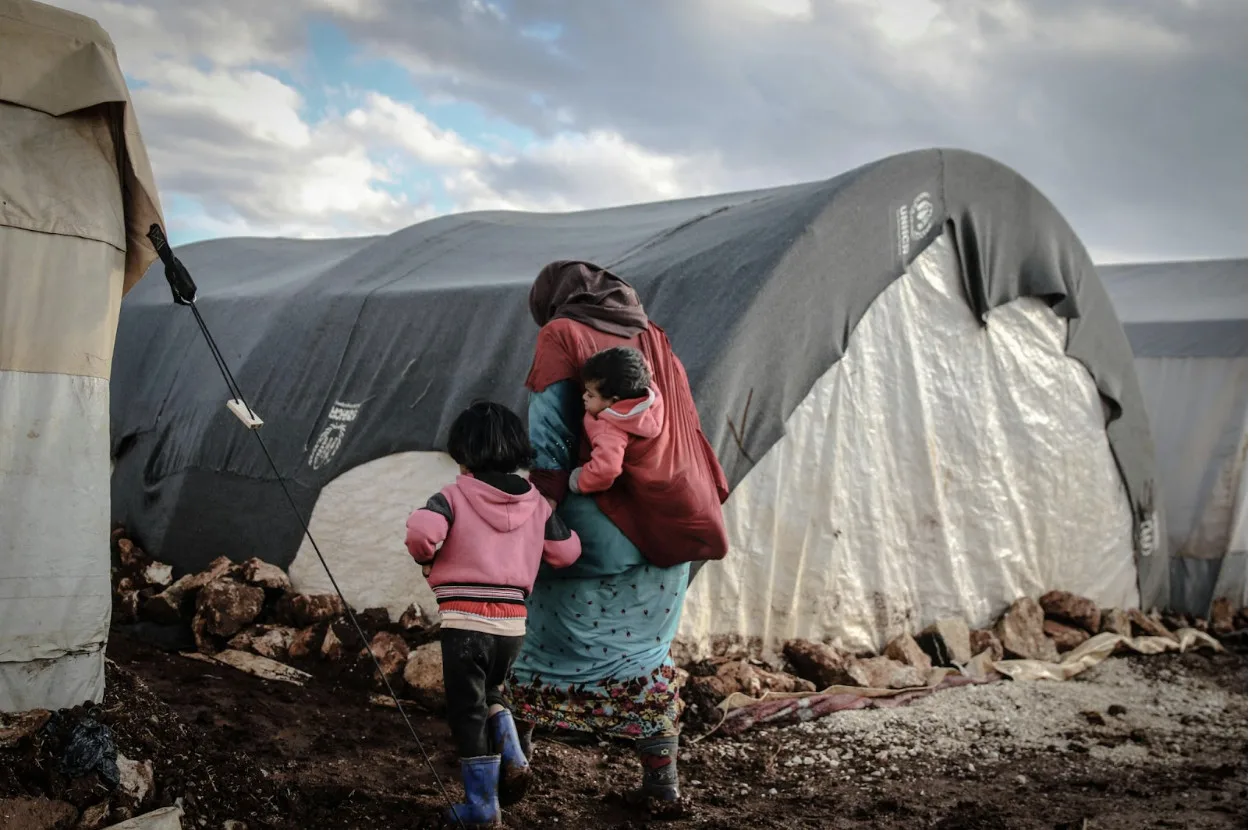
Recognising and confronting child poverty should require no justification, yet it is routinely marginalised in both public narratives and policy discussions. The silence reflects a long-standing tendency to treat deprivation as an unfortunate social circumstance rather than a preventable breach of children’s rights. As long as child poverty remains in the background, governments can evade accountability, and the structural issues remain unsolved.
Bringing child poverty to the forefront is essential because its consequences are severe and often irreversible. According to scientific studies conducted by neuroscientists and developmental psychologists, inadequate nutrition, insecure housing, and limited access to early education alter developmental pathways in ways that cannot be fully corrected later in life. In this sense, poverty is not simply a temporary hardship but a long-term impairment of a child’s ability to realise their rights. Moreover, failing to speak about child poverty allows intergenerational disadvantages to persist. Children who grow up in poverty face barriers to social mobility that persist into adulthood. These structural obstacles are rooted in poverty, and they reinforce cycles of inequality as families remain locked into patterns of exclusion, since limited access to adequate nutrition, stable housing, quality education and early healthcare restricts developmental opportunities from the outset. Although some children do manage to overcome these conditions, doing so requires navigating an environment where every developmental stage is shaped by scarcity, stress and reduced opportunity. The likelihood of “escaping” poverty is therefore the exception rather than the rule, because the cumulative effects of early disadvantage make upward mobility an uneven and extremely demanding pathway.
There is also a clear democratic dimension. States that claim to uphold equality, dignity and social protection cannot credibly maintain these commitments while large numbers of children lack access to basic rights. Open discussion of child poverty forces political institutions to confront the gap between their legal obligations and their policy choices. Increasing visibility generates pressure, and pressure drives the allocation of resources toward effective interventions.
The international human rights law framework establishes clear duties on governments to guarantee every child an adequate standard of living, access to health, education, and social protection.
The 1948 Universal Declaration of Human Rights (UDHR), though non-binding, remains the backbone of this understanding due to its significant normative influence on later international treaties and national constitutions. Article 25 of the UDHR recognises the right of everyone to “a standard of living adequate for health and well-being,” including food, housing, medical care, and social services. Article 26 of the UDHR states that education shall be free and directed toward the full development of the human personality. Together, they set the tone for understanding that children’s material deprivation is incompatible with human dignity, and the provision of basic needs is an obligation.
This moral architecture of the UDHR was later translated into binding law through the 1966 International Covenant on Economic, Social and Cultural Rights (ICESCR). Article 9 of the ICESCR establishes the right to social security, ensuring protection against economic insecurity and vulnerability. Article 11 of the ICESCR guarantees the right to an adequate standard of living, including adequate food, clothing, and housing, and calls for the continuous improvement of living conditions. Moreover, Article 12 recognises the right to the highest attainable standard of physical and mental health, while Article 13 of the ICESCR affirms the right to education as essential to personal development and social participation. Collectively, these provisions require states to use “the maximum of their available resources,” as mandated by Article 2(1) of the aforementioned document, to secure these rights for all, especially children whose development depends on them—yet persistent poverty exposes the gap between legal obligation and lived reality.
The 1989 Convention on the Rights of the Child (CRC) goes further, explicitly articulating children’s entitlements. Article 24 of the CRC recognises the right of the child to the highest attainable standard of health and requires states to take appropriate measures to combat disease and malnutrition. Article 26 enshrines the right of every child to benefit from social security, while Article 27 of the document guarantees an adequate standard of living necessary for physical, mental, spiritual, moral, and social development. Taken together, these provisions oblige states to adopt laws and policies that uphold children’s best interests, treating poverty not as a private family matter but as a collective responsibility that demands state action and accountability.
Finally, the principle of non-discrimination enshrined in Article 2 CRC requires that all children enjoy their rights without distinction of any kind. This protection is further reinforced by Article 2(2) of the ICESCR, which prohibits discrimination in the enjoyment of socio-economic rights. Children from affluent families benefit from better schools, healthcare, and safer environments that nurture development, while those from low-income or marginalised backgrounds face overcrowded classrooms, inadequate housing, and limited access to healthcare. The contrast between these experiences is not merely economic, as it also reflects the unequal distribution of dignity and opportunity. Poverty, when layered upon social exclusion, creates a double burden because those already disadvantaged by origin, geography, or identity are pushed even further to the margins, turning inequality into a self-perpetuating cycle.
The European Union (EU), often praised as a “Union of values,” continues to face a moral and legal paradox as millions of its children are growing up in poverty despite the existence of strong human rights and social protection frameworks. According to Eurostat (2024), over 20 million children in the EU remain at risk of poverty or social exclusion. The EU’s commitment to human dignity and equality, enshrined in the EU Charter of Fundamental Rights (CFR), rings hollow when children continue to face hunger, homelessness, and limited access to education and healthcare.
The CFR provides a legal foundation for children’s well-being and protection. Article 24 of the CFR guarantees children the right to protection and care necessary for their well-being and the right to express their views freely. While Article 34 commits the Union to combat social exclusion and ensure social security and assistance. Complementing this, Principle 11 of the European Pillar of Social Rights (2017) recognises children’s right to affordable early childhood education and care, adequate nutrition, and decent housing. These instruments collectively affirm that protecting children from poverty is a legal duty grounded in fundamental rights.
To fulfil this duty, the EU introduced the European Child Guarantee (2021), a landmark initiative aiming to break the intergenerational cycle of poverty by ensuring that every child in need has access to free healthcare, education, nutritious meals, and decent housing. However, the implementation of the Guarantee has been inconsistent. Some Member States have developed comprehensive national action plans with measurable goals, while others have offered vague commitments or minimal budgets. The result is a patchwork of protection, where a child’s life chances depend more on their country of birth than on the EU’s proclaimed principles of equality.
Behind this uneven progress lie structural drivers perpetuating deprivation. The legacy of austerity measures, particularly following the 2008 financial crisis, has hollowed out welfare systems and reduced investments in child protection and family support services. Inadequate social protection schemes leave single-parent and low-income households struggling to meet basic needs. At the same time, the digital divide further isolates children from education and opportunities in an increasingly online environment. Access to early childhood care and education remains unequal, especially in rural areas and among marginalised communities.
Certain groups are disproportionately affected. Roma children continue to face widespread segregation in schools and substandard housing, a direct reflection of structural poverty and discrimination. Migrant and refugee children often encounter bureaucratic barriers that delay or deny access to healthcare, social benefits, and quality education.
The persistence of such disparities undermines the EU’s credibility as a defender of human rights. A Union that fails to guarantee a dignified life for its youngest citizens cannot claim moral authority on human rights abroad. Eradicating child poverty within Europe is therefore not only a social imperative but a test of the EU’s own legitimacy as a “Union of values.”
While the EU continues to struggle with uneven progress, it is far from alone in confronting the entrenchment of child poverty. Across regions, the interplay between poverty and inequality reveals a global pattern in which rights are most fragile where social protection depends on economic growth rather than legal commitment.
In Latin America, several countries have pioneered rights-based social protection models that view poverty alleviation as a state obligation rather than charity. In Brazil, the Bolsa Família programme links cash transfers to school attendance and regular health check-ups, embodying the principle that children’s development must be publicly guaranteed. By combining income support with access to essential services, it has significantly reduced extreme poverty and improved education and nutrition outcomes. In Mexico, the Programa para el Bienestar de las Niñas y Niños, Hijos de Madres Trabajadoras (Programme for the Well-being of Girls and Boys, Children of Working Mothers) continues the state’s commitment to child-focused social protection. It provides financial support to low-income single mothers or guardians who work, study, or seek employment, helping ensure that children receive adequate care and access to early education. The programme reflects Mexico’s ongoing effort to reduce child poverty by strengthening family welfare and promoting equal opportunities for children from disadvantaged backgrounds. Together, these initiatives demonstrate that when social policy is grounded in human rights and reinforced by political will, welfare can become a tool of empowerment rather than dependency.
In Africa, child-sensitive social protection systems have taken root even in contexts of limited resources. South Africa’s Child Support Grant stands out as a model. It reached over 13 million children and has directly reduced hunger while improving school enrolment rates. Kenya’s Inua Jamii cash transfer programme similarly supports orphans, vulnerable children, and older persons, helping families meet basic needs and keep children in school. In Malawi, the Social Cash Transfer Programme has improved child nutrition, increased school enrolment, and reduced child labour by providing predictable income support to ultra-poor and labour-constrained households. In Namibia, the Child Maintenance Grant and the Vulnerable Children’s Grant, among others, continue to play a vital role in supporting low-income families, helping them meet basic needs and improve children’s welfare, particularly in rural areas. These initiatives show that even modest, well-targeted public investments can yield profound benefits when designed with children’s needs at the centre.
In Asia, rapid economic growth has lifted millions out of poverty and simultaneously deepened inequality. In countries such as India and the Philippines, access to education, sanitation, and digital infrastructure remains highly uneven. Children in rural or informal urban areas often experience poverty as exclusion from progress, as the prosperity around them does not translate into real opportunity. Governments have introduced various programmes to close this gap. In India, initiatives such as the Integrated Child Development Services and the Mid-Day Meal Scheme aim to combat malnutrition and promote school attendance among low-income children. At the same time, the Samagra Shiksha Abhiyan expands access to quality education. In the Philippines, the Pantawid Pamilyang Pilipino Program (4Ps) provides conditional cash transfers to ensure that children remain in school and receive healthcare, complemented by school-based feeding schemes for undernourished pupils. These efforts, supported by the United Nations International Children’s Emergency Fund (UNICEF) and the Asian Development Bank, demonstrate a growing recognition that economic growth must be matched by child-focused social protection.
Conclusion
Child poverty is not an inevitable outcome of economic hardship but a persistent violation of human rights. Despite strong legal frameworks, millions of children worldwide continue to grow up without access to food, housing, education, or healthcare. The gap between rights on paper and reality exposes a crisis of political will rather than resources. The European Child Guarantee represents progress, yet its uneven implementation shows that commitments without accountability change little. Global experiences demonstrate that when poverty alleviation is treated as a legal duty, real transformation is possible. Ending child poverty requires justice. A society that allows children to inherit deprivation undermines its own future. To protect their rights is to uphold humanity’s most fundamental promise: that no child’s worth should be determined by the conditions of their birth.