
Introduction
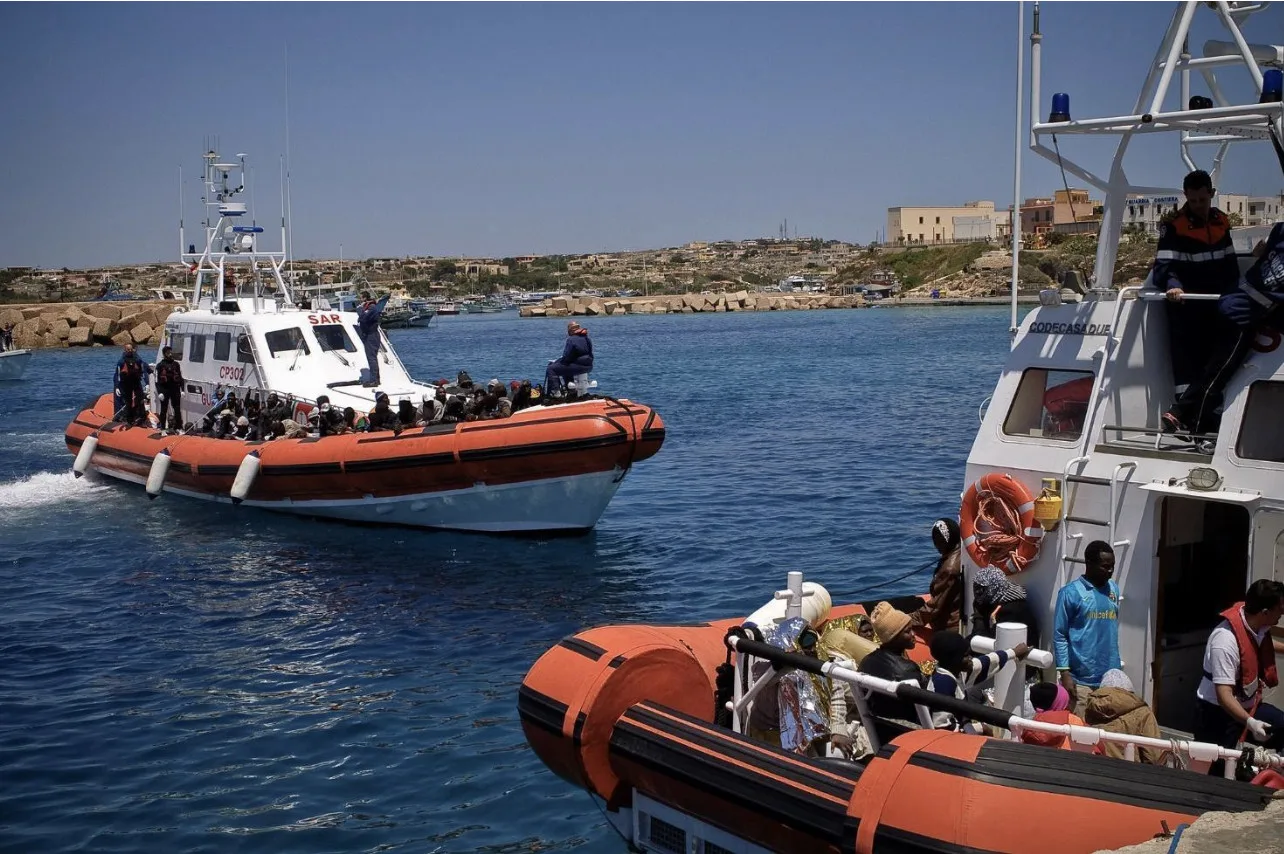
On August 2nd, 2017, the Iuventa rescue ship, under the German NGO Jugend Rettet, had rescued two people after the solicitation of Italian authorities and were asked to head to the port of Lampedusa, Sicily. However, four coastguard vessels with flashing blue lights guided the Iuventa to the dock where the media was waiting upon their arrival. The crew was not aware they were under investigation until one year later. Today, almost five years since the ship was confiscated, four members of the Iuventa are brought in front of the Italian Courts (Giuffrida & Rankin, 2022). In addition, between 2016 and 2017, volunteers from Doctors Without Borders (MSF) and Save the Children rescue boats were accused of “aiding and abetting unauthorised entry into Italy” (Euractiv, 2022). They faced a pre-trial hearing in Sicily, Italy, on May 21st, 2022, over an alleged conspiracy with human traffickers after a controversial inquiry involving mass wiretapping. Trapani judge, Samuele Corso, must determine whether to go forward with the trial after a five-year investigation embroiled in controversy due to the widespread wiretap of charity workers, lawyers and journalists in what is believed to be a politically motivated attempt to halt sea rescues.
According to the International Organisation for Migration (IOM), the Central Mediterranean is the deadliest migratory route in the world, with over 17,000 victims and disappearances since 2014, recorded by the IOM’s Missing Migrants Project. The disappearances are primarily due to the duration of overseas journeys and the increasingly dangerous trafficking patterns, discrepancies in search-and-rescue capability and constraints on the lifesaving effort of NGOs (IOM, 2022). The charity organisations denied ever talking or conspiring with smugglers, who in some cases are armed and can be spotted roaming near rescues in an effort to fetch valuable engine machines from migrant boats. Save the Children told Agence France-Presse (AFP) that it “strongly rejects” the charges, similar to MSF, which hoped that a “period of criminalisation of humanitarian aid” would rapidly end (Euractiv, 2022).
The accusations
The different NGOs are accused of carrying migrants to Europe in cahoots with human smugglers. However, an independent team of experts in digital and oceanography examined photos, videos, weather and oceanic currents, and discovered that the images issued in the Italian media by the prosecution were taken out of context. One photo of an Iuventa rigid rubber boat allegedly hauling a vessel to Libya for reuse by smugglers was proven to be driving north to Europe. The investigation conducted by the UK-based Forensic Architecture revealed that during the trial, “facts are not relied upon to establish a truthful account of events but to construct factual lies” and were lodged in the Italian courthouses (Giuffrida & Rankin, 2022).
Activist Kathrin Schmidt – part of the Iuventa crew – told the Observer before the pre-trial hearing that “everybody knows the pictures and videos of these already unseaworthy, but then overcrowded rubber boat…Stating that there is no necessity to rescue these people is a crime in itself,” adding that “It feels like a never-ending nightmare.” (Giuffrida & Rankin, 2022). The Iuventa’s salvage boat team has saved approximately 14,000 lives in the Mediterranean Sea (Euractiv, 2022). The lawyer representing the Iuventa defendants, Francesca Cancellaro, referred to the case as a unique one due to the investigation’s duration and the employment of undercover agents, inter alia with the “incredible” phone-tapping activity and a trial that involved more than 20 respondents. “I am quite confident that we will show their full innocence,” she stated. “We are talking about people who are involved in rescue operations. They respect the obligation that comes from the law of the sea: the duty to rescue people in distress” (Giuffrida & Rankin, 2022). Trapani’s prosecuting attorney Gabriele Paci reported to the Observer that “the work these organisations do to save people [at sea] is not being contested, but in some cases there are hypotheses, which need to be evaluated by the judge, that there were agreements [made] with traffickers, which meant [the rescuers] then knew when and in which part of the sea [to find migrants]. This is something you cannot do” (Giuffrida & Rankin, 2022).
Conclusion
For observers, this case highlights an alarming propensity to hold the rescuers accountable while at the same time criminalising people who seek asylum or simply a better living standard in a flourishing part of the world less marked by poverty, corruption and the impacts of climate change (Giuffrida & Rankin, 2022). Prosecutor Brunella Sardoni told AFP that she predicted the pre-trial hearings process to last a few months, also in light of the complexity of a case record that counts approximately 30,000 pages and hundreds of CDs (Euroactiv, 2022).
As of May 2022, the number of people who went missing while crossing the Central Mediterranean route is 677, while the recorded missing in the Eastern and Western Mediterranean paths are 55 and 64, respectively (IOM, 2022). It can be concluded that what truly matters is assuring safe migration routes, where people can find a way to reach better living conditions without the fear of being killed on the journey and falling into the traps of human traffickers.
References:
Euractiv. (2022, May 23). Sicily judge to weigh trial of migrant rescue NGOs. Euractiv. Retrieved on 31 May 2022 from https://www.euractiv.com/section/global-europe/news/sicily-judge-to-weigh-trial-of-migrant-rescue-ngos/.
Giuffrida, A. & Rankin, J. (2022, May 22). ‘It’s a never-ending nightmare’: crew of refugee rescue ship facing jail. The Guardian. Retrieved on 31 May 2022 from https://www.theguardian.com/world/2022/may/22/its-a-never-ending-nightmare-crew-of-refugee-rescue-ship-facing-jail.
International Organisation for Migration. (2022). Missing Migrants Project. International Organisation for Migration. Retrieved on 31 May 2022 from https://missingmigrants.iom.int/region/mediterranean.