Reports
Abortion Rights Around the World
- GHRD Team
- 18 July 2022
Abortion, or rather the termination of pregnancy, is and always has been a widely contentious issue worldwide. Abortion is an experience shared by millions of women around the globe and is an essential part in the discussion within Sexual and Reproductive Health (SRH) rights (Popinchalk et al., 2022). The preserving and protecting of SRH rights is discussed during numerous international conventions and protocols, which has pushed many countries to develop better national legislations. However, while some countries in Latin America are liberalising their abortion policies, countries like the United States are becoming more restrictive in the recent years.
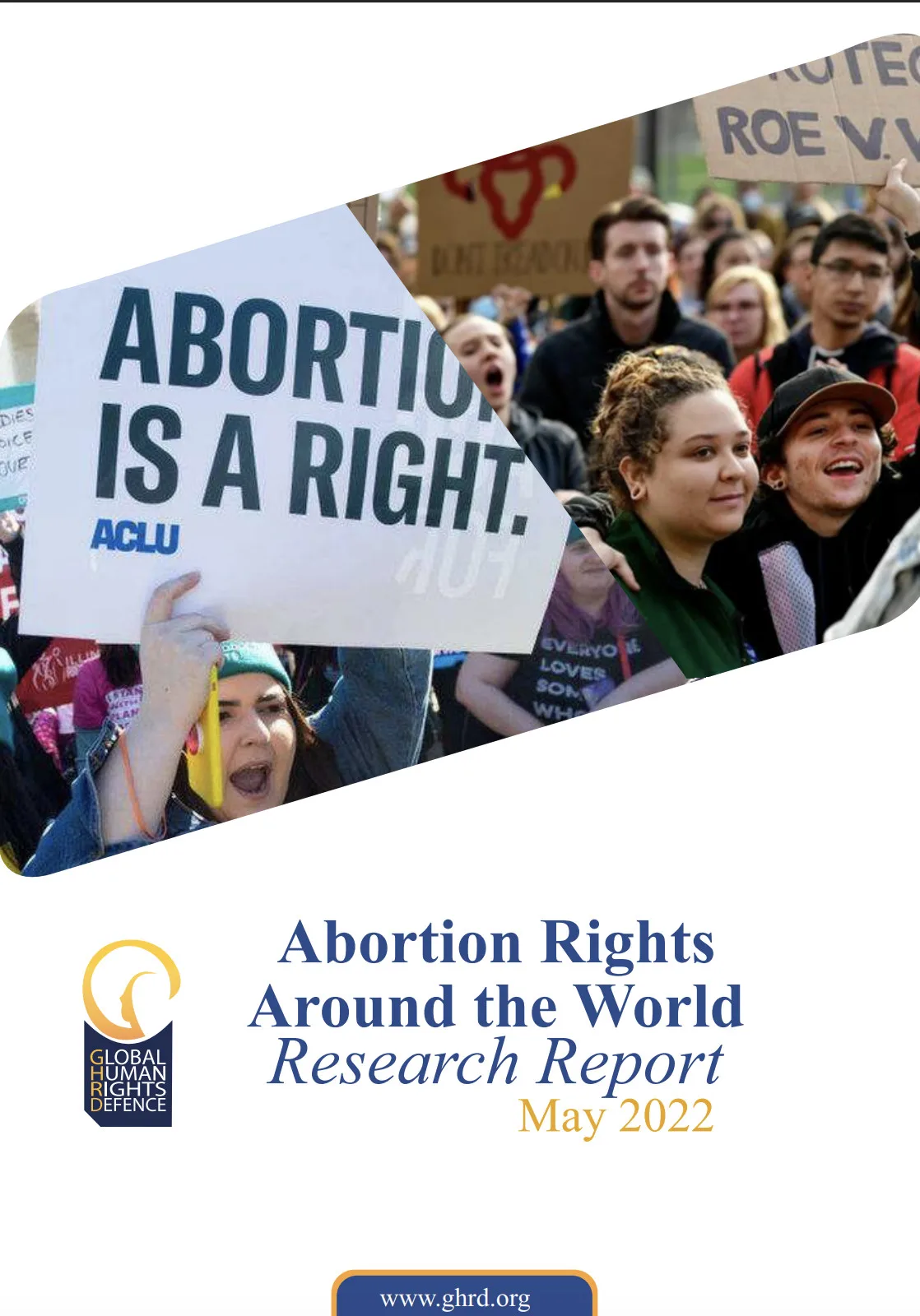
On May 2, 2022, Politico published a leaked draft of the U.S Supreme Court opinion regarding overturning the revolutionary Roe v. Wade (1973) that sponsored constitutional protections for abortions (Johnson, 2022). While overturning Roe v. Wade is not yet finalised, the draft opinion underlines the trend in the United States in limiting women’s reproductive rights. While overturning Roe v. Wade would reduce access to abortion from a constitutional right to one that individual states could decide on, it has been revealed that more than half of the U.S states plan to ban abortion altogether (Johnson, 2022). Overturning Roe v. Wade has had long-lasting effects on each and every person in the United States.
Abortion bans and restriction on safe and legal abortions violates bodily autonomy and bodily integrity. Abortion access must also be considered within the broader context of SRH care. The deterioration of reproductive rights in the United States might encourage states within the country, and even outside the United States, to continue to adopt restrictive policies concerning women’s rights. If Roe v. Wade is successfully overturned, there will be a spill-over effect that would affect international human rights law, endangering numerous women worldwide. Owing to the turn in the tide, this report aims to highlight other countries’ abortion policies. While some countries have made tremendous strides, other countries have been emboldened by the conservative trend in the United States that started long before the Supreme Court decision.
On May 2, 2022, Politico published a leaked draft of the U.S Supreme Court opinion regarding overturning the revolutionary Roe v. Wade (1973) that sponsored constitutional protections for abortions (Johnson, 2022). While overturning Roe v. Wade is not yet finalised, the draft opinion underlines the trend in the United States in limiting women’s reproductive rights. While overturning Roe v. Wade would reduce access to abortion from a constitutional right to one that individual states could decide on, it has been revealed that more than half of the U.S states plan to ban abortion altogether (Johnson, 2022). Overturning Roe v. Wade has had long-lasting effects on each and every person in the United States.
Abortion bans and restriction on safe and legal abortions violates bodily autonomy and bodily integrity. Abortion access must also be considered within the broader context of SRH care. The deterioration of reproductive rights in the United States might encourage states within the country, and even outside the United States, to continue to adopt restrictive policies concerning women’s rights. If Roe v. Wade is successfully overturned, there will be a spill-over effect that would affect international human rights law, endangering numerous women worldwide. Owing to the turn in the tide, this report aims to highlight other countries’ abortion policies. While some countries have made tremendous strides, other countries have been emboldened by the conservative trend in the United States that started long before the Supreme Court decision.
✨ AI summary
Abortion, or rather the termination of pregnancy, is and always has been a widely contentious issue worldwide. Abortion is an experience shared by millions of women around the globe and is an essential part in the discussion within Sexual and Reproductive Health (SRH) rights (Popinchalk et al., 2022). The preserving and protecting of SRH rights is discussed during numerous international conventions and protocols, which has pushed many countries to develop better national legislations. However, while some countries in Latin America are liberalising their abortion policies, countries like the United States are becoming more restrictive in the recent years.
On May 2, 2022, Politico published a leaked draft of the U.S Supreme Court opinion regarding overturning the revolutionary Roe v. Wade (1973) that sponsored constitutional protections for abortions (Johnson, 2022). While overturning Roe v. Wade is not yet finalised, the draft opinion underlines the trend in the United States in limiting women’s reproductive rights. While overturning Roe v. Wade would reduce access to abortion from a constitutional right to one that individual states could decide on, it has been revealed that more than half of the U.S states plan to ban abortion altogether (Johnson, 2022). Overturning Roe v. Wade has had long-lasting effects on each and every person in the United States.
Abortion bans and restriction on safe and legal abortions violates bodily autonomy and bodily integrity. Abortion access must also be considered within the broader context of SRH care. The deterioration of reproductive rights in the United States might encourage states within the country, and even outside the United States, to continue to adopt restrictive policies concerning women’s rights. If Roe v. Wade is successfully overturned, there will be a spill-over effect that would affect international human rights law, endangering numerous women worldwide. Owing to the turn in the tide, this report aims to highlight other countries’ abortion policies. While some countries have made tremendous strides, other countries have been emboldened by the conservative trend in the United States that started long before the Supreme Court decision.
On May 2, 2022, Politico published a leaked draft of the U.S Supreme Court opinion regarding overturning the revolutionary Roe v. Wade (1973) that sponsored constitutional protections for abortions (Johnson, 2022). While overturning Roe v. Wade is not yet finalised, the draft opinion underlines the trend in the United States in limiting women’s reproductive rights. While overturning Roe v. Wade would reduce access to abortion from a constitutional right to one that individual states could decide on, it has been revealed that more than half of the U.S states plan to ban abortion altogether (Johnson, 2022). Overturning Roe v. Wade has had long-lasting effects on each and every person in the United States.
Abortion bans and restriction on safe and legal abortions violates bodily autonomy and bodily integrity. Abortion access must also be considered within the broader context of SRH care. The deterioration of reproductive rights in the United States might encourage states within the country, and even outside the United States, to continue to adopt restrictive policies concerning women’s rights. If Roe v. Wade is successfully overturned, there will be a spill-over effect that would affect international human rights law, endangering numerous women worldwide. Owing to the turn in the tide, this report aims to highlight other countries’ abortion policies. While some countries have made tremendous strides, other countries have been emboldened by the conservative trend in the United States that started long before the Supreme Court decision.
Share this report
Facebook
X
LinkedIn
WhatsApp