Reports
Internally displaced persons
- Asia Team
- 5 July 2024
Internal displacement affects millions globally, stemming from diverse factors that present unique humanitarian challenges. According to the the Guiding Principles on Internal Displacement, Internally Displaced Persons (IDPs) are:
Persons or groups of persons who have been forced or obliged to flee or to leave their homes or places of habitual residence, in particular as a result of or in order to avoid the effects of armed conflict, situations of generalised violence, violations of human rights or natural or human-made disasters, and who have not crossed an internationally recognized border.
Although refugees and internally displaced persons (IDPs) share common elements, particularly regarding causational factors, they differ fundamentally: IDPs have not crossed international borders and remain displaced within their country of origin. In line with the Guiding Principles on Internal Displacement, which is an international, non-legally binding instrument outlining the rights and protections for IDPs, several factors can be considered drivers of internal displacement. These factors may include armed conflict, generalised violence, gross violations of human rights, and natural or human-caused disasters. Armed conflict and generalised violence are primary drivers, displacing civilians who flee their homes to escape violence, persecution, or threats to their lives. Natural disasters and climate change-induced events such as earthquakes, hurricanes, floods, and droughts, also contribute significantly to displacement, as environmental degradation and loss of livelihood forces people to relocate. Furthermore, large-scale development projects like dams, mining operations, and agricultural initiatives, often lead to the displacement of communities reliant on local resources, raising serious human rights concerns about adequate compensation and resettlement. These causes collectively highlight the multifaceted nature of internal displacement and the urgent need for comprehensive responses to protect the rights of affected populations worldwide.
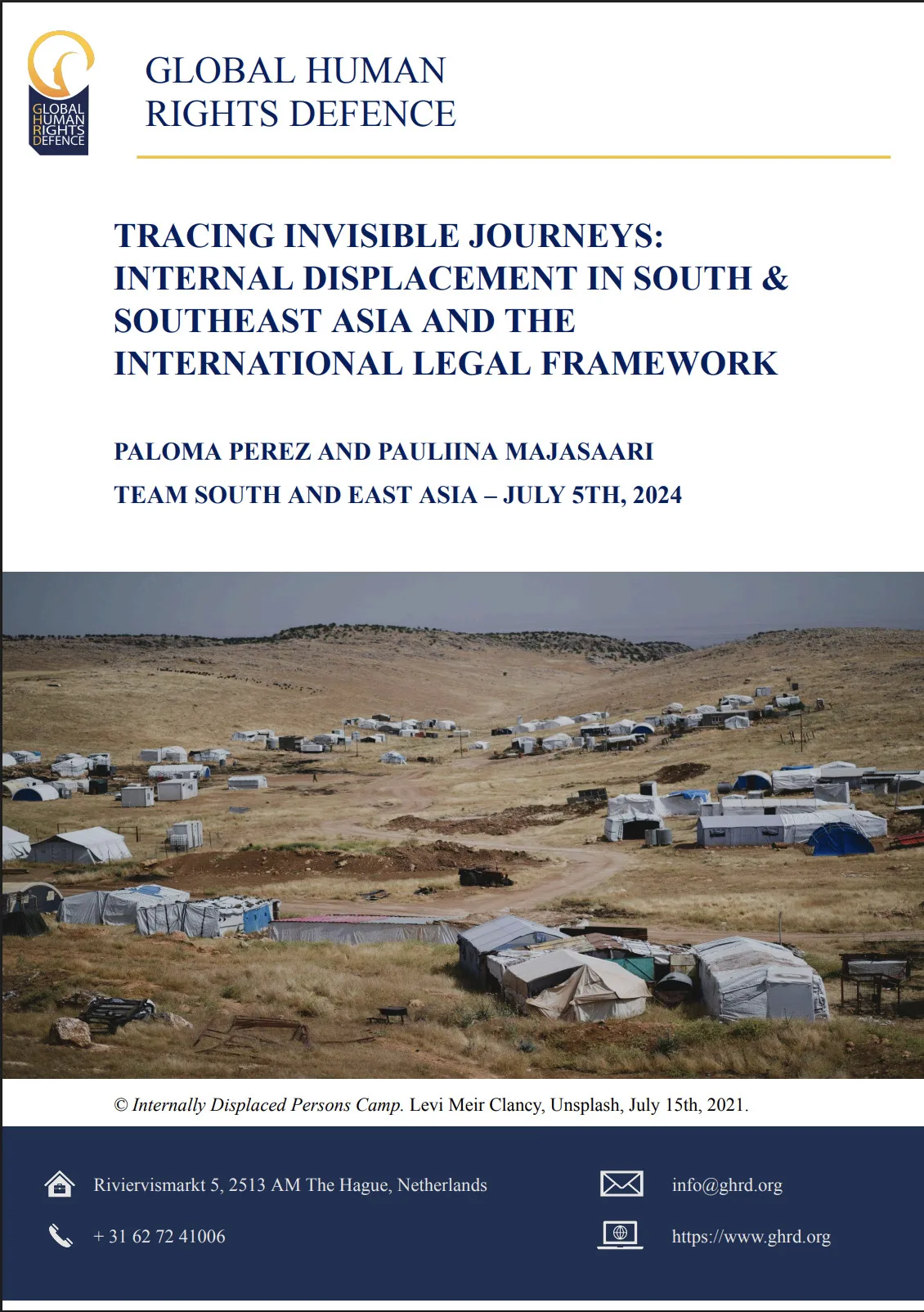
As conflict persists, climate change intensifies, and development projects expand, the number of IDPs continues to rise. These individuals are often thrust into precarious conditions, lacking adequate shelter, access to healthcare, and livelihood opportunities. The absence of comprehensive legal frameworks tailored specifically to IDPs exacerbates their vulnerability, leaving them reliant on piecemeal protections offered through soft law instruments and human rights treaties. Addressing internal displacement is crucial not only for humanitarian reasons, but also for ensuring sustainable development and global stability. The impacts of displacement extend far beyond immediate humanitarian aid, influencing economic growth, social cohesion, and environmental sustainability.
This report begins by contextualising internal displacement within the international legal framework, followed by an analysis of its impact on affected communities. Through case studies from Myanmar, Nepal, and India, the report illustrates the previously mentioned causes of internal displacement, emphasising human rights violations and socio-economic repercussions. Furthermore, the report discusses the roles of key stakeholders, including international organisations, governments, and humanitarian agencies, in responding to and mitigating the effects of displacement.
Persons or groups of persons who have been forced or obliged to flee or to leave their homes or places of habitual residence, in particular as a result of or in order to avoid the effects of armed conflict, situations of generalised violence, violations of human rights or natural or human-made disasters, and who have not crossed an internationally recognized border.
Although refugees and internally displaced persons (IDPs) share common elements, particularly regarding causational factors, they differ fundamentally: IDPs have not crossed international borders and remain displaced within their country of origin. In line with the Guiding Principles on Internal Displacement, which is an international, non-legally binding instrument outlining the rights and protections for IDPs, several factors can be considered drivers of internal displacement. These factors may include armed conflict, generalised violence, gross violations of human rights, and natural or human-caused disasters. Armed conflict and generalised violence are primary drivers, displacing civilians who flee their homes to escape violence, persecution, or threats to their lives. Natural disasters and climate change-induced events such as earthquakes, hurricanes, floods, and droughts, also contribute significantly to displacement, as environmental degradation and loss of livelihood forces people to relocate. Furthermore, large-scale development projects like dams, mining operations, and agricultural initiatives, often lead to the displacement of communities reliant on local resources, raising serious human rights concerns about adequate compensation and resettlement. These causes collectively highlight the multifaceted nature of internal displacement and the urgent need for comprehensive responses to protect the rights of affected populations worldwide.
As conflict persists, climate change intensifies, and development projects expand, the number of IDPs continues to rise. These individuals are often thrust into precarious conditions, lacking adequate shelter, access to healthcare, and livelihood opportunities. The absence of comprehensive legal frameworks tailored specifically to IDPs exacerbates their vulnerability, leaving them reliant on piecemeal protections offered through soft law instruments and human rights treaties. Addressing internal displacement is crucial not only for humanitarian reasons, but also for ensuring sustainable development and global stability. The impacts of displacement extend far beyond immediate humanitarian aid, influencing economic growth, social cohesion, and environmental sustainability.
This report begins by contextualising internal displacement within the international legal framework, followed by an analysis of its impact on affected communities. Through case studies from Myanmar, Nepal, and India, the report illustrates the previously mentioned causes of internal displacement, emphasising human rights violations and socio-economic repercussions. Furthermore, the report discusses the roles of key stakeholders, including international organisations, governments, and humanitarian agencies, in responding to and mitigating the effects of displacement.
✨ AI summary
Internal displacement affects millions globally, stemming from diverse factors that present unique humanitarian challenges. According to the the Guiding Principles on Internal Displacement, Internally Displaced Persons (IDPs) are:
Persons or groups of persons who have been forced or obliged to flee or to leave their homes or places of habitual residence, in particular as a result of or in order to avoid the effects of armed conflict, situations of generalised violence, violations of human rights or natural or human-made disasters, and who have not crossed an internationally recognized border.
Although refugees and internally displaced persons (IDPs) share common elements, particularly regarding causational factors, they differ fundamentally: IDPs have not crossed international borders and remain displaced within their country of origin. In line with the Guiding Principles on Internal Displacement, which is an international, non-legally binding instrument outlining the rights and protections for IDPs, several factors can be considered drivers of internal displacement. These factors may include armed conflict, generalised violence, gross violations of human rights, and natural or human-caused disasters. Armed conflict and generalised violence are primary drivers, displacing civilians who flee their homes to escape violence, persecution, or threats to their lives. Natural disasters and climate change-induced events such as earthquakes, hurricanes, floods, and droughts, also contribute significantly to displacement, as environmental degradation and loss of livelihood forces people to relocate. Furthermore, large-scale development projects like dams, mining operations, and agricultural initiatives, often lead to the displacement of communities reliant on local resources, raising serious human rights concerns about adequate compensation and resettlement. These causes collectively highlight the multifaceted nature of internal displacement and the urgent need for comprehensive responses to protect the rights of affected populations worldwide.
As conflict persists, climate change intensifies, and development projects expand, the number of IDPs continues to rise. These individuals are often thrust into precarious conditions, lacking adequate shelter, access to healthcare, and livelihood opportunities. The absence of comprehensive legal frameworks tailored specifically to IDPs exacerbates their vulnerability, leaving them reliant on piecemeal protections offered through soft law instruments and human rights treaties. Addressing internal displacement is crucial not only for humanitarian reasons, but also for ensuring sustainable development and global stability. The impacts of displacement extend far beyond immediate humanitarian aid, influencing economic growth, social cohesion, and environmental sustainability.
This report begins by contextualising internal displacement within the international legal framework, followed by an analysis of its impact on affected communities. Through case studies from Myanmar, Nepal, and India, the report illustrates the previously mentioned causes of internal displacement, emphasising human rights violations and socio-economic repercussions. Furthermore, the report discusses the roles of key stakeholders, including international organisations, governments, and humanitarian agencies, in responding to and mitigating the effects of displacement.
Persons or groups of persons who have been forced or obliged to flee or to leave their homes or places of habitual residence, in particular as a result of or in order to avoid the effects of armed conflict, situations of generalised violence, violations of human rights or natural or human-made disasters, and who have not crossed an internationally recognized border.
Although refugees and internally displaced persons (IDPs) share common elements, particularly regarding causational factors, they differ fundamentally: IDPs have not crossed international borders and remain displaced within their country of origin. In line with the Guiding Principles on Internal Displacement, which is an international, non-legally binding instrument outlining the rights and protections for IDPs, several factors can be considered drivers of internal displacement. These factors may include armed conflict, generalised violence, gross violations of human rights, and natural or human-caused disasters. Armed conflict and generalised violence are primary drivers, displacing civilians who flee their homes to escape violence, persecution, or threats to their lives. Natural disasters and climate change-induced events such as earthquakes, hurricanes, floods, and droughts, also contribute significantly to displacement, as environmental degradation and loss of livelihood forces people to relocate. Furthermore, large-scale development projects like dams, mining operations, and agricultural initiatives, often lead to the displacement of communities reliant on local resources, raising serious human rights concerns about adequate compensation and resettlement. These causes collectively highlight the multifaceted nature of internal displacement and the urgent need for comprehensive responses to protect the rights of affected populations worldwide.
As conflict persists, climate change intensifies, and development projects expand, the number of IDPs continues to rise. These individuals are often thrust into precarious conditions, lacking adequate shelter, access to healthcare, and livelihood opportunities. The absence of comprehensive legal frameworks tailored specifically to IDPs exacerbates their vulnerability, leaving them reliant on piecemeal protections offered through soft law instruments and human rights treaties. Addressing internal displacement is crucial not only for humanitarian reasons, but also for ensuring sustainable development and global stability. The impacts of displacement extend far beyond immediate humanitarian aid, influencing economic growth, social cohesion, and environmental sustainability.
This report begins by contextualising internal displacement within the international legal framework, followed by an analysis of its impact on affected communities. Through case studies from Myanmar, Nepal, and India, the report illustrates the previously mentioned causes of internal displacement, emphasising human rights violations and socio-economic repercussions. Furthermore, the report discusses the roles of key stakeholders, including international organisations, governments, and humanitarian agencies, in responding to and mitigating the effects of displacement.
Share this report
Facebook
X
LinkedIn
WhatsApp