Reports
Yazidi Children Report
- GHRD Team
- 30 July 2024
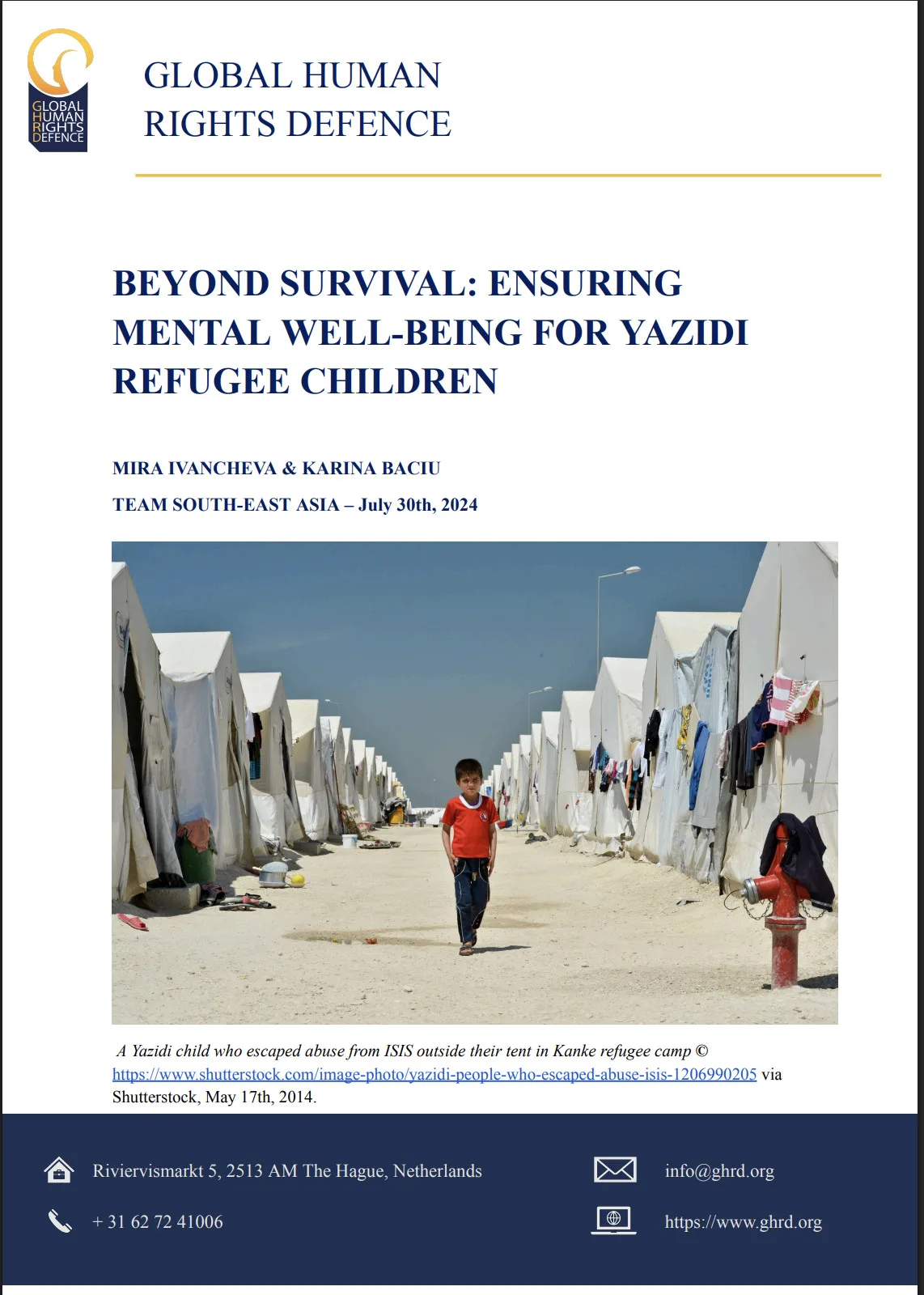
The Yazidi community, an ethno-religious minority from Iraq’s Sinjar region, has endured horrific atrocities since 2014, when ISIS militants began a campaign of genocide against them. Yazidi children in particular have faced unimaginable horrors, including abduction, enslavement, and witnessing the brutal killing of family members. These experiences have left deep psychological scars, making mental health support an urgent priority for this vulnerable group.
International human rights legislation, such as the United Nations Convention on the Rights of the Child (UNCRC), mandate that children who have experienced severe trauma receive special care to aid their recovery and reintegration. Despite these legal protections, the reality for Yazidi refugee children often falls short of these standards. Many suffer from post-traumatic stress disorder (PTSD), anxiety, depression, and other severe mental health conditions, exhibiting symptoms like nightmares, flashbacks, and social withdrawal.
Mental health support for Yazidi refugee children is critically lacking. Refugee camps face a shortage of trained mental health professionals and culturally sensitive services. Efforts by the United Nations High Commissioner for Refugees (UNHCR) and NGOs like Médecins Sans Frontières (MSF) and Amnesty International provide trauma counselling and support groups but are often limited by resources and the great scale of need. Addressing this crisis requires training healthcare providers in trauma-informed care, integrating mental health services into broader healthcare and education systems, and ensuring refugees’ inclusion in national health systems to provide comprehensive support.
This report explores the mental health rights and support systems available to Yazidi refugee children from a human rights law perspective, highlighting the gaps in current frameworks and proposing actionable improvements to ensure their psychological well-being.
International human rights legislation, such as the United Nations Convention on the Rights of the Child (UNCRC), mandate that children who have experienced severe trauma receive special care to aid their recovery and reintegration. Despite these legal protections, the reality for Yazidi refugee children often falls short of these standards. Many suffer from post-traumatic stress disorder (PTSD), anxiety, depression, and other severe mental health conditions, exhibiting symptoms like nightmares, flashbacks, and social withdrawal.
Mental health support for Yazidi refugee children is critically lacking. Refugee camps face a shortage of trained mental health professionals and culturally sensitive services. Efforts by the United Nations High Commissioner for Refugees (UNHCR) and NGOs like Médecins Sans Frontières (MSF) and Amnesty International provide trauma counselling and support groups but are often limited by resources and the great scale of need. Addressing this crisis requires training healthcare providers in trauma-informed care, integrating mental health services into broader healthcare and education systems, and ensuring refugees’ inclusion in national health systems to provide comprehensive support.
This report explores the mental health rights and support systems available to Yazidi refugee children from a human rights law perspective, highlighting the gaps in current frameworks and proposing actionable improvements to ensure their psychological well-being.
✨ AI summary
The Yazidi community, an ethno-religious minority from Iraq’s Sinjar region, has endured horrific atrocities since 2014, when ISIS militants began a campaign of genocide against them. Yazidi children in particular have faced unimaginable horrors, including abduction, enslavement, and witnessing the brutal killing of family members. These experiences have left deep psychological scars, making mental health support an urgent priority for this vulnerable group.
International human rights legislation, such as the United Nations Convention on the Rights of the Child (UNCRC), mandate that children who have experienced severe trauma receive special care to aid their recovery and reintegration. Despite these legal protections, the reality for Yazidi refugee children often falls short of these standards. Many suffer from post-traumatic stress disorder (PTSD), anxiety, depression, and other severe mental health conditions, exhibiting symptoms like nightmares, flashbacks, and social withdrawal.
Mental health support for Yazidi refugee children is critically lacking. Refugee camps face a shortage of trained mental health professionals and culturally sensitive services. Efforts by the United Nations High Commissioner for Refugees (UNHCR) and NGOs like Médecins Sans Frontières (MSF) and Amnesty International provide trauma counselling and support groups but are often limited by resources and the great scale of need. Addressing this crisis requires training healthcare providers in trauma-informed care, integrating mental health services into broader healthcare and education systems, and ensuring refugees’ inclusion in national health systems to provide comprehensive support.
This report explores the mental health rights and support systems available to Yazidi refugee children from a human rights law perspective, highlighting the gaps in current frameworks and proposing actionable improvements to ensure their psychological well-being.
International human rights legislation, such as the United Nations Convention on the Rights of the Child (UNCRC), mandate that children who have experienced severe trauma receive special care to aid their recovery and reintegration. Despite these legal protections, the reality for Yazidi refugee children often falls short of these standards. Many suffer from post-traumatic stress disorder (PTSD), anxiety, depression, and other severe mental health conditions, exhibiting symptoms like nightmares, flashbacks, and social withdrawal.
Mental health support for Yazidi refugee children is critically lacking. Refugee camps face a shortage of trained mental health professionals and culturally sensitive services. Efforts by the United Nations High Commissioner for Refugees (UNHCR) and NGOs like Médecins Sans Frontières (MSF) and Amnesty International provide trauma counselling and support groups but are often limited by resources and the great scale of need. Addressing this crisis requires training healthcare providers in trauma-informed care, integrating mental health services into broader healthcare and education systems, and ensuring refugees’ inclusion in national health systems to provide comprehensive support.
This report explores the mental health rights and support systems available to Yazidi refugee children from a human rights law perspective, highlighting the gaps in current frameworks and proposing actionable improvements to ensure their psychological well-being.
Share this report
Facebook
X
LinkedIn
WhatsApp