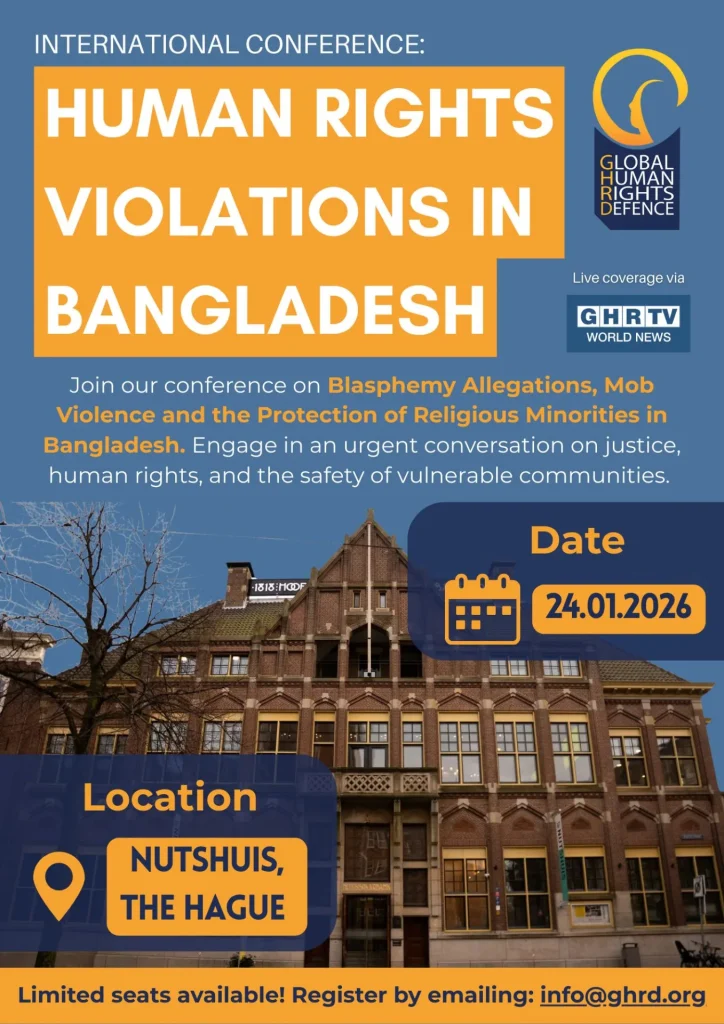
On 24 January 2026, Global Human Rights Defence (GHRD) organized an international conference in The Hague titled “Blasphemy Allegations, Mob Violence and the Protection of Religious Minorities in Bangladesh.”
The event brought together policymakers, academics, journalists, legal experts, and civil society representatives to examine the escalating human rights challenges faced by religious minorities in Bangladesh.
Keynote Address
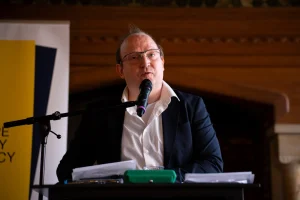
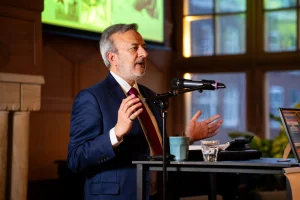
The conference opened with a keynote address by Dr. Anthonie Holslag, who examined the relationship between blasphemy laws, impunity, and the phenomenon described by genocide scholars as “creeping genocide.” His analysis highlighted how legal frameworks and prolonged institutional inaction can enable cycles of targeted violence against minorities to persist over time.
- Read the full keynote address: “The Relationship Between Blasphemy Laws, Impunity and the Phenomenon of ‘Creeping Genocide’ in the Chittagong Hill Tracts.”
Panel Discussions
Legal Frameworks, State Responsibility, and Access to Justice
The first panel examined the legal and institutional conditions enabling violence against religious minorities in Bangladesh. Speakers analysed the application of blasphemy-related provisions alongside broader security and property laws, highlighting how these frameworks have often facilitated impunity rather than protection. Attention was also given to administrative practices that contribute to dispossession, prolonged detention, and restricted access to remedies.
Media, Narratives, and the Role of Civil Society
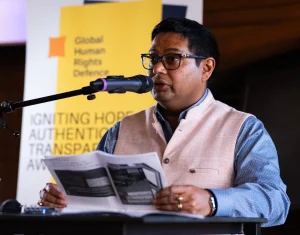
The second panel focused on the role of media ecosystems in shaping public understanding of violence against minorities. Discussions addressed the impact of misinformation, selective reporting, and the rapid spread of unverified allegations—particularly via social media—in escalating mob violence. Panelists also emphasised the importance of independent journalism, civil society documentation, and diaspora-led advocacy in countering silence and denial.
- Read Priyajit Debsarkar’s press release, “Bangladesh, Between the Ditch and the Deep Blue Bay,” for further geopolitical analysis presented during the conference.
- Read Andy Vermaut’s press release, “International Conference on Blasphemy Allegations in Bangladesh Concluded,” reflecting on the discussions and conclusions of the event.
International Responses and Accountability
The third panel examined international responses to the human rights situation in Bangladesh, with particular attention to the roles of the United Nations, the European Union, and national governments. Speakers discussed challenges in translating documentation and reporting into effective international action, especially where political and economic considerations compete with human rights commitments.
Participants stressed the need for consistent monitoring, credible data collection, and principled international engagement to prevent further deterioration of the situation for religious minorities.
- Read the Progga News Desk coverage: “The Hague Reviews Escalating Human Rights Violations Against Religious Minorities in Bangladesh.”
- Read Bangla Mirror’s coverage: “International Conference on Human Rights Allegations in Bangladesh.”
Speakers
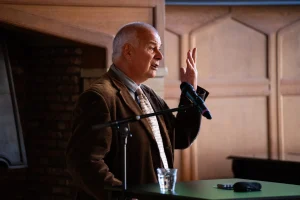
Our conference brought together a diverse group of international experts, policymakers, academics, activists, and human rights advocates. Their combined expertise spanned international law, minority protection, freedom of religion or belief, genocide studies, public health, environmental justice, and democratic governance. Together, they offered critical perspectives on blasphemy allegations, mob violence, and the protection of religious minorities in Bangladesh within a global human rights framework.
Priyajit Debsarkar – Author and Geopolitical Analyst based in London, specialising in international relations and historical conflicts. He has published multiple books with a focus on East Pakistan and the 1999 Kargil War and is best known for The Last Raja of West Pakistan. He is also a regular columnist for leading English and Bengali newspapers across Canada, the UK, Switzerland, India, Bangladesh, and Hong Kong.
Paulo Casaca – Founder and Executive Director of the South Asia Democratic Forum and ARCHumankind, and former Member of the European Parliament (1999–2009). He has held several senior political and advisory roles at national and European level. He is the author of multiple books and reports on economics and international politics.
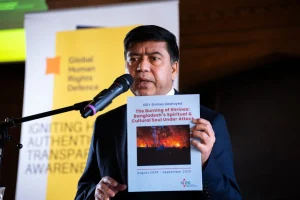
Professor Dr. Md. Habibe Millat – Cardiothoracic surgeon trained in Bangladesh, the UK, Europe, and at Harvard Medical School. Former Member of Bangladesh Parliament (2014–2024) and professor of cardiac surgery in Dhaka. He is a strong advocate for universal health coverage, women and youth empowerment, and public health initiatives.
Rahman Khalilur Mamun – Human rights activist and journalist, and Principal Representative of Tumuku Development and Cultural Union (TACUDU), an ECOSOC organisation. He is Executive President of the International Forum for Secular Bangladesh, Switzerland chapter. His work focuses on secularism, minority rights, and human rights advocacy.
Dina Perla Portnaar – Author, speaker, and critical thinker focusing on humanism and the ethical consequences of belief systems. Her work addresses minority protection, women’s and children’s safety, and moral dilemmas within traditional practices. She is a TEDxAmsterdamWomen speaker and author of the forthcoming philosophical novel Memos from the Edge (March 2026).
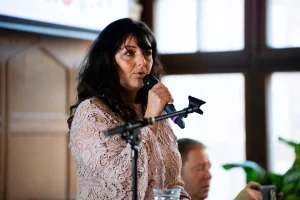
Harry van Bommel (Moderator) – Political consultant and human rights activist, and former member of the Dutch Parliament (1998–2017). His parliamentary work focused on foreign policy, human rights, democracy, and international conflicts. He has served as an international election observer for the OSCE and advises NGOs and governments on international relations and development.
Dr. Anthonie Holslag – Dutch scientist and novelist specialised in anthropology andgenocide studies. His work focuses on state radicalisation, cultural destruction, and the mechanisms that lead to genocide. He has advised the European Parliament on radicalisation and extremism and participated in fact-finding missions, including on the 1971 genocide in Bangladesh.
Nawin Ramcharan – Dutch politician and public administration specialist with a background in public administration and sociology. Founder of the student party Liberi Erasmi, promoting academic freedom and democratic values. Former parliamentary candidate focusing on security, prosperity, migration, and strengthening democracy.
Closing Reflections
In the closing address, Wiktoria Walczyk, Head Coordinator of GHRD, summarised the conference’s key findings and emphasised the growing disconnect between constitutional commitments and lived realities for religious minorities in Bangladesh. She highlighted the need for sustained international attention grounded in evidence, accountability, and international human rights law.
The conference reaffirmed that the protection of religious minorities in Bangladesh is not solely a domestic matter, but a shared international responsibility.

Watch the Conference
The full conference was livestreamed and remains available for viewing.