
Reports
Religious Minorities and Indigenous Communities in Post-July 2024 Bangladesh
- GHRD Team
- 5 April 2025
Since Bangladesh’s independence from Pakistan in 1971, the country has witnessed a continuous struggle between democratic aspirations and autocratic resurgence. This tension reached a critical point during the 2024 national elections, marking one of the most controversial political transitions in the country’s history. After 15 years of leadership, the world’s longest-serving female prime minister, Sheikh Hasina, fled to India in self-imposed exile following months of protests. Her premiership, characterised by widespread repression of dissent, accusations of electoral fraud, silencing critics and systematic violations of civil liberties, catalysed national unrest, which ended with the “July Revolution”. The power vacuum created by this transitional period and the absence of a functioning law enforcement system exposed minorities, particularly Hindus, Ahmadiyya Muslims, Buddhists, Christians and the indigenous groups in the Chittagong Hill Tracts (CHT) to widespread attacks and human rights violations (OHCHR, 2025, p. 3).
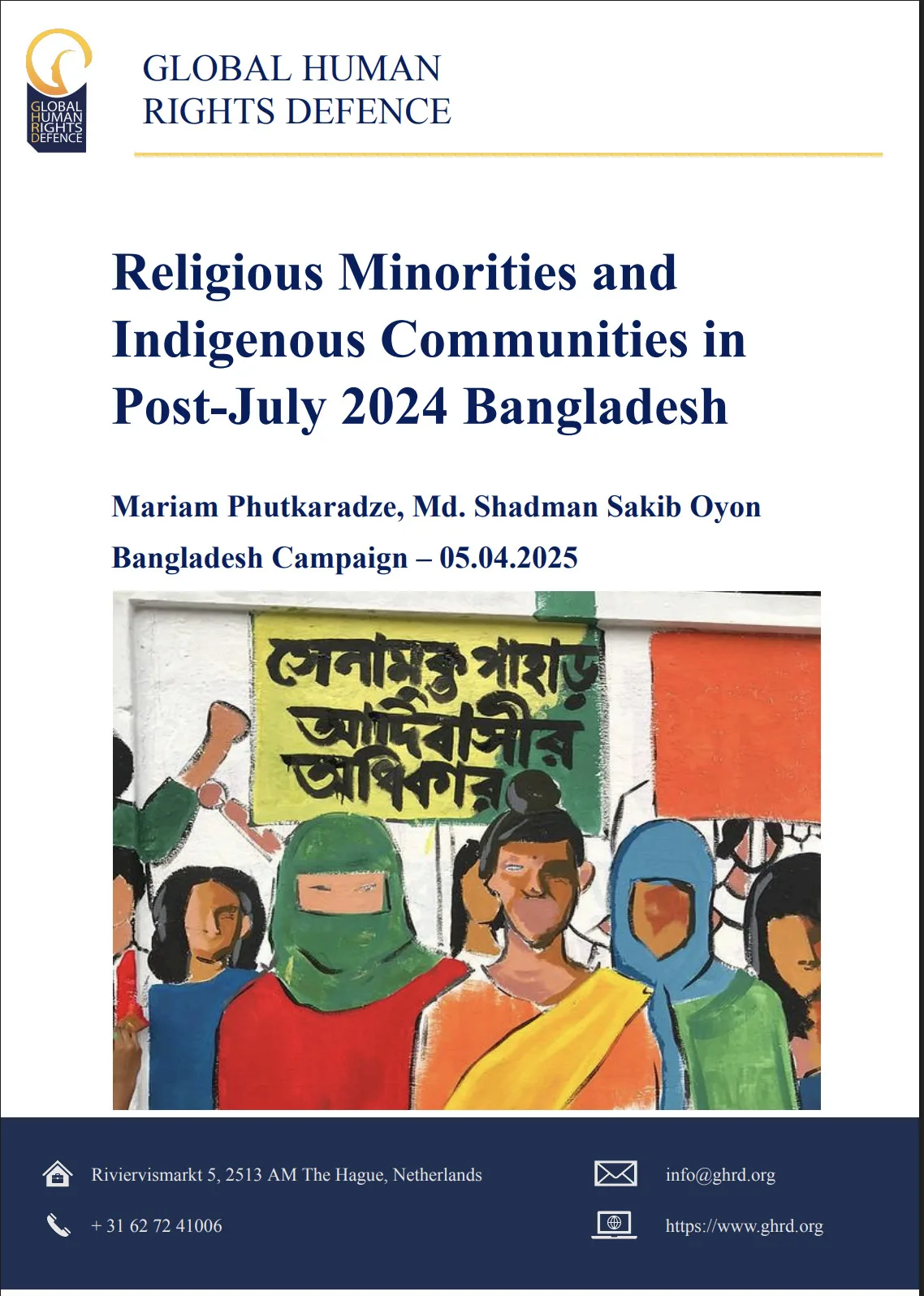
Following the July Revolution, religious minorities and indigenous groups became disproportionately affected by scapegoating, exclusion, and hate crimes. Attacks on homes, places of worship, and businesses – often driven by a combination of religious, ethnic, political (revenge violence against Awami League supporters), and communal motives – revealed both the ineffectiveness of state institutions and the enduring legacies of discrimination (OHCHR, 2025). While the interim government, led by Muhammad Yunus, has promised reforms, aimed at building an inclusive, non-sectarian democracy, issues such as the persistence of civil unrest and mob violence, the systematic impunity of state institutions, and broader geopolitical tensions with neighbouring India still require attention to drive meaningful change.
The report critically examines the status and rights of religious minorities and Indigenous communities in the wake of the July Revolution. It traces the historical processes that shaped their political marginalisation by evaluating structural inequalities and legal shortcomings both before and after the July revolution. It further examines the ongoing efforts by the interim government and situates the conditions of minority communities within the broader context of Bangladesh’s prospective political change.
✨ AI summary
Since Bangladesh’s independence from Pakistan in 1971, the country has witnessed a continuous struggle between democratic aspirations and autocratic resurgence. This tension reached a critical point during the 2024 national elections, marking one of the most controversial political transitions in the country’s history. After 15 years of leadership, the world’s longest-serving female prime minister, Sheikh Hasina, fled to India in self-imposed exile following months of protests. Her premiership, characterised by widespread repression of dissent, accusations of electoral fraud, silencing critics and systematic violations of civil liberties, catalysed national unrest, which ended with the “July Revolution”. The power vacuum created by this transitional period and the absence of a functioning law enforcement system exposed minorities, particularly Hindus, Ahmadiyya Muslims, Buddhists, Christians and the indigenous groups in the Chittagong Hill Tracts (CHT) to widespread attacks and human rights violations (OHCHR, 2025, p. 3).
Following the July Revolution, religious minorities and indigenous groups became disproportionately affected by scapegoating, exclusion, and hate crimes. Attacks on homes, places of worship, and businesses – often driven by a combination of religious, ethnic, political (revenge violence against Awami League supporters), and communal motives – revealed both the ineffectiveness of state institutions and the enduring legacies of discrimination (OHCHR, 2025). While the interim government, led by Muhammad Yunus, has promised reforms, aimed at building an inclusive, non-sectarian democracy, issues such as the persistence of civil unrest and mob violence, the systematic impunity of state institutions, and broader geopolitical tensions with neighbouring India still require attention to drive meaningful change.
The report critically examines the status and rights of religious minorities and Indigenous communities in the wake of the July Revolution. It traces the historical processes that shaped their political marginalisation by evaluating structural inequalities and legal shortcomings both before and after the July revolution. It further examines the ongoing efforts by the interim government and situates the conditions of minority communities within the broader context of Bangladesh’s prospective political change.
Following the July Revolution, religious minorities and indigenous groups became disproportionately affected by scapegoating, exclusion, and hate crimes. Attacks on homes, places of worship, and businesses – often driven by a combination of religious, ethnic, political (revenge violence against Awami League supporters), and communal motives – revealed both the ineffectiveness of state institutions and the enduring legacies of discrimination (OHCHR, 2025). While the interim government, led by Muhammad Yunus, has promised reforms, aimed at building an inclusive, non-sectarian democracy, issues such as the persistence of civil unrest and mob violence, the systematic impunity of state institutions, and broader geopolitical tensions with neighbouring India still require attention to drive meaningful change.
The report critically examines the status and rights of religious minorities and Indigenous communities in the wake of the July Revolution. It traces the historical processes that shaped their political marginalisation by evaluating structural inequalities and legal shortcomings both before and after the July revolution. It further examines the ongoing efforts by the interim government and situates the conditions of minority communities within the broader context of Bangladesh’s prospective political change.
Share this report
Facebook
X
LinkedIn
WhatsApp