
Introduction
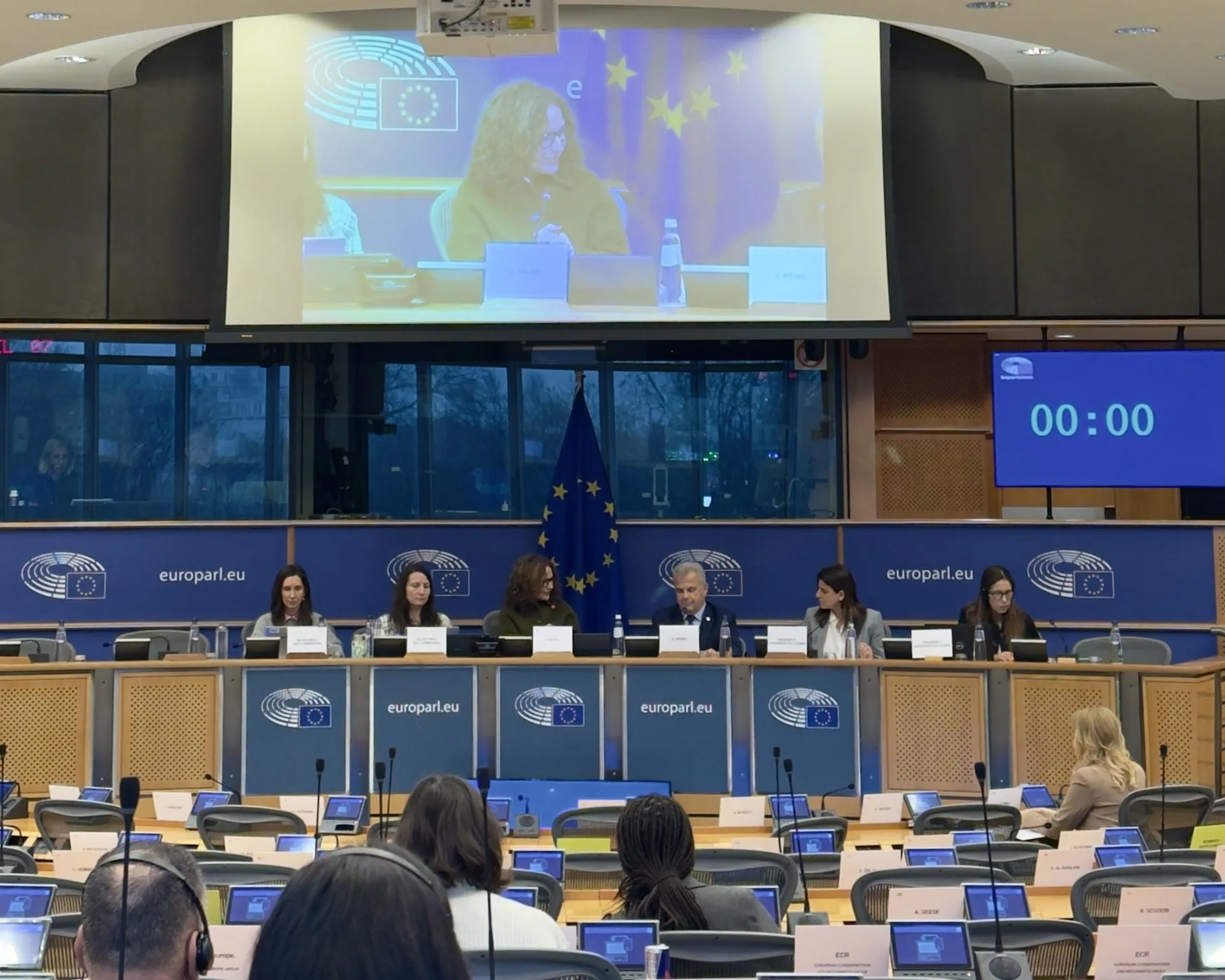
On 27 January 2026, the European Parliament’s Committee on Human Rights (DROI) conducted an exchange of views with the recently returned mission to the Republic of Türkiye to assess the state of human rights, the rule of law, and democratic governance in the context of EU-Türkiye relations. The mission was led by rapporteur Isabel Wiseler-Lima (MEP) and included exchanges with representatives of governing and opposition political parties, civil society organisations, journalists, and independent media actors.
EU-Türkiye Relations and Accession Conditionality
Discussions with Turkish political stakeholders addressed the broader framework of EU-Türkiye relations, including the accession process. Members of the delegation reiterated that, while the EU considers its relationship with Türkiye to be strategic, accession to the European Union remains conditional upon adherence to core values, notably democracy, human rights, and the rule of law. The mission sought to provide an objective assessment of the implementation of existing European Parliament resolutions and commitments undertaken by Türkiye.
Engagement with Civil Society and Independent Media
The delegation met with civil society representatives and members of the independent media, who emphasised the importance of sustained EU engagement and support. These actors underlined that European political attention and financial assistance remain critical to their ability to operate and to maintain hope for democratic change in the country.
Rule of Law and Human Rights Assessment
The assessment of the human rights and rule of law situation on the ground was described as deeply concerning. Delegation members called for respect for rulings of the European Court of Human Rights and the Turkish Constitutional Court, the protection of human rights defenders and opposition figures, and the release of political prisoners. Particular concern was expressed regarding the broad and alleged misuse of terrorism-related legislation to suppress dissent. The delegation recalled that Türkiye is bound by the European Convention on Human Rights, which it ratified voluntarily, and is therefore obliged to comply with its standards.
Detention of Political Figures
As part of the mission, members visited detention facilities where prominent figures, including Ekrem İmamoğlu and Osman Kavala, are held. While the material conditions of detention were described as appearing adequate, the delegation stressed that the deprivation of liberty itself was unacceptable in these cases. Mr İmamoğlu was reported to remain positive and future-oriented, though delegation members underlined that his continued detention prevents him from exercising his political rights. Mr Kavala, detained for several years, was described as maintaining resilience despite the prolonged nature of his imprisonment. The rapporteur called on the European Court of Human Rights to take decisive action in relation to these cases.
The mission also reflected the views of the rapporteur for the European Parliament’s Committee on Foreign Affairs (Committee on Foreign Affairs, AFET), MEP Nacho Sánchez Amor. He highlighted concerns regarding the substitution of the elected Mayor of Istanbul with an appointee from outside the mayor’s political party, following allegations of terrorism. While Turkish authorities justified the decision on security grounds, the delegation questioned its compatibility with democratic standards.
Absence of Tangible Progress and Civil Society Resilience
According to the delegation, no substantive positive developments were identified during the mission. Participants observed an entrenched authoritarian trajectory marked by sustained pressure on journalists, civil society, and legal professionals. The human rights agenda of the Turkish Parliament was described as increasingly detached from core political rights, focusing instead on narrower issues while fundamental freedoms continue to deteriorate. Despite these challenges, the delegation expressed admiration for the resilience and strength of Turkish civil society actors.
EU Strategy and Accession Outlook
Additional interventions during the mission, including by MEP Arkadiusz Mularczyk, criticised what was described as insufficient visibility and impact of EU foreign policy engagement in Türkiye. Concerns were raised regarding the absence of a coherent EU strategy and the perceived silence of senior EU leadership in response to democratic backsliding. While acknowledging past attempts by Türkiye to align with accession requirements, speakers questioned whether the accession process remains viable under current conditions.
In concluding remarks, MEP Sánchez Amor rejected narratives attributing the stagnation of accession negotiations to cultural or religious bias, stressing that democratic regression and authoritarian governance are the sole obstacles to progress. He underlined the importance of clearly communicating this assessment to Turkish civil society to avoid confusion regarding the causes of the stalled accession process.
Conclusion
The DROI mission reaffirmed that EU-Türkiye relations remain anchored in values as well as strategic considerations. The findings point to a sustained deterioration of democratic standards and human rights protections, underscoring the need for clarity, consistency, and credibility in EU engagement. Continued support for civil society, coupled with a principled and transparent political approach, will be central to shaping the future trajectory of relations between the European Union and Türkiye.