
Introduction
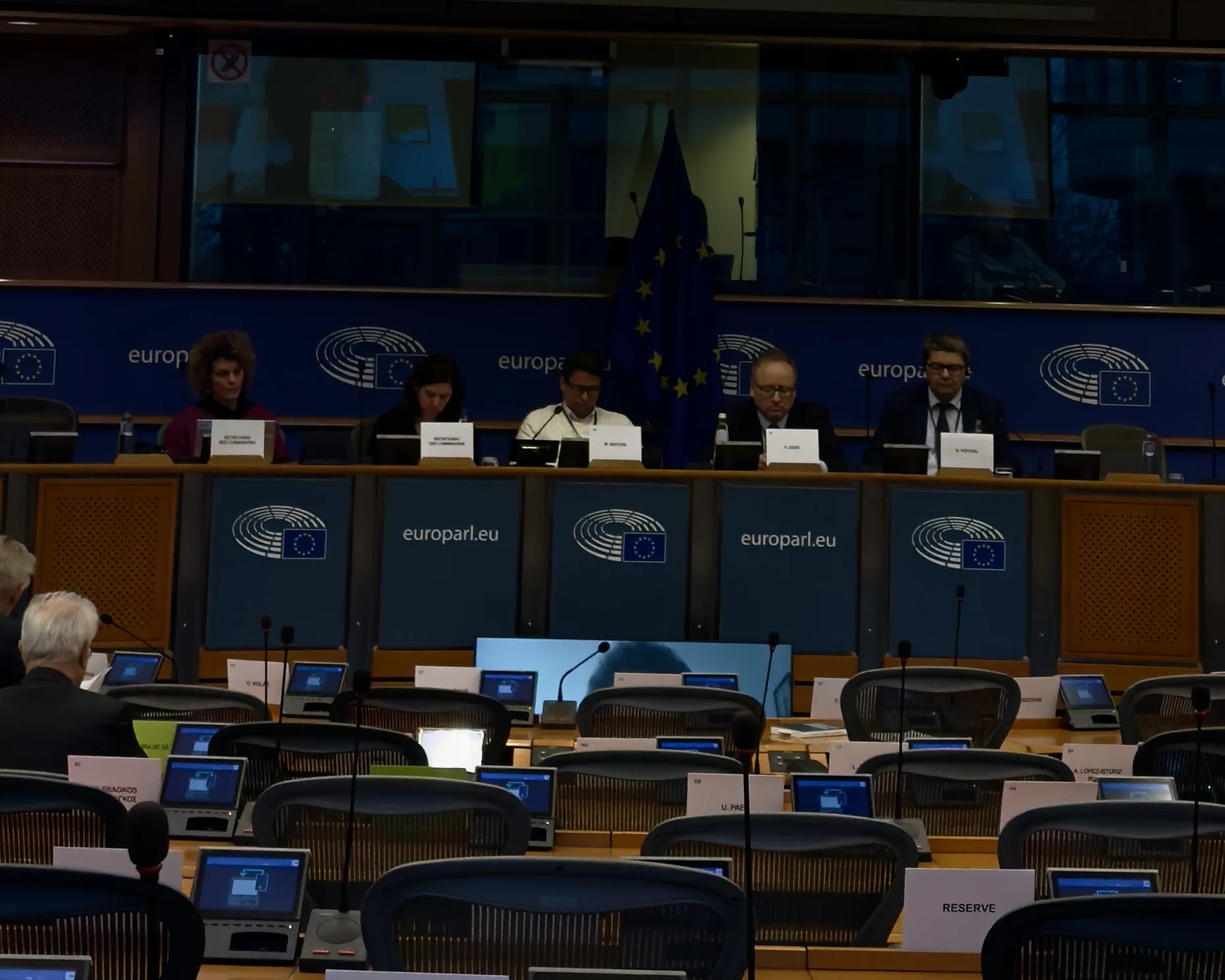
On 26 January 2026, the European Parliament’s Committee on Women’s Rights and Gender Equality (FEMM) held an exchange of views with Costas Fitiris, Minister of Justice and Public Order of Cyprus, in the context of Cyprus assuming the Presidency of the Council of the European Union until the end of June 2026.
During the exchange, Minister Fitiris outlined the priorities of the Cypriot Presidency in the field of gender equality, placing a clear emphasis on a strong European orientation grounded in unity, human rights, and the rule of law. He underlined Cyprus’s intention to act as an honest broker within the Council, contributing to a more autonomous and secure Europe through cooperation and consensus-building among Member States.
Cross-cutting Safeguards for Women’s Rights
Referring to the recent FEMM mission to Cyprus from 26 to 28 March 2025, which focused on the impact of conflict on the rights of women and girls, particularly in relation to reproductive rights and sexual and gender-based violence, the Minister acknowledged the continued relevance of these issues in the Cypriot context. He recalled the long-standing consequences of the Turkish invasion of Cyprus and commended the sustained commitment of the European Parliament and the FEMM Committee to addressing the gendered impacts of conflict.
Gender equality was presented as a central priority of the Cypriot Presidency, supported by what the Minister described as a coherent, ambitious, and deliverable agenda. Key areas of focus include the protection of women and girls from all forms of gender-based online violence, the promotion of their full integration at social, economic, and political levels, and the systematic mainstreaming of a gender perspective across all policy areas.
In this regard, the Cypriot Presidency will host a high-level meeting on gender mainstreaming in February 2026 in Nicosia, aimed at supporting the development of equality policies across Member States and strengthening cooperation on their implementation. In addition, Cyprus will convene a high-level conference on preventing and combating gender-based online violence against women and girls. The conference will address prevention measures, effective responses to online abuse, strategies to engage men and boys, and emerging challenges linked to artificial intelligence, while also exploring future EU-level actions and synergies.
The Minister further highlighted sector-specific initiatives, including efforts to advance gender mainstreaming in the shipping industry and to increase women’s access to seafaring professions. He also addressed legislative priorities, notably the Anti-discrimination Directive, described as the longest-standing pending directive before the Council. While acknowledging the difficulties in achieving unanimity, the Cypriot Presidency committed to advancing discussions on the file, while refraining from making commitments that could not be realistically delivered.
A Commitment to Intersectionality
Beyond gender equality, the exchange covered a broader set of equality and non-discrimination strategies. Minister Fitiris reaffirmed the Presidency’s support for the Anti-Racism Strategy, stressing that the elimination of racial discrimination is fundamental to ensuring the participation of all individuals in civic and political life. He also confirmed continued backing for the LGBTIQ+ equality strategy, with the aim of ensuring that the European Union remains a global standard-bearer for the protection of fundamental rights, as well as support for the Strategy on the Rights of Persons with Disabilities.
In light of his intervention, the Minister described the FEMM Committee as an important interlocutor and strategic partner in advancing equality at the European level. He expressed the Cypriot Presidency’s ambition to bring Member States closer to a shared vision of a Europe that actively promotes inclusion, equality, and the protection of human rights through concrete and coordinated action.
Conclusion
The exchange highlighted the Cyprus Presidency’s intention to frame gender equality as a cross-cutting priority within a broader European agenda focused on cooperation, security, and fundamental rights. The discussion pointed to a forthcoming period in which several initiatives, including work on gender mainstreaming, online violence, and equality strategies, will move into more concrete phases of coordination and implementation.
Looking ahead, the interaction between the FEMM Committee, the Council Presidency, and other EU actors will shape how these priorities are translated into practical measures at both EU and Member State level. The emphasis placed on realistic objectives, institutional dialogue, and shared responsibility suggests a policy cycle focused less on declaratory commitments and more on incremental progress and alignment across the Union.