
Introduction
Over the last few decades, the situation in Venezuela has seriously deteriorated. Marked by a severe economic and sociopolitical crisis, the country has suffered the effects of corruption, political polarisation, oil dependency, and a widening gap between socioeconomic classes. This has led to an economic collapse, the exodus and displacement of over 7.9 million Venezuelans and a humanitarian crisis, as a large proportion of the population lacks basic services, food, and medicines.
The government’s poor management of the country’s resources, together with the authoritarian drift of the United Socialist Party of Venezuela (PSUV), and the confrontation with the United States, have put Venezuela in a fragile situation. Since 2015, Nicolás Maduro has held the office of President. During his rule, issues have arisen involving the United States, including charges of narcoterrorism and drug trafficking, among other crimes, which have significantly damaged his international standing. His reputation has worsened after the last elections in 2024, where, despite the opposition allegedly obtaining a majority of the votes (Human Rights Watch, World Report 2025: Venezuela), he did not step down from power and refused to publicly disclose the election’s official results.
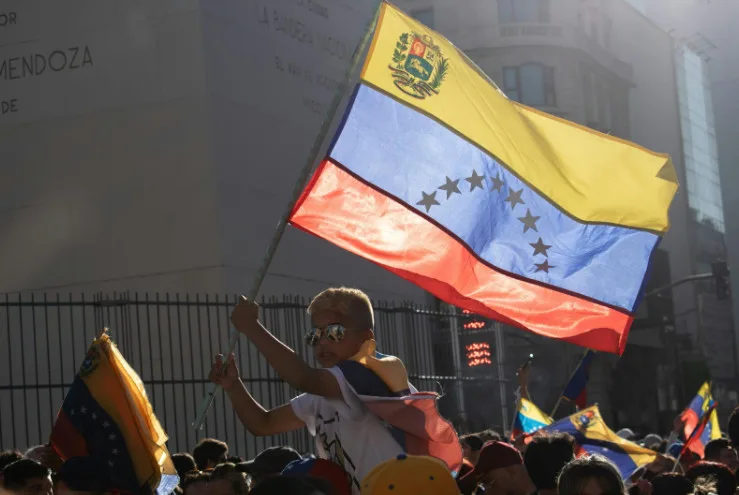
Factual and Political Background: ”Operation Absolute Resolve”
On January 3rd, 2026, United States military forces carried out a lightning operation in Caracas, also referred to as “Operation Absolute Resolve,” in which they detained President Nicolás Maduro and his wife Cilia Flores, and abducted them from Venezuelan territory. After his capture, Maduro was transferred to a U.S. warship and subsequently to New York, where he was brought before a federal court to face charges of narco-terrorism, conspiracy to import cocaine, possession of machine guns and destructive devices, and conspiracy to possess such devices in support of criminal activities, as well as collaborating with criminal organisations classified as terrorists by Washington (United States District Court for the Southern District of New York, n. d.). At the same time, Cilia Flores faces charges related to alleged logistical and financial support operations for the same criminal structure, according to court documents cited by US media.
The U.S. government has framed the operation within a broader policy of “regime change” and has stated that it is “in charge” of the situation in Venezuela (Collinson, 2026). In the meantime, Venezuelan authorities have described the act as a “kidnapping” and a violation of their sovereignty.
Applicable Legal Framework
Regarding international law, the prohibition on the use of force contained in Article 2(4) of the UN Charter forbids the use of force against the territorial integrity or political independence of any State, except in the cases of self-defence or authorisation by the Security Council. The doctrine of the principle of non-intervention reinforces this prohibition by barring coercive interference in matters within the reserved domestic jurisdiction of a State, particularly when it comes to its political system and leadership, as affirmed by the International Court of Justice in Nicaragua v United States (ICJ, Nicaragua v United States, 1986). In other words, it prohibits foreign powers from intervening in the internal affairs of a State.
From the perspective of international criminal law, the Rome Statute, as supplemented by the Kampala Amendments (2010), defines the crime of aggression in Article 8 bis as “the planning, preparation, initiation or execution, by a person in a position effectively to exercise control over or to direct the political or military action of a State, of an act of aggression which, by its character, gravity and scale, constitutes a manifest violation of the Charter of the United Nations.” An “act of aggression” includes, among others, the use of armed forces of one State against the sovereignty, territorial integrity, or political independence of another State.
The jurisdiction of the International Criminal Court (ICC) over the crime of aggression is subject to particularly restrictive conditions, being activated only with respect to States Parties that have accepted the amendments, and with significant exclusions for nationals of non-States Parties or of States that have not ratified them. In cases not referred by the Security Council, the scope of jurisdiction over nationals of non-States Parties, such as the United States, is very limited or nonexistent according to the prevailing interpretation.
Jurisdiction, Immunity and the Problem of Enforcement
After considering the above-mentioned principles, some conclusions can be drawn. Firstly, it was a military operation on the territory of another sovereign State, with no indication of authorisation by the Security Council or of clear and unequivocal public consent by a universally recognised Venezuelan government. The extraction of the acting head of State, or at least the de facto leader of the country, within the framework of a declared policy of “regime change”, implies direct interference in Venezuela’s internal political organisation, going beyond a strictly law enforcement objective. Even if the United States were to invoke the extraterritorial application of its criminal legislation with respect to drug trafficking offences, public international law establishes clear limits: the exercise of criminal jurisdiction does not, by itself, authorise unilateral military operations in foreign territory to detain a head of State. The combination of large-scale military means, the absence of a clear legal basis in the Charter, and the political objective of dismantling the Venezuelan government reinforces the hypothesis of a violation of the principle of non-intervention and the prohibition on the use of force.
Secondly, sitting heads of State enjoy full personal immunity from the criminal jurisdiction of other States, subject only to limited exceptions such as proceedings before international criminal tribunals or a waiver of immunity by the State itself. In this case, Maduro was brought before a U.S. federal court for crimes of narco-terrorism and drug trafficking, based on a combination of principles of extraterritorial jurisdiction. If Maduro continued to be regarded as the head of State of Venezuela for the purposes of international law, the imposition of national criminal proceedings would conflict with the general rule of immunity from jurisdiction. Regardless of recognition disputes, Maduro exercised effective control and was recognised by the UN, which is relevant for immunity purposes (see ICJ, Arrest Warrant, 2002). Even assuming the material jurisdiction of the U.S. court to hear offences with effects on its territory, the method by which the accused was obtained, through a military operation in another State, could be considered a violation of Venezuelan sovereignty, an issue debated in doctrine under the tension between domestic procedural validity and the international unlawfulness of the method of capture.
Finally, from a substantive point of view, the capture operation presents elements that could arguably fall within the category of an “act of aggression”: it involved the use of armed force in the territory of another State without clear consent or Security Council authorisation, with a direct impact on its political leadership. In terms of the Kampala definition, it could be argued that an act of aggression occurred, and that the senior leaders who ordered or directed the operation would be in a position of individual responsibility. Nevertheless, translating this scenario into a concrete case before the ICC is unlikely, since the United States, as noted above, is not a party to the Rome Statute and has not accepted the aggression amendments contained therein. In the absence of a Security Council referral (likely blocked by a U.S. veto), the ICC would have great difficulty exercising jurisdiction over U.S. nationals for the crime of aggression in these circumstances. Consequently, although from an academic perspective it may be plausible to characterise the operation as an act of aggression contrary to the UN Charter, the jurisdictional design of the Rome Statute makes any effective international prosecution for the crime of aggression arising from these facts improbable.
Current Situation within the Country
Following Maduro’s removal, Vice President Delcy Rodríguez assumed the role of acting president, ensuring continuity within the existing governing structure (Torres & Edwards, 2026).
The US administration has given no timeline for any democratic transition. “The continuity of the ruling elite suggests that there won’t be any changes in the social policy that has caused so much misery, so much poverty. The outlook points to continued very low wages, virtually zero pensions and enormous inefficiency in the management of public services”, said Marino Alvarado, legal coordinator at Provea, a Venezuelan human rights organisation (The New Humanitarian, 2025). President Trump has repeatedly framed the military action as a response to historic wrongdoing suffered by US oil companies. He stated publicly that Venezuela had “unilaterally seized and sold American oil, American assets and American platforms, costing us billions and billions of dollars”, adding that “they did this a while ago, but we never had a president that did anything about it. They took all of our property”. (Sanger & Pager, 2026). This suggests that the primary focus of U.S. policy was oriented toward economic interests rather than toward facilitating a democratic transition or addressing the country’s socioeconomic crisis.
As a result, the humanitarian situation continues to worsen. According to Human Rights Watch (2025), out of a population of 28.8 million, over 20 million Venezuelans live in multidimensional poverty due to economic precarity and deficient public services, having lost their means of support and subsistence. In addition, 14.2 million people face severe humanitarian needs, according to the independent civil society platform HumVenezuela.
Conclusion
The capture and extraterritorial transfer of President Nicolás Maduro by United States forces raises serious concerns under international law, particularly in relation to the prohibition on the use of force, the principle of non-intervention and respect for State sovereignty as enshrined in the United Nations Charter. While allegations of serious criminal conduct may justify the exercise of criminal jurisdiction, international law imposes clear limits on the means by which such jurisdiction may be enforced. The use of military force on the territory of another sovereign State, absent Security Council authorisation or unequivocal consent, and within the framework of an openly articulated policy of regime change, places the operation in tension with the foundational norms of international law. From the perspective of international criminal law, the operation arguably displays elements of an act of aggression, although the restrictive jurisdictional regime of the Rome Statute makes any effective international accountability highly improbable in practice.
Beyond its legal implications, the operation has failed to deliver tangible improvements for the Venezuelan population. The continuity of the existing governing structure, the absence of a clear democratic transition and the ongoing deterioration of socioeconomic and humanitarian conditions suggest that the intervention neither addressed the root causes of the crisis nor alleviated the suffering of civilians. More broadly, the Venezuelan case highlights the persistent gap between the normative framework of international law and its enforcement in a system marked by geopolitical asymmetries. It underscores the risks inherent in normalising unilateral uses of force as instruments of law enforcement or political change and invites reflection on the need to strengthen multilateral mechanisms capable of addressing crises in a manner consistent with legality, accountability and the protection of human dignity.
Bibliography
Collinson, S. (5 January 2026). Trump, Venezuela’s Rodríguez and Maduro: Democracy, power and transition [Analysis]. CNN.
https://edition.cnn.com/2026/01/05/politics/trump-venezuela-rodriguez-maduro-democracy-analysis
ICJ, Arrest Warrant of 11 April 2000 (Democratic Republic of the Congo v Belgium), Judgment of 14 February 2002, ICJ Reports 2002, p. 3.
ICJ, Military and Paramilitary Activities in and against Nicaragua (Nicaragua v United States), Judgment of 27 June 1986, ICJ Reports 1986, p. 14, paras. 202–205.
Human Rights Watch. World Report 2025: Venezuela. Human Rights Watch, 2025.
https://www.hrw.org/world-report/2025/country-chapters/venezuela
Rome Statute of the International Criminal Court, adopted 17 July 1998, entered into force 1 July 2002, as amended by the Kampala Amendments, Art. 8 bis.
Sanger, David E., & Pager, Tyler. (3 January 2026). Trump frames Venezuela operation around oil risks and geopolitical stakes. The New York Times.
https://www.nytimes.com/2026/01/03/us/politics/trump-venezuela-oil-risks.html
Scheu, J. (13 January 2026). Expropriation, oil and the prohibition on the use of force: Justification narratives and the effectiveness of international law in the Venezuela crisis. EJIL: Talk!
The New Humanitarian. (14 January 2026). What next for the humanitarian crisis and response in Venezuela?
Torres, Mauricio, & Edwards, Christian. (3 January 2026). Delcy Rodríguez: Venezuela’s interim leader at a crossroads. CNN en Español.
https://edition.cnn.com/2026/01/03/americas/delcy-rodriguez-venezuela-leader-atl-latam
United States District Court for the Southern District of New York. (n. d.). United States v. Nicolás Maduro Moros et al.: Sealed superseding indictment (Case No. S4 11 Cr. 205 (AKH)).