
Introduction
Agroindustrial food systems are increasingly framed through the language of sustainability, safety and efficiency. Yet behind this discourse lies a production model that continues to generate environmental degradation, social harm and human rights impacts on a global scale. While regulatory standards and voluntary commitments seek to reassure consumers, they often fail to address the structural conditions that allow harm to remain invisible and unaccountable. This article argues that sustainability in agroindustrial food systems cannot be achieved without enforceable liability. By examining how environmental damage is displaced, obscured and legally neutralised, it shows that the core problem is not a lack of information, but a system designed to profit from harm without responsibility.
Invisibility as a Political Strategy
Environmental harm is often framed as an unfortunate side effect of economic activity, something regrettable but inevitable in the pursuit of efficiency and food security. However, this framing obscures a more uncomfortable reality. The invisibility of environmental damage is not accidental, but structurally produced. Modern agroindustrial food systems are designed in ways that systematically conceal the socio-environmental and human costs embedded in everyday consumption.
In contemporary economies, distance plays a central role. Production, processing, distribution, and consumption are geographically fragmented, allowing consumers to enjoy affordable and abundant food while remaining largely disconnected from the conditions under which it is produced. This separation is not merely spatial, but political and epistemic. What is not seen is more easily ignored, and what is ignored rarely generates pressure for structural change.
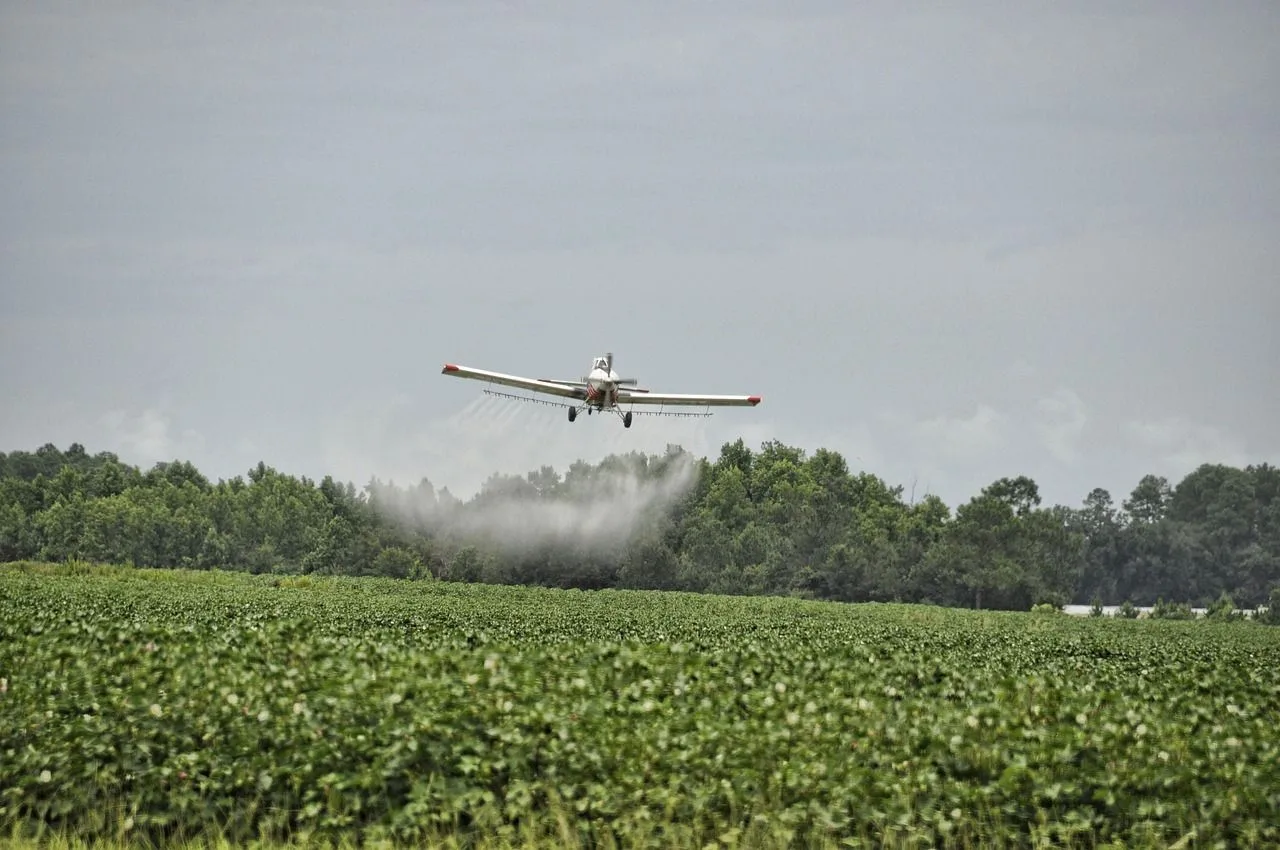
A paradigmatic case is the expansion of soybean monocultures in the Latin American Southern Cone. While Europe consumes this protein to feed its livestock under ‘safety’ standards, rural populations in Argentina and Brazil face direct exposure to glyphosate spraying. The damage, which includes chronic diseases and loss of local biodiversity, remains geographically confined to the production zones, allowing the European supply chain to maintain an appearance of harmlessness on its shelves.
Therefore, invisibility functions as a political strategy. By displacing harm beyond the immediate field of perception, away from supermarkets, cities and centres of power, the agroindustrial system neutralises moral outrage and weakens demands for accountability. Environmental degradation, exposure to toxic substances, and labour exploitation become abstract problems rather than lived realities. As a result, sustainability is reduced to a managerial concept, stripped of its ethical and human rights implications.
Externalisation and Global Asymmetry
Within Europe, the agroindustrial food system is often presented as highly regulated, science-based and environmentally conscious. Food safety standards, maximum residue limits, sustainability strategies, and voluntary certifications contribute to a narrative of control and responsibility. However, this narrative frequently masks deeper contradictions.
Compliance with regulatory thresholds does not equate to the absence of harm. Pesticides may remain within legally permitted limits while still contributing to long-term cumulative health risks and ecosystem degradation, including biodiversity loss. Moreover, regulations tend to assess substances individually, overlooking the combined and chronic effects of multiple chemical exposures. What is legally acceptable is not necessarily socially or ethically acceptable.
The illusion of clean consumption is further reinforced through sustainability labels and corporate commitments. Products are marketed as eco-friendly, carbon-neutral or responsibly sourced, often without transparent or verifiable evidence. This form of greenwashing shifts attention away from structural problems and places the burden of discernment on consumers. In doing so, it sustains the appearance of progress while leaving the underlying production model largely intact.
Europe’s green image thus depends on a selective accounting of environmental harm, one that foregrounds visible improvements while excluding the global and long-term consequences of agroindustrial practices. Sustainability under these conditions becomes a matter of optics rather than transformation.
Responsibility without Accountability
At the heart of the agroindustrial sustainability paradox is the gap between acknowledging harm and enforcing consequences. While environmental harm is widely acknowledged and responsibility is frequently discussed in ethical or voluntary terms, this acknowledgement seldom leads to binding legal consequences for those who derive economic benefit from such harm.
Agroindustrial corporations operate across multiple jurisdictions, exploiting regulatory fragmentation and jurisdictional limits. While environmental damage and human rights impacts may occur in one country, corporate decision-making and legal accountability are often located elsewhere. This structural mismatch allows responsibility to be diffused and liability to be avoided.
Current legal frameworks largely treat environmental harm as an externality rather than a violation. Damage to ecosystems, contamination of water sources, or exposure of communities to hazardous substances seldom trigger legal responsibility proportional to the harm caused. Sanctions, if any, are frequently insufficient to deter harmful practices and are often absorbed as operational costs.
Without enforceable liability, sustainability remains voluntary and conditional. Corporate commitments can be revised, delayed or abandoned with limited consequence. In this context, the language of sustainability risks becoming a substitute for justice, offering reassurance without reparation.
With the entry into force of Directive (EU) 2024/1760, whose transposition deadline ends in July 2026, Europe is attempting to close this gap by requiring companies to be held accountable for damages across their global supply chains. This Directive represents a crucial step forward, as it seeks to mandate large corporations to identify and mitigate negative impacts on human rights and the environment throughout their entire value chain. However, its real success will depend on sanctions not being merely administrative, but rather ensuring that victims from third countries have access to European courts to seek civil redress.
Why Information is not Enough
In response to these challenges, policy debates often emphasise transparency and consumer awareness, with clearer labels and informed choice are presented as key solutions. While transparency is undoubtedly important, it is insufficient on its own.
Placing the burden of change on consumers assumes a level of freedom and agency that does not reflect reality. Food choices are shaped by income, availability, time constraints and cultural norms. Moreover, expecting individuals to navigate complex supply chains and assess the ethical implications of every purchase is neither realistic nor fair.
More importantly, information does not alter power structures. Knowing that a product is associated with environmental harm does not automatically create alternatives, nor does it impose obligations on producers. Without structural reforms and legal accountability, consumer awareness risks becoming a mechanism of moral displacement, wherein responsibility is individualised while systemic drivers remain untouched.
Sustainability cannot rely solely on ethical consumption in a system designed to externalise harm. Without enforceable rules and clear liability, information serves more as a palliative than a cure.
Conclusion
The failure of sustainability in agroindustrial food systems is not primarily a failure of knowledge or awareness, but a failure of architecture. Environmental harm persists not because it is unknown, but because it is structurally rendered invisible, geographically displaced and legally unaccountable.
As long as agroindustrial practices can generate profit without bearing the full cost of their social and environmental impacts, sustainability will remain fragile and uneven. Addressing this requires moving beyond voluntary commitments and consumer-centric solutions toward binding frameworks of responsibility and liability.
Reframing agroindustrial food systems as a human rights issue clarifies the structural limitations of current sustainability approaches. Access to safe food, a healthy environment and effective remedies for harm are not discretionary objectives, but recognised components of fundamental rights frameworks. In the absence of enforceable accountability mechanisms, sustainability remains largely declaratory. Liability, then, is a necessary condition for aligning sustainability objectives with existing legal and human rights frameworks.
Bibliography
European Commission. (2020). A farm to fork strategy for a fair, healthy and environmentally friendly food system. https://food.ec.europa.eu/system/files/2020-05/f2f_action-plan_2020_strategy-info_en.pdf
European Commission. (2023). Green claims and consumer information. https://environment.ec.europa.eu/topics/circular-economy/green-claims_en
European Court of Auditors. (2024). Food labelling in the EU: Consumers may be misled by a maze of labels (Special Report No. 23). https://www.eca.europa.eu
European Parliament & Council of the European Union. (2024). Directive (EU) 2024/1760 on corporate sustainability due diligence and amending Directive (EU) 2019/1937 and Regulation (EU) 2023/2859. Official Journal of the European Union, L 2024/1760. https://eur-lex.europa.eu/legal-content/EN/ALL/?uri=CELEX:32024L1760#
Food and Agriculture Organization of the United Nations. (2024). The unjust climate. FAO. https://openknowledge.fao.org/items/a42e0253-c4a8-4041-973c-98e8b678c8c8
Food and Agriculture Organization of the United Nations. (2024). Discussion paper on sustainability labelling claims: Codex Committee on Food Labelling. Codex Alimentarius Commission. https://www.fao.org/fao-who-codexalimentarius/sh-proxy/es/?lnk=1&url=https%253A%252F%252Fworkspace.fao.org%252Fsites%252Fcodex%252FMeetings%252FCX-714-48%252FWorking%2Bdocuments%252Ffl48_12e.pdf
Human Rights Council. (2021). The right to a clean, healthy and sustainable environment (A/HRC/48/L.23/Rev.1). https://undocs.org/A/HRC/48/L.23/Rev.1
Oxfam. (2013). Behind the brands: Food justice and the “Big 10” food and beverage companies. https://www.oxfam.org/en/research/behind-brands
United Nations. (2011). Guiding principles on business and human rights. https://www.ohchr.org/en/instruments-mechanisms/instruments/guiding-principles-business-and-human-rights
Red de Médicos de Pueblos Fumigados. (2024). Impact of agrochemicals on rural health: 2023-2024 monitoring report on biomarkers in Southern Cone populations. Ediciones Salud Socioambiental.
World Health Organization. (2019). Preventing disease through healthy environments: Exposure to chemicals. WHO. https://www.who.int/publications/i/item/WHO-CED-PHE-EPE-19.4.6
World Health Organization & Food and Agriculture Organization. (2023). Codex discussion paper on sustainability labelling claims. Codex Alimentarius Commission. https://www.fao.org/fao-who-codexalimentarius/sh-proxy/en/?lnk=1&url=https%253A%252F%252Fworkspace.fao.org%252Fsites%252Fcodex%252FCircular%252520Letters%252FCL%2525202023-16%252Fcl23_16e.pdf