A hearing at the European Parliament examined the human rights implications of Bangladesh’s recent elections and renewed international efforts to ensure accountability for crimes committed against the Rohingya, highlighting both opportunities for democratic progress and persistent structural challenges.
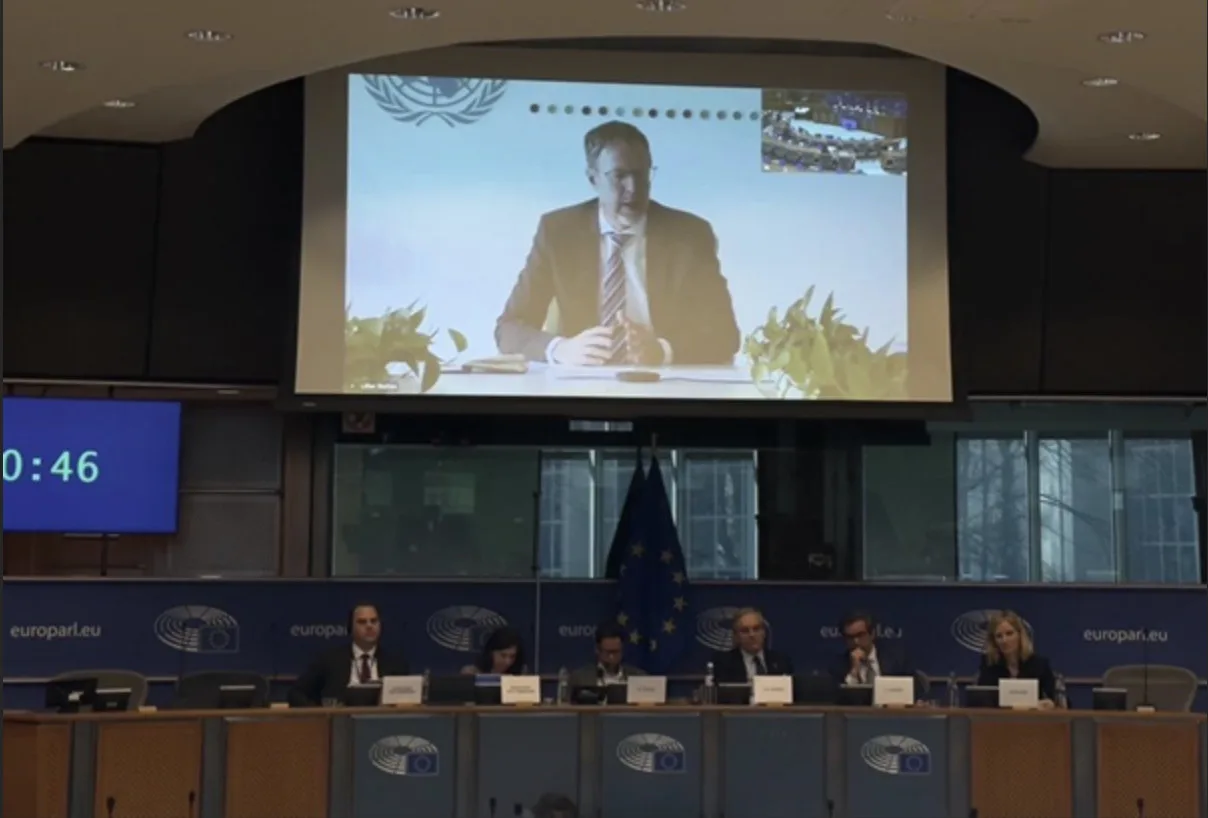
European Parliament Hearing Addresses Bangladesh’s Democratic Transition and Rohingya Accountability
On 19 March 2026, the European Parliament’s Subcommittee on Human Rights (DROI), in association with the Delegation for Relations with the Countries of South Asia, held a session assessing the human rights dimension of EU-Bangladesh relations following the general elections of 12 February 2026, as well as ongoing accountability efforts for crimes committed against the Rohingya population.
Bangladesh’s Political Transition and Democratic Prospects
Chairing the session, MEP Mounir Satouri recalled the recent DROI mission to Dhaka and Cox’s Bazar, where Members engaged directly with stakeholders and visited Rohingya refugee camps. The February 2026 elections were widely recognised as marking a significant shift, signalling what many participants described as a new era in Bangladesh’s political trajectory.
MEP Dimitrie Sturdza, Head of the Delegation for Relations with South Asia, highlighted that the electoral victory of a nationalist party introduces both challenges and opportunities. While Bangladesh has made significant economic and social progress in recent decades, concerns remain regarding the use of force, arbitrary detention, and broader political tensions. He emphasised that this transitional period presents an opportunity to strengthen transparency, reinforce independent institutions, and ensure effective democratic governance.
Sturdza further stressed that political pluralism, freedom of expression, and a dynamic media environment remain essential to a functioning democracy. He underlined the importance of safeguarding the role of journalists and civil society, ensuring the inclusion and protection of cultural and religious minorities, and advancing protections for women and children. Ensuring access to justice and addressing persistent human rights concerns will be critical to ensuring that Bangladesh’s development remains inclusive and equitable.
EU Engagement and Electoral Observations
Monika Bylaite, Deputy Head of the South Asia Division at the European External Action Service (EEAS), noted that the EU deployed a comprehensive electoral observation mission. Civil society actors described the elections as the first genuinely free and non-violent elections since 2008.
However, she cautioned that the success of this new phase will depend on the government’s willingness to implement meaningful reforms. In particular, the proposed reform package led by Professor Muhammad Yunus is expected to serve as a key test of the government’s commitment to democratic consolidation. Concerns remain regarding procedural transparency and the potential rollback of progress achieved under the interim administration.
Bylaite also highlighted ongoing human rights concerns, including enforced disappearances, arbitrary detentions, and challenges faced by minorities and persons with disabilities. At the same time, she noted a renewed dynamism within civil society following the July 2024 uprising, with increased engagement in awareness-raising and democratic participation.
UN Support and Structural Reforms
Stefan Liller, Resident Representative of the United Nations Development Programme in Bangladesh, outlined the UN’s comprehensive support following the July 2024 uprising and throughout the electoral process. He highlighted Bangladesh’s accession to key international conventions, including those addressing torture, enforced disappearances, and labour rights.
Efforts to reform public administration, the judiciary, and policing structures are ongoing, with a particular focus on restoring public trust in the justice system. The development of a strengthened legal framework for a national human rights commission, in consultation with civil society and victims, represents a further step toward institutional accountability.
Bangladesh’s anticipated graduation from Least Developed Country status in November 2026 was also discussed. While this marks significant progress, it carries implications for economic and social rights, particularly in the context of ongoing political and economic challenges.
Rohingya Crisis and Regional Responsibilities
The discussion reaffirmed Bangladesh’s central role in hosting a significant Rohingya refugee population. Participants acknowledged both the country’s efforts and the considerable strain placed on its resources. The European Union continues to act as the largest donor to the Rohingya response and supports initiatives aimed at ensuring safe, voluntary, and dignified return.
Concerns were raised regarding reports of Myanmar-linked actors recruiting individuals, including children, from refugee camps to participate in armed conflict. Speakers emphasised the need for strengthened protection mechanisms and sustained international engagement to prevent further exploitation.
At the same time, the protection environment within Bangladesh remains limited, with restricted access to livelihoods and basic services for refugees. Ongoing funding gaps continue to affect the scale and sustainability of humanitarian assistance.
International Accountability for Crimes Against the Rohingya
Professor Pierre d’Argent, Counsel and Advisor to The Gambia in proceedings before the International Court of Justice, provided an update on the landmark case concerning allegations of genocide against the Rohingya.
The case, initiated in 2019, led to the imposition of provisional measures requiring Myanmar to prevent acts of genocide and protect remaining Rohingya populations. The ICJ confirmed The Gambia’s standing to bring the case, recognising the erga omnesobligations under the Genocide Convention.
Hearings held in January 2026 at the Peace Palace marked a significant moment in the proceedings, with testimonies from Rohingya survivors playing a central role. The case is currently under deliberation. A final judgment could represent the first instance of a state being formally held responsible for genocide, with potential implications for reparations and the recognition of full citizenship rights for the Rohingya.
Conclusion
The hearing underscored that Bangladesh stands at a critical juncture, where democratic transition, institutional reform, and respect for fundamental rights will shape its future trajectory. At the same time, the international community continues to bear responsibility for ensuring accountability for atrocities committed against the Rohingya and for supporting durable solutions to their displacement.
Global Human Rights Defence reiterates the importance of sustained EU engagement, support for civil society, and a principled commitment to human rights in both Bangladesh and the broader region.