
Introduction
No person leaves their home without a significant cause. When examining the motivations behind migratory movements, particularly to the European Union (EU), the emphasis is on how the country of origin compares to that of the destination. Such assessments of migration drivers will account for the divide between the Global North and South in terms of quality of life, economic opportunities, employment and infrastructure conditions. However, a perspective focused on statistics overlooks one fact: for migrants, the EU represents the opportunity for a better life.
This article explores the Mediterranean migration landscape in relation to the roles that states across the sea play. It traces the perils of a migrant’s journey through the Central Mediterranean route, examines the relationship between the EU and Libya, the point of departure for most migrants, and assesses the human rights violations reported in Libya against the international legal framework. Finally, the article argues for a reassessment of EU-Libya relations.
Irregular Migration – Reasons and Destinations
The factors that make the EU an appealing destination are widely recognised, but are nevertheless worth discussing. The European Union, in its many forms over the decades, has existed for 74 years. During this time, the EU has been a hub for concerted multilateral efforts, economic development, and, recently, a unified approach to safeguarding fundamental rights and freedoms. This has positioned the European Union as a beacon of prosperity, championing a high standard for the quality of individual lives. Inmany respects, the EU projects stability and social security, which are priorities for migrants fleeing less desirable situations.
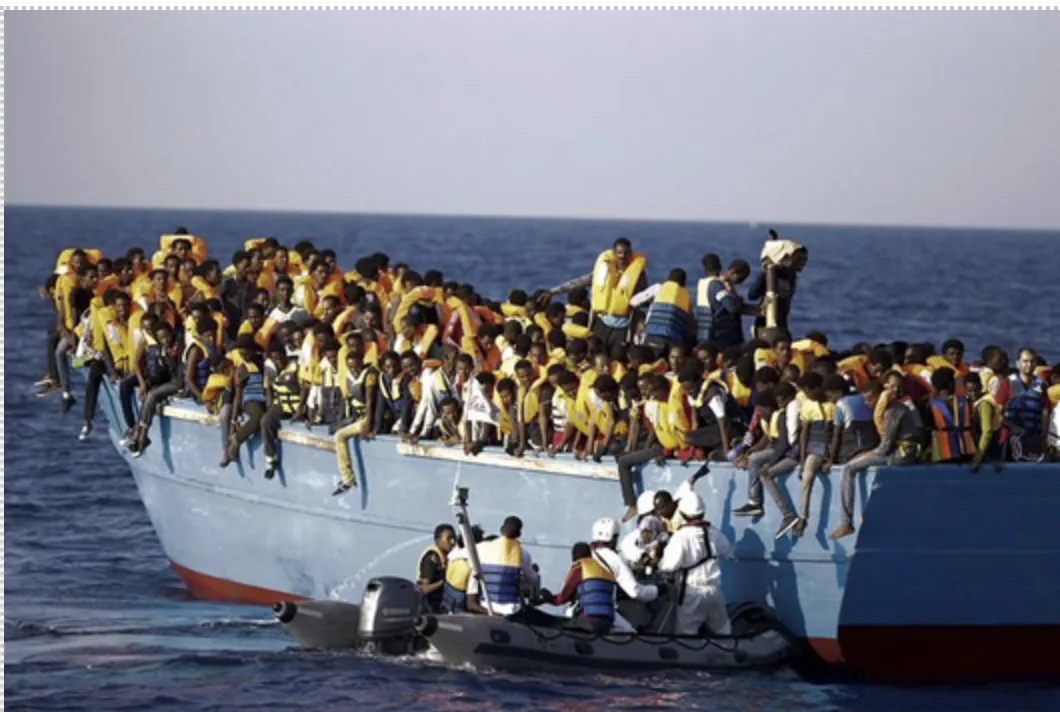
Among the various routes leading to the European Union from nearby or neighbouring regions, the main one is the Central Mediterranean path. This piece of the Mediterranean Sea, located between North Africa and Southern EU Member States like Italy and Malta, saw approximately 67 thousand crossings in 2024, the lowest number in the last five years. The frequency of migratory movements across this particular route is notable, given the complexity of the journey to reach the shores of the EU. Considered the deadliest crossing over the Mediterranean Sea, it claims around two thousand migrant lives yearly, a testament to the desperation and determination of people who escape from deteriorating social and economic conditions, ongoing conflicts, droughts and famine.
However, crossing the Mediterranean Sea towards European shores is only one stage of a complex, perilous journey. Before embarking on any available vessel, regardless of its seaworthiness or safety, and sailing towards Italy or Malta, migrants must reach a point of departure somewhere on the North African coast. One of the most frequent points of departure, and a key country along the Central Mediterranean Route, is Libya.
Libya has experienced sustained political instability and unrest since the 2011 revolution, which removed Muammar al-Gaddafi from power. After forty years of Gaddafi’s rule, the political scene in Libya was fractured, with factions controlling different parts of the state. Societal tensions and economic challenges persist as a result of the continuing political division and instability.
The EU has consistently collaborated with and offered aid to Libya under various mechanisms to facilitate the Libyan transition towards democracy, stability, and prosperity. Currently, the EU’s programs of assistance cover priority areas such as national and local stabilisation; active citizenship and youth socioeconomic integration; health services provision; and capacity building for civil society organisations and institutions. Between 2014 and 2020, aid to Libya approximated €100 million.
In 2015, the EU launched the Emergency Trust Fund for Africa. Its purpose is to offer support in issues of migration and security, also in Libya. The basis for the Emergency Fund is the Joint Communication of the European Commission “Migration on the Central Mediterranean route, Managing flows, saving lives”, which focuses on the creation and implementation of a system for security and migration management, and asylum that complies with international legislation and with the human rights of migrants and refugees. Between 2015 and 2021, Libya was allocated a total of €465 million.
As a key transit country along the Central Mediterranean route, EU-Libya relations are shaped not only by mitigating domestic instability and the effects of political unrest, but also by managing and minimising migratory flows to Europe. The aim is to achieve the latter purpose through the pillars of the Emergency Trust Fund for Africa, which outlines respect for human rights within a sound migration framework. In practice, the situation diverges significantly from the European Commission’s initial expectations.
One aspect which increases the difficulty of achieving the EU goals for a stable Libya regarding migration is the existence of widespread migrant smuggling networks. During Gaddafi’s rule, individuals who arrived in Libya without the proper documentation were designated as illegals and held in detention centres. This validated migrant-smuggling networks and their persistent operations in Libya. Notwithstanding consistent EU efforts to curb irregular migration by supporting national authorities, migrant smuggling is still a prevalent issue. During Gaddafi’s rule, quotas were placed on the trafficking of migrants. However, since 2011, due to the fragmentation of governance and security structures, this practice has moved from being a clandestine activity to an open secret in Libya. As a result, part of the aid provided by the EU consisted of naval missions, such as Operation Sophia, that aimed to disrupt smuggling networks and provide search-and-rescue off the Libyan coast, between 2015 and 2018. This was followed by Operation IRINI, which worked to enforce UN arms embargoes against Libya, building capacity for the Libyan Coast Guard and further disrupting the migrant smuggling at sea.
These measures curb the number of crossings on the Central Mediterranean route, but they have not resulted in improved conditions for migrants in Libya.
The conditions of life for migrants in Libya are harsh and difficult to bear. A report published by the International Organisation for Migration through the Libyan Displacement Tracking Matrix (DTM) found that humanitarian requirements are related to basic human needs. Lack of access to health services, food insecurity and inaccessible accommodation are the main struggles of migrants. The situation is most dire for those who are unemployed or unable to find work. In fact, 16 percent of the migrants interviewed for the 2023 DTM reported lacking sufficient clean water sources, both for drinking and for ensuring hygiene.
Undocumented migrants in Libya are placed in detention centres, controlled by military factions with no oversight or structure of accountability. Detention in official and unofficial facilities is arbitrary and for an indefinite period of time, denying migrants their agency over their lives. On top of that, migrants are faced with overcrowding, a severe lack of due process, and forced transfers. They are also often extorted by detention centre operators, armed group members or smugglers, being held for ransom to their families. Exploitation is a part of the smuggling system, revealing patterns of paid releases, without which the migrants have no chance of escaping detention. One alternative to ransom payments is the forced labour of migrants for little or even no pay in exploitative conditions, for sectors such as construction, agriculture, or domestic work.
Detained migrants experience systematic physical abuse. Testimonies of detainees report beatings, torture, electric shocks, mock executions and cruel treatment by the guards and militia members. The ill treatment of migrants, as well as Libyan citizens, compelled the United Nations to call for an ‘end to this pervasive impunity’, designating the situation as a possible commission of war crimes and crimes against humanity by armed groups.
While men are two times more likely to be detained, regardless of their background, women and girls in detention centres endure terrible fates at the hands of the armed groups. Sexual and gender-based violence is rampant in these facilities, but also in informal settlements or during transit. Survivor testimonies describe incidents of rape, sexual assault, and sexual extortion. For instance, Jamila was held captive for weeks and raped repeatedly by a man who had offered her a job cleaning his house. Hanaa was taken to a forest at gunpoint and raped by a group of men. Since the victims have no access to safe reporting channels, their assailants face little to no consequences for their actions, which increases the risks for women and girls.
A deeply concerning facet of migration from Libya is that many, if not most, migrants who successfully embark on a vessel to make the crossing are intercepted by the Libyan Coast Guard. These interceptions result in migrants being forcibly returned to Libya, where further detention awaits them. These interceptions happen with the informational cooperation of Frontex, the EU’s Border and Coast Guard Agency. Once back in Libya, migrants face even worse conditions, being punished for their attempt to leave for the EU.
Discussions about migrants’ legal status raise questions regarding host states’ human rights obligations. Fortunately, the answer is straightforward and affirmative. Most human rights norms that provide a basic level of protection fall under the principle of universality, meaning that jurisdiction is not a factor. These rights must be protected and apply to everyone, regardless of citizenship or status.
Libya is party to the major human rights mechanisms, particularly the International Covenant on Civil and Political Rights (ICCPR) and International Covenant on Economic, Social and Cultural Rights (ICESCR). These Covenants apply to all persons falling under a State’s jurisdiction or territory, obliging States to protect the rights of all those subject to its control. The ICESCR safeguards the right of access to minimum standards of health and the right to adequate food and housing. The protections of the ICCPR cover the right to life, the prohibition of torture, the prohibition of slavery, and the right to liberty, security, and freedom from arbitrary detention.
Taken together, the living conditions of migrants in Libya, particularly in the context of detention, amount to severe violations of human rights law. The lack of access to health services, food insecurity, and lack of housing constitute, at best, an unjust context, and at worst, evidence of systemic discrimination and violence towards migrants. However, a closer examination of the situation in Libya reveals the extent and interconnection of the reported abuses.
The detention of undocumented migrants is a prime example of systemic abuse. Although the entry into Libya of illegal migrants is criminalised and results in detention, the facts of the matter are no justification. There is no implementation of a right to due process. Furthermore, the lack of access to redress mechanisms and to means of communication with people outside the centres renders this an arbitrary detention. Moreover, most migrant detainees end up having to pay for their liberation, being effectively held for ransom.
The sexual violence and abuse experiences, mainly by women and girls, also reflect an environment in which the human rights and dignity of migrants are not protected. The issues raised by sexual and gender based violence in Libya highlight a vicious cycle of human rights abuse, such as a lack of access to justice, and impunity of the aggressors.
One of the most serious areas of concern that occurs in Libya relates to the prohibitions laid out by the Convention against Torture. Having ratified it in 1989, Libya is bound to protect all people under its control from related violations. However, the numerousreports of beatings, torture, electric shocks, mock executions and cruel treatment by detention centre guards, indicate that Libya is failing to prevent or punish these violations of international human rights law.
The violations of human rights in Libya are widespread and systematic. The United Nations Independent Fact-Finding Mission on Libya issued a report in 2023 detailing broad efforts of authorities silencing dissent by civil society, rampant arbitrary detention, murder, rape, enslavement, extrajudicial killing and enforced disappearance, and a lack of confidence in the justice system. One particular concern was given to the issue of migrants, who are targeted, and systematically tortured and placed in sexual slavery. The report concluded that there are reasonable grounds to believe war crimes and crimes against humanity are being committed in Libya, and migrants are demonstrably victims of this regime of terror.
The human rights situation in Libya is beyond contest, and migrants in Libya undoubtedly endure terrible living conditions, coupled with severe violations and abuse. However, the public criticism sparked by this is in complete contrast with the European Union’s stance in its relations with Libya. In all areas of bilateral collaboration, the EU upholds strict human rights guarantees as a key requisite for partnership. Thus, the substantial financial assistance to Libya for migration management purposes raises questions about the extent to which these principles are upheld in practice.
The European Union must reassess its position towards Libya, particularly in view of its Emergency Trust Fund for Africa, providing financial assistance to a regime that is clearly failing to protect its own population and migrants who are placed in severely vulnerable positions. When international organisations and human rights institutions declare that migrants are trapped in a cycle of abuse, the involvement of the European Union should shift from financially aiding the governance structures in Libya, towards measures that provide a positive impact. Robust protections must be established to ensure that migrants held in Libya or captured at sea, are returned safely and are not subjected to human rights violations akin to crimes against humanity. Furthermore, EU funding should be subject to accountability and independent monitoring tools to prevent its complicity in human rights violations.
Migration is an uncontrollable phenomenon, out of the EU’s control. For migrants, it entails hardships and sacrifice. For the EU, it might reveal societal and structural issues. However, the European Union has a legal obligation and a moral duty to ensure that its migration policies do not result in human rights violations, even if by proxy. Border control should not hinge on the suffering of migrants, or on the denial of their human rights. We must strive for a moral and effective European Union, with a more consistent and rights-based approach to ensuring the protection of all individuals, regardless of citizenship status.
Bibliography
Amnesty International, ‘EU risks fuelling horrific abuse of refugees and migrants in Libya’ (15 June 2021) https://www.amnesty.nl/actueel/eu-risks-fuelling-horrific-abuse-of-refugees-and-migrants-in-libya accessed 28 October 2025.
Amnesty International, ‘Libya: New Evidence Shows Refugees and Migrants Trapped in Horrific Cycle of Abuses’ (September 2020) https://www.amnesty.org/en/latest/press-release/2020/09/libya-new-evidence-shows-refugees-and-migrants-trapped-in-horrific-cycle-of-abuses/ accessed 18 September 2025.
Amnesty International EU, ‘No One Will Look for You: Forcibly Returned From Sea to Abusive Detention in Libya’ (14 July 2021) https://www.amnesty.eu/wp-content/uploads/2021/07/14072021-Libya-Report-final.pdf accessed 17 September 2025.
BBC News, ‘A living hell: Sudanese women face rape and abuse in Libya’ (22 January 2025) https://www.bbc.com/news/articles/cp3w16k0n7wo accessed 18 September 2025.
Czaika M and Reinprecht C, ‘Migration Drivers: Why Do People Migrate?’ in Peter Scholten (ed), Introduction to Migration Studies (Springer 2022).
Eaton T and Yousef L, How Migrant Smuggling has Fuelled Conflict in Libya: A Systems Analysis of Key Transit Hubs (Chatham House, 13 February 2025) https://www.chathamhouse.org/2025/02/how-migrant-smuggling-has-fuelled-conflict-libya accessed 17 September 2025.
El Ghamari M, ‘European Union Activities in Libyan Post-revolution Environment: The Triad Migration, Security, and EU Special Agencies’ in Moosa A Elayah and Laurent A Lambert (eds), Conflict and Post-Conflict Governance in the Middle East and Africa(Palgrave Macmillan 2023) https://doi.org/10.1007/978-3-031-23383-8_9.
European Commission, ‘Libya European Neighbourhood Policy’ https://enlargement.ec.europa.eu/european-neighbourhood-policy/countries-region/libya_en accessed 11 September 2025.
European External Action Service, ‘Factsheet on the Relations between Libya and the European Union’ (3 March 2017) https://www.eeas.europa.eu/node/21889_en accessed 17 September 2025.
European External Action Service, ‘EU-Libya Relations’ (11 February 2022) https://www.eeas.europa.eu/eeas/eu-libya-relations_en accessed 17 September 2025.
Fitzgerald M, Socio-Political Situation in Libya from the Urban Perspective (CIDOB, February 2018) https://www.cidob.org/publicaciones/socio-political-situation-libya-urban-perspective accessed 15 September 2025.
Frontex, ‘Migratory routes’ https://www.frontex.europa.eu/what-we-do/monitoring-and-risk-analysis/migratory-routes/migratory-routes/ accessed 11 September 2025.
Høvring R, ‘10 Things You Should Know About the Central Mediterranean Migration Route’ (NRC, 20 March 2024) https://www.nrc.no/feature/2024/10-things-you-should-know-about-the-Central-Mediterranean-migration-route accessed 11 September 2025.
Human Rights Watch, ‘Libya: Rights Violations Unchecked as Divisions Persist’ (11 January 2024) https://www.hrw.org/news/2024/01/11/libya-rights-violations-unchecked-divisions-persist accessed 17 September 2025.
Human Rights Watch, ‘UN Experts Find War Crimes, Crimes Against Humanity in Libya’ (28 March 2023) https://www.hrw.org/news/2023/03/28/un-experts-find-war-crimes-crimes-against-humanity-libya accessed 17 September 2025.
International Centre for Migration Policy Development (ICMPD), ‘What are the protection concerns for migrants and refugees in Libya?’ (2021)https://www.icmpd.org/file/download/48087/file/What%2520are%2520the%2520protection%2520concerns%2520for%2520migrants%2520and%2520refugees%2520in%2520Libya_.pdf accessed 28 October 2025.
International Organization for Migration, DTM Libya R46 Migrant Report (23 May 2023) https://dtm.iom.int/sites/g/files/tmzbdl1461/files/reports/DTM_Libya_R46_Migrant_Report_23-May-2023.pdf accessed 17 September 2025.
Mixed Migration Centre, Determinants of Detention (December 2019) https://mixedmigration.org/wp-content/uploads/2019/12/082_determinants_detention-.pdf accessed 17 September 2025.
Mosora L, Lopushynskyi I, Midor K and Bembenek M, ‘Study of the Migration Attractiveness of the Countries of the European Continent: Analysis of the Factors of Its Formation’ (2024) 32(4) Management Systems in Production Engineering 412https://doi.org/10.2478/mspe-2024-0038.
Nakache D and Losier J, ‘The European Union Immigration Agreement with Libya: Out of Sight, Out of Mind?’ (E-International Relations, 25 July 2017) https://www.e-ir.info/2017/07/25/the-european-union-immigration-agreement-with-libya-out-of-sight-out-of-mind/ accessed 17 September 2025.
Office of the High Commissioner for Human Rights, ‘Libya: Urgent action needed to remedy deteriorating human rights situation’ (27 March 2023) https://www.ohchr.org/en/press-releases/2023/03/libya-urgent-action-needed-remedy-deteriorating-human-rights-situation-un accessed 28 October 2025.
UN Security Council, Implementation of Security Council resolution 2698 (2023): Report of the Secretary-General, UN Doc S/2024/642 (30 August 2024) https://docs.un.org/en/S/2024/642 accessed 18 September 2025.
Convention against Torture and Other Cruel, Inhuman or Degrading Treatment or Punishment (adopted 10 December 1984, entered into force 26 June 1987) 1465 UNTS 85.
International Covenant on Civil and Political Rights (adopted 16 December 1966, entered into force 23 March 1976) 999 UNTS 171.
International Covenant on Economic, Social and Cultural Rights (adopted 16 December 1966, entered into force 3 January 1976) 993 UNTS 3.