
Introduction
The population of the People’s Republic of Bangladesh encompasses a wide range of different religions. According to a 2025 study, the primary religion is Islam, with 92.3 percent of the population identifying as Muslim, while Hindus account for 7.95 percent, and 0.91 percent are devotees of other religions, including Buddhism and Christianity.
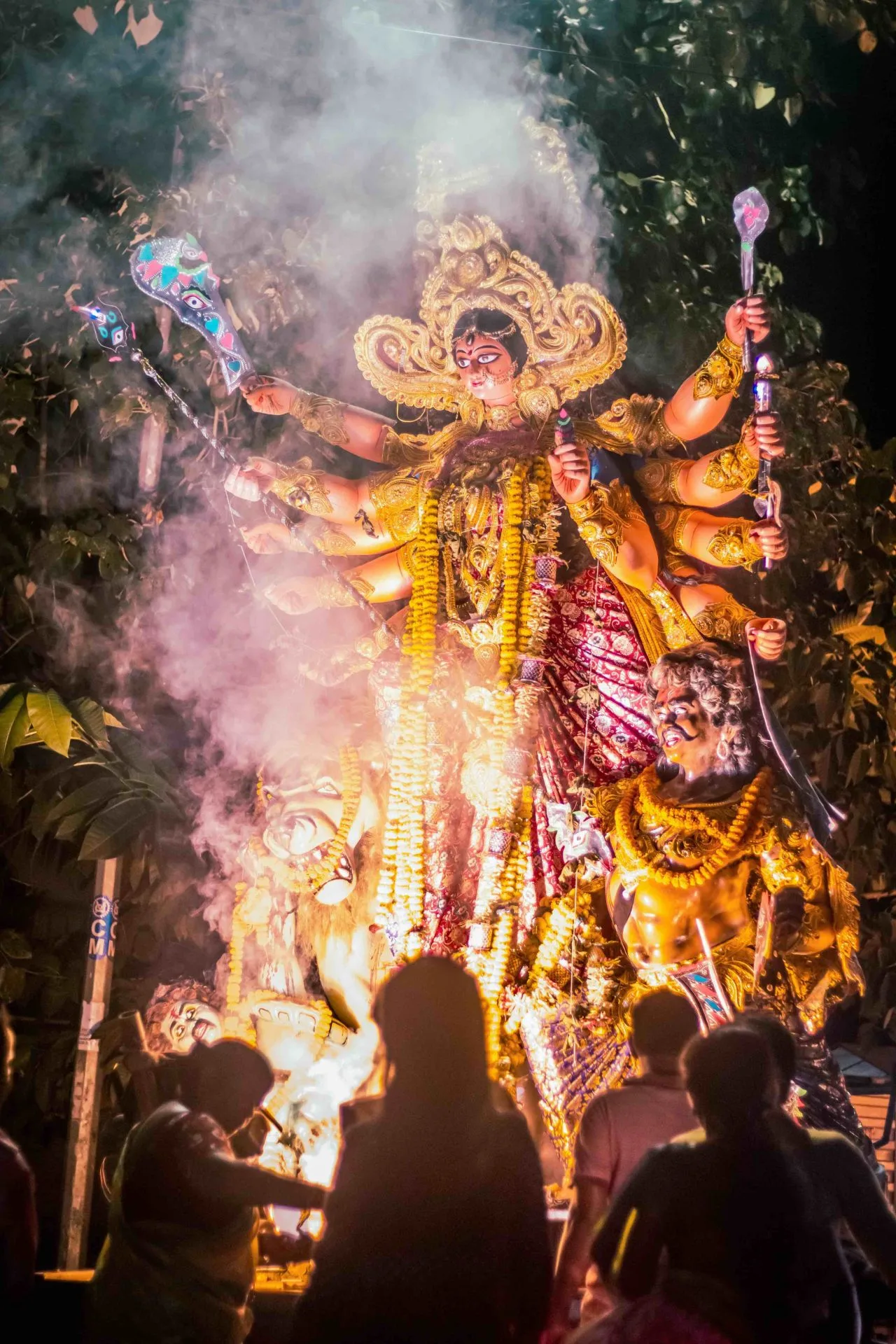
Since the mid-twentieth century, anti-Hindu violence has repeatedly caused a vast array of damage to members of the Hindu religious minority in Bangladesh, with the most recent incident occurring in September 2025. According to the September 26th, 2025 press statement of the Bangladesh Hindu Buddhist Christian Oikya Parishad (Unity Council), a human rights organisation safeguarding the rights of religious minorities, between September 2nd, 2025 and September 23rd, 2025 at least nine arson and vandalism attacks damaged Hindu religious sites. These incidents took place before the Hindu celebration of Sharadiya Durga Puja, and the perpetrators targeted Hindu temples and mandaps. The acts of aggression resulted in vandalising multiple Hindu idols and setting several of them on fire, including Durga, Ganesh, and Lakshmi, injuries to individuals, and fear coupled with rising tensions.
In light of the recent attacks, the aim of the present research paper is to delve deeper into the status and situation of Bangladeshi Hindus. This paper will shed light on the historical context of their sufferings, analysing the constitutional framework of Bangladesh regarding religious minorities, and reviewing two recent incidents that occurred in the South Asian country.
Historical Context of Aggression Against Hindu Communities
Hindus have fallen victim to religious persecution numerous times in the history of Bangladesh, even decades ago. In 1992, following the destruction of the Babri mosque by a Hindu mob in the city of Ayodhya, India, aggression towards Hindus spread over the border to Bangladeshi minorities of the religion, who faced various attacks nationwide.
Furthermore, according to a report by Amnesty International, many Hindus were targeted in Bangladesh after the general elections that took place on October 1st, 2001. Allegedly, this was due to their presumed endorsement of the opposition party, Awami League, which was defeated by the Bangladesh Nationalist Party (BNP) in the voting, whose supporters initiated the violence. Reportedly, mobs linked to the BNP forced a myriad of Hindu families off their properties, raped female members of the community, set homes on fire, and murdered Hindu individuals.
In 2013, more than 40 Hindu temples were damaged, and arson attacks were committed against shops and houses of Hindus nationwide in the course of seven days by Islamist extremists. The miscreants who targeted the religious, commercial, and residential sites of the Hindu minority participated in the political protests of the largest Islamist party known as Jamaat-e-Islami (JI) and its student wing, called Chhatra Shibir.
Additionally, based on the report of a local human rights organisation, between January 2013 and September 2021, Bangladeshi Hindus were subjected to approximately 3,679 incidents of violence in total, which include offences such as vandalism, arson, and directed attacks.
Domestic Legal Framework & The Concept of Secularism
The Constitution of the People’s Republic of Bangladesh (Constitution) was adopted on November 4th, 1972 and it entered into force on December 16th, 1972. Its framework lacks both the expressed recognition of religious minorities and concrete provisions to safeguard them. Subsequent amendments were made to the Constitution, and the Fourth, Fifth, and Eighth Amendments all led to public outcry due to the laws enshrined in them, sparking both violent and peaceful protests in the South Asian country. In the context of religion, the Eighth Amendment is particularly significant, which the Parliament of Bangladesh (originally known as the Jatiya Sangsad) enacted on June 9th, 1988. The importance of the Eighth Amendment lies in originally and explicitly establishing Islam as the official state religion, which can now be found under the subsequently added Article 2A of the Constitution. This was removed later on, but the Fifteenth Amendment reintroduced Islam as the state religion in 2011. Additionally, Article 2A also states that the Bangladeshi State shall provide for religious equality and the free exercise of Buddhist, Christian, Hindu, and other religions’ practices.
In Part II, Article 8(1) of the Constitution, which was added through the Fifteenth Amendment, outlines that the state policies of Bangladesh shall be based upon, inter alia, the fundamental values of secularism. The conventional and widely accepted definition of secularism entails a political ideology which makes a clear separation between state and religious authority, potentially providing for religious equality and the freedom of religion. Speaking of Bangladesh specifically, secularism refers to both religious tolerance and religious liberty, coupled with anti-communalism and the State’s mandate to be neutral among different religions without any explicit or implicit preference. The anti-communalistic approach is described as the secularist objective of reducing or eliminating the socially harmful constituent of communalism. Communalism is a theory that views individuals of the same religious or cultural group as possessing shared political and economic interests. Nevertheless, the notion of secularism in Bangladesh does not imply a rejection of religion, as it does not aim to bar devotees from following their religion. Part II, Article 12 of the Constitution specifically details how to attain secularism in Bangladesh. It states that secularism shall be achieved through the eradication of communalism, the prevention of the State giving preference to a certain religion by means of privileged political status, the abolition of religious exploitation for political purposes, and the elimination of religious persecution or discrimination. Furthermore, Article 8(2) of the Constitution elaborates on Article 8(1). It states that the principle of secularism, among others, shall govern the Bangladeshi administration and law-making, the understanding of the rules set out in the Constitution and other laws, and embody the foundation of the State’s and its citizens’ work. However, Article 8(2) also includes a legal loophole, as it prescribes that the norm of secularism is not judicially enforceable. This showcases how the notion of secularism only serves as a broad guideline, and not as a direct legal obligation that can be invoked by individuals in the case of falling victim to religious discrimination.
The constitutional framework of Bangladesh implicitly covers the rights and protections of religious minorities in several other articles. Part III, Article 27 of the Constitution establishes the equality of all Bangladeshi citizens, and Article 28(1) prohibits the exercise of, inter alia, religious discrimination. Thereby, Article 28(1) indicates the apparent opposition of prejudice and unfair treatment. Article 29(2) of the Constitution bans discrimination and deeming an individual ineligible on the basis of religion in relation to public employment, laying down the equality of opportunity vis-à-vis such positions. Yet, minorities of the South Asian country do not capitalise on these provisions vesting them with equality, as in reality they are not granted the same degree of legal protection and aid. Lastly, Part III, Article 41 of the Constitution sets out the freedom of religion in Bangladesh.In particular, Article 41(1)(a) provides the right of every citizen to practice, declare or propagate the religion of their choice.
Hindus Under Attack in Recent Years
Despite the Constitution emphasising the foundational importance of secularism, the protection from discrimination, and the equality and freedom of religions in Bangladesh, Hindus and their religious sites have endured numerous attacks in recent years.
Similarly to the continuous offences before this year’s Sharadiya Durga Puja celebrations, Hindu temples were also attacked nationwide in October 2021 in connection to the religious festival. The incidents resulted in clashes with the Bangladeshi authorities, over 100 people sustaining injuries, and the death of two Hindu individuals. According to the authorities, an executive member of the temple committee in Begumganj was assaulted and stabbed to death by over 200 miscreants. The capital of the South Asian country, Dhaka, was not an exception to the violent behaviour of Muslim individuals either, since thousands of them were launching bricks to express their opposition, leading to the authorities employing tear gas and rubber bullets to uphold order.
According to a 2024 Al Jazeera report, in the village of Monglargaon, mobs targeted more than 20 Hindu homes and set multiple on fire, thereby forcing people to flee. A local, Bijon Das, recalled the events by saying that “when they attacked my home, my two daughters and wife fled through the backdoor into the jungle”. Moreover, Hindus were victims of enforced displacements, and members of the religious minority were forcibly driven off their lands as well. A student from Bangladesh University of Engineering and Technology (BUET), Abhro Shome Pias, stated that “Hindus have been displaced, and their lands were grabbed forcibly, and it’s unclear whether they’ve received justice or compensation”.
Conclusion
In conclusion, the constitutional framework of Bangladesh, which was amended repeatedly in the past 50 years, does not officially recognise any religious minorities, including Hindus. Neither does it guarantee any expressed protections in their case, despite the attacks they have suffered in the past. The notion of secularism is highlighted as a foundational value of the People’s Republic of Bangladesh in its Constitution, but contradictory acts to the secularist approach cannot be enforced in court. Although the freedom of religion, religious equality, and the equality of opportunity are all explicitly stated in the Constitution, members of the Hindu community in practice do not experience equal treatment.
Furthermore, the religious minority of Hindus encountered a vast array of challenges throughout history in Bangladesh. Among the myriad of attacks, their idols have been desecrated, temples looted, homes burnt down, women raped, and members of the community murdered. The incidents that arose across the country between September 2nd to 23rd, 2025 showcase that to this day, the Bangladeshi Hindus are at risk of being persecuted for their beliefs. The result is escalating fear and anxiety among the Hindu minority, turning a religious festival into chaos, threats, and terror.
Bibliography
Alam S, The State-Religion Amendment to the Constitution of Bangladesh: A Critique” (1991) 24 Verfassung und Recht in Ubersee.
Ali F, Khan H.U, “Unequal Faith: Examining Religious Freedom and the Path Forward for Minorities in Bangladesh” (2025) 3/5 International Journal of Social Sciences Bulletin.
Amnesty International, “Bangladesh: Attacks on members of the Hindu minority” (1 December 2001) 1 <https://www.amnesty.org/en/documents/asa13/006/2001/en/> accessed 1 October 2025.
Amnesty International, “Bangladesh: Wave of violent attacks against Hindu minority” (6 March 2023) <https://www.amnesty.org/en/latest/press-release/2013/03/bangladesh-wave-violent-attacks-against-hindu-minority/> accessed 1 October 2025.
Bangladesh Hindu Buddhist Christian Unity Council, “Press Statement: Mounting Fear and Anxiety Among Devotees Over Upcoming Sharadiya Durga Puja: Oikya Parishad” (26 September 2025).
Bhuiyan J.H, „Secularism in the Constitution of Bangladesh” (2017) 49 The Journal of Legal Pluralism and Unofficial Law.
Biswas S, “There is no law and order. And Hindus are being targeted again” (BBC, 6 August 2024) <https://www.bbc.com/news/articles/cwy77vgmjlzo> accessed 30 September 2025.
“Hindus in Bangladesh” (Minority Rights Group, July 2018) <https://minorityrights.org/communities/hindus/> accessed 29 September 2025.
Kitching K, “The reactionary use of concepts of secularism, pluralism and freedom of expression: implications for education studies” (2025) 44 Irish Educational Studies.
Marof M.H, “‘Our lives don’t matter’: Bangladeshi Hindus under attack after Hasina exit” (Al Jazeera, 12 December 2024) <https://www.aljazeera.com/features/2024/12/12/our-lives-dont-matter-in-post-hasina-bangladesh-hindus-fear-future> accessed 1 October 2025.
The Constitution of the People’s Republic of Bangladesh.
“Two Hindu men killed, temples vandalised in Bangladesh violence” (Al Jazeera, 18 October 2021) <https://www.aljazeera.com/news/2021/10/18/bangladesh-hindus-men-killed-temples-vandalised-religious-violence> accessed 1 October 2025.