Introduction
A series of attacks in Pakistan attributed to Tehrik-e-Taliban Pakistan (TTP) contributed to heightened tensions between Afghanistan and Pakistan in late February 2026. Founded in 2007, the TTP emerged from a coalition of Islamist factions, primarily composed of Pashtun militants from Pakistan’s former Federally Administered Tribal Areas (FATA) and Khyber Pakhtunkhwa province. The group shares significant affinities with the Afghan Taliban: both adhere to the Deobandi school of Sunni Islam and are predominantly Pashtun. Furthermore, TTP leadership has repeatedly expressed allegiance to the Taliban in Afghanistan, underscoring the enduring linkages between these two entities (International Crisis Group, 2026; CFR, 2026).
Relations between the two countries have not always been this tense. In 2021, Pakistan welcomed the U.S. troop withdrawal from Afghanistan, with then Prime Minister Imran Khan praising Afghanistan for “breaking the chains of slavery” (ISPI, 2026). The Taliban’s return to power in August 2021, however, shifted the region’s militant dynamics. Following the Afghan government’s fall, large numbers of prisoners were released, including members of the TTP, who then reorganised (International Crisis Group, 2026; ISPI, 2026). In 2022, Pakistan and the TTP agreed to a ceasefire mediated by the Afghan Taliban, allowing hundreds of militants to return to Pakistan, though many decided to stay in Afghanistan. In the years that followed, militant activity increased and attacks in Pakistan rose. Islamabad repeatedly accused Afghan authorities of tolerating, or failing to prevent, TTP militants from using Afghan territory to launch attacks, straining the relations between the countries and leading to accusations, military reprisals, and cross-border violence (International Crisis Group, 2026; ISPI, 2026).
According to the International Crisis Group, 2025 was “the deadliest year in more than a decade”, with approximately 660 Pakistani security personnel and 580 civilians killed in militant attacks. Most strikes were attributed to the TTP, with Khyber Pakhtunkhwa province experiencing the highest concentration of incidents (International Crisis Group, 2026). Islamabad blamed the increase in violence on the continued presence of TTP leaders in Afghanistan, accusing the Taliban of failing to dismantle militant networks and of allowing fighters to cross the border to carry out attacks. The Taliban government denied these claims, arguing that the TTP insurgency is a Pakistani issue rooted in grievances against the Pakistani state, not Afghan policy (Al Jazeera, 2026; International Crisis Group, 2026).
Long-standing tensions between Afghanistan and Pakistan add fuel to the conflict. A major dispute between the two countries is the Durand Line, the border drawn by British colonial authorities in 1893 dividing Pashtun communities. Successive Afghan governments have disputed the legitimacy of the Durand Line as an international border, a position that the Taliban have also maintained (ISPI, 2026; Chatham House, 2026). Finally, regional rivalries have also fueled mistrust: Pakistan claims that India is trying to exploit its tensions with Afghanistan and accuses the Taliban of acting as a “proxy” for New Delhi (Chatham House, 2026).
Militant violence, unresolved border disputes, and worsening relations between Kabul and Islamabad have turned the conflict from a cross-border insurgency into a direct confrontation between the two countries.
Open War Escalation
Tensions between Afghanistan and Pakistan increased in 2025 as militant attacks in Pakistan rose; in response, Islamabad launched its first airstrikes inside Afghanistan, targeting suspected TTP positions in Khost and Paktika provinces (Reuters, 2026; Al Jazeera, 2026). The conflict escalated further in October 2025, as Pakistan increased the number of strikes after dozens of its soldiers were killed by TTP militants in Khyber Pakhtunkhwa. These actions led to direct clashes between Pakistani troops and Afghan Taliban forces along the border, resulting in at least 17 civilian deaths, before Qatar and Türkiye mediated a fragile ceasefire (Al Jazeera, 2025; ISPI, 2026).
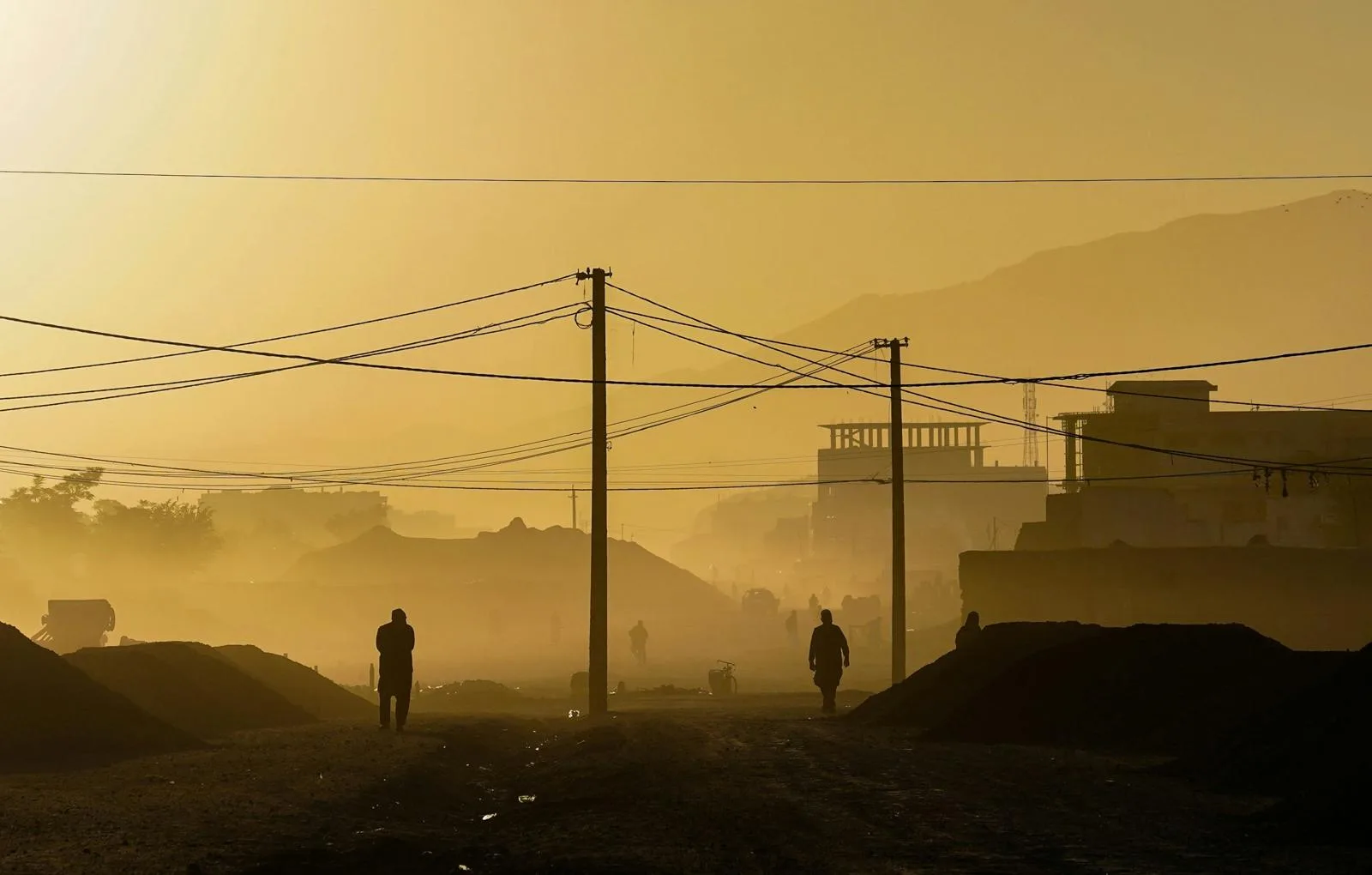
In early 2026, several attacks attributed to militant groups operating from Afghan territory, including the TTP, targeted Pakistani security forces in Bajaur and Bannu districts, as well as a Shia Mosque in Islamabad, where a February bombing killed 31 people (Reuters, 2026; AP News, 2026). On February 21, 2026, the Pakistan Air Force responded with strikes in the Afghan provinces of Nangarhar, Khost, and Paktika, stating that the targets included TTP and Islamic State Khorasan Province facilities (Reuters, 2026; AP News, 2026). The Taliban government condemned these strikes as violations of Afghan sovereignty and reported civilian casualties, including fatalities at a religious school (Al Jazeera, 2026). On February 26, Afghan Taliban forces responded by attacking Pakistani border posts and launching cross-border drone strikes (Reuters, 2026). The following day, Pakistan’s Defence Minister Khawaja Muhammad Asif declared that the conflict had become “open war” between the two countries, stating: “Our patience has reached its limit. Now it is open war between us and you.” (Eurasianet, 2026). Pakistan then launched Operation Ghazab Lil Haq (roughly translating to Wrath for the Truth), which marked a broader escalation of the fighting (Reuters, 2026).
By early March 2026, the conflict had resulted in significant casualties, among both military personnel and civilians. Pakistani officials reported 12 soldiers killed and 27 wounded, while Taliban officials claimed that more than 150 Pakistani troops had died. The United Nations Assistance Mission in Afghanistan (UNAMA) reported that 56 civilians, including 24 children, were killed between February 26 and March 5 during Pakistani military operations (UN News, 2026; Reuters, 2026).
Pakistan has justified its cross-border strikes as an exercise of its right to self-defence under Article 51 of the UN Charter, arguing that the attacks responded to armed assaults originating from Afghan territory. This position was reiterated in an official statement from Pakistan’s Ministry of Foreign Affairs on February 27, 2026, which described the strikes as “precise operations targeting terrorist infrastructure and logistical bases” (Government of Pakistan, Ministry of Foreign Affairs, 27 February 2026). The United States also expressed support for Pakistan’s right to self-defence following the escalation (The Guardian, 2026). The Taliban authorities have rejected this view, maintaining that the TTP insurgency is an internal Pakistani matter, rather than a responsibility attributed to Afghanistan. Islamabad, however, conceives the continued presence of TTP leaders in Afghanistan as evidence that Afghan authorities are unwilling or unable to prevent cross-border attacks, aligning with the controversial “unable or unwilling” doctrine often invoked to justify the use of force against non-state actors operating from foreign territory. Reports of civilian casualties from Pakistani airstrikes have raised concerns regarding the proportionality of the response. While countries have the right to self-defence after an armed attack, any use of force must comply with international humanitarian law, including the rules of distinction and proportionality (UN News, 2026).
Humanitarian Crisis
The escalation of hostilities has significantly worsened humanitarian conditions along the Afghanistan–Pakistan border.
The International Organization for Migration (IOM) reports that approximately 115,000 people have been displaced, including around 66,000 in eastern Afghanistan, because of the fighting (IOM, 2026; Reuters, 2026). This new displacement adds to Afghanistan’s ongoing returnee crisis, further straining an already fragile refugee situation. Since September 2023, due to the spike in terrorist attacks, Pakistan has pressured Afghan nationals to leave the country by enforcing the Illegal Foreigners Repatriation Plan. According to available estimates, two million Afghans have returned, while a further two million remain in Pakistan facing fears of persecution, deportation, or arrest (IOM, 2026; UN News, 2026). By coercing Afghan refugees to leave and expelling even those under legal protection, Pakistan is effectively violating the principle of non-refoulement and the UNHCR non-return advisory implemented in 2021. Afghanistan, already struggling with economic instability and widespread food insecurity, faces considerable challenges in absorbing large numbers of returnees. In the past two years, over five million Afghans have returned from neighbouring countries, including 2.6 million in 2025 alone (IOM, 2026). Many are also returning from Iran, where thousands are leaving after the US-Israeli war began, further intensifying pressure on Afghanistan’s limited humanitarian and economic capacity
The escalation of hostilities has further disrupted humanitarian access, which was already fragile prior to the recent fighting. Key border crossings, such as Torkham and Bahramcha, have been temporarily closed for security reasons, restricting the delivery of aid at a time when needs are rising at an alarming pace (IOM, 2026). The World Food Programme (WFP) reported that insecurity forced the temporary suspension of emergency food aid and other programs in several provinces, leaving about 160,000 people without emergency food distributions (WFP, 2026). This crisis is especially serious given Afghanistan’s pre-existing levels of food insecurity. WFP estimates that 17.4 million people, about one-third of the population, need urgent food assistance, and 3.7 million children are expected to need treatment for acute malnutrition in 2026 (WFP, 2026).
Volker Türk, UN High Commissioner for Human Rights, warned that the violence is “piling misery on misery,” with women and children suffering the most (OHCHR, 2026; UN News, 2026). Increasing insecurity along the border makes it even harder to access healthcare, education, and protection services, particularly in a context where women’s rights and mobility are already significantly restricted (GCG, 2026).
Conclusion
The characterisation of the situation as an “open war” on February 27 marks a major turning point in Afghanistan–Pakistan relations. Although mediation efforts in October 2025 temporarily reduced tensions, broader geopolitical developments in the Middle East, including the US-Israeli war on Iran, make diplomatic intervention harder, potentially reducing the likelihood of effective external mediation (Chatham House, 2026; ISPI, 2026).
In the short term, the main risks include further escalation of cross-border fighting and increased displacement. Ongoing conflict is likely to strengthen militant groups, increase refugee flows, and add to instability across South Asia.
Without renewed diplomatic cooperation and respect for international law, tensions between Afghanistan and Pakistan risk evolving into a protracted crisis, further aggravating an already fragile humanitarian situation.
Bibliography
Al Jazeera. “Taliban, Pakistani Forces Trade Heavy Fire Along Afghanistan Border.” Al Jazeera, October 12, 2025.
https://www.aljazeera.com/news/2025/10/12/taliban-pakistani-forces-trade-heavy-fire-along-afghanistan-border
Al Jazeera. “Pakistan Says No Dialogue with Afghanistan as Attacks Persist.” Al Jazeera, February 28, 2026.
https://www.aljazeera.com/news/2026/2/28/pakistan-says-no-dialogue-with-afghanistan-as-attacks-persist
Al Jazeera. “Nearly 66,000 Afghans Displaced Amid Fierce Fighting on Pakistan Border.” Al Jazeera, March 4, 2026.
https://www.aljazeera.com/news/2026/3/4/nearly-66000-afghans-displaced-amid-fierce-fighting-on-pakistan-border-un
Associated Press. “Pakistan–Afghanistan Border Fighting Escalates Amid Rising Tensions.” Associated Press, 2026.
https://apnews.com/article/pakistan-afghanistan-border-fighting-c4aa84f196db202fc124578a039ae3c4
Chatham House. “Afghanistan and Pakistan Are Facing Open War: De-escalation Needed.” Chatham House, 2026.
https://www.chathamhouse.org/2026/03/afghanistan-and-pakistan-are-facing-open-war-de-escalation-needed
Council on Foreign Relations. “Why Are the Afghan Taliban and Pakistan in an Open War?” Council on Foreign Relations, 2026.
https://www.cfr.org/articles/why-are-the-afghan-taliban-and-pakistan-in-an-open-war
Eurasianet. “Pakistan Declares Open War on Afghanistan: Implications for the Region.” Eurasianet, 2026.
https://eurasianet.org/pakistan-declares-open-war-on-afghanistan-implications-for-the-region
Government of Pakistan, Ministry of Foreign Affairs. “Pakistan’s Actions in Self-Defence against Terrorist Attacks and Military Provocations from Afghanistan.” Islamabad, February 27, 2026.
International Crisis Group. Pakistan: Responding to the Militant Surge on the Afghan Border. Asia Report No. 354. International Crisis Group, 2026.
https://www.crisisgroup.org/rpt/asia-pacific/pakistan-afghanistan/354-pakistan-responding-militant-surge-afghan-border
International Organization for Migration (IOM). “IOM Warns of Humanitarian Impact of Afghanistan–Pakistan Border Escalation.” IOM, 2026.
https://www.iom.int/news/iom-warns-humanitarian-impact-afghanistan-pakistan-border-escalation
ISPI – Istituto per gli Studi di Politica Internazionale. “Pakistan–Afghanistan: Si Riaccende il Conflitto.” ISPI, 2026.
https://www.ispionline.it/it/pubblicazione/pakistan-afghanistan-si-riaccende-il-conflitto-232163
OHCHR – Office of the United Nations High Commissioner for Human Rights. “Türk Says Pakistan–Afghanistan Conflict Is ‘Piling Misery on Misery’.” OHCHR, March 2026.
https://www.ohchr.org/en/press-releases/2026/03/turk-says-pakistan-afghanistan-conflict-piles-misery-misery-pleads-dialogue
Reuters. “Pakistani, Afghan Border Forces Clash; UN Says War Displaces 100,000.” Reuters, March 6, 2026.
https://www.reuters.com/world/asia-pacific/pakistani-afghan-border-forces-clash-un-says-war-displaces-100000-2026-03-06
UN News. “Afghanistan–Pakistan Border Fighting Displaces Tens of Thousands.” United Nations, March 2026.
https://news.un.org/en/story/2026/03/1167103
World Food Programme (WFP). “WFP Warns Conflict Along Afghanistan–Pakistan Border Is Worsening Food Crisis.” WFP, 2026. https://reliefweb.int/report/afghanistan/wfp-warns-deepening-crisis-afghanistan-insecurity-flares-eastern-southern-and-western-border-world-food-programme
Gender in Conflict and Crisis Group (GCG). Gendered Impacts of Hostilities between Afghanistan and Pakistan. 2026. https://reliefweb.int/report/afghanistan/gender-alert-2-impacts-military-hostilities-between-afghanistan-and-pakistan-women-and-girls-april-2026