
Introduction
On February 17th, 2026, a chartered aircraft took off from Rome, stopped in Bari to collect more passengers, and landed in Tirana. On board were about thirty to forty people – not travellers, but men transferred from immigration detention centres across Italy to an Italian-run facility on Albanian soil. Three days later, a second flight carried a further thirty-five to forty people. Within a week, around ninety people were held at the Gjadër centre, the highest number since the Italy–Albania Protocol came into force (InfoMigrants, 2026).
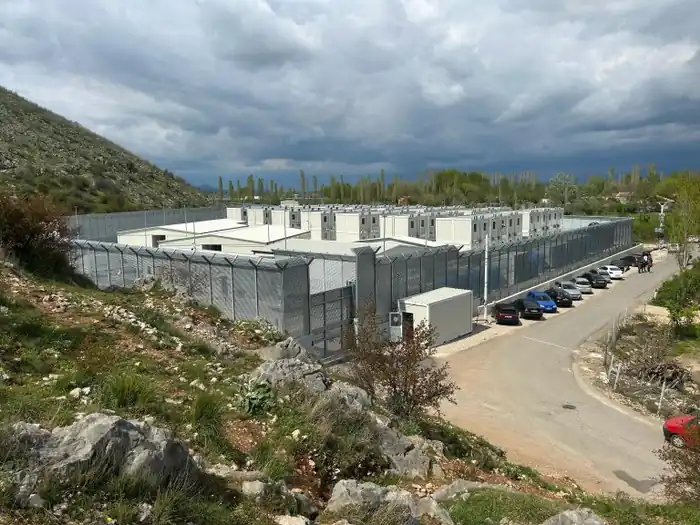
These flights are the latest stage of a bilateral agreement through which Albania grants Italy the use of the port of Shëngjin and an area in Gjadër to build three facilities for border and return procedures – an arrangement the EU increasingly views as a potential new model for enforcing the return of migrants reaching the Union (Lacchei & Scissa, 2024). It belongs to a wider shift: the UN Special Rapporteur on the human rights of migrants, Gehad Madi, warns that the externalisation of migration governance “continues to expand despite long-standing human rights concerns”, including through arrangements allowing the removal of migrants to third States “with which they have no prior connection” (Madi, 2026b).
Flaminia Delle Cese, Legal and Advocacy Advisor for the International Rescue Committee (IRC) Italy, argues that moving people to closed facilities outside EU soil punishes individuals who are already struggling to navigate an increasingly complex migration system. She calls it a dangerous model and an alarming step in the wrong direction (IRC, 2026). The remoteness of the centres, Lacchei and Scissa (2024) note, may also produce conflicts of responsibility for human rights violations committed there, heightening the risk of serious abuse. Monitoring reports have already found that living conditions in Gjadër are perceived as worse than detention in Italian CPRs (Tavolo Asilo e Immigrazione, 2026). These are precisely the harms Madi links to externalisation: arbitrary detention, ill-treatment, the denial of effective remedies, and interference with family life (Madi, 2026b).
Through the specific case of the Italy–Albania Protocol and the Gjadër centre, this article documents the human rights violations produced on the ground to understand the wider logic of the European Union’s externalisation strategy. Its relevance is immediate: on June 17th, 2026, the European Parliament adopted a new Return Regulation which, for the first time, gives all member states a legal basis to establish “return hubs” in third countries (European Parliament, 2026; Council of the European Union, 2026). What began as an Italian pilot has thus become a template available across the Union – and the harms documented at Gjadër preview the human rights cost of exporting migration control across the EU.
Structural Legal Basis of the Protocol
Signed in Rome on November 6th, 2023 by Italian PM Giorgia Meloni and Albanian PM Edi Rama, the protocol consists of 14 articles and runs for five years, renewable once (Protocol, 2023; Veshi et al., 2026, p. 5). Through this bilateral agreement, Albania grants Italy the use of two sites totalling 77,700 square metres – Shëngjin and Gjadër – where Italian authorities operate under Italian law (Protocol, 2023, Art. 4; Veshi et al., 2026, p. 5). The three facilities granted by Albania are: a penalty detention centre with 20 places for the precautionary custody of migrants arrested or detained; an administrative detention centre with 144 places serving as a CPR (Centro di Permanenza per i Rimpatri – Repatriation Detention Centre); and an administrative detention centre with 880 places for asylum seekers awaiting the outcome of their claims (Lacchei & Scissa, 2024). Only asylum seekers whose claims fall under the accelerated border procedure (introduced by Law no. 50/2023) can be detained there, namely people from “safe” countries of origin or those who evaded or tried to evade border controls (Lacchei & Scissa, 2024). While the original Protocol covered only people rescued or intercepted at sea by Italian vessels, and not those already on Albanian soil, its scope was significantly widened in 2025. Decree-Law No. 37 of 28 March 2025, converted into Law No. 75 of 23 May 2025, extended the use of the Albanian centres to third-country nationals already subject to detention measures validated or extended by Italian judicial authorities (Veshi et al., 2026, p. 8). In practice, this transformed Gjadër from an offshore asylum-processing site into a CPR: from April 2025, people held in CPRs on Italian soil began to be transferred to Albania to await removal, thus introducing what monitoring bodies have described as a “transnational administrative detention system” (Tavolo Asilo e Immigrazione, 2026, p. 3). Finally, according to the Protocol (2023), Italy is responsible for all costs, construction, and internal security, while Albania is responsible for external perimeter security.
The Human Rights at Stake
International refugee law is clear that any restriction on the movement of refugees may only be one that is “necessary” (Convention Relating to the Status of Refugees, 1951, art. 31(2)). Measured against that standard, the Italy–Albania Protocol raises serious concerns. Lacchei and Scissa (2024) identify five documented risks to human rights. First, the protocol may violate search and rescue (SAR) standards – from the SAR Convention (International Maritime Organisation, 1979) – and the duty to disembark people in danger at the nearest safe port. The latter violation comes from the fact that Italian authorities might delay disembarkation by taking rescued people to Albania while there might be a closer safe port.
Then, Lacchei & Scissa (2024) highlight that the accelerated procedure and detention could apply to anyone transferred, including vulnerable people who cannot lawfully be detained under Art. 19 of the Italian Consolidated Act on Immigration. Thus, the Protocol fails to exclude vulnerable migrants. Indeed, the Protocol lacks both clear provisions on vulnerability checks and indications as to where this screening should take place, what professional figures should be responsible for carrying it out, what skills and qualifications are needed for such an assessment, and what standards must be respected. Hence, vulnerable individuals are at risk of being subject to prolonged detention and delayed access to asylum. For example, the vulnerability check conducted on the first 16 asylum seekers who were subject to the Protocol failed to detect several vulnerable people and unreasonably extended the disembarking operations for this group. Two minors and two adults in precarious health conditions thus disembarked in Albania. It was only after a second screening on land and a wait of several hours in the port of Shëngjin that they were transferred to Italy (Lacchei & Scissa, 2024, citing ECRE). Additionally, despite the government declaring that vulnerable individuals and minors will not be detained in Albania, the tender includes expenditure items relating to their reception (Lacchei & Scissa, 2024). According to Article 19 of the Consolidated Immigration Act, specific categories such as minors, pregnant women and mothers up to six months after childbirth, people living with close Italian relatives, and the seriously ill are shielded from expulsion and, by extension, from removal-related detention. In addition, according to the EU law on reception conditions (2013/33/EU), detention of an asylum seeker is only allowed when it proves necessary and based on an individual assessment of each case […] if other less coercive alternative measures cannot be applied effectively”. Furthermore, for vulnerable people specifically, Article 11(1) provides that their “health, including mental health […] shall be of primary concern,” and Article 11(2) states that “minors shall be detained only as a measure of last resort and after it having been established that other less coercive alternative measures cannot be applied effectively”. Therefore, automatic detention of everyone transferred, with no mechanisms to check for vulnerability, violates both national and international laws.
Laccher & Scissa (2024) then highlight the right to personal liberty. The Protocol mandates automatic detention of all transferred migrants, with no alternatives. Yet, both the ICCPR (Art 9) and the ECHR (Art 5) state that everyone has the right to liberty and security of person – thereby condemning arbitrary arrest or detention (Council of Europe, 1950; International Covenant on Civil and Political Rights, 1966, art. 9). In addition, the Italian Consolidated Immigration Act (Legislative Decree 286/1998, Article 14) states that the use of detention must be validated by a judge following an individual assessment. Without this validation order, which must be issued within 48 hours from the moment of notification, detention becomes null and must be revoked (Republic of Italy, 1998).
Then another human rights violation relates to the Right of Legal Representation and an Effective Remedy. On paper, migrants are assisted by Italian lawyers via online meetings. According to the Protocol, if such communication is not feasible because of technical difficulties, for example, lawyers can reach their client in Albania. However, Laccher & Scissa (2024) note that because of the long journey to reach the remote areas of the centres, mechanisms to access an effective remedy – especially considering the short time limits to lodge appeals both for administrative detention measures and asylum procedures – risk being severely undermined. Additionally, such difficulties in gaining legal representation further reduce the possibility of lodging an asylum appeal.
Finally, the Protocol risks undermining the right to access asylum. Given the short time frame provided in this accelerated procedure, asylum applications may be rejected without in-depth scrutiny of the case. For instance, the first 12 asylum claims that were lodged in the centre were all rejected in 24 hours as manifestly unfounded. The argument was that the migrants came from countries included in the Italian list of safe countries of origin. This list, however, is controversial in the context of human rights, and Egypt is a telling example. Despite being written into Italy’s list of “safe countries of origin” (Decreto-Legge n. 158/2024, art. 1; ECRE, 2024), it is documented by Amnesty International (2025) and Human Rights Watch (2025) as a state where torture, arbitrary detention, and enforced disappearances remain routine. Egypt was also one of the two countries with Bangladesh in the very first rejected cases, where the Tribunal of Rome refused to validate detention precisely because Egypt could not be considered safe. Furthermore, the principle of fairness in asylum procedures is undermined as the long distance, videoconferencing, and the lack of interpreters may lead to differences in procedural guarantees between those applying for asylum in Albania or those in Italy (Lacchei & Scissa, 2024).
Conditions of Detention
A January 2026 monitoring report by the Tavolo Asilo e Immigrazione (Asylum and Immigration Coalition), a network of Italian civil-society organisations, documented conditions inside Gjadër following six field missions carried out between April and July 2025 (Tavolo Asilo e Immigrazione, 2026). The report highlights forced isolation as a major issue of the Gjadër detention centre: “forced isolation in Gjader is not only a material condition, but a systemic condition of marginalisation that makes people invisible, silent and passive, contributing to an institutionalised dehumanisation that is even more extreme than in the CPRs on Italian territory” (Tavolo Asilo e Immigrazione, 2026, p.21).
According to Tavolo Asilo e Immigrazione (2026), the centre’s courtyard is surrounded by wire mesh, and cell doors can only be opened from the outside with a code. This courtyard is the only common area and there are no recreational activities (Tavolo Asilo e Immigrazione, 2026). Detainees also face constant surveillance: more than 150 police officers are on rotating shifts, and drones are used over the facility (IRC, 2026). Furthermore, food is administered through a slot in the door. Moreover, it is almost impossible for detainees to maintain emotional connections with family members or friends, or even to manage their legal situation, as their only access to the outside world is through the centre’s phone, for which use is limited to 20 minutes per day per person (Tavolo Asilo e Immigrazione, 2026; IRC, 2026). IRC (2026) reports the case of one man who had been unable to speak to his four-year-old son since arriving.
However, by law, CPRs are non-punitive (Tavolo Asilo e Immigrazione, 2026). Yet, the conditions described are similar to those of a high-security prison or isolation unit. Imposing carceral conditions on people who have committed no crime and are held only for migration-status reasons is disproportionate, and that disproportion is the starting point of the violation of ECHR Article 3, which argues that no one shall be subjected to torture or to inhuman or degrading treatment or punishment (Council of Europe, 1950, art. 3). To argue for a violation, the ECHR assesses conditions cumulatively, considering space, ability to move, contact with the outside world, and degrading features such as being fed through a hatch. Here, the cumulative conditions of detention can amount to degrading treatment. The report frames this as “institutionalised dehumanization” (Tavolo Asilo e Immigrazione, 2026, p. 21). Furthermore, Tavolo Asilo e Immigrazione (2026) argues that detainees are rendered silent, passive, and invisible, which violates individuals’ dignity, which, according to Article 1 of the EU Charter, is inviolable and must be protected (European Union, 2012, art. 1).
As a result of such conditions, detainees are twice as likely to develop mental disorders as non-detainees, with high incidences of depression (68 percent), anxiety (54 percent), and post-traumatic stress disorder (42 percent). Following visits to the Albanian centre, MEPs Rachele Scarpa and Cecilia Strada expressed serious concerns about living conditions in Gjader and requested urgent intervention in Albania by the Council of Europe’s Committee for the Prevention of Torture (CPT) itself (Scarpa & Strada, 2025). Within the 35 critical incidents reported, the MEPs noted 21 incidents of self-harm or suicide attempts by at least nine detainees, highlighting serious health concerns about the mental and physical condition of the people inside the centre (Tavolo Asilo e Immigrazione, 2026). Some cases of self-harm reported include attempts of hanging using clothing hooked onto the fire sprinkler system; a person who ingested a zip fastener and whose asthma inhaler had been confiscated and had obvious and recent signs of self-harm on their arms; an ingestion of shower gel as a protest against conditions (Tavolo Asilo e Immigrazione, 2026). Furthermore, the centre does not provide adequate support for medical conditions, whether it is physical – in the case of a person not receiving any treatment while suffering from severe headaches – or psychological. For example, isolation rooms which are originally intended for infection-related isolation – and therefore not suitable for psychiatric purposes – were used for two patients because of “behavioural disturbance”. After a reassessment of their condition, the two patients were deemed vulnerable and unsuitable for detention and returned to Italy. However, placing them in isolation rooms that are not intended for this purpose severely increases the risk to the patients’ safety and the possibility of self-harm. There are also reports of the pathologisation of mental health issues with abuses of psychotropic drugs and tranquillisers (Tavolo Asilo e Immigrazione, 2026). The Court of Cassation even expressed concerns about the “possible serious prejudice to the right to health of ‘migrants’ (Tavolo Asilo e Immigrazione, 2026, p. 17), protected by Article 32 of the Constitution (Republic of Italy, 1947, art. 32), given that the level of healthcare in Albania is not comparable to that in Italy.
Overall, the living conditions in the detention centre are best described by IRC Italy’s Flaminia Delle Cese (2026), who called it “a cruel, costly and counterproductive solution that strips people of their dignity”. She warns that people with pre-existing conditions are being held and further argues that detention is taking a visible toll on people’s mental health.
The Protocol’s Role in Illustrating the Broader Human Rights Violations from the EU Externalisation Strategy
Ahead of the EU vote on the Return Regulation in June 2026, the IRC (2026) visited the Gjader facility and warned against using such centres as a blueprint for the EU’s new return hubs, as it risks replicating existing problems rather than addressing the root, which is establishing a fair, humane migration system. The EU Advocacy Director Marta Welander argued that replicating a system that is already broken is a dangerous mistake (IRC, 2026). This logic is shared by the Dutch MEP Tineke Strik, who added that “this system created under the Italy-Albania deal clearly isn’t working and we need to ensure that this doesn’t become the model for EU-funded detention centres” (Neiman, 2026). Yet, on June 17th, 2026, the European Parliament adopted the new Return Regulation by 418 votes to 218, with 30 abstentions (European Parliament, 2026). The Regulation establishes a common EU system for returns and, for the first time, gives member states a legal basis to set up return hubs in third countries (Council of the European Union, 2026). It also extends the maximum period of detention to up to 30 months, a sharp increase from the 18-month ceiling under the 2008 Return Directive, and introduces a European Return Order to allow return decisions issued by one member state to be recognised and enforced across the Union (Council of the European Union, 2026). The measures on externalisation, including return hubs, take effect immediately, while most other provisions apply from 2027 (Council of the European Union, 2026). With this vote, the model of Shëngjin and Gjadër ceased to be an Italian experiment and became a template available to all twenty-seven member states. The Italy–Albania Protocol thus becomes a preview of the human rights cost of an externalisation strategy the European Union has now written into its own law.
The UN Special Rapporteur on the human rights of migrants, Gehad Madi, frames externalisation as three converging practices: preventing arrivals, outsourcing asylum procedures, and removing migrants to third states “including countries with which they have no prior connection” (Madi, 2026b). Here, the Shëngjin and Gjadër centres are not isolated cases; they are part of a broader logic of externalisation which already includes, for instance, the EU–Turkey deal (2016), the Libya MoU (2017), the EU–Tunisia MoU (2023). This process has now been generalised at the EU level with the June 2026 Return Regulation. The new legislation does not invent new return hubs but rather facilitates a strategy that has been developing for a decade regardless of international law. The violations documented at Gjadër – arbitrary detention, ill-treatment, denial of effective remedies, and interference with family life – are recurring harms produced by externalisation (Madi, 2026b), and are also documented at other externalisation sites, such as Libyan detention (OHCHR & UNSMIL, 2026) and the Greek islands (Amnesty International, 2024). This points to the model itself as the problem: through such harsh conditions, externalisation strategies aim to create deterrence.
Beyond deterrence, externalisation is also designed to move people to where legal oversight is weakest. Such policies allow States to do through third countries what they cannot do by themselves, circumventing the negative and positive duties enshrined in their obligations to non-refoulement and respect of the right to leave (Moreno-Lax & Giuffré, 2019, p. 26). To avoid becoming more attractive to protection seekers, a form of negative regulatory competition has taken hold among Member States. Moreno-Lax & Giuffré (2019) argue that this has been ignited by the Dublin regimes with the aim of avoiding creating a ‘pull factor’. This is what the authors call a “race to the bottom” in protection levels (Moreno-Lax & Giuffré, 2019, p.2). Hence, the EU favours a strategy based on the full externalisation of migration and border controls aimed at eradicating unauthorised access to Europe (Moreno-Lax & Giuffré, 2019).
Yet externalisation largely fails on its own terms. The Gjadër scheme offers a maximum of 3,000 places against the 141,790 people who reached Italy by sea in 2023 – therefore covering around 2.1 percent of arrivals – while costing far more than processing in Italy: running costs have been estimated at up to seven times those of an equivalent facility on Italian soil (Lacchei & Scissa, 2024; Neiman, 2026). Rather than reducing migration, such measures displace it and divert resources from reception and integration, which is why the Special Rapporteur urges States to “prioritise rights-based, fair and sustainable migration and asylum systems” instead (Madi, 2026b). The persistence of a model that is both harmful and ineffective suggests its function is as symbolic and political as it is practical.
Additionally, during a panel discussion at the 62nd session of the Human Rights Council, Gehad Madi (2026a) insisted on the fact that limited transparency is a recurring feature of externalisation strategies. At Gjadër, while Italy formally retains jurisdiction, accountability still collapses in practice because of the remoteness. Even MEPs from the left-leaning Greens and European Free Alliance (EFA) faced difficulty accessing the facilities in Albania, with some staff members denied entry by Italian authorities on site. Hence, even when jurisdiction is retained, the accountability deficit remains. Therefore, given the difficulty to determine legal responsibility in externalisation strategies, G. Madi (2026b) calls for the inclusion of human rights clauses in all cooperation agreements to avoid measures that violate – directly or indirectly – human rights, and for independent human rights monitoring mechanisms and accessible complaint procedures, precisely because externalisation erodes them.
Conclusion
What began as an offshore asylum-processing scheme has, through the March 2025 decree, become a return hub to which people already held in Italian repatriation centres are transferred. At every stage, the Italy–Albania Protocol has raised serious human rights concerns. Its accelerated procedures risk violating search and rescue standards, the right to personal liberty, the right to legal representation and effective remedy, and the right to access asylum, while its failure to exclude vulnerable people exposes those who should never be detained to prolonged confinement. Inside Gjadër, monitoring reports document isolation, inadequate healthcare, self-harm, and attempted suicides. This carceral regime imposed on people who have committed no crime is what the Tavolo Asilo e Immigrazione (2026) describes as “institutionalised dehumanisation”.
These harms are not an Italian implementation failure but recurring features of externalisation itself. As this article has argued, the model is designed both to deter, through harsh conditions, and to move people to where legal oversight is weakest, thereby allowing States to do through third countries what they cannot lawfully do themselves. Even where Italy formally retains jurisdiction, accountability collapses in practice. And the strategy fails on its own terms: it detains a fraction of arrivals at a very high cost. Hence, the aim is not to effectively address the situation and support people, but to determine future arrivals. With the adoption of the June 2026 Return Regulation, this contested Italian experiment has become a template available across the European Union, exporting its accountability gap to all twenty-seven member states.
The evidence gathered at Gjadër offers a clear warning. As the Tavolo Asilo e Immigrazione (2026, p. 25) concludes, repatriation centres are “structurally pathogenic places that are harmful to individual and collective dignity, where not only should people with illnesses or vulnerabilities not be detained, but where even those who are generally healthy will experience a deterioration in their health, particularly their mental health”. The question the Italy–Albania model ultimately poses reaches beyond migration policy. These findings call for more than criticism. A first recommendation – echoing the Tavolo Asilo e Immigrazione (2026) – is to suspend transfers to Gjadër at the very least until the Court of Justice delivers its binding ruling, which calls for the agreement to be cancelled. Where externalisation nonetheless continues, it cannot be allowed to operate by violating human rights: transfers must be preceded by genuine vulnerability screening, detention used only as a measure of last resort subject to individual judicial review, and effective access to lawyers and suspensive appeals guaranteed despite the distance. Crucially, any such arrangement must be accompanied by independent and transparent human rights monitoring, accessible complaint mechanisms, and binding human rights clauses in all cooperation agreements, as the UN Special Rapporteur urges (Madi, 2026b). Above all, the resources devoted to containment would be better invested in rights-based reception and integration, addressing the causes of migration rather than displacing its human cost. In the words of the UN Special Rapporteur, this issue is “not only how States manage migration, but also what kind of societies we aspire to be” (Madi, 2026).
Bibliography
Amnesty International. (2024). Greece — Samos: “We feel in prison on the island”: Unlawful detention and sub-standard conditions in an EU-funded refugee centre (Index No. EUR 25/8356/2024). https://www.amnesty.org/en/documents/eur25/8356/2024/en/
Amnesty International. (2025). Egypt: Human rights. In Amnesty International Report 2024/25. https://www.amnesty.org/en/location/middle-east-and-north-africa/north-africa/egypt/report-egypt/
Convention Relating to the Status of Refugees, opened for signature July 28, 1951, 189 U.N.T.S. 137, art. 31(2) (entered into force April 22, 1954). https://www.unhcr.org/media/convention-and-protocol-relating-status-refugees
Council of Europe. (1950). Convention for the Protection of Human Rights and Fundamental Freedoms (European Convention on Human Rights, as amended), ETS No. 5, Art. 3. https://www.echr.coe.int/documents/d/echr/convention_ENG
Council of the European Union. (2026, June 1). Council and Parliament reach deal on returns of illegally staying third-country nationals [Press release]. https://www.consilium.europa.eu/en/press/press-releases/2026/06/01/council-and-parliament-reach-deal-on-returns-of-illegally-staying-third-country-nationals/
Directive 2013/33/EU of the European Parliament and of the Council of 26 June 2013 laying down standards for the reception of applicants for international protection (recast), 2013 O.J. (L 180) 96. https://eur-lex.europa.eu/legal-content/EN/TXT/HTML/?uri=CELEX:32013L0033
European Council on Refugees and Exiles. (2024). Safe country of origin — Italy. Asylum Information Database (AIDA). https://asylumineurope.org/reports/country/italy/asylum-procedure/the-safe-country-concepts/safe-country-origin/
European Parliament. (2026). Return Regulation [Legislative procedure / plenary vote of 17 June 2026]. https://oeil.europarl.europa.eu/oeil/en/document-summary?id=1782674
European Union. (2012). Charter of Fundamental Rights of the European Union, art. 1, 2012 O.J. (C 326) 391. https://eur-lex.europa.eu/eli/treaty/char_2012/oj
Human Rights Watch. (2025). Egypt. In World Report 2025. https://www.hrw.org/world-report/2025/country-chapters/egypt
InfoMigrants. (2025, June 25). L’Italie a procédé à sa première expulsion de migrants depuis son centre en Albanie. https://www.infomigrants.net/fr/post/65332/litalie-a-procede-a-sa-premiere-expulsion-de-migrants-depuis-son-centre-en-albanie
InfoMigrants. (2026, March 5). Italy: 80 migrants in repatriation centers transferred to Albania. https://www.infomigrants.net/en/post/70188/italy-80-migrants-in-repatriation-centers-transferred-to-albania
International Covenant on Civil and Political Rights, opened for signature December 16, 1966, 999 U.N.T.S. 171, art. 9 (entered into force March 23, 1976). https://www.ohchr.org/en/instruments-mechanisms/instruments/international-covenant-civil-and-political-rights
International Maritime Organization. (1979). International Convention on Maritime Search and Rescue (SAR Convention), 1405 U.N.T.S. 97 (entered into force 22 June 1985). https://www.imo.org/en/About/Conventions/Pages/International-Convention-on-Maritime-Search-and-Rescue-(SAR).aspx
International Rescue Committee. (2026, June 17). IRC warns against replicating Albania detention model as MEPs prepare to vote on Return Regulation [Press release]. https://www.rescue.org/eu/press-release/irc-warns-against-replicating-albania-detention-model-meps-prepare-vote-return
Italia. (2024). Decreto-Legge 23 ottobre 2024, n. 158 — Disposizioni urgenti in materia di procedure per il riconoscimento della protezione internazionale e dei Paesi di origine sicuri. Gazzetta Ufficiale della Repubblica Italiana, Serie Generale n. 249, 23 ottobre 2024. https://www.gazzettaufficiale.it/eli/id/2024/10/23/24G00177/SG
Lacchei, A., & Scissa, C. (2024, November 19). The Italy–Albania Protocol: Curbing migration at all costs. Refugee Law Initiative Blog, School of Advanced Study, University of London. https://rli.blogs.sas.ac.uk/2024/11/19/the-italy-albania-protocol-curbing-migration-at-all-costs/
Madi, G. (2026a, June 23). Panel remarks [Conference session]. Externalisation of Migration Governance: New Trends and Specific Aspects, side event to the 62nd session of the UN Human Rights Council, Geneva, Switzerland.
Moreno-Lax, V., & Giuffré, M. (2019). The rise of consensual containment: From “contactless control” to “contactless responsibility” for forced migration flows. In S. S. Juss (Ed.), Research handbook on international refugee law (pp. 82–108). Edward Elgar. https://www.unhcr.org/media/raise-consensual-containment-contactless-control-contactless-responsibility-forced-migration
Neiman, G. (2026, June 30). MEPs limited access to Italy’s Gjadër migration centre in Albania. EUobserver. https://euobserver.com/224974/meps-limited-access-to-italys-gjader-migration-centre-in-albania/
Office of the United Nations High Commissioner for Human Rights & United Nations Support Mission in Libya. (2026). Business as usual? A report on the human rights situation of migrants, refugees and asylum-seekers in Libya. OHCHR. https://www.ohchr.org/sites/default/files/documents/press/2026-non-un/unsmil-ohchr-business-usual-en.pdf
Protocol between the Government of the Italian Republic and the Council of Ministers of the Republic of Albania for the strengthening of cooperation on migration [Protocollo … in materia migratoria]. (2023, November 6). Ministero degli Affari Esteri e della Cooperazione Internazionale. https://www.esteri.it/wp-content/uploads/2023/11/Accordo-Italia-Albania_compressed.pdf
Refugee Law Initiative. (2024, November 19). The Italy–Albania Protocol: Curbing migration at all costs. Refugee Law Initiative Blog, School of Advanced Study, University of London. https://rli.blogs.sas.ac.uk/2024/11/19/the-italy-albania-protocol-curbing-migration-at-all-costs/
Republic of Italy. (1947). Constitution of the Italian Republic, art. 32. https://www.senato.it/documenti/repository/istituzione/costituzione_inglese.pdf
Republic of Italy. (1998). Decreto legislativo 25 luglio 1998, n. 286 — Testo unico delle disposizioni concernenti la disciplina dell’immigrazione (Art. 19). Gazzetta Ufficiale n. 191, 18 August 1998. https://www.brocardi.it/testo-unico-immigrazione/titolo-ii/capo-iii/art19.html
Scarpa, R., & Strada, C. (2025, May 2). Migranti: Scarpa e Strada, pericolo vita per occupanti CPR Gjadër, trasmessa segnalazione al CPT [Comunicato stampa]. Gruppo PD – Camera dei deputati. https://www.deputatipd.it/news/migranti-scarpa-e-strada-pericolo-vita-occupanti-cpr-gjader-trasmessa-segnalazione-al-cpt
Special Rapporteur on the human rights of migrants (Madi, G.). (2026b, June 22). UN expert warns of expanding externalisation of migration governance, calls for renewed commitment to human rights [Press release]. Office of the United Nations High Commissioner for Human Rights. https://www.ohchr.org/en/press-releases/2026/06/un-expert-warns-expanding-externalisation-migration-governance-calls-renewed
Tavolo Asilo e Immigrazione. (2026). Border wounds: The new phase of the “Albania model.” Asylum and Immigration Coalition (Italy). https://s3.eu-central-1.amazonaws.com/actionaid.it/uploads/2026/02/Report-TAI_ALBANIA_ENG.pdf
Veshi, D., Pupe, E., Mirtella, D., Kiškis, M., & Koka, E. (2026). The constitutionality of the Italy–Albania Protocol of November 2023. Nordic Journal of Migration Research, 16(1), Article 7, 1–14. https://doi.org/10.33134/njmr.967