
Introduction
October 17th is observed as the International Day for the Eradication of Poverty, officially commemorated by the United Nations (UN). As unstable situations keep growing and poverty is on the rise, with fewer welfare policies being put in place, it is important to highlight the stories of impacted communities. Poverty is shaped by unequal access to resources, institutional discrimination, and systematic exclusion from economic and political decision-making. Intersectional inequalities such as gender identity and economic insecurity often compound with each other, making it disproportionately difficult to get out of poverty and gain autonomy and better access to resources.1
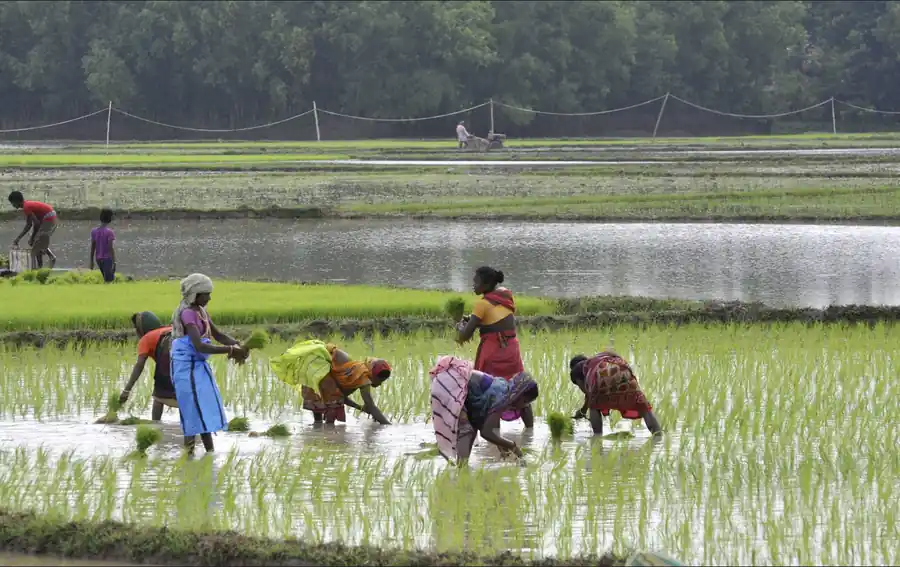
These issues are inseparable from the question of who controls land, who benefits from its use, and who is able to remain on it because land provides food, housing, income, social belonging, and a degree of economic security. Indeed, land is essential for survival and often economic flourishing, particularly in agricultural communities like those of the majority of the African continent. 2
Land governance encompasses the institutions, laws, policies, and practices through which land is allocated, registered, transferred, and managed.3 A gendered lens on this question is particularly interesting because it asks us to reframe how anti-poverty policies related to resource access have been envisioned so far. Women contribute substantially to agricultural production and rural livelihoods. Yet, their ability to own, inherit, manage, and make decisions about land remains constrained.4 Indigenous women, widows, women from marginalised communities and women living in poverty may face multiple, overlapping forms of discrimination. According to the 2025 Sustainable Development Goals Report, 58 percent of the reviewed countries lacked adequate legal protection for women’s land rights, which left a glaring gap, as less than half of women had rights to their own land.5
The reality of land dispossession is essential to highlight because it impedes many guaranteed human rights, notably those detailed in the International Covenant on Economic, Social and Cultural Rights (ICESCR), such as the right to food security, to work, and to shelter, and, more implicitly, to education. For rural women, secure land tenure can determine whether they can sustain their families, invest in agricultural production, and obtain economic and legal autonomy. Conversely, exclusion from land ownership and decision-making can reinforce dependency, economic insecurity, and intergenerational poverty.
Recent developments in African land policy make the reality of land dispossession a key case study for understanding this argument. In African contexts, land rights are shaped by the interaction between statutory law, customary tenure, inheritance practices, and local governance structures. Discriminatory practices can persist even where national legislation formally guarantees gender equality. The consequences are particularly severe for women whose access to land depends on their social status and often recognition by community authorities.6
The relationship between gender inequality, land governance, and poverty is thus considered vital in the context of fighting economic insecurity. What we see is that land rights are essential to women’s economic independence and that legal frameworks have so far impeded the realisation of their broader human rights.
Women And Land Governance: When Participation Does Not Result in Representation
The ability to acquire, register, and retain land is shaped by intersecting forms of discrimination. It is important to understand this reality through a gendered lens, especially because the gendered impacts are concrete and devastating. The UN Convention to Combat Desertification, for example, recognises that gender inequality restricts women’s access to resources and their participation in decisions concerning land management and restoration – women are often limitedly recognised as right-holders.7
The Food and Agriculture Organization (FAO) notes that gender inequalities persist in securing the rights to, and ownership of agricultural land. The prevalence of such inequalities is a growing concern and has led notably to their monitoring through the Sustainable Development Goal indicator 5.a.1, which measures the
(a) Percentage of people with ownership or secure rights over agricultural land (out of total agricultural population), by sex; and (b) share of women among owners or rights-bearers of agricultural land, by type of tenure.8
What the FAO highlights in using these indicators is that women are often deprived of land governance and ownership, which is particularly contradictory to the reality of land development.
Women contribute to food production, livestock management, natural resource conservation and the processing and distribution of agricultural goods. Often women cultivate a plot, contribute to its productivity, and depend on its harvest without possessing the authority to decide how it is used, whether it is sold, or who will inherit it.9 This disparity is symptomatic of the fact that women are often excluded from local land committees, agricultural cooperatives, or community negotiations. Rarely are women included in the institutional oversight of land, which is contradictory, as
women comprise 43 percent of the global agricultural workforce”10, even more “In parts of the developing world, women farmers are the majority – rising to 57 percent in sub-Saharan Africa and 60 percent in South Asia,11, yet “less than 15 percent of landholders worldwide are women”.12
The insecurity this creates has long-term implications: women are more prone to vulnerability, such as becoming dependent on precarious forms of employment and exploitation; they risk becoming dependent and stuck within more abusive working and interpersonal conditions; they often have fewer chances of getting access to education and housing. Access to land and land governance becomes a question of human rights that spans across concerns relating to the right to get out of poverty.
Individual identities and various legal limitations come into play here. In legal contexts, for example, women obtain access to land through marriage rather than through independent ownership. Widows may be dispossessed by relatives, while divorced or unmarried women may encounter barriers to inheritance or registration. For Indigenous women and women belonging to marginalised communities, the situation may be further complicated by discrimination within state institutions, disputes over collective territories, extractive projects and the limited recognition of customary tenure. Women with disabilities may encounter additional obstacles when accessing registration procedures, legal assistance, or community decision-making processes.
When agricultural land is lost or becomes less productive, women without secure tenure may have limited influence over decisions concerning compensation, resettlement or access to alternative livelihoods. Dispossession can disrupt social relationships, weaken community belonging, and undermine women’s ability to participate in local decision-making. Where land is central to cultural identity or collective life, the loss of access may also have wider social and political implications. These inequalities are reflected in the legal frameworks governing property.13
The FAO’s assessment of women’s equal rights to land ownership highlights the gap between general constitutional guarantees of equality and the specific legal protections needed to ensure women can own, use, manage, inherit, and register land.14 This, then, explains why women are more likely to suffer from rights violations like food insecurity. This dichotomy is essential to note because it demonstrates that meaningful policies are essential to redress exploitation and dispossession: participatory practices that include marginalised groups are not, in themselves, allowing for agency most of the time.
African legal and customary systems illustrate this tension particularly well and raise important questions as to rights implementation. In many African communities, customary tenure systems remain important in governing land and mediating access to communal resources. These systems are not inherently discriminatory, and they can provide important forms of collective protection. However, where local practices privilege male inheritance or recognise women’s claims primarily through their relationships with men, women may find themselves excluded from ownership and governance.15
In Tanzania, the case of Asia Athumani Gudo illustrates how dispossession following widowhood can undermine economic security. When she was prevented from cultivating the land she had previously farmed, she lost access to the principal means through which she supported her children.16 The consequences included reduced income and greater difficulty in meeting basic needs. This is a concrete example of how gendered land insecurity can reproduce poverty across generations.
These dynamics reveal a circular relationship between land insecurity and poverty. Women who lack secure land rights are more exposed to economic shocks, while poverty itself can make it harder to obtain legal assistance, challenge dispossession, or complete costly administrative procedures. Poverty eradication must therefore address not only women’s income, but also their ability to retain the resources that make economic security possible.
Reframing Our Policies
To understand how policies must be reframed, rural women must be recognised as independent rights-holders with the capacity to shape decisions concerning their livelihoods, communities and environments. As many non-governmental organisations (NGOs) have lobbied, the shift in agency needs to refocus on marginalised communities that participate in agricultural and land development and protection. A gender-responsive approach must therefore examine not only the question of who owns land, but also who exercises control over it, benefits from its productivity, and participates in decisions concerning its future.17
Research on land rights in Rwanda helps us illuminate this reality. In a study relating to the legal empowerment of rural women, Abbott, Mugisha, and Sapsford demonstrated that there is a continuous gap between legal recognition and substantive rights – women, while recognised as rightful owners, or co-owners, were still less likely to access legal pathways and remained institutionally overlooked:
The problems of women’s subordination remain, however, given patriarchal attitudes, unequally shared decision-making and a tension between Rwanda’s espousal of the rule of law on the one hand and the principle of dialogue and consensus on the other.18
This feeds into and is created by economic insecurity and its intersecting issues. Understanding land access and ownership as a proxy for legal recognition and emancipation is essential. As the researcher develops, without proper protection, women end up more vulnerable. Additionally, land rights address the need to push our policies beyond de jure anti-discrimination policies, but rather to see how systematically and institutionally women have been pushed into more precarious situations.
Importantly, land ownership and the protection against gendered segregation within that right are well documented within international and regional human rights treaties. Article 14 of the Convention on the Elimination of All Forms of Discrimination against Women (CEDAW) specifically addresses the circumstances of rural women. It requires states to take account of the problems faced by rural women and to ensure their participation in and benefit from rural development. Article 14(2)(g) also addresses rural women’s right to equal treatment in land and agrarian reform, as well as in land resettlement schemes.
CEDAW General Recommendation No. 34 on the rights of rural women further clarifies states’ obligations to address discrimination affecting rural women’s access to land, natural resources, economic opportunities, and decision-making.19 The African regional human rights framework is equally important. Article 19 of the Protocol to the African Charter on Human and Peoples’ Rights on the Rights of Women in Africa (Maputo Protocol) recognises women’s right to sustainable development. It calls for women’s participation in development planning and management, as well as access to and control over productive resources, including land. Article 15 also addresses the right to food security, while Article 18 recognises the importance of a satisfactory environment.20
These protocols indicate two crucial points: 1) land ownership cannot be addressed as an isolated solution, but rather through a web of gendered policies; 2) despite these protections, the current situation showcases that a rights-based approach must be supported by better institutional frameworks that give back agency to women. Liberia exemplifies this reality. Before the adoption of the Land Rights Act in 2018,21 women and other marginalised groups frequently encountered exclusion from land ownership and community-level decision-making.
The Act recognised the right of Liberian citizens to own land without discrimination based on gender and other characteristics. Nevertheless, changing the law does not automatically eliminate discriminatory customs or ensure that women can exercise their rights in practice. UN Women has highlighted that only when the importance of community engagement and women’s participation is recognised will the Liberian government have a chance at implementing these protections meaningfully.22
National legislation may recognise equality in principle while leaving gaps in enforcement or failing to address discriminatory practices within customary systems. A rights-based approach must thus account for the diversity of rural women’s experiences. This includes ensuring that women can participate meaningfully in land administration, access independent legal assistance, obtain information about their rights and challenge unlawful dispossession without fear of retaliation. The joint publication by the Office of the UN High Commissioner for Human Rights and UN Women titled “Realizing Women’s Rights to Land and Other Productive Resources” provides a useful framework for this approach. It emphasises that secure access to land and productive resources would pass by supporting women’s independence, autonomy and ability to meet their own needs and those of their families.23
Implications and Further Legal Opportunities
The 2030 Agenda for Sustainable Development, with its primary goal to end poverty in all its forms, 24 delineates that poverty eradication cannot be achieved sustainably when women are systematically excluded from productive resources. Similarly, gender equality remains incomplete when women cannot retain the land on which their livelihoods depend.
As research has shown, insecure land rights severely restrict women’s ability to attain economic independence and limit gendered equality within communities. Applying the ideals of equality set out in landmark treaties and protocols requires that legal reforms are accompanied by customary and institutional measures that address the wider conditions shaping women’s economic autonomy. These include access to affordable childcare, social protection, agricultural training, credit, legal and market assistance.25 Women should also be able to participate in agricultural cooperatives and local decision-making bodies.
A poverty eradication strategy that encourages women to become economically independent while leaving the underlying distribution of land and resources unchanged risks reproducing the very inequalities it seeks to address. A law may formally recognise women’s right to own property while leaving in place administrative procedures, inheritance rules or customary practices that make exercising this right difficult in practice. Registration fees, limited access to legal services, discriminatory attitudes among local authorities and a lack of accessible information can all undermine the effectiveness of legal protections. Land inequality is therefore not simply a matter of individual women lacking property.
Strengthening women’s land rights requires more than preventing future discrimination. It also demands effective responses to existing dispossession and the exclusion of women from land that they have historically cultivated, managed or relied upon. This includes ensuring access to effective remedies where women have been unlawfully deprived of land, as well as establishing safeguards against future violations. Liberia provides a useful example here. UN Women’s work has focused, for example, on supporting rural women’s cooperatives to obtain formal land deeds and participate in land governance.26 Restoring women’s access to land must also be understood as a question of political agency. Women should have a meaningful role in decisions concerning agricultural investment, conservation, land restoration, resettlement and the management of natural resources. Their knowledge of local ecosystems and agricultural practices should inform these decisions.
Rwanda illustrates this conclusion. After introducing significant legal and administrative reforms aimed at strengthening women’s property and inheritance rights. Rwanda’s land tenure regularisation programme was associated with satellite policies such as increased investment in soil conservation, particularly among female-led households, which had a concrete impact on the livelihoods of women farmers.27 Research also demonstrated that the inequality gap was filled because of institutional and customary practices rather than simply legal approaches: a study of the policy noted that women continued to encounter obstacles linked to inheritance, marriage, and entrenched social norms and that most solutions stemmed from challenging economic and cultural practices.28
Such policies have important trickle-down effects in the fight against gendered poverty. Recognising women as central actors also means moving beyond the assumption that land rights are principally a means of improving household welfare. Indeed, conceptualising concrete legal recognition of women’s knowledge and claim over their land asks us to enforce mechanisms that allow women to access legal aid, dispute resolution, agricultural education, but also emancipatory practices going all the way into comprehensive sexual and reproductive education and health so that they are on equal footing with male owners. Women must also be able to participate in decisions concerning customary land and community resources. These procedures create safeguards against dispossession and empower community rights.
Conclusion
Eradicating poverty requires more than improving access to employment or providing temporary financial assistance. It demands a reassessment of the legal, economic, and social structures that determine how resources are distributed, governed, and inherited. The relationship between women, land governance, and poverty reveals the limitations of approaches to development that focus exclusively on income, productivity, or economic growth. This intersection provides real and concrete guidance on how to better approach poverty eradication while offering community-focused policies.
The persistent gap between women’s contribution to agricultural economies and their access to secure land rights reflects deeper structural inequalities. Discriminatory laws, unequal inheritance practices, exclusion from decision-making, and inadequate access to justice can reinforce poverty across generations. These barriers are particularly severe for women who experience intersecting forms of discrimination. As a largely agricultural economy, Africa provides interesting examples to understand these dynamics.
The experiences of Tanzania, Liberia, and Rwanda demonstrate different dimensions of this challenge: the vulnerability created by dispossession, the opportunities offered by legislative reform, and the difficulties of translating formal equality into substantive autonomy. A common principle emerges: poverty eradication cannot be achieved sustainably while women remain excluded from the resources that underpin their livelihoods. Secure land tenure supports economic stability, but its significance extends further, encompassing autonomy, dignity, food security, and participation in public life.
International and regional human rights frameworks already provide a foundation for action by making clear connections between gender equality, access to productive resources, and sustainable development. The priority now is to translate these commitments into accessible rights, effective remedies, and accountable institutions.
Bibliography
Abbott P, Mugisha R and Sapsford R, ‘Women, Land and Empowerment in Rwanda’ (2018) 30(6) Journal of International Development 1006–22 https://doi.org/10.1002/jid.3370.
African Union, Protocol to the African Charter on Human and Peoples’ Rights on the Rights of Women in Africa (adopted 11 July 2003, entered into force 25 November 2005) https://au.int/en/treaties/protocol-african-charter-human-and-peoples-rights-rights-women-africa accessed 13 October 2026.
Ali D, Deininger K and Goldstein M, ‘Environmental and Gender Impacts of Land Tenure Regularization in Africa: Pilot Evidence from Rwanda’ (2014) 110 Journal of Development Economics 262 https://doi.org/10.1016/j.jdeveco.2013.12.009.
Bayisenge J, Höjer S and Espling M, ‘Women’s Land Rights in the Context of the Land Tenure Reform in Rwanda – The Experiences of Policy Implementers’ (2015) 9(1) Journal of Eastern African Studies 74–90 https://doi.org/10.1080/17531055.2014.985496.
Chigbu UE (ed), Land Governance and Gender: The Tenure-Gender Nexus in Land Management and Land Policy (CABI 2021).
Chigbu UE, ‘Anatomy of Women’s Landlessness in the Patrilineal Customary Land Tenure Systems of Sub-Saharan Africa and a Policy Pathway’ (2019) 86 Land Use Policy 126–35 https://doi.org/10.1016/j.landusepol.2019.04.041.
Duncan BA and Brants C, Access to and Control over Land from a Gender Perspective: A Study Conducted in the Volta Region of Ghana (May 2004).
Food and Agriculture Organization of the United Nations (FAO), ‘5.a.1 Women Ownership of Agricultural Land’ (SDG Indicators Data Portal) https://www.fao.org/sustainable-development-goals-data-portal/data/indicators/5a1-women-ownership-of-agricultural-land/ accessed 13 October 2026.
Food and Agriculture Organization of the United Nations (FAO), ‘5.a.2 Women’s Equal Rights to Land Ownership’ (SDG Indicators Data Portal) https://www.fao.org/sustainable-development-goals-data-portal/data/indicators/5a2-women-s-equal-rights-to-land-ownership/ accessed 13 October 2026.
Food and Agriculture Organization of the United Nations (FAO), The Gender Gap in Land Rights (FAO 2018) https://www.fao.org/3/I8796EN/i8796en.pdf accessed 13 October 2026.
Heard-Garris N and others, ‘Structuring Poverty: How Racism Shapes Child Poverty and Child and Adolescent Health’ (2021) 21(8 Suppl) Academic Pediatrics S108 https://doi.org/10.1016/j.acap.2021.05.026.
Office of the United Nations High Commissioner for Human Rights (OHCHR) and UN Women, Realizing Women’s Rights to Land and Other Productive Resources (2nd edn, United Nations 2020) https://digitallibrary.un.org/record/3974902 accessed 13 October 2026.
Republic of Liberia, Land Rights Act (2018) https://landportal.org/library/resources/land-rights-act accessed 13 October 2026.
Skoll Foundation, ‘Why Land Tenure Is a Cross-Cutting Solution for Poverty, Climate Change and Women’s Rights’ (11 October 2022) https://skoll.org/2022/10/11/why-land-tenure-cross-cutting-solution-for-poverty-climate-change-womens-rights/ accessed 13 October 2026.
United Nations Convention to Combat Desertification (UNCCD), ‘Gender’ https://www.unccd.int/land-and-life/gender/overview accessed 13 October 2026.
United Nations General Assembly, Convention on the Elimination of All Forms of Discrimination against Women (adopted 18 December 1979, entered into force 3 September 1981) 1249 UNTS 13.
United Nations General Assembly, ‘Transforming Our World: The 2030 Agenda for Sustainable Development’ UNGA Res 70/1 (25 September 2015) UN Doc A/RES/70/1 https://docs.un.org/en/A/RES/70/1 accessed 13 October 2026.
United Nations Statistics Division, The Sustainable Development Goals Report 2025 (United Nations 2025) https://unstats.un.org/sdgs/report/2025/goal-05/ accessed 13 October 2026.
United Nations Tanzania, ‘The Power of Land Tenure: Providing Security and Opportunity for Rural Women in Tanzania’ https://tanzania.un.org/en/313615-power-land-tenure-providing-security-and-opportunity-rural-women-tanzania accessed 13 October 2026.
UN Women, ‘Outcome LBR_D_2.2: By 2024, Liberia Has Sustained, Diversified and Inclusive Economic Growth Driven by Investments in Agriculture, Food Security and Job Creation and Is Resilient to Climate Change and Natural Disasters’ (UN Women Transparency Portal, 2020–2025) https://open.unwomen.org/en/outcome-detail/XM-DAC-41146-LBR_D_2.2?plan_period=2020-2025 accessed 13 October 2026.
UN Women, ‘UN Women Partners with LBS to Conduct Community Dialogues on Women’s Land Rights and Gender Roles’ (24 September 2021) https://liberia.un.org/en/145877-un-women-partners-lbs-conduct-community-dialogues-women%E2%80%99s-land-rights-and-gender-roles accessed 13 October 2026.
Notes
- Nia Heard-Garris and others, ‘Structuring Poverty: How Racism Shapes Child Poverty and Child and Adolescent Health’ (2021) 21(8 Suppl) Academic Pediatrics S108. https://doi.org/10.1016/j.acap.2021.05.026 Accessed 13 October 2026 ↩
- Pamela Abbott, Roger Mugisha and Roger Sapsford, ‘Women, Land and Empowerment in Rwanda’ (2018) 30(6) Journal of International Development 1006. https://doi.org/10.1002/jid.3370. Accessed 13 October 2026 ↩
- Uchendu Eugene Chigbu (ed), Land Governance and Gender: The Tenure-Gender Nexus in Land Management and Land Policy (CABI 2021). Accessed 13 October 2026 ↩
- Ibid ↩
- United Nations Statistics Division, ‘Goal 5: Achieve Gender Equality and Empower All Women and Girls’ in The Sustainable Development Goals Report 2025 (United Nations 2025) https://unstats.un.org/sdgs/report/2025/goal-05/ accessed 13 October 2026. ↩
- Uchendu Eugene Chigbu, ‘Anatomy of Women’s Landlessness in the Patrilineal Customary Land Tenure Systems of Sub-Saharan Africa and a Policy Pathway’ (2019) 86 Land Use Policy 126. https://doi.org/10.1016/j.landusepol.2019.04.041Accessed 13 October 2026 ↩
- United Nations Convention to Combat Desertification (UNCCD), ‘Gender’ https://www.unccd.int/land-and-life/gender/overview accessed 13 October 2026. ↩
- Food and Agriculture Organization of the United Nations (FAO), ‘5.a.1 Women Ownership of Agricultural Land’ (SDG Indicators Data Portal) https://www.fao.org/sustainable-development-goals-data-portal/data/indicators/5a1-women-ownership-of-agricultural-land/ accessed 13 October 2026 ↩
- Skoll Foundation, ‘Why Land Tenure Is a Cross-Cutting Solution for Poverty, Climate Change and Women’s Rights’ (11 October 2022) https://skoll.org/2022/10/11/why-land-tenure-cross-cutting-solution-for-poverty-climate-change-womens-rights/ accessed 13 October 2026. ↩
- Ibid citing Food and Agriculture Organization of the United Nations (FAO), The Gender Gap in Land Rights (FAO 2018) FAO report accessed 13 October 2026. ↩
- Ibid ↩
- Ibid ↩
- Uchendu Eugene Chigbu (n 6) ↩
- Food and Agriculture Organization of the United Nations (FAO), ‘5.a.2 Women’s Equal Rights to Land Ownership’ (SDG Indicators Data Portal) FAO SDG Indicators Data Portal accessed 13 October 2026. ↩
- Uchendu Eugene Chigbu (n 6) ↩
- United Nations Tanzania, ‘The Power of Land Tenure: Providing Security and Opportunity for Rural Women in Tanzania’ https://tanzania.un.org/en/313615-power-land-tenure-providing-security-and-opportunity-rural-women-tanzania accessed 13 October 2026. ↩
- Beatrice Akua Duncan and Caroline Brants, Access to and Control over Land from a Gender Perspective: A Study Conducted in the Volta Region of Ghana (May 2004), supported by the Food and Agriculture Organization of the United Nations (FAO), SNV Netherlands Development Organisation and Women in Law and Development in Africa. Accessed 13 October 2026 ↩
- Pamela Abbott, Roger Mugisha and Roger Sapsford, ‘Women, Land and Empowerment in Rwanda’ (2018) 30(6) Journal of International Development 1006–22, https://doi.org/10.1002/jid.3370 Accessed 13 October 2026. ↩
- UN General Assembly, ‘Convention on the Elimination of All Forms of Discrimination against Women’ UNGA Res 34/180 (18 December 1979), UN Doc A/RES/34/180, https://digitallibrary.un.org/record/835897?v=pdf. Accessed 13 October 2026 ↩
- African Union, Protocol to the African Charter on Human and Peoples’ Rights on the Rights of Women in Africa (adopted 11 July 2003, entered into force 25 November 2005) https://au.int/en/treaties/protocol-african-charter-human-and-peoples-rights-rights-women-africa. Accessed 13 October 2026. ↩
- Republic of Liberia, Land Rights Act (2018), approved 19 September 2018 and published 10 October 2018, https://landportal.org/library/resources/land-rights-act. Accessed 13 October 2026 ↩
- United Nations Women, ‘UN Women Partners with LBS to Conduct Community Dialogues on Women’s Land Rights and Gender Roles’ (24 September 2021) https://liberia.un.org/en/145877-un-women-partners-lbs-conduct-community-dialogues-women%E2%80%99s-land-rights-and-gender-roles accessed 13 October 2026. ↩
- Office of the United Nations High Commissioner for Human Rights (OHCHR) and UN Women, Realizing Women’s Rights to Land and Other Productive Resources (2nd edn, United Nations 2020) https://digitallibrary.un.org/record/3974902 accessed 13 October 2026. ↩
- UN General Assembly, ‘Transforming Our World: The 2030 Agenda for Sustainable Development’ UNGA Res 70/1 (25 September 2015) UN Doc A/RES/70/1, Goals 1 and 5, targets 5.a, https://docs.un.org/en/A/RES/70/1 accessed 13 October 2026. ↩
- UN General Assembly, ‘Convention on the Elimination of All Forms of Discrimination against Women’ UNGA Res 34/180 (18 December 1979) UN Doc A/RES/34/180, https://digitallibrary.un.org/record/835897?v=pdf accessed 13 October 2026. ↩
- UN Women, ‘Outcome LBR_D_2.2: By 2024, Liberia Has Sustained, Diversified and Inclusive Economic Growth Driven by Investments in Agriculture, Food Security and Job Creation and Is Resilient to Climate Change and Natural Disasters’ (UN Women Transparency Portal, 2020–2025) UN Women Transparency Portal accessed 13 October 2026 ↩
- Daniel Ali, Klaus Deininger and Markus Goldstein, ‘Environmental and Gender Impacts of Land Tenure Regularization in Africa: Pilot Evidence from Rwanda’ (2014) 110 Journal of Development Economics 262, https://doi.org/10.1016/j.jdeveco.2013.12.009 accessed 13 October 2026. ↩
- Jeannette Bayisenge, Staffan Höjer and Margareta Espling, ‘Women’s Land Rights in the Context of the Land Tenure Reform in Rwanda – The Experiences of Policy Implementers’ (2015) 9(1) Journal of Eastern African Studies 74. https://doi.org/10.1080/17531055.2014.985496 accessed 13 October 2026. ↩