
By Júlia Peña Falcon, EU Team, Global Human Rights Defence
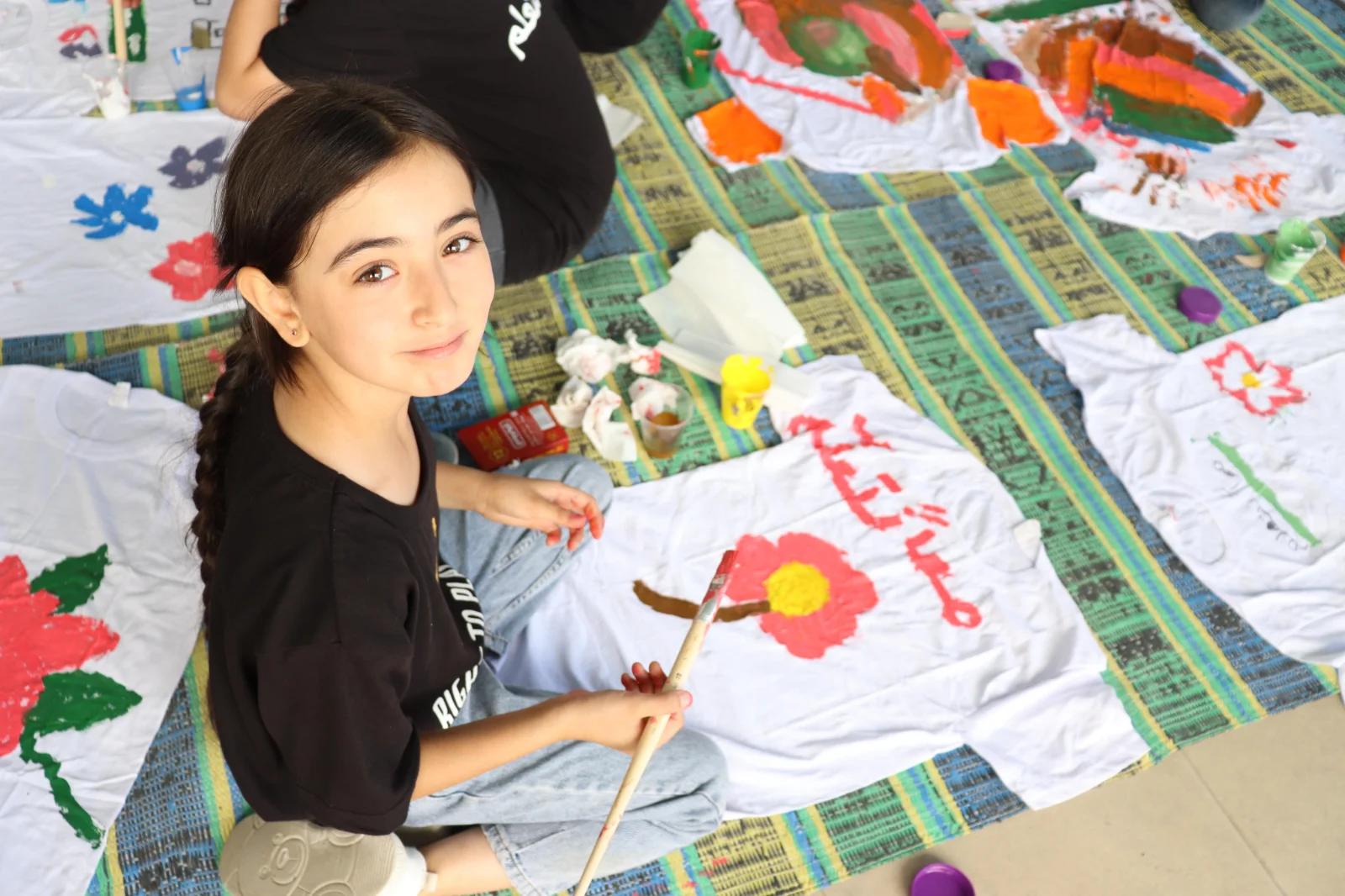
When we picture children playing, the image is usually quite simple: a ball kicked across a neighbourhood park, a game of tag during recess, a moment of carefree distraction. When we picture humanitarian emergencies: refugee camps, active war zones, communities grappling with extreme poverty – play is rarely the first thing that comes to our mind. When crises strike, the immediate priorities are obvious: food, clean water, shelter, physical safety.
Yet, Christine Bax from Right to Play Netherlands – the Dutch national office of the international NGO Right to Play – recently explained something very important for Universal Children’s Day: that treating play as a secondary necessity misunderstands how children actually survive, heal, and learn.
“Play is a very simple thing – activities like playing with a ball, for instance”, Bax explains. “But play is also the language of a child. It is the way a child expresses themselves, discovers the world, and relates to others”.
You Cannot Teach a Stressed Brain
Marked each year on November 20, Universal Children’s Day exists to raise global awareness of children’s welfare and to hold governments accountable to the UN Convention on the Rights of the Child (UNCRC). Article 31 within the treaty explicitly recognises every child’s right to rest, leisure, and play. Far from being a trivial part of childhood, Right to Play,which operates across 11 countries in Africa, the Middle East, and Asia,treats play as a foundational mechanism for education, mental health, and human rights protection.
Today, more children than ever are affected by crises. Between 2010 and 2024, the number of displaced children globally nearly tripled from around 17.0 million to 48.8 million, and more than 1 in 5 children are currently living in or fleeing from active conflict zones (UNICEF, 2023; UNICEF USA, 2022). In regions affected by conflict or displacement, access to education is often severely limited. Beyond war and displacement, over one billion children live in countries that are at extremely high risk from the impacts of climate change (UNICEF, 2021).
When crises force families from their homes, children often face stress and insecurity. They are more vulnerable to abuse, violence, and exploitation. Many children lack the support they need to recover, learn, and build a better future. Even when temporary learning spaces are set up, children living under constant threat struggle to develop literacy y or numeracy (Save the Children, 2019).
“What mindset do you need for learning?” asks Bax. “Children affected by conflict often carry the weight of trauma, loss, and uncertainty. Those experiences occupy their minds, and there is little room left for learning. They first need support, stability, and a sense of safety. Only then can they fully engage with education”.
Developmental science backs this up. When a child experiences prolonged, severe adversity – known as toxic stress – their nervous system stays locked in a state of hypervigilance. This type of stress can impair the development of brain architecture, especially in areas responsible for complex skills like language, attention, and decision-making. It can also disrupt the child’s development more broadly, with impacts on learning, health, and well-being across the lifespan (Harvard Center on the Developing Child, 2024).
Unlocking a child’s learning capacity first requires regulating their nervous system. Right to Play addresses this by pairing psychosocial support directly with learning instruction. Facilitators lead children through structured games designed to restore a sense of safety and emotional grounding. “After these mental health exercises, that are playful and light, children become more calm – and in that calm, they can learn”, Bax notes.
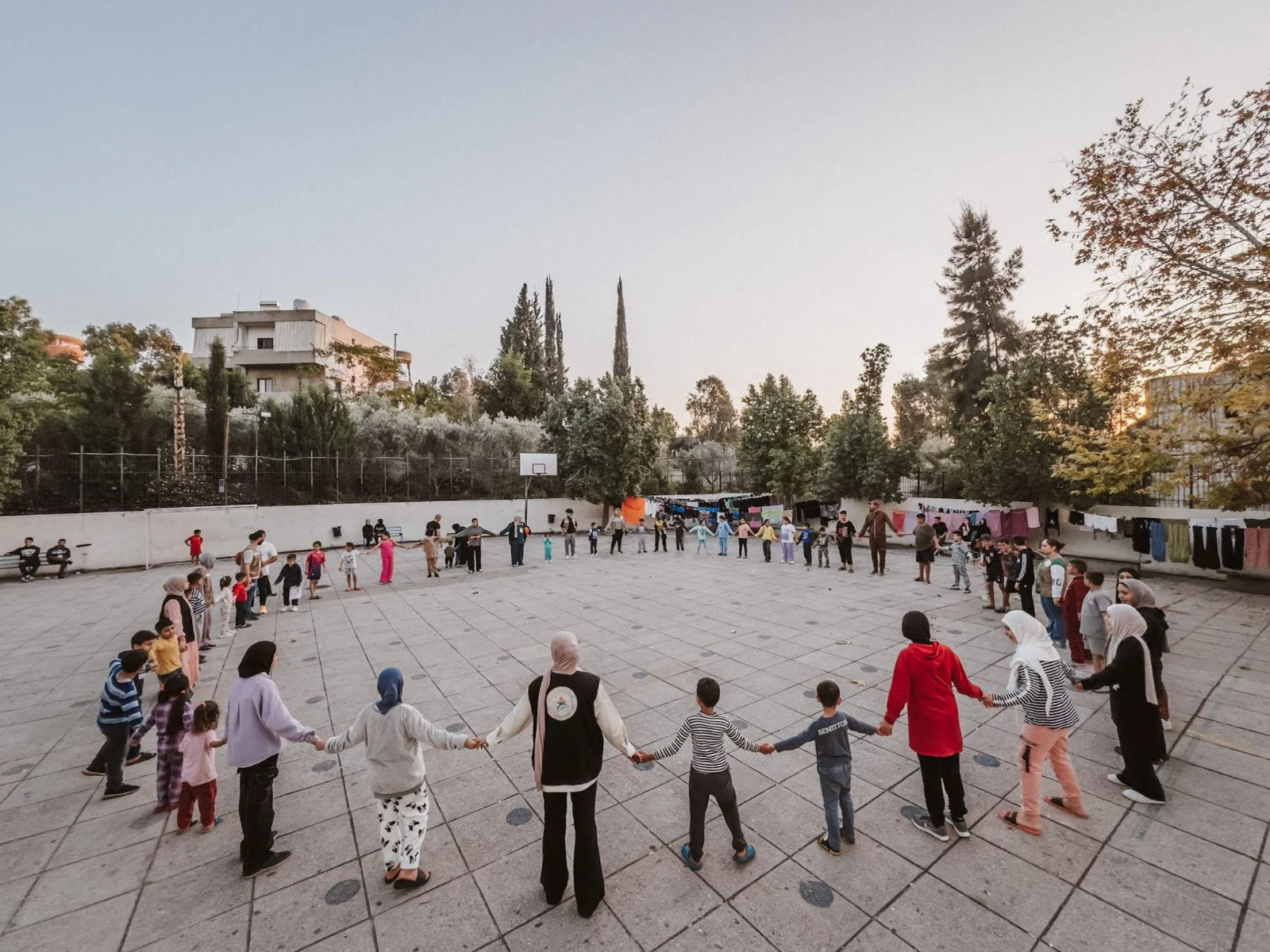
Right to Play is implementing this approach in Gaza through its Circle of Hope programme. Since formal schools have remained closed for over three years and the active conflict makes standard teaching nearly impossible, Circle of Hope operates in temporary learning spaces, and takes a holistic, community-wide approach. It trains educators in trauma-informed psychosocial support, while also providing them with mental health resources to help them cope with the shared crisis. Furthermore, it involves parents and caretakers in sessions focused on their well-being and support for their children (Right to Play, n.d.).
More Than Just a Ball Game: Advancing Education and Human Rights
While play is vital in acute emergencies, it is equally effective at solving entrenched systemic barriers in development settings. When integrated into daily school life, play-based learning can transform classroom quality.
“Consider a primary school teacher in Ghana, standing in front of an overcrowded and under-resourced classroom”. Under rigid, lecture-style instruction, children sitting in the back quickly disengage and fall behind. When the same teacher uses an active ball game to teach multiplication or vocabulary, participation becomes collective and engaging, keeping children invested in their education. Beyond academics, structured play acts as a vehicle for advancing broader human rights, such as the elimination of child labour, and the promotion of gender equality, mental health, public and hygiene (Right to Play, 2022).
Taking Joy Seriously
Ultimately, advocating for children’s rights requires shifting how adults view play itself. Although it is often dismissed as unproductive, play is a powerful tool for systemic change and a key means through which children develop resilience, empathy, and cognitive skills.
As Bax emphasises, investing in children’s well-being today is essential long-term thinking: “Children are our future, if we don’t invest now, what is going to happen in 30 years when these children who need help today become the adults running the world?”.
For Universal Children’s Day, her takeaway is both urgent and grounded in hope: “Appreciate the joy of play – do not see fun as something useless, because it is actually very essential”. Whether by prioritising sustained global support for youth development or simply putting down a smartphone and stepping outside, protecting children’s right to play is an investment in a healthier, more stable world.
Sources
Harvard University. (2024). Toxic stress – center on the developing child at harvard university. Center on the Developing Child at Harvard University. https://developingchild.harvard.edu/key-concept/toxic-stress/
Right To Play. (n.d.). In Gaza, the circle of hope program helps children heal. Right To Play. Accessed 20 november 2026, de https://righttoplay.com/en/news/in-gaza-circle-of-hope-helps-children-heal/
Right To Play. (2022). Share’s impact: Transforming health education for 425,000 young people through play. Right To Play. https://righttoplay.com/en/news/the-share-project-transforming-health-education-through-play/
Save the Children. (2019, November 7). Conflict and education. Save the Children UK. https://www.savethechildren.org.uk/what-we-do/global-issues-hub/conflict-and-education
UNICEF. (2021). One billion children at ‘extremely high risk’ of the impacts of the climate crisis – UNICEF. Www.Unicef.Org. https://www.unicef.org/press-releases/one-billion-children-extremely-high-risk-impacts-climate-crisis-unicef
UNICEF. (2023, june). Child displacement – UNICEF data. Unicef DATA. https://data.unicef.org/topic/child-migration-and-displacement/displacement/
UNICEF USA. (2022, November 30). Children in war zones: How conflict affects kids. Unicef USA. https://www.unicefusa.org/what-unicef-does/emergency-response/children-in-conflict