
10 November 2026 | Brussels, Belgium
Rachele Roggi, EU Team, Global Human Rights Defence.
Ten years after the beginning of the systematic persecution of the Uyghur people in East Turkistan, Members of the European Parliament, human rights experts and civil society representatives gathered at the European Parliament in Brussels on November 10th, 2026.
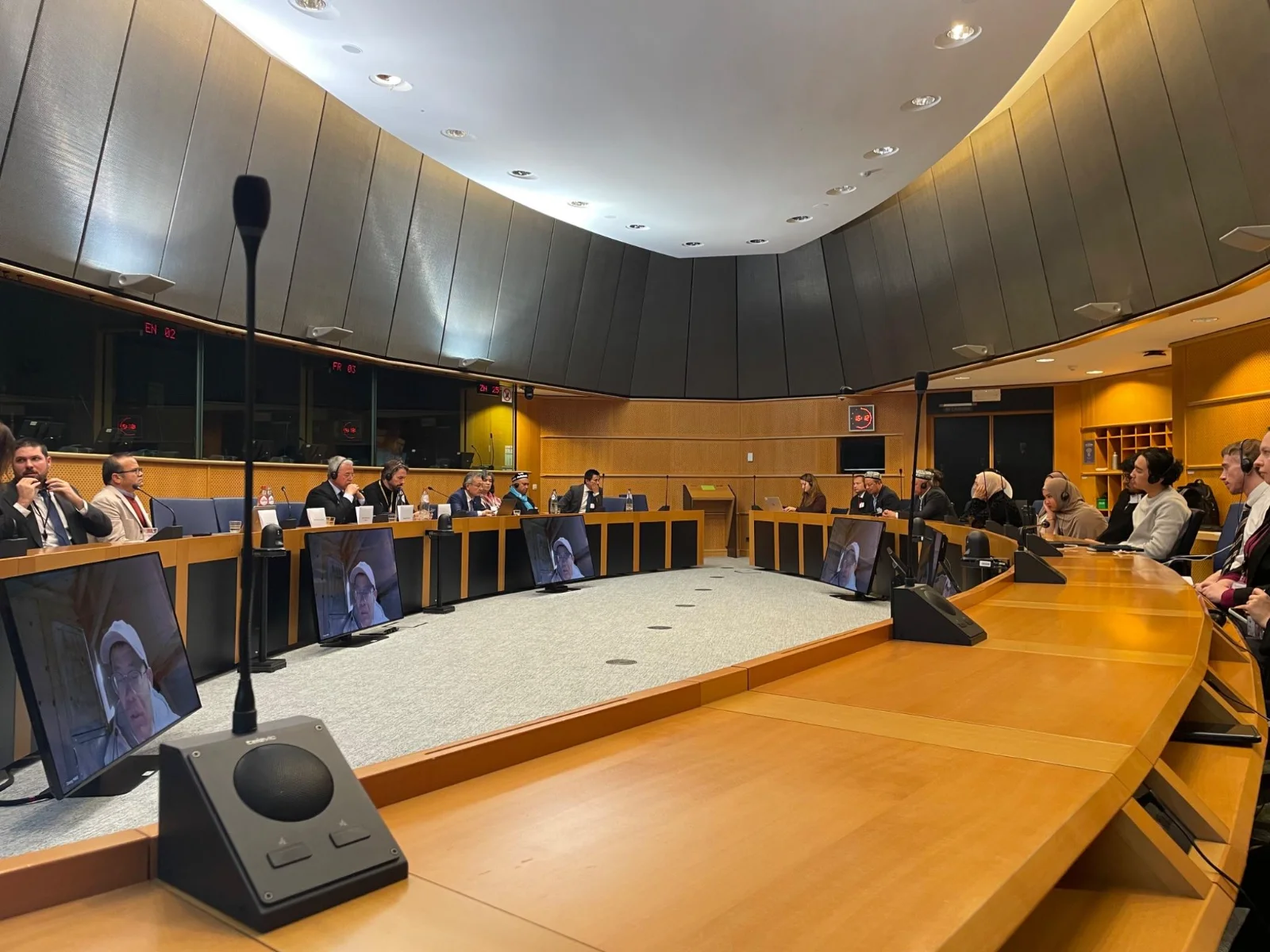
The event provided an opportunity to reflect on a decade of severe human rights violations against Uyghurs and other Turkic communities in China, while examining the international community’s response and the measures that still need to ensure accountability and justice. Discussions focused particularly on the EU’s responsibility to address forced labour, prevent products made through exploitation from entering European markets, and maintain political and diplomatic pressure on the Chinese authorities.
European Responsibility: Turning Commitments into Action
MEP Kathleen Van Brempt highlighted the connection between human rights violations, global economic structures and modern-day exploitation. She stressed that European consumption and international supply chains cannot be separated from the conditions under which goods are produced. In this context, she pointed to the importance of the EU Forced Labour Regulation, which will prohibit products made with forced labour from being placed on the European market from December 2027. She also referred to the European Parliament’s previous resolutions addressing forced labour and arbitrary detention in China, emphasising the importance of continued dialogue, diplomacy and political engagement rather than silence.
MEP Miriam Lexmann addressed what she described as a collective moral failure, arguing that the international community had failed to pay sufficient attention to the persecution of the Uyghur people despite mounting evidence. She stressed that the EU has already adopted important legislative instruments, but these measures alone cannot protect victims unless it is properly implemented. Parliamentary resolutions, while important in expressing political condemnation, will not by themselves rescue those subjected to persecution. The priority must therefore be to ensure that European measures against forced labour become effective instruments of protection and accountability.
A Decade of Systematic Persecution in East Turkistan
Turgunjan Alawdun, the President of the World Uyghur Congress, outlined the scale and evolution of the repression of Uyghurs since 2016. He described a systematic campaign involving mass detention, torture, forced sterilisations and abortions, sexual violence, family separation, pervasive surveillance, forced labour and the destruction of Uyghur religious, linguistic and cultural identity.
Although Chinese authorities announced the closure of the so-called vocational education and training centres in 2019, arbitrary detention and coercive practices continued. According to the WUC, the system of repression was not dismantled in response to international pressure but was instead transformed and reorganised, enabling it to persist through other mechanisms of control.
The president reported that the region has also become a testing ground for extensive surveillance technologies. Religious practices have been restricted, Uyghur language and cultural heritage have been systematically undermined, and coercive labour practices have affected sectors including agriculture, textiles, footwear and electronics. These developments demonstrate that the persecution extends beyond detention facilities and is embedded in broader economic and social structures.
Genocide and International Accountability
Sir Geoffrey Nice, former lead prosecutor at the International Criminal Tribunal for the former Yugoslavia and Chair of the Independent Uyghur Tribunal, addressed the legal dimensions of genocide and the importance of establishing the specific intent required under international law. He emphasised that genocide involves not only prohibited acts but also the intention to destroy, in whole or in part, a protected national, ethnic, racial or religious group as such.
The Independent Uyghur Tribunal, which delivered its judgment in December 2021, concluded that the Chinese state had committed genocide through measures intended to prevent births among Uyghurs, alongside crimes against humanity and torture. Its findings underscored the importance of examining both the physical acts committed against a population and the intention behind them. The right to life, bodily integrity, and the continued existence of a community are fundamental to this assessment.
Forced Labour: the Responsibility of Global Supply Chains
Ben Vanpeperstraete, senior EU Adviser at Anti-Slavery International, highlighted the difficulties of investigating forced labour within Chinese supply chains, particularly given the lack of transparency and the obstacles faced by independent investigators seeking access to reliable information. Investigating products and tracing their origins remain challenging, especially where meaningful cooperation with independent scrutiny is lacking. He stressed the importance of cooperation and transparency in identifying abuses and ensuring that companies and other relevant actors cannot evade responsibility. The absence of cooperation must be taken seriously when assessing the circumstances surrounding suspected forced labour and the conduct of those involved.
From Recognition to Meaningful Protection
From GHRD’s perspective, ten years of persecution must not be met with another decade of insufficient action. The EU has an important responsibility to ensure that its human rights commitments are reflected in its trade policies, legislative frameworks and diplomatic relations.
The implementation of the Forced Labour Regulation, alongside continued political engagement, targeted accountability measures, and support for Uyghur victims and their families, will be essential to addressing these violations. European institutions must move beyond declarations of concern and ensure that existing legal instruments deliver tangible results.
Protecting human dignity requires more than acknowledging abuses: it requires the political will to confront them, the determination to hold perpetrators accountable and the commitment to ensure that European markets do not profit from forced labour.
The international community must not remain silent.