
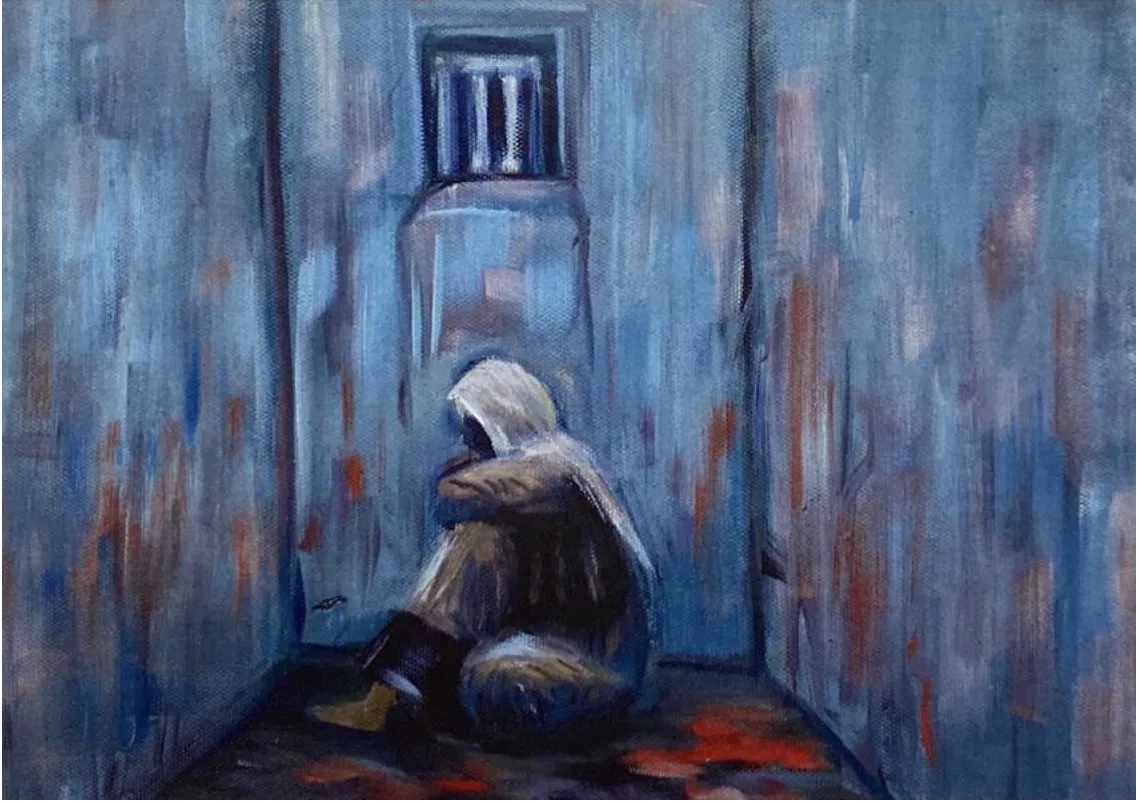
At the opening of the 60th session of the Human Rights Council, High Commissioner Volker Türk painted a global picture of shrinking protections and widespread crises. He reminded the Council that human rights are the foundation of peace, and warned that the systematic disregard of international law risks “pushing the world onto the tracks of another world war.” Among the country situations he highlighted, Afghanistan was presented as one of the starkest examples of such erosion.
The assessment was clear: Afghanistan under the Taliban amounts to gender apartheid and systematic human rights violations. Deputy High Commissioner Nada Al-Nashif underlined that since 2021, the Taliban have issued countless decrees dismantling basic rights. She alerted that repression is deepened by a worsening humanitarian crisis, stressing that women and girls face the most severe restrictions, now at unprecedented levels. She urged renewed international efforts to protect fundamental rights and advance peace.
What the UN put on the record
The UN report painted a bleak picture: restrictions on women’s mobility, employment, and healthcare; arbitrary detentions and intimidation of activists and families; public executions and corporal punishment; and torture of journalists. Cuts to humanitarian aid, it warned, had left millions without lifelines. The report called for a moratorium on executions, an end to corporal punishment, and protection of freedom of expression and media.
Richard Bennett, UN Special Rapporteur on Afghanistan, confirmed this “consistent picture of deteriorating human rights.” He described new maram cards restricting women’s movement, the closure of schools for girls, and “point system” laws penalizing everyday interactions. He noted an alarming rise in corporal punishment, with at least 672 public floggings in 2024, more than double the previous year. Afghanistan, he informed, is unsafe for voluntary returns. Yet Bennett rejected the idea that the country is a lost cause: “This is a test of whether the world will confront gender persecution, whether human rights apply universally or only selectively.” He urged stronger humanitarian assistance, systems of accountability, and recognition that what is unfolding is nothing less than gender apartheid.
Speaking for the CEDAW Committee, Nahla Haidar described Afghanistan as “the most severe women’s rights crisis in the world.” She reminded the Council that, despite ratifying CEDAW in 2003, the Taliban have imposed more than eighty decrees dismantling women’s rights. “No interpretation of Sharia can justify this systematic exclusion,” she remarked.
Haidar’s testimony drew on Afghan women’s voices: “First they warn us, then they threaten us, then they hit us.” A survey of 6,500 women in thirty-five provinces found that 45 percent reported domestic violence, often exacerbated by Taliban edicts. Civil society witnesses described harrowing testimonies: women burned with boiling water, electrocuted, threatened with stoning, and forced into child marriages. Others reported restrictions on free expression, widespread disappearances, and persecution of minorities. Courts, she added, routinely humiliate women and dismiss evidence, even in rape cases.
She also underlined that women are not the only victims: deportations, extrajudicial executions, persecution of minorities, people with disabilities, men, and children have all deepened poverty and dismantled public services. More than half of the population now needs humanitarian aid, worsened by recent earthquakes.
Her conclusion was unequivocal: states must resist the normalization of Taliban rule and establish a special UN mechanism to monitor violations and ensure accountability. “The voices of Afghan women must not be silenced, and their rights must be restored.”
Voices Beyond the Chamber
During a parallel event organized by Madre, Inc., Richard Bennett appraised that repression is compounded by shrinking resources. Afghan activists remain on the frontlines, he said, but projects are closing, salaries are cut, and many now work unpaid. Even his own mandate, he admitted, struggles under liquidity shortages that prevent it from reaching its potential. He described Afghanistan as “a multilayered system of oppression” that the world must not normalize.
Civil society groups echoed this, urging the Council to establish a special UN mechanism to monitor violations and ensure women’s voices are heard globally.
Moderator Meetra Qutb, a former lecturer at Kabul University, summed it up bluntly: “Afghanistan is the worst country in the world to be a woman.”
Other experts expanded the frame. Surya Deva, Special Rapporteur on the right to development, warned of a global backlash against gender equality. “We don’t need to empower women,” he argued, “we need to create conditions for them to realize their freedoms and rights.” He called for ending the artificial divide between humanitarian and development aid, the replacement of short-term fixes with long-term solutions, and the adoption of a holistic perspective that links gender equality with climate change, technology, migration, and refugees.
For Deva, an intersectional lens is essential to the right to development, and the Afghan crisis is also an opportunity to “decolonize aid.”
Fereshta Abbasi of Human Rights Watch described Afghanistan as the world’s most severe humanitarian and human rights crisis. With donor cuts of around forty percent, she reported that 22.7 million Afghans face food insecurity, clinics and schools are closing, and civil society groups are running out of lifelines. Deportations from Iran and Pakistan, recent earthquakes, and harassment at aid points add to the collapse.
Artemis Akbary of the Afghanistan Liberation Organization gave voice to the LGBTQ+ community, describing how aid cuts, which have led to the closure of protection and educational programs, have eroded trust. “We receive hundreds of requests for help that we cannot meet,” he said. With visa costs out of reach and mental health services gone, many are left with trauma, depression, and suicidal thoughts. He stated that by 2026, millions of returnees could become internally displaced, with the country having no capacity to absorb them.
Lucia Withers of the Hamrah Initiative told of grassroots groups supporting women in exile and at home. She recalled the case of a pregnant woman forced to travel eight hours to reach the nearest hospital. Both she and her unborn child died on the way. For Withers, this illustrates how the collapse of health services is not only destroying lives but also driving families into desperation and fuelling human trafficking.
Accountability at the Threshold
On 10 September, speakers at a side event hosted by the Asian Forum for Human Rights and Development underlined that Afghanistan has reached a critical moment for accountability.
Fereshta Abbasi stressed that more than one hundred organizations now support the creation of an international investigative mechanism. Such a step, she argued, would not only document crimes and identify perpetrators but also send a powerful signal to Taliban commanders. Yet she declared that this signal could also prompt them to prepare ways to resist or undermine the mechanism.
Richard Bennett informed that without an independent investigative body, survivors may never see justice. He noted that while his mandate is constrained by funding shortages, the International Criminal Court’s investigation continues despite political pressure.
Zaman Sulhani criticized the UN Security Council for failing to respond to the gravity of the crisis. He described systematic attacks on journalists and the abolition of existing laws as signs that Afghanistan is sliding deeper into impunity and crimes against humanity.
Civil society organizations added that the responsibility now lies with member states. Survivors, they alerted, have nowhere to turn unless governments move from statements to action. One intervention recalled how the Taliban had decided to remove women’s photos from ID cards, but reversed the measure under social pressure, proof that outside attention can still make a difference. Yet threats of executing journalists show how fragile those gains are.
International Responses
Spain and other European states stressed that Afghanistan’s crisis transcends borders and is the responsibility of the entire international community. Qatar, Kuwait, Malaysia, and Indonesia pointed to humanitarian aid, scholarships for Afghan women, and mediation initiatives. Other states, however, invoked sovereignty and cautioned against interference, risking the normalization of Taliban rule.
Calls for Action
Across UN officials and civil society, several demands converged. Recognizing the Taliban would mean legitimizing repression, so states must hold that line. Accountability cannot be left to history books: it requires independent mechanisms now, with evidence preserved and perpetrators named. The voices of Afghan women demand more than sympathy: they need resources, shelters, schools, and the freedom to work. Aid must reach the people directly, with women aid workers at the front of delivery. And above all, the cycle of executions and public punishment must end if there is to be any space left for dignity.
Conclusion
The debate at HRC60 presented Afghanistan as more than a national tragedy. It is a test of whether the international community will uphold universal human rights or allow selective application. Afghan women and civil society continue to resist with extraordinary courage, running underground schools, solidarity networks, and advocacy campaigns. The question that remains is whether states will match that courage with action.