
Introduction
On June 25, 2025, Edris Ali was hanged in Urmia Central Prison. He was a Kurdish kolbar: one of the thousands of cross-border porters who haul goods across the mountains of western Iran to survive, in one of the country’s most economically neglected regions. Originally arrested on charges of smuggling alcoholic beverages, he was forced under torture to confess to espionage for Israel following Iran and Israel’s 12-day war, and was accused of having smuggled two drones from Iraqi Kurdistan into Iran (Iran Human Rights, 2025a; Loft, 2025). He had been held in prison for eight months and subjected to torture before his confession was extracted (Loft, 2025). He was married with three children. His name appeared in state media only once, to announce his death. He was a poor labourer from a minority community that has carried a disproportionate weight of repression for decades.
For Iran’s ethnic and religious minorities, war has never been merely a geopolitical event. It has been a pretext. When Israel launched its military campaign against Iran on June 13, 2025, a 12-day offensive targeting nuclear and military infrastructure, the Islamic Republic responded not only on the battlefield but inward, using the emergency of external threat to tighten its grip on the communities it has long regarded with suspicion. That logic did not stop when the bombing did. As the broader United States (US)-Israel joint campaign against Iran continued into 2026, the domestic crackdown intensified rather than subsided, with ethnic and religious minorities bearing a disproportionate share of its weight.
This article examines how Iran’s minorities, above all its Kurdish, Baluchi, and Arab communities, are caught in a double bind: targeted by a regime that brands them as foreign agents, and instrumentalised by outside powers, pursuing their own strategic interests without accepting obligations toward the populations they claim to support. Drawing on documented cases, reports from human rights organisations, and on-the-ground reporting from the Kurdish border regions, it argues that neither the 2025 Israeli campaign nor the ongoing 2026 US-Israel offensive represents a rupture in how minorities are treated. They are accelerants, deepening pre-existing vulnerabilities that the international community has so far failed to adequately address.
Who are Iran’s Minorities?
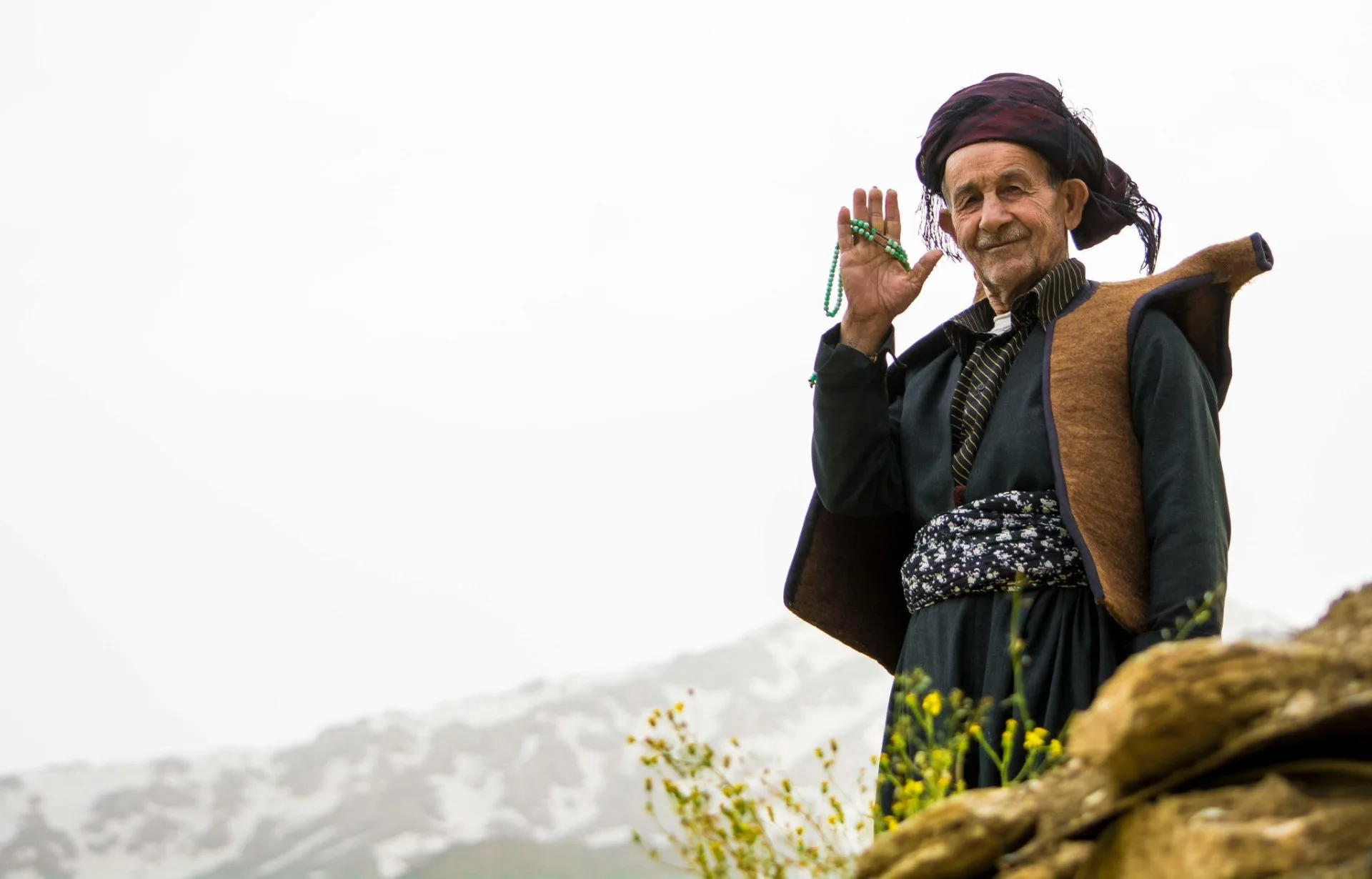
Iran is far more ethnically diverse than its public image often suggests. Persians constitute roughly 61 percent of the country’s nearly 93 million people, while significant minority groups include Azeris (16-24 percent), Kurds (8-10 percent), Lors (5-6 percent), Arabs (2-3 percent), and Baluchis (2 percent), alongside smaller Turkic communities (Maloney et al., 2026).
Geography is crucial to understanding these communities, as Azeris are concentrated in the north-western provinces, Kurds in the northwest along the Iraqi and Turkish borders, Arabs in the south-western province of Khuzestan, and Baluchis in the remote south-eastern province of Sistan and Baluchestan (Loft, 2025). Religious minorities, including the Baha’is, Christians, Sunni Muslims, Jews, and Zoroastrians, add another layer of diversity that the Islamic Republic has long struggled to accommodate. Together, non-Persian ethnic groups make up close to half of Iran’s population, yet they have remained largely absent from the country’s political and economic centres of gravity. That absence is not accidental, and it is not uniform. To understand how minorities experience the current wars, it is necessary to map the internal hierarchy among them, since repression from the Islamic Republic does not apply equally across all minorities.
Azeris occupy a qualitatively different position from other minorities, owing largely to their Shia identity and their historical integration into Iranian ruling structures (Salih, 2025). Turkic Shia dynasties, including the Safavids, who institutionalised Shia Islam as the state religion, and later the Qajars, embedded Azeri elites into the political sphere of the country long before the Islamic Republic (Salih, 2025). Both former Supreme Leader Ali Khamenei and former President Masoud Pezeshkian are of Azeri background (Maloney et al., 2026). This does not place Azeris beyond discrimination; they remain denied mother-tongue education and are viewed with suspicion by the Islamic Revolutionary Guard Corps (IRGC) due to perceived cultural and political affinities with neighbouring Azerbaijan, but it does mean they are structurally closer to the centre of power than any other minority group (Shahbandar, 2021).
The sharpest line of exclusion runs not simply along ethnicity but along the intersection of ethnicity and religion. Kurds, Baluchis, and most Arabs are Sunni Muslims, which places them outside both axes of legitimacy in a state that defines itself through Persian language and Shia Islam (Loft, 2025). This “double minority” status, non-Persian and non-Shia simultaneously, is the single most important variable in explaining why these three communities dominate the execution and detention statistics documented throughout this article. Azeris, as Shia, face only one of these two axes of exclusion. Kurds, Baluchis, and Arabs face both, all the time, and with intensifying force in times of external crisis.
A History of Structural Marginalisation
The roots of the minority problem in Iran go back long before the Islamic Republic; the attempt by Reza Shah Pahlavi to unify the peoples of Iran into a nation-state in the 1920s, by making Persian (Farsi) the only official language, prohibiting publication in minority languages, and brutally suppressing nomadic and tribal communities, did not bring relief in 1979, when Ayatollah Khomeini formally approved the use of military force to suppress Kurdish uprisings in West Azerbaijan and Kurdistan, Arab unrest in Khuzestan, and Turkmen resistance in the northeast, with thousands killed (Loft, 2025). The result was decades of structural neglect masquerading as national unity.
Persian has always been the only language taught in Iranian schools. Despite years of calls to change this, nothing has shifted and in minority regions, schools remain underfunded. This has real consequences: communities fall further behind, poverty deepens, and people find themselves increasingly separated from mainstream society (Loft, 2026a).
The numbers back this up. Between March 2023 and March 2024, provinces where ethnic minorities make up the majority, like Sistan-Baluchestan, Kurdistan, Kermanshah, and Khuzestan, consistently ranked among the poorest and most unemployment-hit in the entire country (Salih, 2025). What makes this even harder to swallow is that these are not poor regions by nature. Khuzestan alone produces around 90 percent of Iran’s oil revenue. Yet the Arab communities who live there see very little of that wealth. Jobs in the oil and petrochemical sectors are largely handed to Persians, leaving the local population on the outside looking in.
At every turn, repression has cast a shadow over economic exclusion, and not by coincidence. According to the non-governmental organisation Iran Human Rights, an Oslo-based monitoring organisation that documents executions through a network of sources inside Iran, of those executed for affiliation with banned political and armed groups between 2010 and 2024, 52 percent were Kurdish, 29 percent were Baluch, and 16 percent were Arab, together accounting for 97 percent of all politically motivated executions, the vast majority of them Sunni Muslims (Iran Human Rights, 2025b). With impunity, security forces have killed and tortured unarmed Kurdish cross-border porters, known as kolbars, on the Kurdistan-Iraq border, and Baluchi fuel porters in Sistan and Baluchestan (Loft, 2026a). As Amnesty International’s 2024 annual report highlights, these do not reflect isolated incidents but are part of a systemic pattern of discrimination spanning across sectors, including education, employment, housing, and political representation (Amnesty International, 2025). The 2025 and 2026 wars did not create this pattern. They found it already in place and gave it new intensity.
Conflict as an Accelerant: The Pattern Since 2022
This phenomenon of using minority identities to stir up trouble during politically turbulent times is certainly not new to the events of 2026. On the contrary, it was first put into practice back in 2022, when the arrest and subsequent death of Jina Mahsa Amini, a 22-year-old Kurdish woman from Saqqez, by Iran’s morality police, triggered the biggest wave of unrest in the country ever since the revolution of 1979. The chant that echoed in solidarity from all corners of the nation, “Jin, Jiyan, Azadi” (“Woman, Life, Freedom”), which emerged from grassroots Kurdish activist groups, was yet another way for minorities to assert themselves in their identity, which was rapidly being perceived as a security threat (OHCHR, 2024).
It is important to note that ethnic and religious minorities, especially the Kurds and Baluchis, were among those who suffered more in the repression, and according to the UN Fact-Finding Mission in Iran, suffered the “direct consequence of long-term discrimination” (OHCHR, 2024). Some of the abuses identified by the Mission included murder, extrajudicial executions, excessive use of force, arbitrary detention, torture, rape, disappearance, and gender persecution, all of which the Mission determined to constitute crimes against humanity (OHCHR, 2024).
The ‘geography of repression’ was not incidental. An existing strong military-security presence in border provinces with minority populations allowed the government to repress the uprising, including through a joint military intervention, with minorities, both ethnically and religiously, suffering the largest toll of casualties throughout the protests (OHCHR, 2024). In areas like Mahabad and Saqqez with a Kurdish majority population, the government increased the use of repression from using Basiji militia to the deployment of military convoys. The regime specifically blamed secessionist elements, such as the exiled Democratic Party of Iranian Kurdistan operating from northern Iraq, for instigating the protests and smuggling weapons into Iran (Fiennes, 2022). This framing, instrumentalising fears of ethnic separatism to delegitimise a cross-class national uprising, would prove to be a template for what followed.
However, the violence was especially intense in the far southeast. On September 30, 2022, security forces opened fire on worshippers in Zahedan who were protesting both Amini’s killing and the rape of a 15-year-old Baluchi girl by a local police chief, with Amnesty International estimating that between 66 and 96 people were killed within a matter of hours (Aman, 2023). The incident, known thereafter as “Bloody Friday”, deep-rooted in the double subordination of Iran’s Baluch community, exposed both ethnic discrimination and the impunity of state violence, and signalled that the regime’s response to dissent in minority regions would be governed by a different, more lethal approach. By 2023, Iran had also conducted drone and missile strikes against Kurdish opposition groups based in Iraqi Kurdistan, which it accused of supporting the protest movement from abroad (Loft, 2023).
The protest movement itself contradicted the regime’s claim of separatism. The Iranian public mostly rejected the regime’s attempts to frame the protests as secessionist or foreign conspiracies, and the anger mirrored the 1979 revolution in its crossing of geographic and ethnic lines, manifesting more as a popular, patriotic movement than an explosion of ethnic separatism (Fiennes, 2022). The 2022-2023 movement did not achieve systemic political change, but it demonstrated that minority communities were at once the most mobilised and vulnerable participants in any challenge to the Islamic Republic, a dynamic that the war of 2025-2026 would intensify.
The 2025-2026 War: Documented Impact on Minorities
In connection with the Israeli military campaign that began on June 13, 2025, Iranian authorities arrested over 21,000 people, including dissidents, journalists, human rights activists, and members of the Kurdish, Balochi, Azerbaijani Turk, Ahwazi Arab, Baha’i, and Jewish communities (Farouk and Jalal, 2026). The use of capital punishment escalated in parallel, with at least 612 people executed in the first six months of 2025, an increase of 119 percent on the same period in 2024, and by year’s end, at least 2,228 prisoners had been put to death, among them 162 Baluch and 115 Kurdish prisoners (Iran Human Rights, 2025c; Iran Human Rights, 2026). In August 2025, the United Nations Office of the High Commissioner for Human Rights (OHCHR) identified this as a systematic pattern of using the death penalty as a tool of state intimidation targeting ethnic minorities, with United Nations Human Rights Chief Volker Türk calling for a moratorium on capital punishment (OHCHR, 2025a).
The campaign also generated a specific new category of prosecution: the charge of espionage for Israel. In October 2025, Iran passed legislation making espionage automatically punishable by death, and the United Nations Fact-Finding Mission warned that expedited trials were putting individuals at heightened risk of summary execution without due process (Farouk and Jalal, 2026; OHCHR, 2025b). The charge was applied with particular severity against religious minorities, as security forces detained Baha’i and Jewish community members, forcing some to confess on television to being Israeli spies (Rezvani, 2025), while Iran’s Ministry of Intelligence described the Baha’i faith as a “Zionist sect”; part of what the Human Rights Watch characterised as a coordinated propaganda campaign of incitement and disinformation (Human Rights Watch, 2025).
The individual cases make the aggregate data concrete. Edris Ali, the kolbar whose execution opened this article, was hanged alongside Azad Shojaei and Iraqi national Rasoul Ahmad Rasoul in Urmia Central Prison, with all three denied legal representation and subjected to torture before confessions were extracted (Iran Human Rights, 2025a). Of 67 prisoners documented by Iran Human Rights as facing execution in late 2025, 13 were Baluch, 12 Kurdish, and 11 Arab, communities representing a fraction of the total population but the overwhelming majority of those facing politically motivated capital punishment (Iran Human Rights, 2025d). Security forces also detained 25 Kurdish children in 2025, accounting for 52 percent of all child detentions documented nationwide (Farouk and Jalal, 2026). In border areas, the Hengaw Organization for Human Rights recorded seven kolbars shot and killed in a single month following the 12-day conflict, while on July 1, 2025, IRGC agents raided the Baluch village of Gounich, killing two women and wounding at least ten, offering justifications that variously cited a “terrorist group”, “Afghans”, and “Israel” in the same breath (Farouk and Jalal, 2026; Human Rights Watch, 2025). That conflation summarises the logic of collective punishment governing the regime’s approach to its border communities.
As the broader US-Israel joint campaign continued into 2026, the structural conditions established during the 2025 crackdown, the espionage legislation, the militarisation of border areas, and the use of collective punishment against kolbars and rural communities, remained fully in force. Comprehensive documentation of 2026-specific impacts remains incomplete, given restrictions on independent reporting, but the February 2026 Coalition of Political Forces of Iranian Kurdistan, uniting the regions five biggest Kurdish parties, the Democratic Party of Iranian Kurdistan (KDPI), Komala Party of Iranian Kurdistan (Komala), Kurdistan Freedom Party (PAK), Organization of Iranian Kurdistan Struggle (Khabat), and Kurdistan Free Life Party (PJAK), represents a significant political shift (Rodgers, 2026). Yet the risk of instrumentalisation remains acute, as the Trump administration’s reported discussions of Central Intelligence Agency (CIA) support for Kurdish military action, followed by a rapid reversal from the Kurds, mirrored patterns of abandonment that Kurdish communities had experienced in earlier conflicts in Iraq and Syria (Lawal, 2026; Wilgenburg, 2025). For Iran’s minorities, the 2026 campaign represented both a potential opening and a familiar danger.
Conclusion: Prospects and the Path Forward
What the evidence gathered in this article makes clear is that the 2025 Israeli campaign and the ongoing 2026 US-Israel offensive did not create Iran’s minority crisis; they inherited and accelerated it. The pattern of disproportionate execution, collective punishment, linguistic suppression, and economic exclusion documented throughout this article was fully operational before the first strike. Edris Ali, the kolbar hanged in Urmia on a confession extracted under torture, was not a casualty of the war. He was a casualty of the system that the war made more visible. The conflict gave the Islamic Republic a new vocabulary: espionage, Zionist collaboration, and national security, with which to apply old methods to familiar targets. The international community’s response has fallen far behind the documentation. Despite repeated calls from the OHCHR, the UN Fact-Finding Mission’s finding of possible crimes against humanity, and the execution figures of 2025, no state with diplomatic relations with Iran has placed minority protection at the centre of its engagement. As Iran’s internal politics remain uncertain, the fate of minority communities may be shaped by one of three trajectories. None offers automatic relief without deliberate international intervention:
The Regime Survives, Minorities Pay
The most historically probable scenario is that the Islamic Republic deals with the crisis as it has done before in 2009, 2017-18, 2019, and 2022-23, through selective repression, economic signalling, and political containment, with security forces remaining loyal throughout (Loft, 2026b). Survival would come at a price paid by minorities. The espionage legislation, mass arrests in Kurdish and Baluchi regions, and the ongoing execution of minority prisoners are not aberrations in this scenario; they are its defining features, and there is no structural reason to expect them to recede once the external military pressure does.
The Regime Collapses, Chaos Follows
The International Crisis Group has warned that some of Iran’s possible futures could be worse than the present, noting that the IRGC would not necessarily disappear in any post-Khamenei transition (International Crisis Group, 2026; Loft, 2026b). As documented above, Kurdish political coordination has reached an unprecedented level, but coordination alone does not constitute a political settlement. Without a coherent transition framework that explicitly includes minority protections, collapse risks replicating the outcomes of Libya after 2011 or northern Syria after 2019, where minority communities gained neither protection nor autonomy, and the vacuum left by a fallen regime was filled by competing armed actors rather than representative governance (Lawal, 2026).
A Negotiated Transition with Minority Inclusion
A managed transition explicitly incorporating minority rights is the most difficult scenario, but may be the only path to durable stability. Persian Iranians are deeply divided, and non-Persian groups comprise roughly half the population, meaning concerns about nationalist backlash overstate national cohesion (Natali, 2026). Komala Secretary-General Abdulla Mohtadi has noted that any successful transition requires Persian-speaking support and must operate on a genuinely national scale (Wilgenburg, 2025). The Minority Rights Group has similarly stated that a peaceful future cannot be secured without addressing structural discrimination at every level of the state (Minority Rights Group, 2022). This means not only post-transition institutional reform, but immediate, concrete protections during any period of political uncertainty, when minority communities are historically at their most exposed.
What the three scenarios share is that minority communities bear the cost of each of them passively, unless their status is made an explicit condition of international engagement. The documentation assembled by the UN Fact-Finding Mission, Amnesty International, Human Rights Watch, Hengaw, and others is not in dispute. What remains in dispute is whether the international community will act on it. A stable Iran cannot be built on the exclusion of nearly half its population. International obligations toward Iran’s minorities do not begin after a transition, as they have just been disregarded till now.
Bibliography
Aman, F. (2023). Protests Have Brought Iran’s Ethnic Minorities & Persian Majority Closer. Stimson. Retrieved March 24th, 2026, https://www.stimson.org/2023/protests-have-brought-irans-ethnic-minorities-persian-majority-closer/.
Amnesty International. (2025). Iran: Human rights in Iran: Review of 2024/2025. https://www.amnesty.org/en/documents/mde13/9275/2025/en/.
Farouk, Z. and Jalal, L. (2026). Punishing Vulnerability: Iran’s Minority Crackdown After the 12-Day War. New Lines Institute. Retrieved March 24th, 2026, https://newlinesinstitute.org/middle-east-center/punishing-vulnerability-irans-minority-crackdown-after-the-12-day-war/.
Fiennes, Guy. (2022). “Kurds and Baluch are brothers, thirsty for the leader’s blood” – Iran’s minorities, the Mahsa Amini Protests and Iranian identity. Omer Journals. Retrieved March 24th, 2026, https://omerjournal.com/2022/12/20/kurds-and-baluch-are-brothers-thirsty-for-the-leaders-blood-irans-minorities-the-mahsa-amini-protests-and-iranian-identity/.
Human Rights Watch. (2025). Iran: Authorities Unleash Wave of Oppression After Hostilities with Israel. Retrieved March 23rd, 2026, https://www.hrw.org/news/2025/09/02/iran-authorities-unleash-wave-of-oppression-after-hostilities-with-israel.
International Crisis Group. (2026). Iran in Crisis: Time for a Change from Within. Retrieved March 24th, 2026, https://www.crisisgroup.org/stm/middle-east-north-africa/iran-united-states/iran-crisis-time-change-within.
Iran Human Rights. (2025a). 3 Kurdish Men Hanged for Israel Collaboration; Ahmadreza Djalali at Imminent Risk of Execution. Retrieved March 22nd, 2026, https://iranhr.net/en/articles/7682/.
Iran Human Rights. (2025b). Execution of Ethnic Minorities in Iran in 2024. Retrieved March 22nd 2026, https://www.iranhr.net/en/articles/7376/.
Iran Human Rights. (2025c). At Least 98 Executions in June and 612 in First 6 Months of 2025. Retrieved March 24th, 2026, https://www.iranhr.net/en/articles/7701/.
Iran Human Rights. (2025d). 110 Executions Recorded in July; At Least 67 Protesters, Prisoners of Conscience and Espionage Defendants on Death Row. Retrieved March 22nd, 2026, https://iranhr.net/en/articles/7842/.
Iran Human Rights. (2026). Statistical Review and Analysis of Executions in 2025; Breaking the Record of Human Rights Violations in Iran with 2228 Executions. Retrieved March 24th, 2026, https://en.iranhrs.org/statistical-review-and-analysis-of-executions-in-2025-breaking-the-record-of-human-rights-violations-in-iran-with-2228-executions/.
Lawal, S. (2026). Is the CIA planning to arm Kurdish forces to start an uprising in Iran?. Al Jazeera. Retrieved March 25th, 2026, https://www.aljazeera.com/news/2026/3/4/is-the-cia-planning-to-arm-kurdish-forces-to-spark-an-uprising-in-iran.
Loft, P. (2023). 2022 Iran protests: Human rights and international response. House of Commons, UK Library. Retrieved March 23rd 2026, https://commonslibrary.parliament.uk/research-briefings/cbp-9679/.
Loft, P. (2025). Iran: Impacts of June 2025 Israel and US strikes. House of Commons, UK Library. Retrieved March 24th, 2026, https://commonslibrary.parliament.uk/research-briefings/cbp-10292/.
Loft, P. (2026a). US-Israel strikes on Iran: February/March 2026. House of Commons, UK Library. Retrieved March 24th, 2026, https://commonslibrary.parliament.uk/research-briefings/cbp-10521/.
Loft, P. (2026b). Iran protests 2026: UK and international response. House of Commons, UK Library. Retrieved March 21st, 2026, https://commonslibrary.parliament.uk/research-briefings/cbp-10462/.
Maloney, S. et al. (2026). After the strike: The danger of war in Iran. Brookings. Retrieved March 21st, 2026, https://www.brookings.edu/articles/after-the-strike-the-danger-of-war-in-iran/.
Minority Rights. (2022). Protests, discrimination and the future of minorities in Iran. Retrieved March 21st, 2026, https://minorityrights.org/resources/protests-discrimination-and-the-future-of-minorities-in-iran/.
Natali, D. (2026). Iranian Kurds Can Fight, but How Effectively?. Foreign Policy. Retrieved March 23nd, 2026 https://foreignpolicy.com/2026/03/17/iran-kurds-intervention-syria-turkey-war-conflict/.
Rodgers, W. (2026). Kurdish groups in Iran face risky dilemma amid unclear US endgame. Chatham House. Retrieved March 21st, 2026, https://www.chathamhouse.org/2026/03/kurdish-groups-iran-face-risky-dilemma-amid-unclear-us-endgame.
Rezvani, A. (2025). Iran cracking down on people suspected of aiding Israel in war last month. NPR. Retrieved March 21st, 2026, https://www.npr.org/2025/07/03/nx-s1-5450291/iran-cracking-down-on-people-suspected-of-aiding-israel-in-war-last-month.
Salih, M. (2025). A geography of protest: Inside the rise of Iran’s minority factor. Atlantic Council. Retrieved March 21st, 2026 https://www.atlanticcouncil.org/blogs/menasource/a-geography-of-protest-inside-the-rise-of-irans-minority-factor/.
Shahbandar, O. (2021). No country for minorities: The agony of Iran’s ethnic Arabs, Kurds, Baloch and Azeris. Arab News. Retrieved March 23rd 2026, https://www.arabnews.com/node/1822306/middle-east.
United Nations Human Rights Office Of The High Commissioner. (2024). Minorities in Iran have been disproportionally impacted in ongoing crackdown to repress the “Woman, Life, Freedom” movement, UN Fact-Finding Mission says. Retrieved March 23rd 2026, https://www.ohchr.org/en/press-releases/2024/08/minorities-iran-have-been-disproportionally-impacted-ongoing-crackdown.
United Nations Human Rights Office Of The High Commissioner. (2025a). Türk calls on Iran to halt use of death penalty amid worrying surge in executions. Retrieved March 23rd 2026, https://www.ohchr.org/en/press-releases/2025/07/turk-calls-iran-halt-use-death-penalty-amid-worrying-surge-executions.
United Nations Human Rights Office Of The High Commissioner. (2025b). UN experts urge Iran to choose protection over repression after ceasefire. Retrieved March 23rd 2026, https://www.ohchr.org/en/press-releases/2025/07/un-experts-urge-iran-choose-protection-over-repression-after-ceasefire.
Wilgenburg, W. (2025). Caution and Fear of a Crackdown: Iranian Kurdish Opposition Responses to the Israel-Iran Conflict. Washington Institute. Retrieved March 23rd 2026, https://www.washingtoninstitute.org/policy-analysis/caution-and-fear-crackdown-iranian-kurdish-opposition-responses-israel-iran.