
Civil Society Dialogue on EU-India Free Trade Agreement by the European Commission
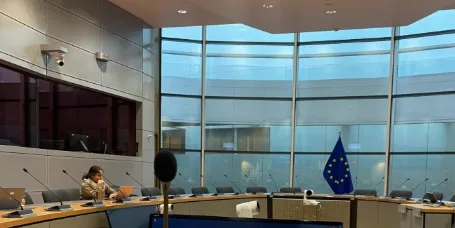
On Wednesday, 18 February 2026, the European Commission held a Civil Society Dialogue on the EU–India Free Trade Agreement (FTA) at the Berlaymont building in Brussels, presenting updates on the state of negotiations as the final agreement text remains unpublished ahead of further scrutiny. Commission representatives described the agreement as a significant milestone against a backdrop of geopolitical uncertainty and long-running negotiations spanning nearly two decades. They characterised the outcome as the “best possible” balance achievable with India, reflecting the country’s highly protected market and the need to tailor commitments to its specific economic structure. Current EU–India trade is estimated at around €180 billion, with officials indicating that trade volumes could expand significantly once the agreement enters into force. The FTA is expected to expand EU access to one of the world’s largest and fastest-growing economies, opening new opportunities for exporters and supporting broader efforts to diversify trade partnerships amid global uncertainty.
The proposed agreement was presented as one of the most comprehensive trade deals negotiated by both partners, reflecting a balance of opportunities and sensitivities across sectors and a framework tailored to India’s specific economic context. Key areas covered include trade in goods and services, digital trade, competition and subsidies, small and medium-sized enterprises (SMEs), transparency, dispute settlement, intellectual property, and trade and sustainable development, amongst many others.
While the overall structure of the agreement follows the standard framework, negotiators highlighted that several provisions have been tailored to reflect India’s specific economic context, resulting in targeted concessions in selected sectors. For instance, the agreement does not include a standalone government procurement chapter, as negotiators pointed to constraints in achieving reciprocal market access. Officials noted that commitments in this area ultimately reflected the degree of openness offered by each side, leaving government procurement outside the final scope of the FTA. A comparable dynamic was noted in relation to investment, as well as energy and raw materials, where negotiators pointed to constraints in reaching balanced commitments. Consequently, these areas remain outside the main scope of the agreement.
Trade
The agreement is expected to deliver extensive market access commitments, covering more than 90% of bilateral trade. India is set to fully liberalise approximately 93.2% of its imports from the EU, with partial liberalisation applying to an additional share of 3.4%, bringing overall trade coverage to around 97%.
On the EU side, commitments include full liberalisation of roughly 91.5% of imports from India. The EU will also apply partial liberalisation to a limited share of imports from India, including certain steel products, reflecting sector-specific sensitivities. When combined with full liberalisation commitments, overall coverage is expected to approach nearly 99.3%. Officials nevertheless emphasised that the long-term potential of the agreement remains significant, given India’s comparatively higher tariff levels and the resulting scope for EU exporters to benefit from progressive tariff reductions. Estimated tariff savings for EU exporters could amount to approximately €4 billion per year by the end of the transition period. Sectors such as wines and spirits are expected to see notable gains, as they currently face tariff barriers up to 150%, which will ultimately decrease to 20-30%. The agreement is also expected to require adjustments within the EU, with sectors such as textiles and ceramics identified as sensitive to liberalisation commitments. Extensive tariff elimination is seen across industrial goods. Machinery and electrical equipment, representing around €16 billion in EU exports, are expected to see tariffs reduced to zero. Full tariff removal is likewise anticipated for aircraft and spacecraft, as well as for plastics, chemicals and pharmaceuticals, which currently face tariffs ranging from roughly 11% to 22%
Automative
The automotive sector will not be fully liberalised under the agreement. Instead, market access is expected to be managed through tariff reductions combined with quota arrangements in the Indian market. Indicative quotas of around 250,000 vehicles were referenced, differentiated by technology categories including electric and internal combustion engine vehicles, as well as price segmentation. Tariffs on cars, currently reaching around 110%, are expected to be phased down to approximately 10% within the quota framework. While full tariff elimination is not foreseen, the reduction represents a significant change in market access conditions for the automotive sector.
As part of the “balanced” arrangements, the EU is expected to grant quota-based access for 600,000 Indian cars, with volumes differentiated across vehicle categories. In parallel, car parts are set to be fully liberalised on both sides, reflecting a higher level of openness in automotive supply chains. The automotive provisions are expected to include a review clause, allowing for adjustments over time in response to evolving market conditions.
Dispute settlement mechanisms are foreseen in relation to technical barriers to trade, with provisions expected to build on existing WTO disciplines. The dialogue also highlighted India’s ongoing reform of its Quality Control Orders system, introduced to enhance product standards. Given the evolving nature of this framework, commitments in this area were described as necessarily limited for the time being. As a result, legally binding commitments in this area remain limited. However, a conformity assessment framework is expected to be established with India to support the integration of ongoing quality control reforms.
Services and Investments
In the area of services, the EU was described as having obtained comparatively favourable commitments relative to peer agreements. Progress was particularly noted in financial services, including insurance, with improved legal certainty reflected in India’s commitments schedule. Additional improvements were referenced in maritime transport and associated services such as dredging and subsea cable operations. Audiovisual services were not included in the commitments, reflecting sensitivities within the EU. Speakers referenced India’s audiovisual interest, including Bollywood, when highlighting its significance, although the area remains outside the scope of the agreement.
With regard to investment, negotiators highlighted that stronger outcomes were achieved in services than in manufacturing sectors, where commitments remain comparatively limited. This is mainly due to the fact that the legislations in India only allow for foreign direct investments till 74%. Investment was therefore described as an area to be revisited in three years through a review mechanism.
Sustainability
The sustainability chapter was described by officials as one of the most difficult areas of the negotiations, reflecting what were referred to as “maximalist proposals” from the Indian side. These included discussions around possible exceptions or responses linked to EU climate measures such as the Carbon Border Adjustment Mechanism (CBAM) and the EU deforestation regulation. Officials indicated that these proposals were not taken forward. However, CBAM is expected to include an annex establishing a technical dialogue with India on its implementation. Officials indicated that MFN-style considerations were reflected in discussions related to CBAM, seeking to ensure that the conditions India receives will be better than any third-country partner of the EU.
Alongside the FTA, a wider EU–India strategic agenda was highlighted, encompassing cooperation on climate policy, greenhouse gas reduction and sustainable industrial transformation. In areas not fully covered by EU exclusive competence, such as mobility, memoranda of understanding are being used to facilitate cooperation and encourage Member State participation.
In the area of sustainability, India emphasised that trade commitments should not be directly linked to labour rights or environmental obligations, highlighting a fundamental divergence in approaches. These differences were presented as a key factor contributing to the complexity of negotiations in the sustainability chapter. The agreement includes legally binding commitments on fundamental labour standards, with India expected to work towards the ratification and implementation of core International Labour Organization (ILO) conventions. Commitments also reference gender equality and the effective implementation of the Paris Agreement. However, these sustainability provisions are not subject to the standard dispute settlement mechanism, reflecting the cooperative approach adopted in this chapter.
Negotiators acknowledged that Indian counterparts expressed strong and explicit criticism on this matter, at times describing EU regulatory measures as “neo-imperialist” or “colonial” in nature. These statements were cited as illustrating the sensitivity of sovereignty concerns and the difficulties surrounding the sustainability chapter. Therefore, the possibility that the EU could apply sanctions in relation to ILO commitments was viewed as a red line during the negotiations. Overall, the chapter was framed as relying primarily on cooperation, monitoring and dialogue rather than sanction-based enforcement. Additionally, it was emphasised that a significant share of India’s economy operates within the informal sector, which was cited as an important factor shaping the country’s position on the scope and enforcement of sustainability commitments.
Essential Elements and Conditionality
Discussions also addressed the inclusion of “essential elements” of the agreement, a standard provision allowing either partner to suspend parts of the FTA in the event of a serious breach. These elements typically relate to respect for human rights and democratic principles, commitments on the non-proliferation of weapons of mass destruction, and adherence to the Paris Agreement. The dialogue noted that India’s status as a nuclear-armed state outside the Nuclear Non-Proliferation Treaty was raised in this context. While this did not ultimately prevent agreement on the clause, officials indicated that recognition of human rights and democratic principles as essential elements was secured within the FTA framework. Thus, serious breach of these essential elements may allow either party to suspend parts of the agreement, or, where appropriate, the agreement in its entirety.
On the Paris Agreement, negotiators highlighted sensitivities regarding any obligation to remain formally a party to the treaty. The outcome instead reflects commitments to effectively implement the Paris Agreement within the sustainability chapter, without explicitly requiring continued party status.
Intellectual Property Rights
In the area of intellectual property, geographical indications were not included in the FTA negotiations and are being pursued through a parallel process. The broader agreement nevertheless contains horizontal provisions, including chapters addressing small and medium-sized enterprises (SMEs).
Trade Remedies and Safeguards
The agreement is expected to provide an extended timeframe for the use of bilateral safeguards, allowing both partners to respond to potential market disruptions linked to liberalisation. Officials indicated that safeguard measures could be applied for up to 22 years, enabling temporary action in the event of import surges affecting domestic industries. Negotiators noted that India had explored taxation carve-outs comparable to those included in other agreements, including the UK–India context. Such provisions were ultimately not incorporated into the FTA, reflecting concerns related to the non-discriminatory treatment of EU companies.
Lastly, officials noted that India continues to advance trade negotiations with partners such as Canada, reflecting an evolving liberalisation trajectory. In this context, they emphasised that further delays were unlikely to substantially alter the overall balance of the agreement, reinforcing the rationale for concluding negotiations within the current timeframe.