
Introduction
Malaysia’s forests and lands are rich in biodiversity and natural resources, making forest commodities, such as palm oil and timber, vital to the national economy. In fact, the palm oil industry amounted to 114 billion Malaysian Ringgit and contributed to 2.3 percent of the country’s gross domestic product in 2024 (Phung, 2025). Beyond their economic value, these forests form part of the Indigenous peoples’ ancestral domains, making them a huge aspect of their culture, history, and livelihood.
However, the growing industrial plantations and mining operations have contributed to deforestation and widespread environmental degradation. Consequently, there are concerns regarding the sustainability of the forests and the preservation of the ancestral lands of the Indigenous peoples. Thus, this article tackles the intersection between the environmental challenges and the rights of Indigenous peoples in Malaysia.
Current issues
Deforestation
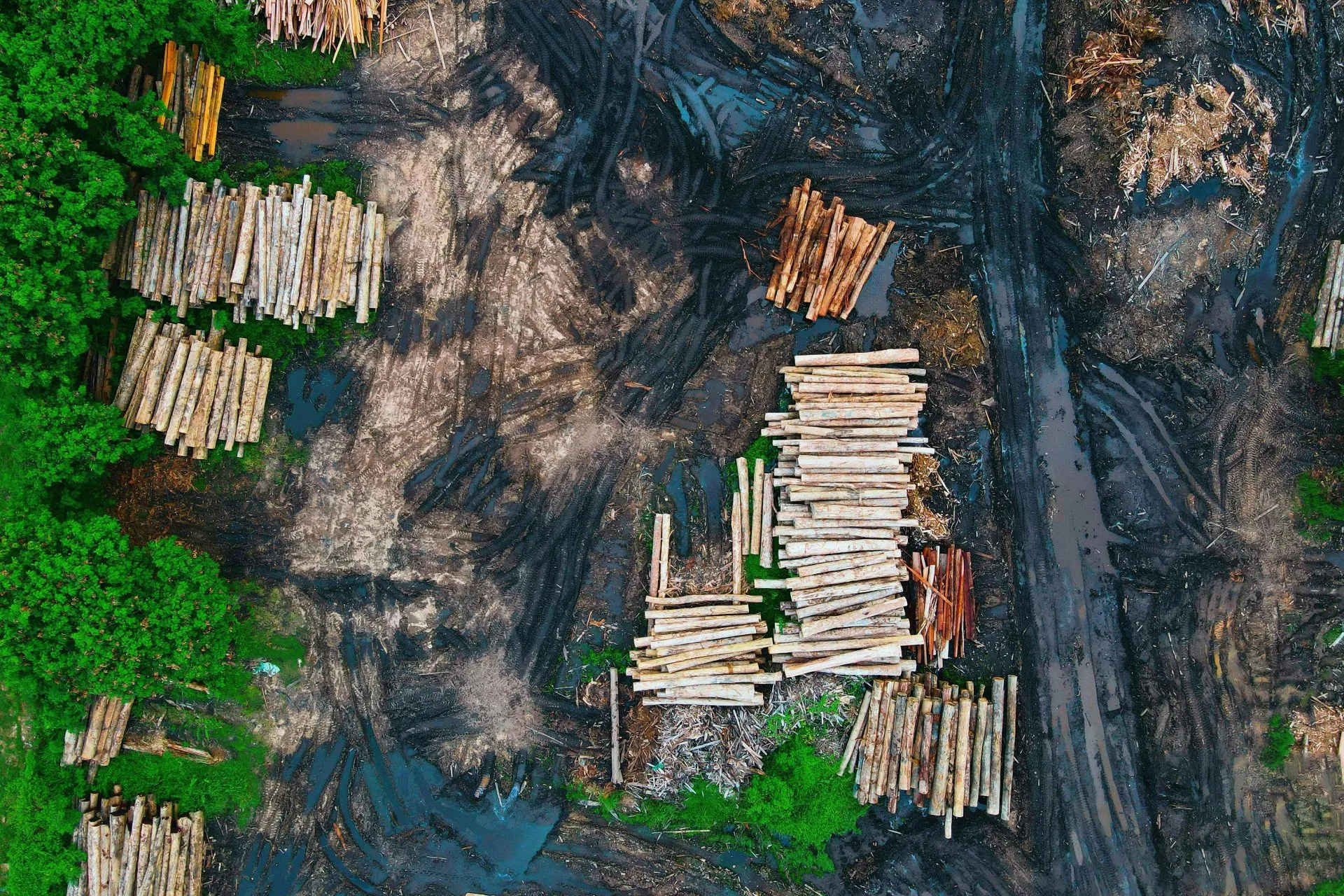
Deforestation in Malaysia has been driven by industrial activities to support the country’s timber and palm oil industries, particularly in the State of Sarawak. Recently, Human Rights Watch published research conducted from July 2023 to March 2025, where it gathered data from Indigenous Peoples and Malaysian officials to assess the environmental damage in the forest of Sarawak and the violations of Indigenous Peoples’ rights.
One such example of an affected Indigenous group is the Rumah Jeffery, a 60-member Indigenous Iban group living in Sarawak’s rainforest. According to the report, the group manages a native customary land of 521 hectares under Sarawak’s Land Code of 1958, but lacks a formal government-recognised land title affirming their customary rights (Chávez & Reysio-Cruz, 2025). As a result, Rumah Jeffery’s land was vulnerable to encroachment by private companies.
The report claims that Zedtee Sdn Bhd (Zedtee), a Malaysian timber company, carried out logging operations on the ancestral lands of Rumah Jeffery without the latter’s free, prior, and informed consent (Chávez & Reysio-Cruz, 2025). The basis for Zedtee to conduct such operations was the lease granted by the Sarawak government to build a timber plantation and a logging concession, which allegedly overlaps with Rumah Jeffery’s ancestral land. To clear the forest area, Zedtee sent bulldozers to cut down the trees, which resulted in a loss of eight hectares of tree cover. The Rumah Jeffery tried to resist the logging activities; however, they were threatened with arrest by the government. Thereafter, Zedtee filed a complaint against them for their eviction in the area, which was subsequently issued by the Sarawak Forest Department. The Human Rights Watch report argues that the actions of the company and the local government were not merely an environmental violation but also a breach of the Indigenous peoples’ human rights (Chávez & Reysio-Cruz, 2025).
Mining
Like deforestation, mining operations in Malaysia also pose a significant concern to Indigenous Peoples, often leading to loss of natural resources and rising health concerns for the communities who live near mining sites. The Temiar Orang Asli, an Indigenous group of Kampung Kelaik village, who are located in Gua Musang, are currently faced with this problem.
According to an investigative report conducted by Malaysiakini, near the Kampung Kelaik village are two operating mines run by major corporations, one by Redstar Capital and another by Aqua Orion. Redstar Capital has been running mining operations since 2009, while Aqua Orion began in 2015 (Vinothaa, 2024). Due to the proximity of the village to the iron ore mining operations, some members of the Temiar community were found to have higher levels of chromium in their bloodstream than the normal threshold, which exceeded the allowable limits set by the Malaysian Department of Environment. The report surmises that the heavy metal might have entered the bloodstream through the polluted waters that flowed from the mining sites and which have turned the rivers a rusty red colour. The Temiar community used these rivers and ponds for fishing and bathing, but exposure to polluted waters has caused skin lesions among some community members. The report also noted that higher levels of chromium can lead to a risk of developing cancer and other respiratory issues (Vinothaa, 2024).
Due to the various issues caused by the companies and the encroachment of their native lands, the Indigenous group tried to file court injunctions to stop the operations, but they failed. Subsequently, they filed another lawsuit to seek a declaration of rightful ownership over the native land, alleging that the logging and mining activities conducted on the Temiar Orang Asli’s lands have disrupted their traditional practices, particularly affecting their religious, spiritual, and burial practices (BERNAMA, 2025-b). No resolution has yet been made on the matter.
Policy Implications
With the current mining and logging activities in Malaysia’s forests, there are concerns from the local and international communities that these activities will lead to environmental degradation and threaten the Indigenous Peoples’ ancestral domains. Recently, the European Union classified Malaysia as having a “standard risk” for deforestation under the European Union Deforestation Regulation (EUDR) (Reuters, 2025). According to Commodities Minister Johari Abdul Ghani, Malaysia, as the world’s second-largest exporter of palm oil, has made significant progress in its commitment to reducing deforestation. As such, the country should be classified as “low risk” instead of “standard risk” (Reuters, 2025). The EUDR classification bears significance because it affects the ease of exporting products to the EU. Having a “low risk” qualification means that there are fewer due diligence checks on the products being brought to the EU as opposed to “standard risk” or “high risk” products. In the EUDR, restrictions are applied on the importation of commodities such as beef, palm oil, cocoa, and soy that are sourced from deforested areas.
The Malaysian Palm Oil Council (MPOC), which represents the country’s palm oil interests, made a similar statement seeking clarification on the EU’s “standard risk” classification, emphasising that Malaysia was able to greatly reduce its primary forest loss by 65 percent over the last decade (BERNAMA, 2025-a). The CEO of MPOC, Belvinder Sron, claims that said classification imposes an undue burden on Malaysian exporters because it will lead to additional paperwork to comply with EU regulations, which it argues are unnecessary, and that the classification was “based on political horse trading and favoritism” (Malaysian Palm Oil Council, 2025).
Malaysia has been a critic of the EUDR and has even filed a complaint before the World Trade Organization (WTO) in 2021, arguing that the regulation is discriminatory against Malaysian palm oil exporters (Mai, 2024). Nevertheless, after taking into consideration the merits of Malaysia’s arguments, the WTO ruled in favor of the EU.
While Malaysian palm exporters oppose the EUDR classification, environmental and human rights groups are taking an opposite stance. In fact, these groups urge the EU to classify imports from the State of Sarawak as “high risk” to force industries to respect Indigenous ancestral lands and ensure higher scrutiny on commodities coming from the region (Borneo Project, 2024). For Indigenous peoples, the issue of deforestation in Sarawak is significant because the government aims to convert over 400,000 hectares of natural forest into industrial timber plantations by 2025 (Human Rights Watch, 2024). As a response to this, SAVE Rivers, an Indigenous organisation in Sarawak, voiced the following concern:
Logging companies are still bulldozing Indigenous peoples’ forests in Sarawak without consultation or consent from communities, which should translate into a ‘high risk’ classification under the new EU law until our government addresses these rights violations and makes effective its commitment to preserve our remaining forests (Human Rights Watch, 2024).
Since Sarawak is an area rich with biodiversity and is home to thousands of Indigenous peoples, the government’s forest conversion projects are concerning because they will affect the Indigenous peoples’ livelihoods (The Borneo Project, 2024). Moreover, as pointed out by Human Rights Watch (2024), the Sarawak government does not have a law requiring companies to obtain free, prior, and informed consent from the community, and is also not transparent regarding information regarding the land-use maps of Indigenous territories.
In response to the ongoing concern regarding the environmental sustainability of the forests in the region, especially in the palm oil industry, the Sarawak government has recently announced that it will limit the granting of new provisional leases to palm oil companies in order to comply with the EUDR (Rantayy, 2025).
Conclusion
The Malaysian government is faced with a challenge of balancing the protection of domestic industries, the rights of Indigenous peoples, and the promotion of environmental sustainability. While the country faces international pressure from the European Union’s Deforestation Regulation to improve its forest industries, it also faces domestic pressure from Indigenous peoples to protect their ancestral lands and from palm oil exporters to promote economic growth. The current situation calls for stronger protection mechanisms of ancestral domains and transparency in the granting of land leases to companies, especially in the State of Sarawak. Ultimately, Malaysian policymakers will need to balance their commitment to supporting their economic industries, preserving the environment, and protecting ancestral domains.
Bibliography
BERNAMA. (2025a, May 23). MPOC Seeks EC Clarification On Malaysia’s “Standard Risk” Status. BERNAMA. Retrieved June 22, 2025, from https://bernama.com/en/news.php?id=2426051
BERNAMA. (2025b, October 3). Encroachment On Kelaik Ancestral Land Hinders Indigenous Customs, Court Told. BERNAMA. Retrieved June 22, 2025, from https://www.bernama.com/en/news.php?id=2400968
Chávez, L. T., & Reysio-Cruz, M. (2025). Facing the Bulldozers: Iban Indigenous Resistance to the Timber Industry in Sarawak, Malaysia. In Human Rights Watch. Retrieved June 22, 2025, from https://www.hrw.org/report/2025/05/04/facing-bulldozers/iban-indigenous-resistance-timber-industry-sarawak-malaysia
Human Rights Watch. (2024, September 23). EU: Address Indigenous Rights Violations in Malaysian Imports. Human Rights Watch. Retrieved June 22, 2025, from https://www.hrw.org/news/2024/09/23/eu-address-indigenous-rights-violations-malaysian-imports
Mai, L. (2024, May 30). Palm Oil Powerhouses: Why the EU’s Deforestation-Free Regulation Does Not Work in Southeast Asia | New Perspectives on Asia | CSIS. Center for Strategic and International Studies. Retrieved June 22, 2025, from https://www.csis.org/blogs/new-perspectives-asia/palm-oil-powerhouses-why-eus-deforestation-free-regulation-does-not
Malaysian Palm Oil Council. (2025, May 26). Malaysia to Challenge the European Commission Over EUDR Benchmarking. Malaysian Palm Oil Council. Retrieved June 22, 2025, from https://www.mpoc.org.my/malaysia-to-challenge-the-european-commission-over-eudr-benchmarking/
Phung, A. (2025, May 5). Malaysia’s RM114 Billion Palm Oil Industry Charts Path To Profitable Sustainability. Business Today. Retrieved June 22, 2025, from https://www.businesstoday.com.my/2025/05/05/malaysias-rm114-billion-palm-oil-industry-charts-path-to-profitable-sustainability/
Rantayy, T. (2025, February 19). No new provisional leases for palm oil plantations, says Minister. DayakDaily. Retrieved June 22, 2025, from https://dayakdaily.com/no-new-provisional-leases-for-palm-oil-plantations-says-minister/?trk=public_post_comment-text
Reuters. (2025, May 29). Malaysia says EU’s deforestation risk rating based on old data. Reuters. Retrieved June 22, 2025, from https://www.reuters.com/sustainability/climate-energy/malaysia-says-eus-deforestation-risk-rating-based-old-data-2025-05-28/
The Borneo Project. (2024, September 26). Why Sarawak should be high risk under the new EU deforestation rules. The Borneo Project. Retrieved June 22, 2025, from https://borneoproject.org/why-sarawak-should-be-high-risk-under-the-new-eu-deforestation-rules/Vinothaa, S. (2024). Iron Ore Mining is invading an indigenous Orang Asli Community in Malaysia. In Asian Dispatch. Malaysiakini. Retrieved June 22, 2025, from https://www.asiandispatch.net/iron-ore-mining-is-invading-an-indigenous-orang-asli-community-in-malaysia