
Geneva, March 25th, 2026
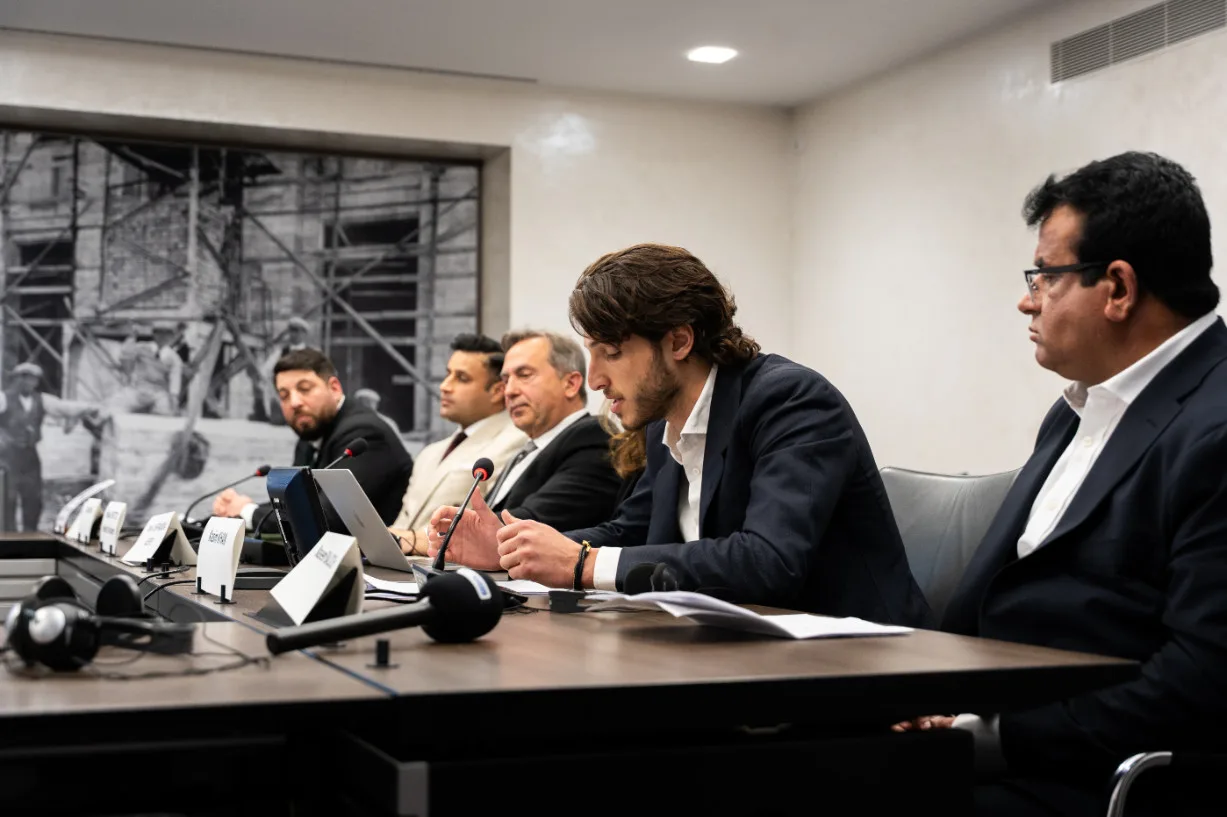
A group of European lawmakers and legal experts met at the UN Human Rights Council today to demand a halt to Pakistan’s special trade privileges. The conference focused on the GSP+ program, which gives Pakistan preferential access to European markets. Critics at the event argued that the Pakistani government is failing to meet the human rights standards required to keep these benefits.
Barbara Bonte, a Member of the European Parliament, opened the session with a call for immediate action. She stated that trade preferences must be earned and should not be treated as an automatic rollover. The European Commission has already confirmed that it received a formal “white paper” outlining these concerns. This document shows that the current situation is a systematic breakdown of rights across the entire country.
Religious minorities are facing a particularly dangerous period. Nicolaos Breas, a member of the Hellenic Parliament, pointed out that the country’s blasphemy laws are being used to target Christians and Hindus. He noted that in the last year alone, there have been dozens of murders and hundreds of forced marriages. He is now calling for specific progress, such as a 15% reduction in false accusations, as a condition for future trade deals.
The meeting also highlighted the treatment of political figures. Zulfi Bukhari, a former cabinet minister, described a massive crackdown on political opposition and the media. He noted that journalists are being silenced or driven into exile for speaking the truth. Kasim Khan, the son of former Prime Minister Imran Khan, spoke about his father, who has been held in solitary confinement for nearly 1,000 days. He described a “death cell” with no light or clean water. He also noted that the government is blocking family visits and medical care.
Dr. Naseem Baloch, Chairman of the Baloch National Movement, also gave testimony on the situation in Balochistan. He described a climate of repression and the enforced disappearance of his own family members. Geopolitical analyst Rafael Khalivotis added that the state is essentially exporting its poverty by sending hundreds of thousands of citizens abroad. This creates a wave of migration toward Europe that is often managed by smuggling networks.
The message from the conference was clear. The European Union needs to stop the automatic renewal of these trade preferences. Many leaders now believe that Pakistan must prove that it respects its citizens before it can profit from European markets again.