
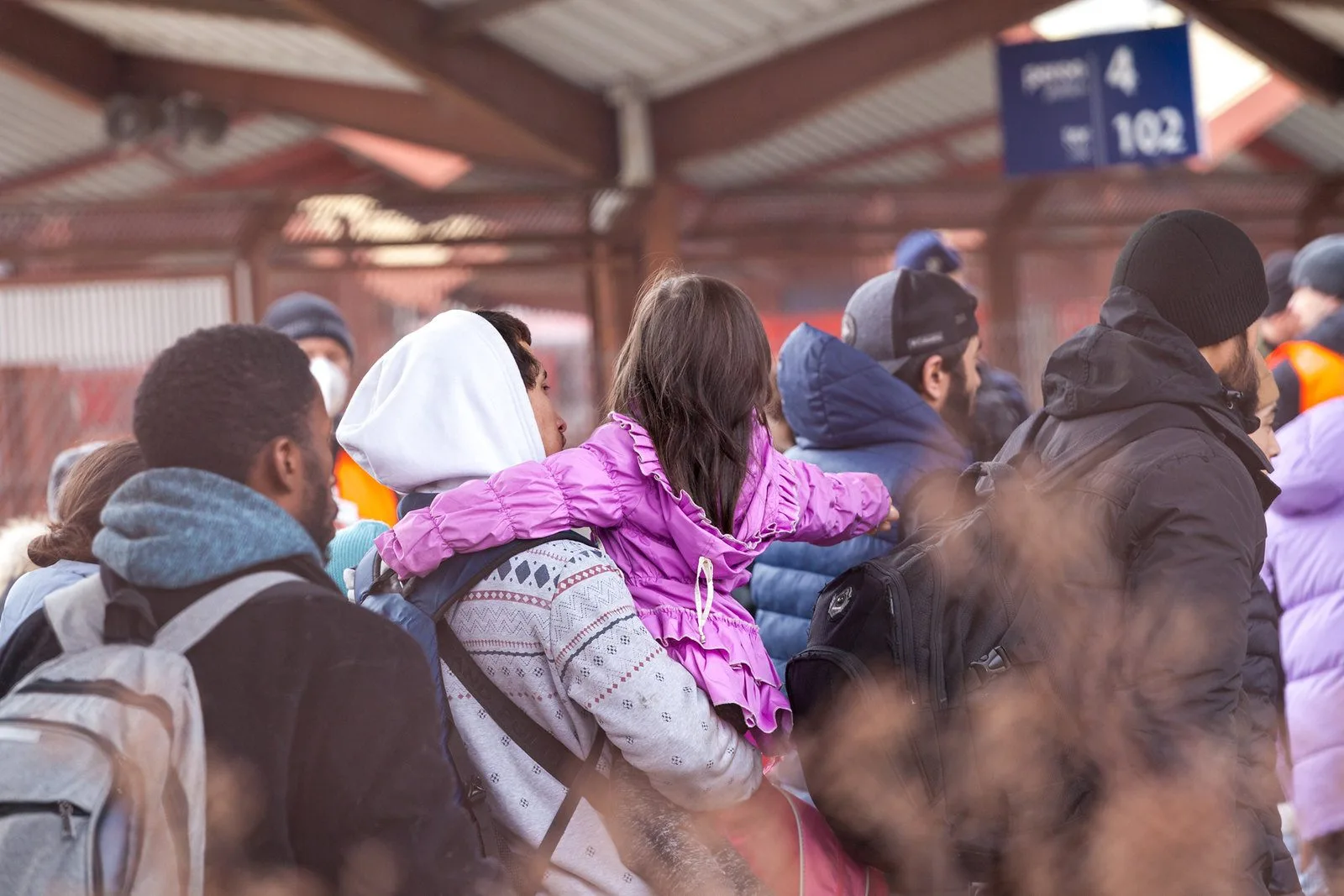
Only two weeks have passed since Russia began its invasion of Ukraine and already more than 2 million Ukrainians have fled to neighbouring countries, making it the fastest-growing refugee crisis in Europe since the Second World War, according to the United Nations (UN) High Commissioner for Refugees. [1] Not long ago, the continent faced another humanitarian challenge with the 2015 refugee crisis, sparked then by the still-ongoing Syrian Civil War. With this most recent crisis, however, it has become painfully apparent that Europe’s hospitality is much more generous for Ukrainians than it is for Syrians. Comparing the European response to the inflow of refugees from those two different armed conflicts, we will take a look at the most significant differences. We will see that European countries are imposing a double standard, treating white European refugees vastly better compared to those coming from the Middle East.
As sudden aggression has forced many Ukrainians to flee, the vast majority of those displaced by the Russian invasion has come to the European Union (EU). [2] While more than 2 million have already fled the country, UN officials are now warning that the number of people seeking refuge in the EU could soon exceed 7 million, emphasising that this is only a rough estimate given that the ongoing fighting prevents accurate counting. [3] What has become evident, however, is that roughly 1 million Ukrainians are leaving the country every week now, with that number expected to rise as the war worsens.
So far, the European response to the influx of Ukrainian refugees has been outstanding and a prime example of international cooperation and protection done right. For example, major telecommunications companies have introduced free-of-charge calls to Ukraine from landlines as well as mobile phones. [4] And to make reaching safe havens easier, train operators across Europe are now offering free rail transport to Ukrainians, with the Deutsche Bahn, Germany’s national rail carrier, even preparing to add additional carriages on trains running from Poland to Berlin to meet demand and boost capacity; [5] upon showing a Ukrainian passport, free tickets are provided. [6] Moreover, the EU invoked the Temporary Protection Directive on 3 March 2022, a scheme first introduced in response to the Balkan Wars in the 1990s to manage large-scale refugee movements. [7] Under the directive, refugees from Ukraine are eligible for a residence permit, access to employment and education, and opportunities for family relocation and social welfare are being granted, all for up to three years and without having to apply for asylum. [8] Additionally, the European Commission put forward operational guidelines on border management that aim to simplify border controls at the EU’s borders with Ukraine. [9] Slovakia and Poland even permit entry for Ukrainians without valid travel documents such as passports. [10] This is how a refugee response should work: keeping borders open for people in need of shelter, avoiding time-consuming formalities, and making family reunification easier.
We know, however, that this is not how the international protection regime has always worked in Europe. Treatment of Ukrainians differs significantly from that of Syrians and other nationalities in the not-so-distant past. Noticeably, countries that are now welcoming refugees from Ukraine, namely Poland, Hungary, Slovakia, and the Czech Republic, had earlier garnered international attention and criticism for being particularly hostile towards Syrian refugees, refusing to equally share the burden of offering asylum among the EU Member States. While the European Union as a whole is home to over 1 million of the 6.6 million Syrian refugees in the world, the vast majority are hosted by only two European countries, namely Germany (59 per cent) and Sweden (11 per cent), according to data from the UN High Commissioner for Refugees. In April 2020, the Court of Justice of the European Union, in Luxembourg, even handed down a ruling against Poland, Hungary, and the Czech Republic for non-compliance with migrant relocation obligations. [11] This was preceded by multiple and repeated calls from the European Commission for all three countries to abide by their obligations to accept migrants as mandated by European quotas, all of which were ignored. [12] Ultimately, the court ruled that, by refusing to comply with the temporary relocating mechanism that ensures equal distribution of refugees among the Member States, the countries had failed to fulfil their obligations under European Union law. [13] Remarkably, Poland is now a major player in the current Ukraine crisis, having taken in the highest number of refugees so far, with Poland’s interior minister Mariusz Kaminski stating last week that “we will do everything to provide safe shelter in Poland for everyone who needs it”, [14] failing to mention that his country had essentially refused to take in any Syrian refugees during the Syrian war just a few years back. He also omitted to mention that Polish contractors have just begun working on a new 353-million-euro wall along the Belarus border aimed at deterring refugee crossings, mostly coming from the Middle East. [15] This is a textbook case of double standard that is difficult to bear. The Bulgarian Prime Minister Kiril Petkov goes even further by stating that
These are not the refugees we are used to (…) these people are Europeans. These people are intelligent, they are educated people (…) this is not the refugee wave we have been used to, people we were not sure about their identity, people with unclear pasts, who could have been even terrorists. [16] He continues by stating that (…) there is not a single European country now which is afraid of the current wave of refugees. [17]
Such comments can only be condemned and show the deep ignorance and racism of some towards non-European refugees. And yet, the Bulgarian Prime Minister does not stand alone, with Slovakia having said all the way back in 2015 that it would only accept Christians from Syria, according to The Associated Press. [18]
Such incidents clearly show that many European countries are apparently more willing to give protection and shelter to people who are white Europeans than to brown people from the Middle East, completely ignoring that Article 1 of the Convention Relating to the Status of Refugees (1951) equally applies to and protects refugees of all races, cultures, nationalities, ethnicities, and social backgrounds. This double standard is deeply unfair, highly disturbing, and must be condemned. While the exact reasons behind this divergent response may be hard to precisely pin down, geographic proximity can lead a country to take in more refugees than others, like in the case of Lebanon, an immediate neighbour of Syria. This, however, is no justification for blatant discrimination. Instead, the wave of empathy we have seen for Ukrainians should extend further to all refugees, wherever they may come from, whichever conflict they may flee. In the end, a refugee is a refugee. As Article 3 of the Convention Relating to the Status of Refugees (1951) states, all Member States “shall apply the provision of this Convention to refugees without discrimination as to race, religion or country of origin”. [19] The Ukrainian refugee crisis presents the EU and its Member States with an important opportunity to live up to this provision, to demonstrate their universal attachment to humanitarian values and human rights, and to (re)commit to the international refugee protection system.
Footnotes:
[1] Operational Data Portal, Ukraine Refugee Situation, https://data2.unhcr.org/en/situations/ukraine last accessed 9 March 2022
[2] Christopher Hamill-Stewart, “How Ukraine crisis laid bare Western biases, prejudices and double standards”, Arab News, 8 March 2022, https://www.arabnews.com/node/2038816/media last accessed 9 March 2022
[3] “Russian invasion risks displacing more than 7 million Ukrainians, says EU crisis commissioner”, France24, 27 February 2022, https://www.france24.com/en/europe/20220227-europe-must-prepare-for-millions-of-ukrainian-refugees-eu-commissioner-says last accessed 9 March 2022
[4] “Deutsche Telekom introduces free-of-charge calls to Ukraine”, Reuters, 25 February 2022, https://www.reuters.com/business/media-telecom/deutsche-telekom-introduces-free-of-charge-calls-ukraine-2022-02-25/ last accessed 10 March 2022
[5] Sean Goulding Carrol, “EU rail companies offer fleeing Ukrainians free travel”, Euractiv, 28 February 2022, https://www.euractiv.com/section/railways/news/eu-rail-companies-offer-fleeing-ukrainians-free-travel/ last accessed 10 March 2022
[6] Ibid.
[7] Jessie Butchley, “What is the European Union Temporary Protection Directive?”, Envoy Global, 7 March 2022, https://www.mondaq.com/work-visas/1168646/what-is-the-european-union-temporary-protection-directive last accessed 10 March 2022
[8] Ibid.
[9] “Ukraine: Commission proposes temporary protection for people fleeing war in Ukraine and guidelines for border checks”, European Commission, 2 March 2022, https://ec.europa.eu/neighbourhood-enlargement/news/ukraine-commission-proposes-temporary-protection-people-fleeing-war-ukraine-and-guidelines-border-2022-03-02_en last accessed 10 March 2022
[10] “Slovakia permits entry for Ukrainians fleeing the war without valid travel documents”, Schengenvisainfo News, 26 February 2022, https://www.schengenvisainfo.com/news/slovakia-permits-entry-for-ukrainians-fleeing-the-war-without-valid-travel-documents/ last accessed 10 March 2022; “Poland will help all Ukrainians fleeing war with Russia: officials”, Radio Canada International, 25 February 2022, https://ici.radio-canada.ca/rci/en/news/1864902/poland-will-help-all-ukrainians-fleeing-war-with-russia-officials last accessed 10 March 2022
[11] Commission v Poland, Hungary and the Czech Republic, Court of Justice of the European Union, Joined Cases C-715/17, C-718/17, C-719/17, 2 April 2020
[12] “European Union: Court of Justice rules against Poland, Czech Republic, and Hungary for noncompliance with migrant relocation obligations”, Library of Congress, 5 June 2020, https://www.loc.gov/item/global-legal-monitor/2020-06-05/european-union-court-of-justice-rules-against-poland-czech-republic-and-hungary-for-noncompliance-with-migrant-relocation-obligations/ last accessed 10 March 2022
[13] Press Release No 40/20 on the Judgment in Joined Cases C-715/17, C-718/17 and C-719/17, Court of Justice of the European Union, Commission v Poland, Hungary and the Czech Republic, 2 April 2020, https://curia.europa.eu/jcms/upload/docs/application/pdf/2020-04/cp200040en.pdf last accessed 10 March 2022
[14] Christopher Hamill-Stewart (n2)
[15] “Poland begins work on $400m Belarus border wall against refugees”, Al Jazeera, 25 January 2022, https://www.aljazeera.com/news/2022/1/25/poland-begins-work-on-400m-belarus-border-wall-against-migrants last accessed 10 March 2022
[16] “Double standard: Arab refugees watch as Europe embraces Ukrainians”, Daily Sabah, 2 March 2022, https://www.dailysabah.com/world/europe/double-standard-arab-refugees-watch-as-europe-embraces-ukrainians last accessed 10 March 2022
[17] Ibid.
[18] “Migrant’s crisis: Slovakia ‘will only accept Christians’”, BBC News, 19 August 2015, https://www.bbc.com/news/world-europe-33986738 last accessed 10 March 2022
[19] Article 3 of the Convention Relating to the Status of Refugees (adopted 28 July 1951, entered into force 22 April 1954), 189 UNTS 137
Bibliography:
Butchley J, “What is the European Union Temporary Protection Directive?”, Envoy Global, 7 March 2022, https://www.mondaq.com/work-visas/1168646/what-is-the-european-union-temporary-protection-directive last accessed 10 March 2022
Carrol S, “EU rail companies offer fleeing Ukrainians free travel”, Euractiv, 28 February 2022, https://www.euractiv.com/section/railways/news/eu-rail-companies-offer-fleeing-ukrainians-free-travel/ last accessed 10 March 2022
Commission v Poland, Hungary and the Czech Republic, Court of Justice of the European Union, Joined Cases C-715/17, C-718/17, C-719/17, 2 April 2020
Convention Relating to the Status of Refugees (adopted 28 July 1951, entered into force 22 April 1954), 189 UNTS 137
“Deutsche Telekom introduces free-of-charge calls to Ukraine”, Reuters, 25 February 2022, https://www.reuters.com/business/media-telecom/deutsche-telekom-introduces-free-of-charge-calls-ukraine-2022-02-25/ last accessed 10 March 2022
“Double standard: Arab refugees watch as Europe embraces Ukrainians”, Daily Sabah, 2 March 2022, https://www.dailysabah.com/world/europe/double-standard-arab-refugees-watch-as-europe-embraces-ukrainians last accessed 10 March 2022
“European Union: Court of Justice rules against Poland, Czech Republic, and Hungary for noncompliance with migrant relocation obligations”, Library of Congress, 5 June 2020, https://www.loc.gov/item/global-legal-monitor/2020-06-05/european-union-court-of-justice-rules-against-poland-czech-republic-and-hungary-for-noncompliance-with-migrant-relocation-obligations/ last accessed 10 March 2022
Hamill-Stewart C, “How Ukraine crisis laid bare Western biases, prejudices and double standards”, Arab News, 8 March 2022, https://www.arabnews.com/node/2038816/media last accessed 9 March 2022
“Migrant’s crisis: Slovakia ‘will only accept Christians’”, BBC News, 19 August 2015, https://www.bbc.com/news/world-europe-33986738 last accessed 10 March 2022
Operational Data Portal, Ukraine Refugee Situation, https://data2.unhcr.org/en/situations/ukraine last accessed 9 March 2022
“Poland begins work on $400m Belarus border wall against refugees”, Al Jazeera, 25 January 2022, https://www.aljazeera.com/news/2022/1/25/poland-begins-work-on-400m-belarus-border-wall-against-migrants last accessed 10 March 2022
“Poland will help all Ukrainians fleeing war with Russia: officials”, Radio Canada International, 25 February 2022, https://ici.radio-canada.ca/rci/en/news/1864902/poland-will-help-all-ukrainians-fleeing-war-with-russia-officials last accessed 10 March 2022
Press Release No 40/20 on the Judgment in Joined Cases C-715/17, C-718/17 and C-719/17, Court of Justice of the European Union, Commission v Poland, Hungary and the Czech Republic, 2 April 2020, https://curia.europa.eu/jcms/upload/docs/application/pdf/2020-04/cp200040en.pdf last accessed 10 March 2022
“Russian invasion risks displacing more than 7 million Ukrainians, says EU crisis commissioner”, France24, 27 February 2022, https://www.france24.com/en/europe/20220227-europe-must-prepare-for-millions-of-ukrainian-refugees-eu-commissioner-says last accessed 9 March 2022
“Slovakia permits entry for Ukrainians fleeing the war without valid travel documents”, Schengenvisainfo News, 26 February 2022, https://www.schengenvisainfo.com/news/slovakia-permits-entry-for-ukrainians-fleeing-the-war-without-valid-travel-documents/ last accessed 10 March 2022“Ukraine: Commission proposes temporary protection for people fleeing war in Ukraine and guidelines for border checks”, European Commission, 2 March 2022, https://ec.europa.eu/neighbourhood-enlargement/news/ukraine-commission-proposes-temporary-protection-people-fleeing-war-ukraine-and-guidelines-border-2022-03-02_en last accessed 10 March 2022