
Introduction
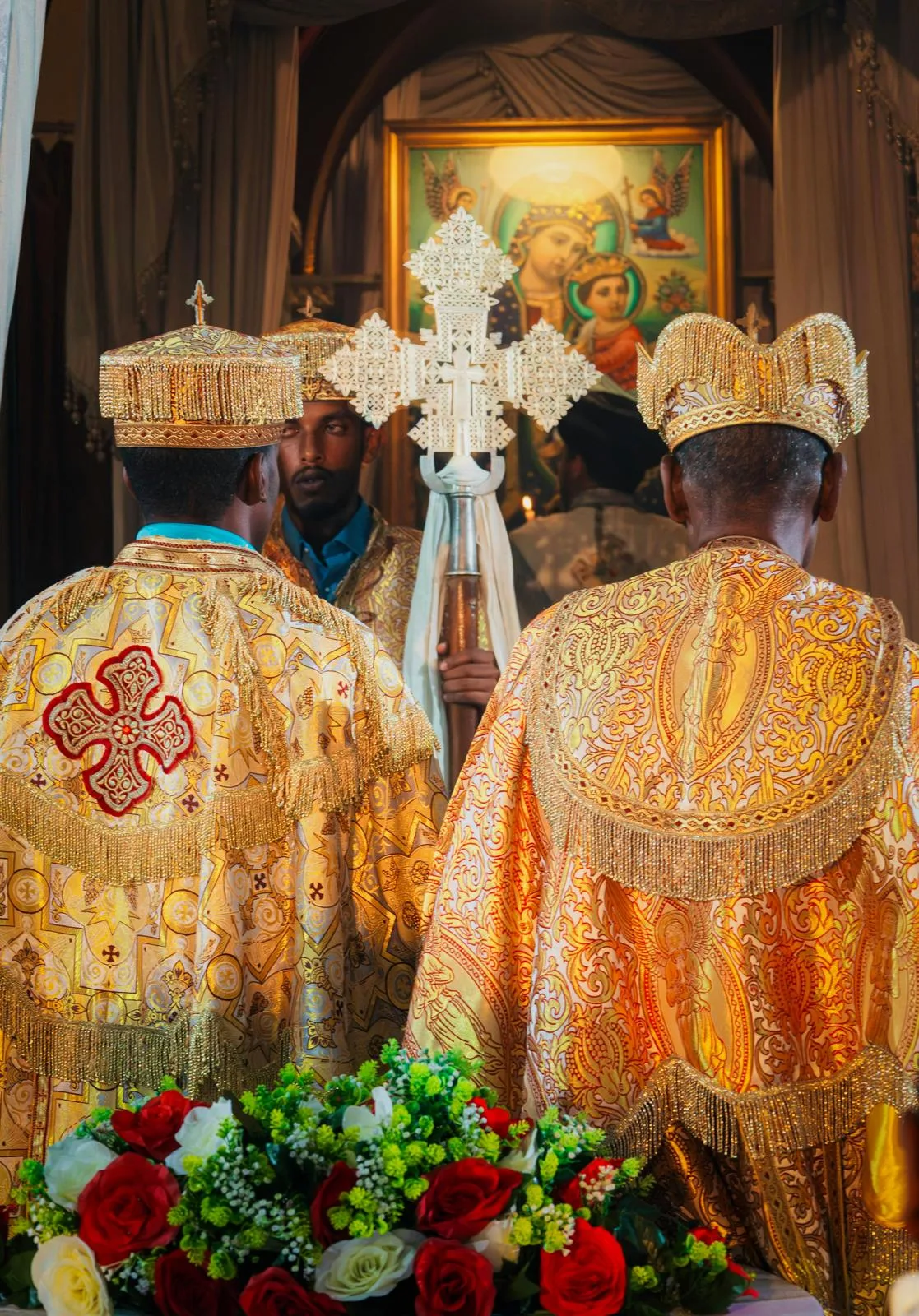
The kingdom of Aksum, located in what is now Ethiopia, was among the first Christian countries in the world. Since its conversion in the fourth century, the Ethiopian Orthodox Tewahedo Church has continuously held a dominant role in the country’s religious landscape, reflecting its profound influence on Ethiopian civilization and national culture. The Church’s doctrine emphasises Tewahedo, the unified nature of Christ to differentiate it from other Orthodox traditions. Beyond its theological influence, the Church functioned as a cornerstone of Ethiopian civilisation, serving as the custodian of the Ethiopian national identity, the provider of education and law, and it the defender of Ethiopian liberties against foreign intervention for centuries (Berhanu, 2026).
Today, Ethiopia is religiously diverse. While majority of the population adhere to Christianity, a third of the population follows Islam, and the harmony between religions is long documented (Edwards, 2025). In the past few years, however, religion has been used as a justification for tension and conflicts by the government, allowing those in power to manipulate policies and strategies against different ethnic groups.
While the Ethiopian Constitution formally recognises the separation of religion and state, guaranteeing religious freedom and secularism, the reality is different. Different governments have tried to limit Ethiopian Orthodox Tewahedo Church (EOTC)’s influence, intervening in its affairs to achieve political objectives (Liyew, 2024). In recent years, anti-Orthodox campaigns have intensified. The escalation of violence against EOTC has also affected the ethnic Amharas (DNE Africa, 2025). This overlap between religious identity and ethnicity blurs the nature of persecution, raising questions as to whether the violence is primarily ethnically or religiously motivated.
These developments raise serious concerns regarding compliance with international human rights standards. Freedom of thought and religion is clearly protected by Article 18 of the International Covenant on Civil and Political Rights (ICCPR), of which Ethiopia has been a signatory state since 1993. Conversely, systematic violence directed towards ethnic groups constitutes crimes against humanity, or potentially even genocide, under international law.
Ethnic Federalism and Amhara Violence
Referenced multiple times in the Bible, Ethiopia holds great significance in Christian history, making the violence against Amhara Orthodox Christians paradoxical. To fully understand the roots of this violence, it is necessary to move beyond religion and examine the wider political framework established under the 1994 Constitution.
The 1994 Constitution introduced under Meles Zenawi establishes a system of ethnic federalism, dividing the country based on ethnic lines into nine states (Cullum, 2025). In principle, this system gives right to self-determination, stronger autonomy and ethnic representation in institutions (Alemayehu, 2025). However, the political incentives included in the system do little to encourage coexistence between ethnic groups, instead fuelling violent competition for resources and power (Cullum, 2025). The Amhara people are one of the largest ethno-linguistic groups in Ethiopia and yet are continuously marginalised and targeted against under the policies and the ethnic federalist structure. Since the establishment of separate ethic sub-states, Amhara civilians, mostly Christians, have been mutilated, massacred, and harassed for promoting Ethiopian unity instead (DNE Africa, 2025). As the Church continues to support Ethiopianism, it directly confronts the ethno-nationalist policies of the ruling regime. This begs the question: are the Amhara people are targeted because of their religion or because of their ethnicity?
The violence against Amhara Orthodox Christians has different reasons. The weaponisation of ethnic politics since 1994 has enabled religion to be instrumentalised, serving political needs, and resulting in the demonisation of the Amhara people and, by extension, the EOTC (Biru, 2026). The EOTC is, in fact, perceived as a threat to the ruling regime due to its cultural significance of fostering Amhara hegemony (Biru, 2026). Additionally, perceptions of historical dominance attributed to the Amhara and their association with the EOTC have fuelled resentment among other groups. Hostility towards Amhara Orthodox Christians, therefore, does not solely stem from ethnicity, but deep political implications.
Another factor contributing to the present-day violence is the lack of accountability after the Tigray War and the controversies of the Pretoria Peace Agreement (International Crisis Group, 2023). The peace deal did not stop violence in other areas beyond Tigray, and it has allowed Oromo Special Forces (OSF) and the Oromo Liberation Army (OLA) to continue severe violence targeting the Amharas (Carpenelli and Fagiolo, 2023).
As a result, the Amhara Orthodox community continue to be marginalised and targeted for a few reasons. First, the long-standing separation based on ethnicity has made them an easy target. Second, the systematic exclusion of Amhara elites from the government to maintain an Oromo-dominated coalition. Third, Amhara association with the EOTC continues to be perceived as a threat to the regime because of its strong cultural and spiritual influence. The violence against Amhara Orthodox Christians should therefore be understood in terms of the greater context of politics and historical roots.
Institutional Persecution
The patterns of violence and oppression against the Church began during the communist junta, the Derg, ruling in 1974. Guided by Marxist-Leninist ideology, religion was viewed as a threat that had to be eradicated, and the influence of the EOTC was considered incompatible with the idea of a socialist state. As a result, state policy has increasingly aimed at deconstructing the Church’s influence by targeting the clergy and confiscating its economic foundation (Getahun, 2025a). This marked the beginning of a systematic effort to diminish the institutional and cultural power and social influence of the Church.
Following the fall of the Derg in 1991, the Tigray People’s Liberation Front (TPLF) assumed power and formed a coalition government. While the new government formally endorsed religious freedom by signing on to multiple international legal frameworks, the introduction of the ethnic federalist system significantly undermined the efforts. The prioritisation of ethnolinguistic identity indirectly weakened the EOTC by intervening in Church affairs and leadership (DNE Africa, 2025).
Under the leadership of Abiy Ahmed since 2018, concerns regarding the treatment of Amhara Orthodox Christians have substantially increased. Unlike its predecessors, his actions have been characterised by direct forms of confrontation instead of policy constraints (Getahun, 2025a). The government has perpetually taken action to limit Amhara influence, such as the disbanding of the Amhara Special Forces while allowing other regional forces to continue (Chanie, 2025).
In 2023, the federal government had declared a state of emergency due to escalating conflict in the Amhara region, between Amhara forces, Fano, and the Ethiopian National Defence Force (ENDF) (Amnesty International, 2024). Restrictions during these six months resulted in numerous arbitrary arrests and detentions, with reports widely criticising the ethnic undertone of these measures (Ethiopian Human Rights Commission, 2024). During the state of emergency, a national ban on the public display of religious symbols was also implemented (Mekonen, 2025). Religious broadcasts were also monitored and censored on the grounds that they contained thoughts promoting political dissent.
Under the campaign, the regime’s armed forces, especially the ENDF, in collaboration with the OLA and OSF, carried out strikes and attacks against Amhara civilians, churches and places of worships important to the EOTC (Amhara Association of America, 2025). Critics have argued that these operations, including drone strikes, sexual violence, mass killing, and executions, all point towards a campaign of collective punishment (Getahun, 2025b).
Due to these widespread attacks, the Amhara population is now also the largest displaced community within Ethiopia, fleeing attacks and discrimination from armed groups and governmental forces. Significantly, armed groups have also been targeting Amharas in Oromia and other regions (Human Rights Watch, 2022).
Not only is the state directly involved with the attacks reported recently, but it also continues to do so with impunity. The level of violence employed by armed forces also undercuts the claim of bringing law and order to the region (Human Rights Watch, 2024). Essentially, the combination of church destruction and the targeting of Amhara populations clearly signal the existence of institutional persecution against Amhara Orthodox Christians.
Is There Evidence of a Genocide?
From the systemic exclusion of Amharas from political participation and the repression of Amhara political leaders, to the government ignoring attacks, or even facilitating them, the vulnerability of the Amharas is worsening. Moreover, Prime Minister Abiy Ahmed’s publication, The Path of Assimilation, has often been criticised for its perception of a national identity that ignores regional and ethnic diversity.
The International Commission of Human Rights Experts on Ethiopia has undertaken an investigation to document violations against the Amhara people, sexual violence against ethnic Amhara women and girls, the killing of Amhara civilians, and other acts (UN Human Rights Council, 2023). Followed up by the statement made by Alice Nderitu, the United Nations Under-Secretary-General and Special Adviser on the Prevention of Genocide, there is adequate evidence pointing to a heightened risk of genocide since 2023 (UN, 2023). Multiple reports have documented the patterns of abuse targeting Amhara communities, particularly those affiliated with the EOTC, with some critics appealing for the crisis to be officially labelled as a genocide (Plaut, 2025).
Genocide is codified as a core crime under international law in the Convention on the Prevention and Punishment of the Crime of Genocide (Genocide Convention) as “acts committed with the intent to destroy, in whole or in part, a national, ethnical, racial or religious group”, including acts of killing, causing harm, preventing birth, and forcibly transferring children (Genocide Convention Article 2, 1948). Thus, to claim a genocide exists against the Amhara Orthodox Christians, one must first establish whether the government has intent to destroy a group, and whether the Amhara Orthodox Christians constitute either an ethnic group or a religious group.
In the case of the Amhara people, there is little ambiguity regarding group status. Because the central Ethiopian government has created state lines based on ethno-linguistic groups, the Amhara can be considered an ethnic group. Given the overlap between Amhara identity and their religious beliefs to the EOTC, they may also constitute a religious group. Depending on the form of analysis, an argument to include the targeting of EOTC followers in other regions in Ethiopia can also be made. Establishing the element of intent, however, is more contentious. Direct evidence of intent is hard to establish, as no official speech or declaration has been made by the government.
Following the dissolution of the Amhara Special Forces by the federal government, the Amhara people were left vulnerable against state armed forces. This change in security coincides with the increased reports of killings carried out by the OSF and the ENDF. Human Rights Watch (2024) has further reported on hospitals and healthcare workers being bombarded to strip Amhara soldiers of their right to healthcare and life. The destruction of the healthcare system is not only a violation of international humanitarian law itself, but also significantly increases mortality of the targeted population when carried out systematically.
Sexual violence has also been widely reported in conflict areas (DNE Africa, 2026). International criminal law recognises rape and sexual violence as elements of crimes against humanity and, potentially genocide, when committed with intent to destroy. Additionally, aid agencies’ access remains restricted in Amhara, with workers either kidnapped, tortured or face other incidents of violence (Human Rights Watch, 2025).
There also appears to be deliberate targeting of Amhara intellectuals and properties. Millions of Amhara children are left without access to education due to the collapse of state institutions and the bombardment of schools (Plaut, 2025). It is argued that the attacks of education and intellectual elites indirectly erode social cohesion, institutional memory, and the capacity for political organisation (Plaut, 2026).
Large-scale displacement has forced many Amhara people into camps where access to everyday necessities is limited (Carpanelli and Fagiolo, 2023). These mass atrocities are not limited to Amhara people in the Amhara region- Amhara residents in Oromia region have experienced heightened violence since 2023 (Carpenelli and Fagiolo, 2023). While the displacement of Amharas in Ethiopia is most likely a consequence of other actions, it does not deny the fact that displacement in certain circumstances calculated to bring about the physical destruction of the group would also constitute as genocide (ICJ Croatia v Servia, 2015).
Conclusion
The situation facing Amhara Orthodox Christians in Ethiopia is complex. The violence against the EOTC cannot solely be understood through religious persecution but emerges from a broader political context shaped by ethnic federalism and the institutionalisation of ethnicity. The patterns of violence point towards a systematic targeting of this community. Combined with widespread impunity and the participation of governmental forces, the cumulative effect has the power to fragment an entire population.
Despite these alarming indicators, to classify the situation as genocide remains politically challenging. Ultimately, the classification of a genocide should not underscore the urgency of protection and prevention that is necessary in any case. This targeting of Amhara Orthodox Christians is not an isolated event, but part of a wider political movement to consolidate power. Addressing this requires not military intervention, but humanitarian responses and accountability, combined with institutional reforms to protect the coexistence of ethnic groups.
Bibliography
Alemayehu, G. (2025). Perspectives on Ethnic Federalism in Ethiopia. Walden Dissertations and Doctoral Studies. https://scholarworks.waldenu.edu/dissertations/18079/. Accessed April 7, 2026.
Amhara Association of America. (2025). Summar of Recent Recorded Drone and Air Strikes in Amhara Region, Ethiopia. https://www.amharaamerica.org/post/summary-of-recent-recorded-drone-and-air-strikes-in-amhara-region-ethiopia. Accessed April 8, 2026.
Amnesty International. (2024). Ethiopia: Authorities must stop using state of emergency law to silence peaceful dissent. Amnesty International. https://www.amnesty.org/en/latest/news/2024/02/ethiopia-authorities-must-stop-using-state-of-emergency-law-to-silence-peaceful-dissent/. Accessed April 8, 2026.
Amnesty International. (2025). Ethiopia: Urgent international action needed to end mass arbitrary detentions in the Amhara region. Amnesty International. https://www.amnesty.org/en/latest/news/2025/01/ethiopia-urgent-international-action-needed-to-end-mass-arbitrary-detentions-in-the-amhara-region/. Accessed April 8, 2026.
Berhanu, G. (2026). The persecution of the Ethiopian Orthodox Church: Forced conversion, derision, and systemic erasure – analysis. Eurasia Review. https://www.eurasiareview.com/27012026-the-persecution-of-the-ethiopian-orthodox-church-forced-conversion-derision-and-systemic-erasure-analysis/. Accessed April 7, 2026.
Biru, Y. (2026). Why Amhara Orthodox Christians Face Violence in Ethiopia. Borkena. https://borkena.com/2026/01/09/ethiopia-why-amhara-orthodox-christians-face-violence/. Accessed April 8, 2026.
Carpanelli, A. and Fagiolo, N. (2023). Identity and Violence: Abiy Ahmed’s Amhara genocide denial. ResetDialogues. https://www.resetdoc.org/story/identity-violence-abiy-ahmed-amhara-genocide-denial/. Accessed April 9, 2026.
Chanie, B. (2025). Understanding the conflict in Ethiopia’s Amhara Region. Centre for International Policy Studies. https://www.cips-cepi.ca/2025/01/16/understanding-the-conflict-in-ethiopias-amhara-region/. Accessed April 8, 2026.
Cullum, B. (2025). Ethiopia, the land of the Bible, brutally targeting, and killing Christians. The National Security Hour. https://www.americaoutloud.news/ethiopia-the-land-of-the-bible-brutally-targeting-and-killing-christians/. Accessed April 7, 2026.
DNE Africa. (2025). Inside Ethiopia’s Amhara Crisis: Power, Persecution, and War. Daily News Egypt. https://africa.dailynewsegypt.com/inside-ethiopia-amhara-crisis-power-war/. Accessed April 7, 2026.
DNE Africa. (2026). Amhara Fano accesses Ethiopia of genocide, demands AU intervention. Daily News Egypt. https://africa.dailynewsegypt.com/amhara-fano-accuses-ethiopia-genocide-au/. Accessed April 9, 2026.
Edwards, T. (2025). Christians face rising persecution in Ethiopia as attacks spread across Oromia. The Catholic Herald. https://thecatholicherald.com/article/christians-face-rising-persecution-in-ethiopia-as-attacks-spread-across-oromia. Accessed April 7, 2026.
Ethiopian Human Rights Commission. (2024). Annual Ethiopia Human Rights Situation Report. https://ehrc.org/download/annual-ethiopia-human-rights-situation-report-june-2023-to-june-2024/#. Accessed April 8, 2026.
Getahun, S. (2025a). The shattered cross: A chronicle of state-sanctioned persecution against Ethiopia’s Orthodox Christians. Borkena. https://borkena.com/2025/11/13/ethiopia-the-shattered-cross-a-chronicle-of-state-sanctioned-persecution-against-ethiopias-orthodox-christians/. Accessed April 7, 2026.
Getanhun, A. (2025b). Amhara Fano rebels accuse Ethiopian government of ‘genocidal war’ in response to US report. DNE Africa. https://africa.dailynewsegypt.com/amhara-fano-ethiopia-government-genocide/. Accessed April 8, 2026.
Human Rights Watch. (2022). Ethiopia: civilians in western Oromia left unprotected. https://www.hrw.org/news/2022/08/31/ethiopia-civilians-western-oromia-left-unprotected. Accessed April 9, 2026.
Human Rights Watch. (2024). Ethiopia: army attacks health care in Amhara conflict. Human Rights Watch. https://www.hrw.org/news/2024/07/03/ethiopia-army-attacks-health-care-amhara-conflict. Accessed April 8, 2026.
Human Rights Watch. (2024). Ethiopia: Military Executes Dozens in Amhara Region. Human Rights Watch. https://www.hrw.org/news/2024/04/04/ethiopia-military-executes-dozens-amhara-region. Accessed April 8, 2026.
Human Rights Watch. (2025). Ethiopia Events of 2025. Human Rights Watch. https://www.hrw.org/world-report/2026/country-chapters/ethiopia. Accessed April 9, 2025.
International Crisis Group. (2023). Ethiopia’s ominous new war in Amhara. https://www.crisisgroup.org/brf/africa/horn-africa/ethiopia/b194-ethiopias-ominous-new-war-amhara. Accessed April 9, 2026.
Liyew, D. (2024). The Politics of Secularism in Ethiopia: Repression and/or Co-option Towards EOTC. European Scientific Journal 27. https://eujournal.org/index.php/esj/article/view/17933. Accessed April 7, 2026.
Mekonen, M. (2025). Ethiopia Faces urgent religious freedom and human rights crisis. The Habesha. https://zehabesha.com/ethiopia-faces-urgent-religious-freedom-and-human-rights-crisis/. Accessed April 8, 2026.
Peebles, G. (2025). We’re still breathing: Amhara genocide in Etiopia. CounterPunch. https://www.counterpunch.org/2025/11/07/were-still-breathing-amhara-genocide-in-ethiopia-2/. Accessed April 7, 2026.
Plaut, M. (2025). Amhara’s sskies of terror: ethnic cleansing and the fight for justice. https://martinplaut.com/2025/06/04/amharas-skies-of-terror-ethnic-cleansing-and-the-fight-for-justice/. Accessed April 8, 2026.
Plaut, M. (2025). Ethiopian attacks on Amhara bring imprisonment and death. https://martinplaut.com/2025/03/18/ethiopian-attacks-on-amhara-bring-imprisonment-and-death/. Accessed April 9, 2025.
Plaut, M. (2026). Targeting the Amhara intelligentsia: killings, detentions, and the legal threshold of genocide under international law. https://martinplaut.com/2026/02/06/targeting-the-amhara-intelligentsia-killings-detentions-and-the-legal-threshold-of-genocide-under-international-law/. Accessed April 9, 2026.
UN Human Rights Council. (2023). Comprehensive Investigative findings and legal determinations. https://www.ohchr.org/en/hr-bodies/hrc/ichre-ethiopa/index. Accessed April 9, 2026.
United Nations. (2023). UN warns of heightened risk of genocide and atrocity crimes in Ethiopia. https://news.un.org/en/story/2023/10/1142142. Accessed April 9, 2026.