
Introduction
The presence of dozens of languages and 50 million people makes Sudan not only the third-largest country on the African continent, but also a territory characterised by extraordinary geographic and cultural diversity. International narratives often reduce the Sudanese conflict to a clash between the Muslim ‘Arab’ north and the African Christian or animist south, without taking into account the intrinsic centre–periphery dynamic (Minority Rights Group International, 1995). This simplification obscures the deep dynamics of a country in which “elites enriched themselves by exploiting the human and material resources of the periphery” alongside an embedded culture of political violence (Democracy in Africa, 2025; Minority Rights Group International, 1995; Willis & Berridge, 2025). The armed conflict, which erupted in 2023 represents not only an escalation of the conflict between the Sudanese Armed Forces (SAF) and the paramilitary Rapid Support Forces (RSF) but also a change in the nature of violence, which has become targeted and selective (United Nations, 2025; United Nations Office for the Coordination of Humanitarian Affairs, 2024; 2025; Amnesty International, 2025). The intensification of RSF campaigns in the south-western Sudanese areas has led to ‘ethnically motivated’ acts of violence as part of a campaign in which the conflict itself becomes instrumental in accelerating a systematic ethnic cleansing targeting non-Arab communities (Global Centre for the Responsibility to Protect, 2025; House of Lords Library, 2025; International Crisis Group, 2025; Ethirajan, A., & Booty, N., 2025; Amnesty International, 2025; The Economist, 2025; Centre for Preventive Action, 2025; Mureithi, 2025).
These acts recall a past of violence, as was the case in the 2000s when more than 200,000 people were killed in Darfur by the Arab Janjaweed militia, which later evolved into the RSF and was supported by the then-dictator Omar al-Bashir (Mureithi, 2025). Despite the accusations of genocide and the sentences of the International Criminal Court (ICC) for war crimes and crimes against humanity issued against Sudanese government officials, Militia/Janjaweed leaders, and also leaders of the Resistance Front, a climate of internal impunity continues to allow the perpetrators of violence to retain political positions (Global Centre for the Responsibility to Protect, 2025; International Criminal Court, n.d.).
In this context, this article seeks to analyse the historical and political construction of the marginalisation of non-Arab communities in Sudan, examining its origins during the British colonial period, its institutionalisation under the authoritarian regime, and the renewed consolidation of the ethnic issue in the current conflict. The aim is to provide a dynamic reconstruction that demonstrates how current violence is closely connected to the colonial past and to internal political fractures. Understanding these dynamics is essential because of their power in shaping the trajectory of the Sudanese conflict and its impact on the civilian population.
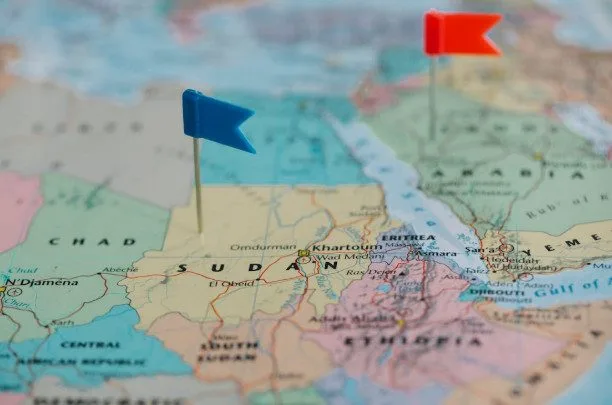
Colonial Legacies and the Structural Foundations of Non-Arab Marginalisation
Current dynamics of violent practices in the conflict have their roots in the British colonial period, through the implementation of policies that contributed to the establishment of divisions and disparities between central territories, around the capital Khartoum and peripheral territories (Willis & Berridge, 2025). Indirect rule policies, applied by the British and based on governing through local intermediaries rather than direct administration, did not allow the development of administrative structures along the same lines between different territories of the country, but instead characterised the early period of British colonialism, with a differentiation of policies for the management of so-called ‘rural’ areas that consolidated legal, cultural, and economic differences (Minority Rights Group International, 1995; Willis & Berridge, 2025). In 1930, the Southern Policy and the Closed District Ordinance limited contacts between centre and periphery regions, preventing the economic, social, and educational development of the latter, thereby producing strong disparity and laying the foundations for subsequent political and social fractures (Minority Rights Group International, 1995).
Following independence, which was obtained in 1956, Sudan found itself deeply divided internally between the wealthier northern regions, mostly Arab, and the southern regions of the country, predominantly Christian or animist, and thus failed to create a true sense of national identity (Centre for Preventive Action, 2025; House of Lords Library, 2025; Farah, 2025; Global Centre for the Responsibility to Protect, 2025). This geographic division is at the same time an illustrative perception closely interconnected with a centre-periphery dynamic, which is instrumental in understanding the role of ethnic distortion for political purposes (Minority Rights Group International, 1995). However, it is not sufficient on its own to explain the causes of the current conflict or to inform effective approaches to peace and reconciliation (Minority Rights Group International, 1995).
The two long civil wars, culminating in 2011 with the creation of the Republic of South Sudan, only worsened the marginalisation of peripheral regions such as Darfur, where the main non-Arab communities of the country live (Centre for Preventive Action, 2025; House of Lords Library, 2025; Bozbaş, 2025). Fur, Zaghawa, and Masalit, historically excluded from decision-making processes, as well as from equitable access to essential services, security, and development, have fueled polarisation and conflicts (Centre for Preventive Action, 2025; House of Lords Library, 2025; Bozbaş, 2025).
Following the 1989 coup, Omar al-Bashir came to power and ruled until 2019, progressively imposing a policy of discrimination against the non-Arab population, institutionalising it and turning what had previously been merely a territorial marginalisation into an ethnic one (Centre for Preventive Action, 2025). Through a strict interpretation of Sharia and the use of private militias and morality police, such as the Janjaweed militia, the regime aimed to consolidate Arab-Muslim political power, laying the foundations for the outbreak of the Darfur war in 2003 (Centre for Preventive Action, 2025). The genocide that occurred during that conflict, condemned by the International Criminal Court (ICC), represented a breaking point, intensifying internal fractures, which culminated in 2019 with a coup carried out by the SAF, commanded by General Abdel Fattah al-Burhanand the RSF, led by Mohamed Hamdan ‘Hemedti’ Dagalo (Centre for Preventive Action, 2025; House of Lords Library, 2025).
Despite attempts to mitigate Sudan’s economic difficulties and achieve greater stability through the establishment of the Transitional Sovereignty Council under Abdalla Hamdok (Centre for Preventive Action, 2025; House of Lords Library, 2025). The ongoing struggle for power among the leaders of armed groups, only slowed the country’s transition process, leading to firefights between SAF troops deployed in Khartoum and RSF soldiers elsewhere in Sudan, and ultimately causing the outbreak of Sudan’s current conflict (Centre for Preventive Action, 2025; House of Lords Library, 2025). The assassination of the governor of Darfur in June 2023, who had accused the RSF of genocidal attacks against ethnic minorities in the region, caused a further escalation of violence, prompting numerous NGOs to report acts of ethnic cleansing and war crimes carried out particularly by the RSF in western Darfur (Centre for Preventive Action, 2025).
Recent Developments in 2025 and the Intensification of Targeted Violence Against Non-Arab Minorities
The Sudanese situation in recent years is widely defined as one of the most difficult periods in its history, particularly following the conflict that broke out in April 2023 between the SAF and the RSF (United Nations, 2025; United Nations Office for the Coordination of Humanitarian Affairs, 2024; 2025; Amnesty International, 2025). Recent developments highlight not only a worsening of the conflict and a systematic targeting of civilians but also a change in the nature of violence, which has taken on targeted and selective characteristics.
Between the end of 2024 and the beginning of 2025, the RSF intensified military campaigns in western and northern Darfur, striking areas inhabited particularly by non-Arab communities such as the Fur, Masalit, Zaghawa, and Berti (House of Lords Library, 2025; International Crisis Group, 2025; Ethirajan, A., & Booty, N., 2025; Amnesty International, 2025). Consequently, in the last weeks of October 2025, the situation further worsened, with the conquest of the city of El-Fasher by RSF forces, forcing the SAF to retreat and taking hold of most of Western Sudan (House of Lords Library, 2025; International Crisis Group, 2025; Ethirajan, A., & Booty, N., 2025; Amnesty International, 2025).
The occupation of the region by the RSF was accompanied by serious violations, documented through satellite imagery and reports by humanitarian organisations monitoring the area, resulting in war crimes, including the deliberate burning of homes and the destruction of areas of interest (House of Lords Library, 2025; International Crisis Group, 2025; Plett Usher & Fleming, 2025; Fleming & Kagoe, 2025; Booty et al., 2025; Amnesty International, 2025; Brookfield & Abdo Kahin, 2025). In particular, raising concerns of genocide, according to UN rights chief Volker Türk and confirmed by Yale’s Humanitarian Research Lab (HRL), the ongoing violence is ‘ethnically motivated’ against non-Arab communities, occurring door to door, suggesting the implementation of a military strategy that shows patterns of an intentional and systematic process of ethnic cleansing against the Fur, Zaghawa, and Berti, through executions and forced displacement (International Crisis Group, 2025; The Economist, 2025; Amnesty International, 2025; Centre for Preventive Action, 2025; Mureithi, 2025; Office of the United Nations High Commissioner for Human Rights, 2025; Brookfield & Abdo Kahin, 2025).
Ethically Targeted Violence and Humanitarian Crisis: from Famine to Forced Displacement
Already critical before April 2023, the conditions of the conflict have shown significant trends in the killings of civilians, forced displacement, man-made famine, and a collapsing healthcare system, effectively making Sudan “one of the worst humanitarian nightmares in recent history”, as declared by the head of the UN Office for Humanitarian Affairs and Emergency Relief (Centre for Preventive Action, 2025). Aggravating the situation is the region’s notable susceptibility to the impact of climate change, with the occurrence of numerous deadly floods (United Nations, 2025; United Nations Office for the Coordination of Humanitarian Affairs, 2025).
The lack of access for humanitarian organisations only worsens the precarious situation of civilians and non-Arab minorities, placing Sudan eighth globally in terms of humanitarian severity, as described by the analysis of the 2024 INFORM Risk Index (Inter-Agency Standing Committee & European Commission, 2024; United Nations, 2025; United Nations Office for the Coordination of Humanitarian Affairs, 2025; Amnesty International, 2025; Centre for Preventive Action, 2025; House of Lords Library, 2025). The humanitarian crisis, already characterised by internal displacement affecting 12 million people, further worsened after the fall of El Fasher on 26 October 2025, leading to the displacement of a further 200,000 people (United Nations Office for the Coordination of Humanitarian Affairs, 2024; Le Poidevin, 2025).
Specifically, the ongoing humanitarian disaster is defined as man-made, since the RSF and its allies, as confirmed by recent developments in El Fasher and Kordofan, are accused of using starvation as a method of warfare, through the deprivation of essential survival items, including food and water, and medicine (House of Lords Library, 2025; Nyagoah, 2025; United Nations Office for the Coordination of Humanitarian Affairs, 2024). Such actions are punishable under international law as the crime against humanity of extermination, aggravated by acts of “murder, torture, enslavement, rape, sexual slavery, sexual violence, forced displacement, and persecution on ethnic, gender, and political grounds” (House of Lords Library, 2025; Nyagoah, 2025; United Nations Office for the Coordination of Humanitarian Affairs, 2024).
The violence that tends to target civilians is based on perceived affiliation. Currently, the conflict has seen the increasing advance of RSF forces in western and northern Darfur, striking areas mainly inhabited by non-Arab communities (Office of the United Nations High Commissioner for Human Rights, 2025). In particular, women are among the most affected segments of the population, as sexual and gender-based violence and exploitation are also used as tools of warfare to intimidate and control communities, numbers which have intensified since April 2023 (United Nations Office for the Coordination of Humanitarian Affairs, 2024).
The severity of the crisis underlines the necessity of conflict de-escalation and unrestricted humanitarian relief access, but in particular, greater international attention. OCHA has repeatedly called on the parties to the conflict to facilitate humanitarian access through the launch of a Famine Prevention Plan to distribute lifesaving aid, cash assistance, and community-based interventions (United Nations Office for the Coordination of Humanitarian Affairs, 2024).
Conclusion
The analysis proposed shows how the understanding of the violence perpetrated in Sudan since 2023, which can be placed within the framework of crimes against humanity and war crimes, would not be possible without observing the continuity between the colonial period, authoritarian governance, and the policies of instrumentalisation of ethnicity. The administrative divisions applied during British colonialism indeed laid the foundations for the marginalisation of non-Arab communities, later consolidated during the regime of Omar al-Bashir and instrumentalised in the recent conflicts, creating fertile ground for a systematic use of violence by state and paramilitary actors. The ethnicisation of the conflict therefore emerges as a central element of the current violence, the culmination of a long history of political, economic, and social exclusion in which the resort to violence has become a systemic and structural act.
The interconnection of these elements has led to an unprecedented humanitarian crisis, defined as man-made because RSF forces use sexual violence, starvation, and targeted killings against non-Arab communities as true tools of warfare, in order to ensure that the conflict itself accelerates a process of ethnic cleansing.
However, it is important to underline that the ethnic-religious dimension is not sufficient to explain the conflict in its entirety. Understanding the historical and political genealogy is essential for developing effective peace and reconciliation responses, without reducing the conflict to a simple clash between Arabs and non-Arabs. Such a view would oversimplify the complexity of the internal dynamics without addressing the structural roots of marginalisation. An approach that recognises the responsibilities of the colonial period, of post-independence governments, and of the use of ethnic identity as a tool of warfare, is therefore indispensable for contributing to a complete understanding of the conflict and its implications for the civilian population.
Bibliography
Amnesty International. (2025, October 3). Sudan: RSF must end attacks and further suffering of civilians in El Fasher. https://www.amnesty.org/en/latest/news/2025/10/sudan-el-fasher/
Booty, N., Foulkes, I., & Plett Usher, B. (2025, November 14). Mass killings probe in Sudan will hold culprits to account, vows UN. BBC News. Retrieved November 19, 2025, from https://www.bbc.com/news/articles/c70jd4elgwzo
Bozbaş, G., (2025). Ethnic Conflicts and Marginalization in Sudan: Pursuing Sustainable Peace. İnsan ve Toplum Dergisi. 15(3), 40-70.
Brookfield, K., & Abdo Kahin, R. (2025, October 31). Yale lab reports mass killings in Sudan, calls for student activism. Yale Daily News. Retrieved November 19, 2025, from https://yaledailynews.com/blog/2025/10/31/yale-lab-reports-mass-killings-in-sudan-calls-for-student-activism/
Centre for Preventive Action. (2025, November 6). Civil War in Sudan. Council on Foreign Relations. https://www.cfr.org/global-conflict-tracker/conflict/power-struggle-sudan
Ethirajan, A., & Booty, N. (2025, October 31). More than 60,000 flee Sudanese city after its capture by RSF militia – UN. BBC News. Retrieved November 19, 2025, from https://www.bbc.com/news/articles/c0qppe4vdevo
Farah, F. (2025, May). ‘No race, no tribe’: The December revolution’s struggle for an inclusive, national identity. Chr. Michelsen Institute. Retrieved November 24, 2025, from https://www.cmi.no/publications/9555-no-race-no-tribe-the-december-revolutions-struggle-for-an-inclusive-national-identity
Fleming, L., & Kagoe, R. (2025, November 4). Drone strike hits funeral in Sudan, killing many mourners. BBC News. Retrieved November 19, 2025, from https://www.bbc.com/news/articles/c0rp4z0rgleo
Global Centre for the Responsibility to Protect. (2025, November 14). Sudan. Retrieved November 24, 2025, from https://www.globalr2p.org/countries/sudan/
House of Lords Library. (2025, November 17). Humanitarian situation in Sudan: November 2025. UK Parliament. Retrieved November 19, 2025, fromhttps://lordslibrary.parliament.uk/humanitarian-situation-in-sudan-november-2025/ lordslibrary.parliament.uk
Inter-Agency Standing Committee & European Commission. (2024). INFORM report 2024: 10 years of INFORM. Publications Office of the European Union. Retrieved November 19, 2025, from https://data.europa.eu/doi/10.2760/555548
International Criminal Court. (n.d.). Situation in Darfur, Sudan. Retrieved November 25, 2025, from https://www.icc-cpi.int/darfur
International Crisis Group. (2025, October). Sudan – CrisisWatch database. Retrieved November 19, 2025, from https://www.crisisgroup.org/crisiswatch/database?location%5B%5D=14
Le Poidevin, O. (2025, November 11). Women in Darfur report rape, lost children amid Sudan violence, UN says. Reuters. Retrieved November 25, 2025, from https://www.reuters.com/world/africa/women-darfur-report-rape-lost-children-amid-sudan-violence-un-says-2025-11-11/
Minority Rights Group International. (1995, August 1). Sudan: Conflict and minorities. Retrieved November 25, 2025, from https://minorityrights.org/resources/sudan-conflict-and-minorities/
Mureithi, C. (2025, November 3). At least 36,000 Sudanese have fled since fall of El Fasher to RSF, says UN agency. The Guardian. Retrieved November 25, 2025, from https://www.theguardian.com/world/2025/nov/03/sudanese-refugees-el-fasher-rsf-tawila-un
Mureithi, C., (2025, October 28). Mass killings reported in Sudanese city seized by paramilitary group. The Guardian. Retrieved November 19, 2025, from https://www.theguardian.com/world/2025/oct/28/mass-killings-reported-el-fasher-sudan-paramilitary-group-rapid-support-forces The Guardian+1
Nyagoah, T. P. (2025, June 19). South Sudan’s man‑made humanitarian catastrophe. Human Rights Watch. Retrieved November 24, 2025, from https://www.hrw.org/news/2025/06/19/south-sudans-man-made-humanitarian-catastrophe
Office of the United Nations High Commissioner for Human Rights. (2025, October 27). Sudan: Appalling reports of summary executions and other serious violations as RSF makes major territorial gains in El Fasher and North Kordofan. OHCHR. Retrieved November 19, 2025, from https://www.ohchr.org/en/press-releases/2025/10/sudan-appalling-reports-summary-executions-and-other-serious-violations-rsf
Office of the United Nations High Commissioner for Human Rights. (2025, September 5). “A war of atrocities:” Sudan civilians deliberately targeted, UN Fact-Finding Mission reports international crimes on large scale. Retrieved November 25, 2025, from https://www.ohchr.org/en/press-releases/2025/09/war-atrocities-sudan-civilians-deliberately-targeted-un-fact-finding-mission
Plett Usher, B., & Fleming, L. (2025, October 30). Sudan RSF chief promises investigation as anger mounts over El-Fasher killings. BBC News. Retrieved November 19, 2025, from https://www.bbc.com/news/articles/cq50jg5nv45o
Salhani, J. (2025, October 28). Yale report finds evidence of RSF mass killings in Sudan’s El Fasher. Al Jazeera. Retrieved November 24, 2025, from https://www.aljazeera.com/news/2025/10/28/yale-report-finds-evidence-of-rsf-mass-killings-in-sudans-el-fasher
The Economist. (2025, November 7). Hemedti: warlord, power-broker and the new sultan of Darfur. Retrieved November 19, 2025, from https://www.economist.com/middle-east-and-africa/2025/11/07/hemedti-warlord-power-broker-and-the-new-sultan-of-darfur
United Nations Office for the Coordination of Humanitarian Affairs. (2025, November 18). Sudan. Retrieved November 19, 2025, from https://www.unocha.org/sudan
United Nations Office for the Coordination of Humanitarian Affairs. (2024, December). Sudan: Humanitarian needs and response plan – Executive summary, Humanitarian Programme Cycle 2025. OCHA.
United Nations. (2025, November 12). Sudan: Migration chief hears horrific accounts of exodus from El Fasher. Retrieved November 24, 2025, from https://news.un.org/en/story/2025/11/1166347
UNHCR. (2025). UNHCR highlights difficulties in aid delivery amid escalating conflict in Sudan. Retrieved November 24, 2025, from https://www.unhcr.org/news/briefing-notes/unhcr-displaced-civilians-fleeing-sudan-s-darfur-kordofan-regions-navigate
United Nations. (2025, November 18). Sudan conflict. UN News. Retrieved November 19, 2025, from https://news.un.org/en/focus/sudan-conflict
Willis, J., & Berridge, W. (2025, November 11). Why has Sudan descended into mass slaughter? The answer goes far beyond simple ethnic conflict. Democracy in Africa. Retrieved November 25, 2025, from https://democracyinafrica.org/why-has-sudan-descended-into-mass-slaughter-the-answer-goes-far-beyond-simple-ethnic-conflict/