
4 November 2026 | Brussels
Rachele Roggi, EU Team, Global Human Rights Defence.
The European Parliament’s Committees on Civil Liberties, Justice and Home Affairs (LIBE) and on Women’s Rights and Gender Equality (FEMM) met in Brussels in order to discuss the progress made towards implementing Directive (EU) 2024/1385, as well as the remaining legal, institutional and societal challenges in combating violence against women and domestic violence across the European Union.
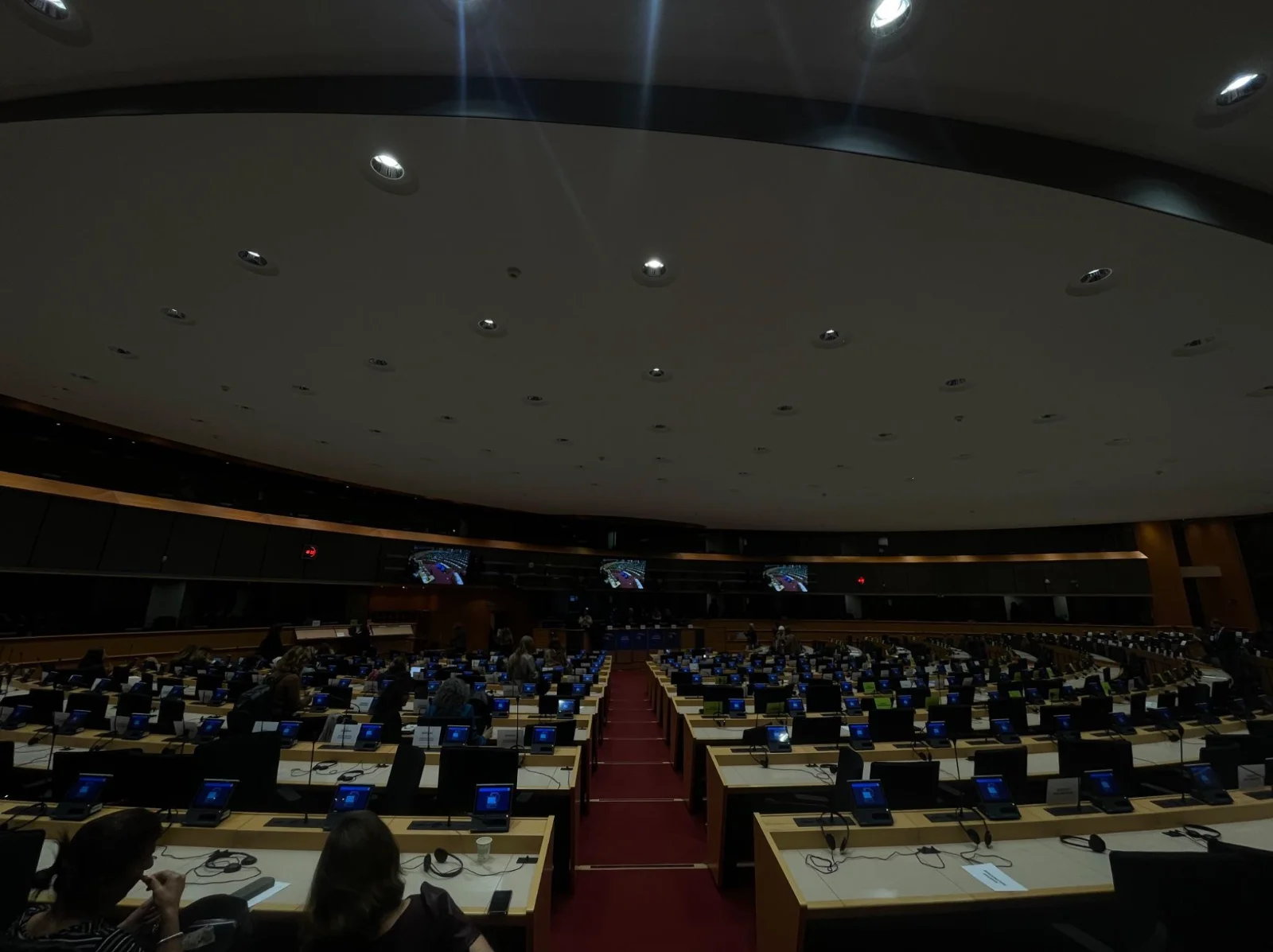
Chaired by Ms Lina Gálvez, Chair of the FEMM Committee, the meeting brought attention to the persistent underreporting and invisibility of gender-based violence, highlighting the need to move beyond formal legislative commitments towards effective, measurable and accountable implementation.
From Legislative Commitments to Effective Protection
Opening the discussion, Ms Gálvez stressed that the effectiveness of the Directive must be assessed not only through its transposition into national legislation, but also through the concrete protection and support provided to victims. Member States must establish effective mechanisms that can be monitored and evaluated, ensuring that legal commitments translate into tangible improvements in women’s safety, dignity and freedom.
Particular attention was given to Article 44 of Directive (EU) 2024/1385, which requires Member States to establish systems for collecting, producing and disseminating statistics on violence against women and domestic violence. These include data on reported offences, convictions, victims killed, shelter capacity and calls to national helplines. The development of comparable data, supported by common standards established in cooperation with the European Institute for Gender Equality (EIGE), is essential to identifying gaps, measuring progress and ensuring institutional accountability.
The discussion also underlined the importance of strengthening law enforcement responses, access to justice, specialist support services and protection mechanisms. Without reliable data and adequate resources, the effectiveness of national policies remains difficult to assess, while victims continue to face barriers to reporting and obtaining protection.
The Central Role of Consent and the Need for Further Legal Progress
A central issue discussed during the meeting was the recognition of consent in the context of sexual violence. Article 35 of the Directive represents an important step by requiring Member States to promote the central role of consent in sexual relationships, understood as being given voluntarily and as an expression of a person’s free will. It also requires awareness-raising initiatives, consent-based educational materials and rape-prevention programmes.
This approach reinforces the need to move away from victim-blaming attitudes and towards a culture grounded in bodily autonomy, mutual respect and sexual integrity. Nevertheless, the Directive does not establish a harmonised EU-wide criminal definition of rape based on the absence of consent. The absence of a common criminal-law standard remains a significant gap in the European framework and was a key concern in the discussion.
The meeting highlighted the need for a broader cultural and educational transformation, supported by sustained initiatives across educational institutions, public services and society as a whole. Challenging harmful gender stereotypes, addressing victim-blaming and ensuring that consent is understood as fundamental to sexual relationships must become integral components of prevention policies.
The Role of the European Commission and Member States
Pinuccia Contino, Deputy Director for Equality and Head of Unit for Gender Equality at the European Commission’s Directorate-General for Justice and Consumers (DG JUST), addressed the importance of institutional support for victims and effective access to justice. She also outlined the Commission’s implementation workshops, which provide Member State representatives with opportunities to discuss the Directive’s provisions and seek guidance on transposing them into national law.
With the transposition deadline set for 14 June 2027, Member States must now accelerate their efforts to ensure that national legislation and institutional practices meet the Directive’s requirements. The risk of minimal or uneven implementation across the Union makes effective monitoring by the European Commission particularly important. Where Member States fail to fulfil their obligations, the Commission must be prepared to use the infringement procedures available under EU law.
Beyond Minimum Standards: the Need for Stronger European Action
The discussions ultimately highlighted that adopting legislation is only the first step towards ending violence against women. Effective implementation requires political commitment, adequate resources, transparent monitoring, reliable data and meaningful cooperation between public authorities and civil society organisations.
As an important next step, the European Union should continue examining the limitations of its current legal framework, particularly regarding the absence of a harmonised criminal definition of rape based on consent. Further legislative action could strengthen common standards, improve enforcement and ensure that protection does not depend on the Member State in which a victim lives.
From the perspective of GHRD, the fight against violence against women cannot stop at legislative commitments. The European Union must ensure that its promises translate into effective protection, equal access to justice and accountability in every Member State.