Introduction
Every year on November 25th, the public debate focuses on the urgent need to eliminate psychological, physical, sexual, economic, and all other forms of violence perpetrated against women worldwide. This article will, however, redirect the focus towards another part of the narrative, one that acknowledges the emotional and intellectual strength women have developed throughout history, often despite the structures that sought to limit their potential.
Female resilience is not an automatic response to adversity, but the expression of a long-standing tradition of cooperation and strategic thinking. Emotional intelligence is a key skill for the twenty-first century, and for generations it has been a daily practice for millions of women, even when it was not formally recognised as such.
In times of crisis, this same capacity has allowed women to hold together entire communities, manage tensions, rebuild social bonds, and maintain cohesion when formal structures have failed. Research in sociology, anthropology, and community psychology consistently shows that women play a central role in emotional and social stability during periods of prolonged stress or profound societal change (Bradshaw & Fordham, 2015; Enarson, 2012).
Alongside the urgent need to address the violence women still face worldwide, this article seeks to recognise women’s historical resilience and stabilising role in moments of crisis, as well as their contemporary emotional leadership, in order to propose a more complete understanding of their contribution to the transformation of our societies.
Female Resilience: A Concept with Scientific Grounding
Resilience is defined by the American Psychological Association (APA) as “the process and outcome of successfully adapting to difficult or challenging life experiences, especially through mental, emotional, and behavioural flexibility” (APA, 2020). This definition aligns with scientific literature showing that resilience is not passive resistance but a set of dynamic processes involving emotional regulation, decision-making, cognitive strategies and support networks. In this sense, resilience is not “inner toughness” but a group of measurable and trainable skills.
A growing body of research has examined resilience specifically in women leaders. A study published in the Australian Journal of Psychology (2022), “Testing a model of resilience for women leaders: a strengths-based approach,” shows that women’s resilience is built from cognitive assets, such as self-efficacy and clarity of goals, emotional assets, including affective regulation and stress management, and behavioural assets such as seeking support and using problem-solving strategies. It is therefore not a spontaneous reaction to adversity but a set of capabilities shaped in high demand environments.
Another study, “Resilience, Determination, and Innovation in Women’s Educational Leadership” (Ngubane, S. et al. 2023), demonstrates that women in leadership roles must mobilise more internal and external resources to overcome structural barriers, which leads them to develop more complex resilience strategies. Resilience thus emerges not as an “innate” trait, but as a competence acquired in environments that historically required women to manage emotions more intensively and adapt more quickly.
Together, these studies show that female resilience is not an idealised construct but a documented phenomenon shaped by both personal factors and social conditions. Nor is it an empty celebration of women’s capacity to “endure”, but evidence of how women have developed advanced strategies to navigate contexts that, for millennia, restricted their full participation.
Emotional Intelligence as a Strategic Advantage: the Dismantling of a Stereotype
Traditional discourse often labels women as “too emotional,” as if their connection to emotions were a flaw that undermined objectivity or leadership capacity. Contemporary research shows exactly the opposite: emotional capacity is not an obstacle, but a critical competence for modern leadership.
A systemic review published in the Journal of Intelligence (2022) found that emotional intelligence, meaning “the capacity to understand one’s own emotions and those of others and to manage them effectively”, explains a significant part of the female advantage in transformational leadership, a leadership style that strengthens team resilience and reinforces cohesion.
A study published by Emerald (Duan, W. et al. 2023), “Emotional intelligence and high-performance leadership of women leaders,” conducted with female executives in China, detected a positive correlation between emotional intelligence and leadership performance, which consequently improved team satisfaction. The authors argue that the ability to regulate emotions and navigate conflict through effective communication functions as a statistical predictor of success in complex organisational contexts.
Similarly, research presented in Advances in Global Leadership (Adler, N. J., 2023) shows that women tend to display higher levels of emotional self-efficacy, understood as confidence in one’s ability to regulate emotions and manage interactions. This has nothing to do with the popular intuition that “women feel more,” but with verifiable psychological skills that support relational leadership.
These studies dismantle two widespread assumptions. The first is the belief that engaging with emotions is incompatible with effective leadership. The evidence shows the opposite. Emotional skills function as strategic tools, especially in contexts where leadership depends on cooperation, crisis management, interdependent decision-making and the creation of trusting environments.
The second assumption is that emotion should be minimised or excluded from professional judgment. Emotion itself is a natural human response that provides information about the environment. What matters is the ability to interpret and regulate emotional states, a competence that strengthens communication, decision-making and conflict resolution. Research in psychology and public health shows that emotional suppression and the lack of emotional literacy intensify stress responses and hinder cooperation (Hobfoll et al., 2007). When emotional states are acknowledged and managed rather than denied, they become resources that support crisis management and enable leaders to build stable, trust-based environments.
Furthermore, the negative impacts of emotional suppression extend beyond professional settings, as further research links them to poorer emotional regulation and a higher likelihood of perpetrating physical, psychological and sexual intimate-partner violence. This association is documented in a meta-analysis published in Clinical Psychology Review (Velotti et al., 2022). Evidence from another study, “How Do Traditional Masculinity Ideologies and Emotional Competence Relate to Aggression and Partner Violence”, shows that strong adherence to traditional masculinity norms correlates with increased aggression, impaired emotional competence and greater likelihood of domestic violence perpetration (Mosquera et al., 2023).
Recognising this does not endorse essentialism, but rather highlights the patterns identified by research, which are now considered fundamental to modern leadership.
Women’s Leadership in Times of Crisis from an Evidence-Based Perspective
Studies on community responses to crisis show that women play a fundamental role in emotional and organisational stability. This is not derived from anecdotal observations but from empirical research conducted across different regions and grounded in established theoretical frameworks.
A study published in BMC Psychology (Liu et al., 2023) defines community resilience as “the capacity of a system to adapt successfully to challenges that threaten its functioning or future development.” This framework has been applied in analyses of communities affected by displacement and protracted crises, where women often assume key roles in emotional and social coordination.
Similarly, The Oxford Handbook of Positive Psychology (Masten, 2012) defines resilience in human development as “positive adaptation in the context of significant adversity.” This allows for a clearer understanding of why women frequently appear in field research as central figures in caregiving structures, community mediation, and the maintenance of basic social norms during periods of instability.
The literature on the “glass cliff” (Ryan & Haslam, 2005; Vial et al., 2021) also shows that women are more often appointed to leadership positions during crises, reflecting the evidence-based perception that their emotional skills and coordinative abilities are particularly effective when environments are uncertain.
Research by UN Women and the Overseas Development Institute further documents that, in humanitarian crises, women sustain informal support networks that temporarily replace weakened institutions. These networks combine emotional management with basic logistical problem-solving, two pillars essential to social continuity.
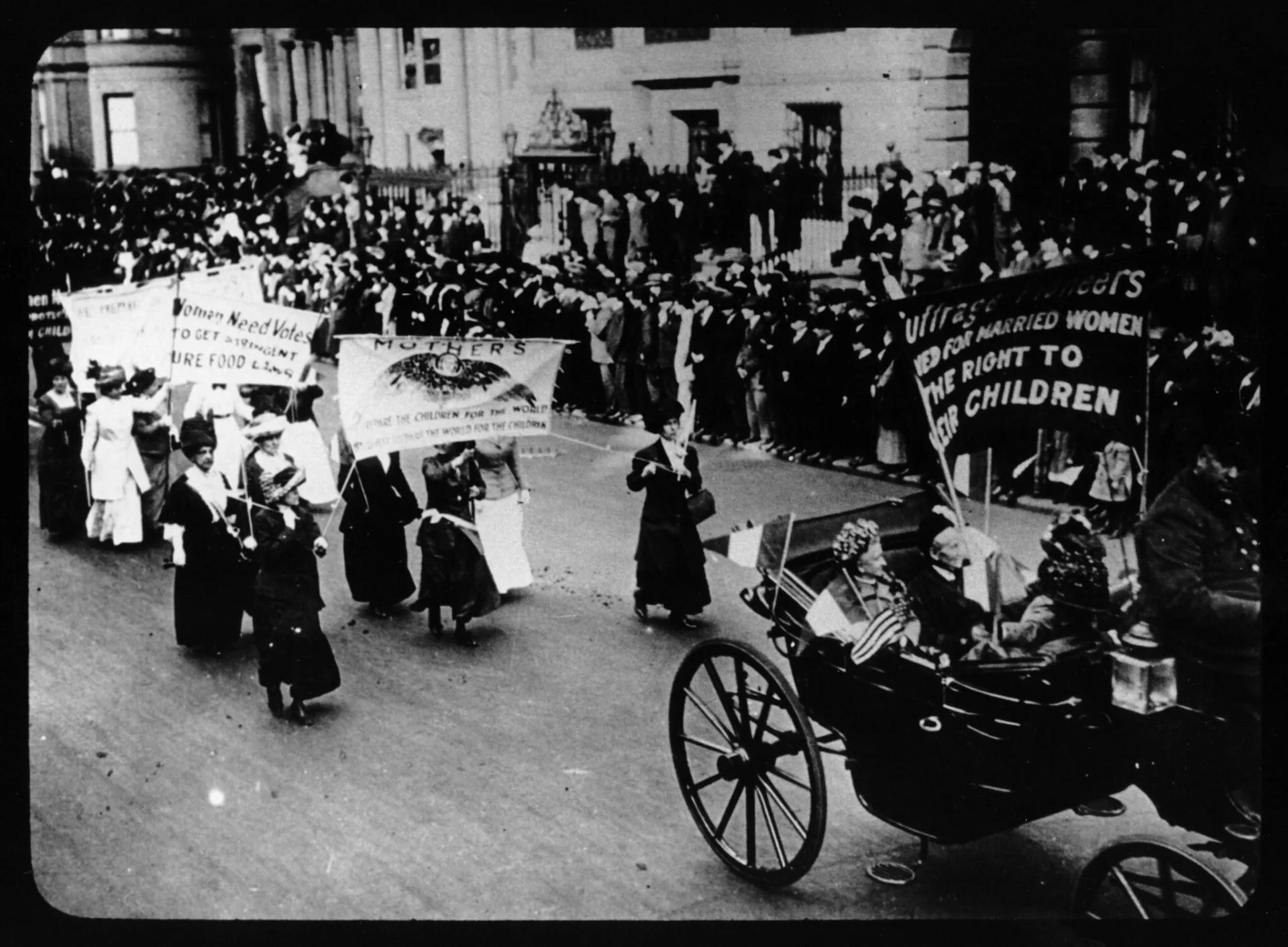
Historical evidence reinforces this pattern. In the late eighteenth century, Olympe de Gouges articulated a vision of civic responsibility and political equality in her Déclaration des droits de la femme et de la citoyenne, a text that expanded the basis of democratic participation and challenged exclusionary structures long before modern debates on gender and leadership emerged. During the First World War, women across Europe organised local mediation, support networks and essential community services that reduced social disruption when formal institutions were overwhelmed (Grayzel, 2002). In the early twentieth century, Jane Addams, awarded the Nobel Peace Prize, showed that community-based initiatives grounded in emotional understanding and social cooperation can contribute significantly to conflict reduction and social recovery. Together, these cases show that women’s contributions to social stability and crisis management have deep historical roots and are not limited to contemporary contexts.
Conclusion
The analysis of the evidence shows that women occupy a central place in social resilience and crisis management, not because of cultural expectations or any supposed innate condition, but due to competencies developed over generations. These capabilities remain insufficiently recognised within formal leadership systems and yet are essential today for confronting global crises and providing stability and cohesion in the most critical moments.
Moving toward more resilient societies requires integrating this knowledge into institutions, ensuring the full participation of women in decision-making spaces, in the formulation of public policies and in the reconstruction of more equitable societies. At a time when social challenges demand cooperation, stability and strategic vision, the accumulated experience of women represents an indispensable resource for the future.
Bibliography
Adler, N. J. (2000). Global leadership: Women leaders across cultures. In W. H. Mobley (Ed.), Advances in Global Leadership (Vol. 2, pp. 65–86). JAI Press. https://www.researchgate.net/publication/235281728_Advances_in_global_leadership_The_women’s_global_leadership_forum
American Psychological Association. (2020). Building your resilience. https://www.apa.org/topics/resilience.
Bradshaw, S., & Fordham, M. (2015). Women, girls and disasters: A review for DFID. Routledge.
Duan, W. H., Asif, M., Nik Mahmood, N. H., & Wan Zakaria, W. N. (2023). Emotional intelligence and high-performance leadership of women leaders. Management Research Review, 46(1), 1–18. https://doi.org/10.1108/MRR-06-2021-0419
Enarson, E. (2012). Women confronting natural disaster: From vulnerability to resilience. Lynne Rienner Publishers.
Hobfoll, S. E., Watson, P., Bell, C. C., Bryant, R. A., Brymer, M. J., Friedman, M. J., … Ursano, R. J. (2007). Five essential elements of immediate and mid-term mass trauma intervention. Psychiatry, 70(4), 283–315. https://doi.org/10.1521/psyc.2007.70.4.283
Grayzel, S. R. (2002). Women and the First World War. Longman.
Liu, M., Zhang, Q., Li, J., & Wang, X. (2023). Resilience in the face of adversity: Classes of positive adaptation. BMC Psychology, 11(1), 1–14. https://doi.org/10.1186/s40359-023-01049-x
Masten, A. S. (2012). Resilience in development. In S. J. Lopez (Ed.), The Oxford Handbook of Positive Psychology (2.ª ed., pp. 74–88). Oxford University Press.
Mosquera, P. M. R., Sánchez-Rodríguez, A., & Rodríguez-González, M. (2023). How do traditional masculinity ideologies and emotional competence relate to aggression and partner violence? Frontiers in Psychology, 14. https://doi.org/10.3389/fpsyg.2023.1100114
Ngubane, S. A., Maphalala, M. C., & Shandu, T. P. (2023). Resilience, determination, and innovation in women’s educational leadership. In Women’s Leadership in African Education (Chapter 18). Springer. https://doi.org/10.1007/978-3-031-90038-9_18
Pillay-Naidoo, D., & Nel, P. (2022). Testing a model of resilience for women leaders: A strengths-based approach. Australian Journal of Psychology, 74(3–4), 340–352. https://doi.org/10.1080/00049530.2022.2138542
Velotti, P., Garofalo, C., & Zavattini, G. C. (2022). Emotion regulation and intimate partner violence perpetration. Clinical Psychology Review. https://doi.org/10.1016/j.cpr.2022.102111
Vial, A. C., Napier, J. L., & Brescoll, V. L. (2021). A bed of thorns: Female leaders and the self-reinforcing cycle of the glass cliff. The Leadership Quarterly, 32(5). https://doi.org/10.1016/j.leaqua.2020.101458
Zhang, L., & Wong, P. T. P. (2022). Emotional intelligence and transformational leadership: A systematic review. Journal of Intelligence, 10(4), 102–120. https://doi.org/10.3390/jintelligence10040049