
Introduction
Abkhazia is internationally recognised as Georgian territory. However, since the war of 1992-1993, Abkhazia has been under Russian occupation and de facto control. The war resulted in the expulsion of ethnic Georgians from Abkhazia, making them internally displaced people in their own country. Nowadays, ethnic Georgians remain only in some Abkhazian regions, primarily in Gali, where they live under the most pressing yet underreported humanitarian crises in Europe. These people face systemic discrimination, human rights abuses, and a deliberate policy of marginalisation. The lack of international mechanisms and their ineffectiveness exacerbate the situation on the ground. This essay examines the challenges faced by ethnic Georgians in occupied Abkhazia, their complex reality, and the shortcomings of foreign assistance initiatives.
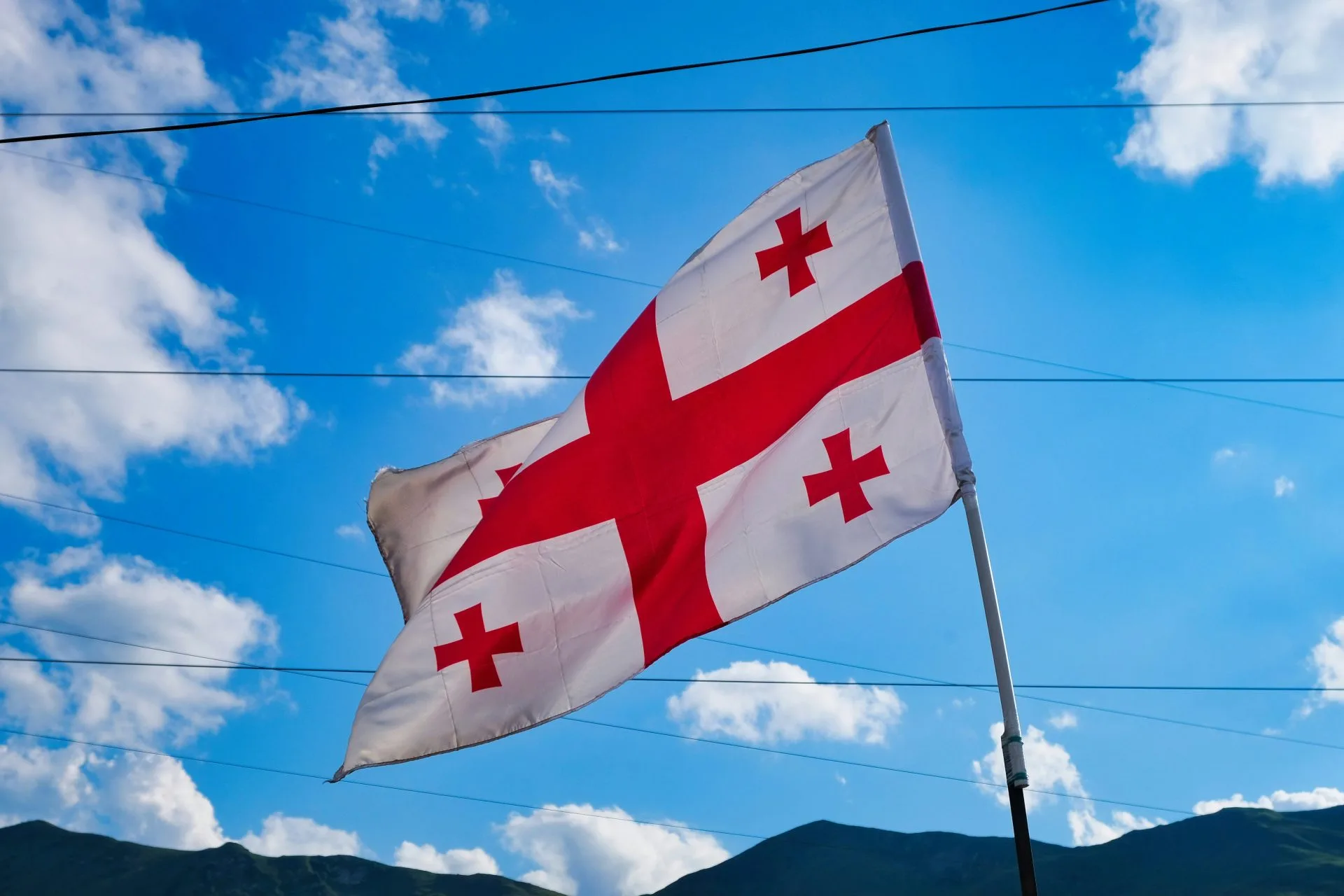
Conflict in Abkhazia
Conflict in Abkhazia is a result of a compilation of reasons that include the deliberate Soviet policy of creating divisions, mistrust between political elites of different ethnic groups, political crisis in Georgia after the collapse of the Soviet system, foreign, specifically Russian, interference, etc. A violent war that erupted in 1992 led to the expulsion of up to 250,000 Georgians from Abkhazia. According to various human rights organisations, atrocities committed against Georgians during and after the war amount to ethnic cleansing.
After the war, Abkhazia declared independence; however, it remains unrecognised by the absolute majority of international society. Russia and a handful of other states recognised the independence of Abkhazia, together with another separatist region in Georgia – South Ossetia, after the Russian invasion of Georgia in 2008. Abkhazia and South Ossetia are effectively under Russian de facto control and occupation.
In 1994, the United Nations managed to negotiate the return of around half of the Georgian population of the Gali district, around 30,000 – 40,000 people, back to their homes. They became a minority under an occupation regime that curtails their rights, discriminates against them and gives them little hope for the future.
The Georgian minority in occupied Abkhazia
The residents of Gali district live under constant surveillance and pressure, often viewed as a “fifth column” by Abkhaz authorities. Their situation is characterised by precarious legal status, prohibiting education in their native language, restricted freedom of movement, and economic marginalisation.
Georgians living in Gali are officially Georgian citizens. They only get a residence permit from so-called local authorities. The residence permit comes with limited rights and is often issued arbitrarily. The occupation regime tries to impose Russian identity cards and citizenship on Georgians and denies them access to various social goods. The arbitrary rejections of so-called residence permits persist, together with continuous pressure on those who hold a Georgian passport, creating an additional climate of fear and injustice.
Furthermore, Georgian citizens residing in Abkhazia are often denied education in the Georgian language. In schools and kindergartens, the instruction process takes place in Russian and sometimes the Abkhazian language. Schools in some of the regions besides Gali, where Georgians live, do not teach the Georgian language at all. In those schools where Georgian is still taught, dedicated courses are strictly limited to a few hours per week. Denying education in the mother tongue violates the cultural rights of Georgian children and contravenes international human rights standards.
Additionally, Georgians are often denied freedom of movement, especially along the occupation line. Georgians in occupied Abkhazia rely on the crossings to Tbilisi-controlled territory for access to healthcare, markets, education and family. The crossing points are arbitrarily closed by the occupation regime for various reasons, while delays in obtaining documents for crossing purposes further impact the right to free movement.
Georgians residing in Gali are often targeted by surveillance and detentions. Arrests take place on charges of espionage or “illegal” border crossing. In one of the recent cases, Georgian priest Father Pimen was arrested, whom the head of the Abkhazian Orthodox Church, Father Vissarion, blamed for “promoting nationalist ideas” among residents of the Gali district. Another prominent, relatively recent case is of Irakli Bebua, who was arrested in 2020 for burning the banner depicting the Abkhazian flag symbolics. He was released after 4 years and 6 months imprisonment to Tbilisi-controlled territory.
These structural problems are only part of a long list of challenges that the Georgian minority living under an occupation regime has to survive. Their rights are violated, their well-being is neglected, and they are perceived as second-class citizens in their own homes.
International mechanisms
International society has largely been unable to significantly affect the situation on the ground. Despite numerous pieces of evidence of human rights violations, international society largely remains ineffective in addressing the situation in a meaningful way due to the uncooperative behaviour of the occupation regime and interference by Russia.
Initially, the UN was actively engaged in the conflict resolution process. The United Nations Observer Mission in Georgia (UNOMIG) operated from 1993 to 2009. Among other tasks, UNOMIG also included the Human Rights Office established in December 1996. UNOMIG was shut down by a Russian veto in the UN Security Council after the Russian invasion of Georgia in 2008. When active, insights from UNOMIG informed various UN resolutions; however, urges for Abkhazian de facto leadership to respect the Gali population’s residency rights and identity mostly fell on deaf ears.
Furthermore, each year Georgia proposes a resolution to the UN General Assembly about internally displaced people and their rights, which tasks the General Secretary to prepare a report on the Status of internally displaced persons and refugees from Abkhazia, Georgia, and the Tskhinvali region/South Ossetia, Georgia. These reports also include the challenges of Georgians living in occupied Abkhazia.
Currently, only one international mission operates in Georgia – the EU Monitoring Mission (EUMM). Part of their mandate is to facilitate the resumption of a safe and normal life for communities on both sides of the occupation line. However, Abkhazian (and South Ossetian) de facto authorities deny access to the EU Monitoring Mission on their controlled territory, making it hard for EUMM to assess the situation on the ground in the occupied territories.
Council of Europe reports and OSCE statements frequently highlight Abkhazia’s human rights abuses. International monitoring missions, however, are unable to enter the occupied areas. Their ability to monitor events and put suggestions into action is strictly limited because of their lack of presence on the ground.
The case of the Georgian minority in Gali is yet another demonstration of how ineffective international justice mechanisms can be. Political interests of rogue state – Russia have effectively undermined any UN efforts to address the situation on the ground, and the non-cooperation of the occupation regime with the EUMM complicates the work of the only remaining international observation mission to address the conflict in Georgia. Even though the challenges of Gali Georgian residents are reflected in the resolutions and reports of various international organisations, the situation on the ground does not improve and only gets worse.
Conclusion
The ethnic Georgian population in Abkhazia, especially in the Gali district, continues to suffer from systemic human rights violations under the de facto authorities backed by Russia. Their situation is one of legal uncertainty, cultural erasure, and socio-economic deprivation. The policies imposed on them – denial of language rights, arbitrary detentions, restricted movement, etc. – point to a broader strategy of forced assimilation and demographic manipulation.
International mechanisms, limited in themselves by their scope, have been largely ineffective in changing the reality on the ground. With limited access, little enforcement power, and diminishing global attention, the challenges of Georgians in Abkhazia risk becoming a forgotten crisis.
Meaningful change would require international actors to recognise the tragic situation on the ground, make bold and fair assessments of the violations of human rights of Georgians living under occupation and deploy innovative approaches for enhanced monitoring and specific ways to address the problems on the ground. The struggle of the Georgian minority for their dignity, identity and rights deserves recognition.
Bibliography
Consolidated report on the conflict in Georgia (October 2024 – March 2025). (2025). Council of Europe.
Fear and uncertainty: The life of Georgians in Gali. (2019, November 18). Global Voices. https://globalvoices.org/2019/11/18/fear-and-uncertainty-the-life-of-georgians-in-gali/
Georgian Citizen Imprisoned by Russian Occupation Forces in Abkhazia in 2020, Released. (n.d.). Civil Georgia. Retrieved June 26, 2025, from https://civil.ge/archives/672637
Georgians in Gali | Human Rights Watch. (2011, February 18). https://www.hrw.org/news/2011/02/18/georgians-gali
Georgia/Russia: Post-conflict boundary splits communities, leaving thousands in limbo. (2019, July 3). Amnesty International. https://www.amnesty.org/en/latest/news/2019/07/georgiarussia-post-conflict-boundary-splits-communities-leaving-thousands-in-limbo-2/
Living in Limbo. (2011). Human Rights Watch. https://www.hrw.org/report/2011/07/15/living-limbo/rights-ethnic-georgians-returnees-gali-district-abkhazia
Menabde. (n.d.). Georgians in Abkhazia: A Choice Between Assimilation and Emigration. Retrieved June 26, 2025, from https://jamestown.org/program/georgians-in-abkhazia-a-choice-between-assimilation-and-emigration/
nikama. (2025, June 17). Georgian priest arrested in Abkhazia—Unofficial reports claim he “preached nationalist ideas.” Jamnews in English. https://jam-news.net/georgian-priest-arrested-in-abkhazia-unofficial-reports-claim-he-preached-nationalist-ideas/
Our Mandate. (n.d.). Retrieved June 26, 2025, from https://www.eumm.eu/en/about_eumm/mandate
Shamanauri, K. (2023, July 5). Occupied Lives: Georgians’ Daily Struggles Under Russian Control in Gali. Caucasus Watch. https://caucasuswatch.de/en/insights/occupied-lives-georgians-daily-struggles-under-russian-control-in-gali-abkhazia.html
Soboliev, V. (2017, September 25). Georgians in Gali—Foreigners in their own land. OC Media. https://oc-media.org/georgians-in-gali-foreigners-in-their-own-land/
Status of internally displaced persons and refugees from Abkhazia, Georgia, and the Tskhinvali region/South Ossetia, Georgia. (2025). UN Secretary-General. https://docs.un.org/en/A/79/892
UNOMIG: United Nations Observer Mission in Georgia—Background. (n.d.). Retrieved June 26, 2025, from https://peacekeeping.un.org/sites/default/files/past/unomig/background.html