Global Human Rights Defence hosts a Legal Forum at Palais des Nations, to demand accountability for global compliance failures.
On 24 April 2026, marking the International Day of Multilateralism and Diplomacy for Peace, we sponsored the Geneva Forum at the Palais des Nations to confront the systemic erosion of the international judicial order. This high-level summit mobilized an elite assembly of international jurists, state officials, and scholars to address the alarming rise of state non-compliance and the political siege of global courts.
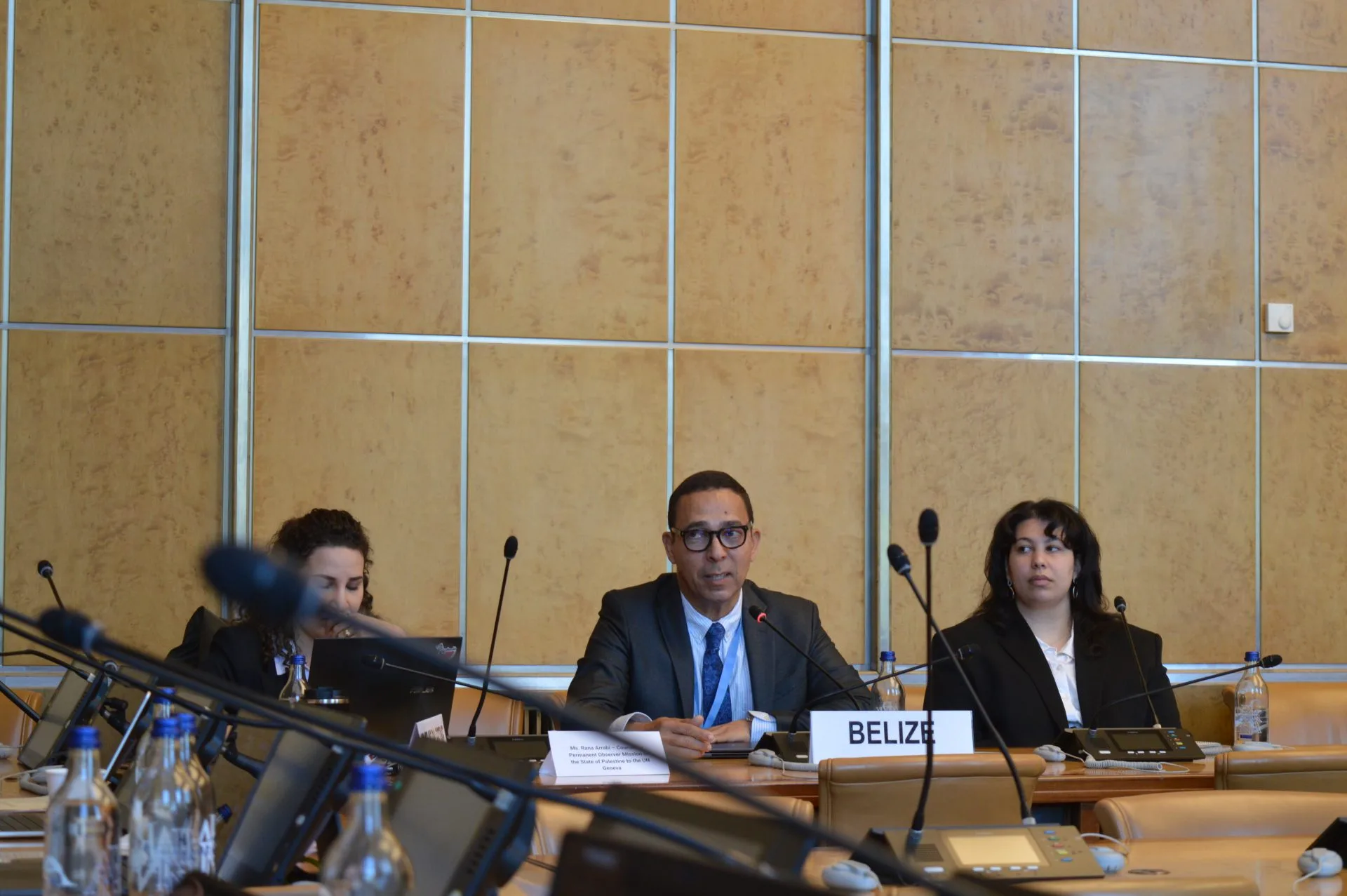
The Forum featured exhaustive legal testimony from a roster of world-renowned authorities. H.E. Dr. Harold Young, Ambassador and Permanent Representative of Belize to the UN, joined Prof. Dr. Dr. h.c. Kai Ambos, Judge at the Kosovo Specialist Chambers and Professor at Georg August University of Göttingen, in examining the shifting role of the judiciary in international relations. They were joined by Prof. Dr. Matthias Goldmann of EBS University and the Max Planck Institute, Prof. Dr. Marco Sassòli, Professor Emeritus at the University of Geneva and Commissioner of the International Commission of Jurists, and Dr. Eitan Diamond, Senior Legal Expert at the IHL Centre.
Discussions focused on the “institutional threats” facing the International Court of Justice and the International Criminal Court. Scholars argued that while these courts now serve as the world’s conscience, they remain vulnerable to an “autocratic oligarchy” and targeted sanctions intended to obstruct justice. Prof. Ambos and Assist. Prof. Dr. Ka Lok Yip of Hamad Bin Khalifa University analyzed how “state exceptionalism” and “doctrines of necessity” are exploited by powerful states to justify weapon transfers that perpetuate cycles of violence, even when those actions bypass the UN Charter.
Francesca Albanese, the UN Special Rapporteur on the situation of human rights in the Palestinian Territory occupied since 1967, also raises sharp concerns about the thousands missing or killed and the systematic dehumanization within diplomatic fora. She argues that international law is a binding obligation rather than a matter of choice, noting that states risk complicity by continuing to fund or shield actions that have metastasized into genocide. Furthermore, military and trade agreements, especially regarding dual-use goods, must be immediately suspended to uphold the clear mandate that no state may aid or assist in international crimes.
This reality was further detailed by Ms. Rana Arrabi, Counsellor for the Permanent Observer Mission of Palestine, and Dr. med. Qassem Massri, who appraised the newly enacted “death penalty for terrorists” law as a tool of apartheid and institutionalized non-compliance.
The proceedings, moderated by experts such as Dr. Gleb Bogush of the University of Cologne, concluded that international law is a binding mandate, not a diplomatic preference. The event culminated in the Geneva Statement of 24 April 2026, a decisive call for a “new multilateralism” that functions as a framework for dignity for the many, rather than a facade for the few.