
Introduction
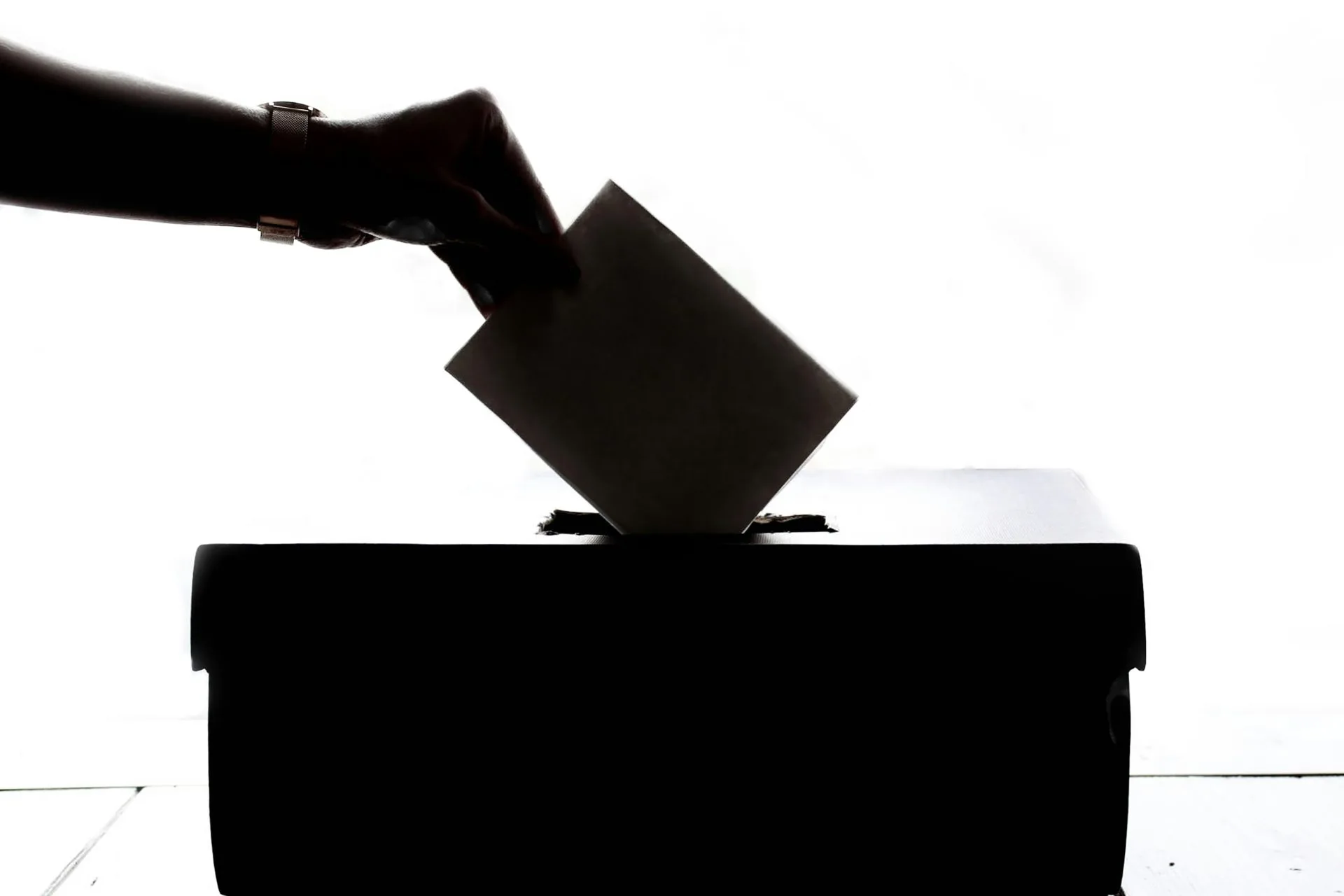
Free and fair elections are the core principles of the democratic process in every country. Voters should be able to make their choice without interference and manipulation. This is why European Union (EU) countries and institutions have some measures to prevent interference, disinformation, cyberattacks, and data breaches during elections (European Parliament, 2024). The European Cooperation Network on Elections brings together member states responsible for electoral matters. For example, their work includes defending European elections against potential information manipulation, cyberattacks, and hybrid threats; they also protect networks and information systems related to elections against cyber threats that could negatively affect the electoral process and voters’ rights (European Parliament, 2024).
The Universal Declaration of Human Rights (UDHR), adopted to protect fundamental human rights universally, guarantees the right to free and fair elections. Article 21 of the UDHR states that everyone has the right to take part in the government of their country, either directly or through freely chosen representatives. Moreover, it says that
[…] the will of the people shall be the basis of the authority of government, this will shall be expressed in periodic and genuine elections which shall be by universal and equal suffrage and shall be held by secret vote or by equivalent free voting procedures. But what happens when the voters are manipulated from outside?
In the past decade, Russia has been accused many times of interfering in elections across different countries. They often used cyberattacks, disinformation campaigns, and other tools to manipulate voters’ decisions. Is this hybrid warfare, or is this aimed at weakening democratic systems around the world? Although this article cannot fully answer those crucial questions, it aims to explain how Russia attempts to influence countries’ elections and the methods it employs to achieve its goal.
What could be the reason behind electoral interference? There could be a million reasons for Russia to do so. The interference could aim to support pro-Russian parties or weaken other political parties. By influencing elections across Europe and in the United States (US), the goal could be to damage the North Atlantic Treaty Organization (NATO) or the EU. We cannot truly answer this question, but the article will present examples of countries where Russia tried to influence elections and some possible reasons behind it.
How Russia Tries to Influence Elections
Election interference refers to actions taken by a nation to disrupt or influence another sovereign nation’s electoral processes (EBSCO, 2022). There are many different methods of interference that have evolved with technology.
One of the most used methods is disinformation. Disinformation can be defined in terms of “manipulative, deceptive, or harmful actors, behaviors, and content, manifesting in a variety of forms that can also be applied to the electoral context” (Disinfo Lab, 2021). Disinformation has different tactics. For example, micro-targeting means that users’ data are used to segment them into groups for content targeting (Disinfo Lab, 2021). Before the 2016 US elections, the Russian Intelligence Research Agency (IRA) used Facebook’s targeted advertising to efficiently target ads on divisive or polarising topics at vulnerable people (Cornell University, 2018).
Another tactic is “hack-and-lack”, which basically means that Russia is strategically leaking sensitive information to manipulate public discourse by selectively releasing information that serves its objectives. They aim to sow confusion and erode trust in democratic institutions (Aspenia Online, 2023). Russia’s disinformation campaigns include the use of Russian media, such as Russia Today and Sputnik, to spread fake news (Is Russia a Threat to Western Democracy, 2017). The most recent example of pro-Russian propaganda and fake news occurred during Moldova’s 2025 parliamentary elections, when they sought to undermine Moldova’s pro-EU ruling party (BBC, 2025).
Another method is cyberattacks and cyber-espionage. According to the Council of Europe, electoral cyberattacks can include hacking voter registration databases, tampering with vote tabulation systems, spreading malware to disrupt voting machines, or launching distributed denial-of-service (DDoS) attacks to overwhelm election websites (Council of Europe, 2025). Reportedly, Russian government hackers targeted 21 US state voter registration systems and disseminated the emails to WikiLeaks along with fake documents (Is Russia a Threat to Western Democracy, 2017). As mentioned, Russia often uses DDoS attacks, which overwhelm the target with a flood of internet traffic. For example, in May 2025, a Russian hacker group attacked several Romanian government and presidential candidates’ websites (POLITICO, 2025).
The interference can also happen through political financing. Furthermore, the Council of Europe stated that “financial participation from foreign actors in local and regional elections could be considered as a type of political participation from actors not entitled to vote nor maintaining a genuine link with these subnational units” (Council of Europe, 2025). For example, Marine Le Pen’s National Rally in France received a loan from a Russian bank before the 2017 French presidential elections, which fuelled concerns that Le Pen was under the Kremlin’s sway (Financial Times, 2023).
Some crucial examples show how Russian methods and tactics actually affected elections in different countries.
The Case of the United States
One of the most important examples is the 2016 US presidential election. Held on November 8th, 2016, the Republican Donald Trump won the Electoral College with 304 votes compared to 227 votes for Hilary Clinton (New York Times, 2017). Soon after the elections, allegations arose of attempted election interference by Russian agents (EBSCO, 2023). Later, in December 2016, the Central Intelligence Agency (CIA) revealed that Russia not only intervened in the election but also actively worked to favor Trump’s candidacy and hurt Clinton’s, rather than generally trying to destroy public confidence in the electoral process (NBC News, 2017).
Reportedly, Russia used different methods to affect the election process in the US. One of the methods was to hack into a computer and steal emails written by the staff of Hilary Clinton’s campaign. The Chief Intelligence Office (Glavnoye Razvedyvatelnoye Upravlenie, GRU) then created a fake online group to share the stolen emails with WikiLeaks and release them to undermine Clinton’s image among voters (EBSCO, 2023). Russia also probed state voter databases. They did not change the number of votes during the election, but hackers could steal the personal information of hundreds of thousands of voters (EBSCO, 2023). Spreading fake news about Hilary Clinton was yet another method. It is believed that the IRA hired hundreds of internet trolls to post false information about Clinton. Additionally, more than 50,000 Twitter accounts were linked to Russian bots and fake accounts (EBSCO, 2023).
The 2016 US elections have clearly shown that cyberattacks have become the new weapon of choice in political influencing, because Russia did not stop with the US. The next country was France in 2017.
The Case of France
In 2017, during the French presidential election, Emmanuel Macron’s campaign was attacked by Russia. The hackers were linked to a Russian-affiliated group known as APT28 or Fancy Bear, which also had been involved in the 2016 US election interference, more specifically, Trend Micro, a cybersecurity firm, said that a hacking group was believed to be part of a Russian intelligence unit and appeared to be the same group behind the hacking of Democratic campaign officials before last the 2016 US presidential election (The Guardian, 2017).
The attack happened only two days before the final vote, and thousands of emails and internal documents were leaked and published online. This attack was clearly intended to harm Macron’s chances and create confusion among voters. The presidential electoral authority, the CNCCEP, even asked the media to avoid publishing information from the leaked documents, because “the publishing of false information falls under the law, particularly criminal law” (The Guardian, 2017).
This specific incident is probably one of the clearest examples of how Russia uses “hack-and-leak” tactics combined with disinformation to interfere in democratic elections and promote candidates who are more sympathetic to Russia’s interests.
The Case of Moldova
Moldova’s parliamentary elections were held on September 28th, 2025, and resulted in a victory of the pro-European party of Action and Solidarity (PAS) (The Conversation, 2025). Winning these elections was crucial for Moldova’s future path into the EU, because Moldova was awarded EU candidate status in 2022 along with Ukraine and Georgia, four months after Russia’s full-scale invasion of Ukraine. Therefore, the elections were widely considered a straight choice between European and Russian trajectories (Atlantic Council, 2025).
Just like in France and the US, the election process was heavily influenced by disinformation campaigns and other types of interference by Russia (Al Jazeera, 2025). A BBC investigation found evidence of a Russian-funded network that paid people to post fake news online and organise rigged polls showing inflated levels of support for pro-Kremlin parties (BBC, 2025). Social media became the Kremlin’s main battleground for interfering in the election process. According to RFI, Russia recruited operatives locally and employed AI technologies to create large quantities of fake accounts and flood Moldovan social media platforms with disinformation campaigns to attack President Sandu and her party (RFI, 2025).
Russia’s attempt to sway the elections in Moldova failed, the pro-European party won the elections. Sandu’s electoral platform of European integration, transparency, and reform received majority support from the Moldovan public. There is no doubt that Russian election interference operations are a genuine and persistent threat to all democratic countries, but one possible solution could be empowering the electorate with information and resilient democratic systems to fight against Russian methods.
The Case of Georgia
In October 2024, Georgia had parliamentary elections, which were widely seen as a referendum on Georgia’s future geopolitical direction, because, as mentioned above, after Russia’s full-scale invasion of Ukraine, three countries, including Georgia, received EU candidate status. The people of Georgia certainly choose the EU path, but at the same time, after two wars with Russia, people fear the possibility that Russia could invade Georgia once again if the country attempts to turn away from Moscow (Atlantic Council, 2024).
One way Russia can influence elections in Georgia is through its connections to the Georgian Dream Party, which has been in power since 2012. So, in 2024, the elections were interfered with differently, it was shaped by the ruling Georgian Dream Party’s direct alignment with Russian interests, and the authorities became enablers (Geopolitics, 2025). Russia deployed a disinformation campaign through Georgian pro-government propaganda channels, Orthodox clergy, and civil society organisations (Geopolitics, 2025). Their disinformation and propaganda mostly promoted a false choice between war and peace. The Georgian Dream Party presented itself as a guarantor of stability and traditional values; at the same time, the Russian state media and officials directly endorsed these messages (Geopolitics, 2025).
One of the ways Russia influenced the Georgian elections in 2024 was by transporting Russian domestic propaganda methods into Georgian politics, for example, by labelling Georgian journalists and civil society activists as foreign agents. Russia, with the help of Georgian Dream, spread fear of war and disinformation, which allowed them to win the elections in 2024. The former president of Georgia, Salome Zourabichvili, even accused Russian intelligence of shaping this outcome, with the help of propaganda and disinformation campaigns (CNN, 2024).
Conclusion
Russia uses many different methods to influence and interfere in elections across the world, especially in post-Soviet countries that are trying to join the EU or NATO. From spreading fake news and using online trolls to cyberattacks and political ties, Russia is trying to steal the democratic elections from European countries. The tools that Russia uses to influence elections do not always aim to support one political party, but sometimes they also aim to confuse people and make them question democratic systems in general.
The above-mentioned examples show that countries are affected in very different ways. For example, in the US, it was hacking and social media trolling. In France, it was the “hack-and-leak” strategy, which basically meant leaking documents right before the elections to make voters question their own choices. In Moldova and Georgia, Russian methods mostly included propaganda, pressure, and most importantly, having close connections with local political actors to spread Kremlin-friendly narratives. It is really hard to say why Russia is doing so, but we can only assume that the bigger goal is to influence and weaken NATO, the EU, and democratic ideas in general.
One thing that countries can do to fight against it is to raise awareness and provide people with information, just like Moldova did before the 2025 elections, so they can identify propaganda and disinformation and not believe everything they hear or see on social media.
Bibliography
Al Jazeera, ‘Moldova’s pro-EU party wins election hit by Russian interference claims’ (29 September 2025) https://www.aljazeera.com/news/2025/9/29/moldovas-pro-eu-party-wins-election-hit-by-russian-interference-claims accessed 28 October 2025.
Aspenia Online, ‘Understanding Russian disinformation strategies inside and outside the country’ (4 July 2023) https://aspeniaonline.it/understanding-russian-disinformation-strategies-inside-and-outside-the-country.com accessed 28 October 2025.
Atlantic Council, ‘Putin’s Moldova election failure highlights Russia’s declining influence’ (4 October 2025) https://www.atlanticcouncil.org/blogs/ukrainealert/putins-moldova-election-failure-highlights-russias-declining-influence/ accessed 28 October 2025.
BBC, ‘How Russian-funded fake news network aims to disrupt election in Europe’ (21 September 2025) https://www.bbc.com/news/articles/c4g5kl0n5d2o accessed 28 October 2025.
CBS News, ‘Russia-linked hackers targeting French election, security firms say’ (25 April 2017) https://www.cbsnews.com/news/russia-hacked-french-election-trend-micro-report-fancy-bear-pawn-storm/ accessed 28 October 2025.
CNN World, ‘Alleging ‘Russian Special Operation,’ Georgian president calls for protests over disputed election’ (27 October 2024) https://edition.cnn.com/2024/10/27/europe/georgia-election-russia-protests-intl-latam/index.html accessed 28 October 2025.
Cornell University, ‘A case study of Russia-linked Ad campaigns on Facebook’ (21 November 2018) https://arxiv.org/abs/1808.09218 accessed 28 October 2025.
Council of Europe, ‘Foreign Interference in electoral processes at local and regional levels’ (26 March 2025).
EBSCO, ‘Election Interference: Overview’ (2022) https://www.ebsco.com/research-starters/law/election-interference-overview accessed 28 October 2025.
EBSCO, ‘Russian interference in the 2016 United States elections’ (2023) https://www.ebsco.com/research-starters/diplomacy-and-international-relations/russian-interference-2016-united-states accessed 28 October 2025.
Eu Disinfo Lab, ‘Foreign elections interferences: an overview of trends and challenges’ (18 October 2021) https://www.disinfo.eu/publications/foreign-election-interferences-an-overview-of-trends-and-challenges/#:~:text=In%20this%20regard%2C%20it%20may,foreign%20actors%20hire%20domestic%20proxies accessed 28 October 2025.
European Parliament, ‘How are free and fair elections ensured?’ (6–9 June 2024) https://elections.europa.eu/en/free-fair-elections/ accessed 28 October 2025.
Geopolitics, ‘Targeted disruption: Russian interference in the 2024 elections in Moldova, Romania and Georgia’ (8 May 2025) https://politicsgeo.com/targeted-disruption-russian-interference-in-the-2024-elections-of-moldova-romania-and-georgia/ accessed 28 October 2025.
Lucan Ahmad Way and Adam Casey, ‘Is Russia a threat to Western democracy? Russian intervention in foreign elections, 1991–2017’ (3–4 November 2017).
NBC News, ‘Report: Putin, Russia tried to help Trump by discrediting Clinton’ (7 January 2017) https://www.nbcnews.com/news/us-news/report-putin-russia-tried-help-trump-discrediting-clinton-n703981 accessed 28 October 2025.
POLITICO, ‘Russian hacker group attacks Romanian government websites on election day’ (4 May 2025) https://www.politico.eu/article/russia-hacker-group-romania-election-day-constitutional-court-vote/ accessed 28 October 2025.
RFI, ‘How Russian disinformation flooded Moldova’s media landscape ahead of election’ (27 September 2025) https://www.rfi.fr/en/international/20250927-how-russian-disinformation-flooded-moldova-media-landscape-ahead-of-election accessed 28 October 2025.
The Conversation, ‘Moldova: pro-EU party wins majority in election dominated by Russian interference’ (29 September 2025) https://theconversation.com/moldova-pro-eu-party-wins-majority-in-election-dominated-by-russian-interference-266179 accessed 28 October 2025.
The New York Times, ‘2016 Presidential Election Results’ (9 August 2017) https://www.nytimes.com/elections/2016/results/president accessed 28 October 2025.
United Nations, ‘Universal Declaration of Human Rights’ (10 December 1948) https://www.un.org/en/about-us/universal-declaration-of-human-rights accessed 28 October 2025.