
Introduction
Artificial Intelligence (AI) is gaining increasing recognition around the world. People are utilising AI and its tools in their everyday lives, and so are governments in various countries. In recent years, governments around the world have started deploying new surveillance systems or technologies that are powered by AI (Feldstein, 2019). These AI-powered surveillance systems/technologies are mostly used in public spaces for various reasons, such as facial recognition, motion tracking, etc. It can be argued that such technologies are used to maintain public order and safety, but in practice, especially in countries where there are authoritarian regimes, the reality can be very different.
As in many authoritarian countries, AI-assisted surveillance systems in Georgia have become a very powerful tool for the government to control the citizens. It is worth mentioning that Georgia has increased the deployment of surveillance cameras since November 28th, 2024, when the Prime Minister of Georgia announced the suspension of the European Union (EU) accession process. The government installed new, larger, and stronger surveillance cameras, particularly in areas where people are still gathering and protesting every single day. These facial recognition cameras and other monitoring systems have been used to track protestors, fine or arrest them, and collect their biometric data without their knowledge or consent. These recent developments raise some serious concerns under international human rights law (IHRL).
This article aims to argue that the Georgian government’s use of AI-powered surveillance technologies against protesters violates fundamental human rights under IHRL.
Surveillance technologies and protests in Georgia
Article 78 of the Georgian Constitution states that “The constitutional bodies shall take all measures within the scope of their competences to ensure the full integration of Georgia into the European Union and the North Atlantic Treaty Organisation.”
It has always been the aspiration of the Georgian people to join the EU, and in December 2023, the European Council granted Georgia candidate status, turning this dream into a reality. Almost one year after receiving candidate status, the Prime Minister of the ruling party announced that they would not continue EU accession negotiations for the next four years. Even before this announcement, tensions in the country were very high because of the government’s increasingly authoritarian, anti-Western, and pro-Russian policies, but this was the moment when thousands of people gathered together on the main avenue of Tbilisi and started protesting against the Georgian Dream regime.
The citizens of Georgia have been protesting for more than 200 days now, hundreds have been beaten and arrested, some of them charged with criminal offences and facing years in prison, including opposition politicians. Despite the fact that the government used all the power they had, including tear gas, pepper spray, rubber bullets, and water cannon, people kept coming back to the streets and protesting against the regime. The ruling party, Georgian Dream, then decided to use repressive tools, fining and arresting anyone who would dare to raise their voice and keep protesting. For example, during the first months of the protests, the Georgian Dream government changed some legal norms in the Administrative Code of Georgia and increased the fines for blocking roads to up to USD 1900. Moreover, they not only changed the legislation to punish people for fighting for their future, but also installed AI-powered surveillance cameras throughout the main streets of Tbilisi, the capital of Georgia, to gather footage of protesters and use it as primary “evidence” to fine them.
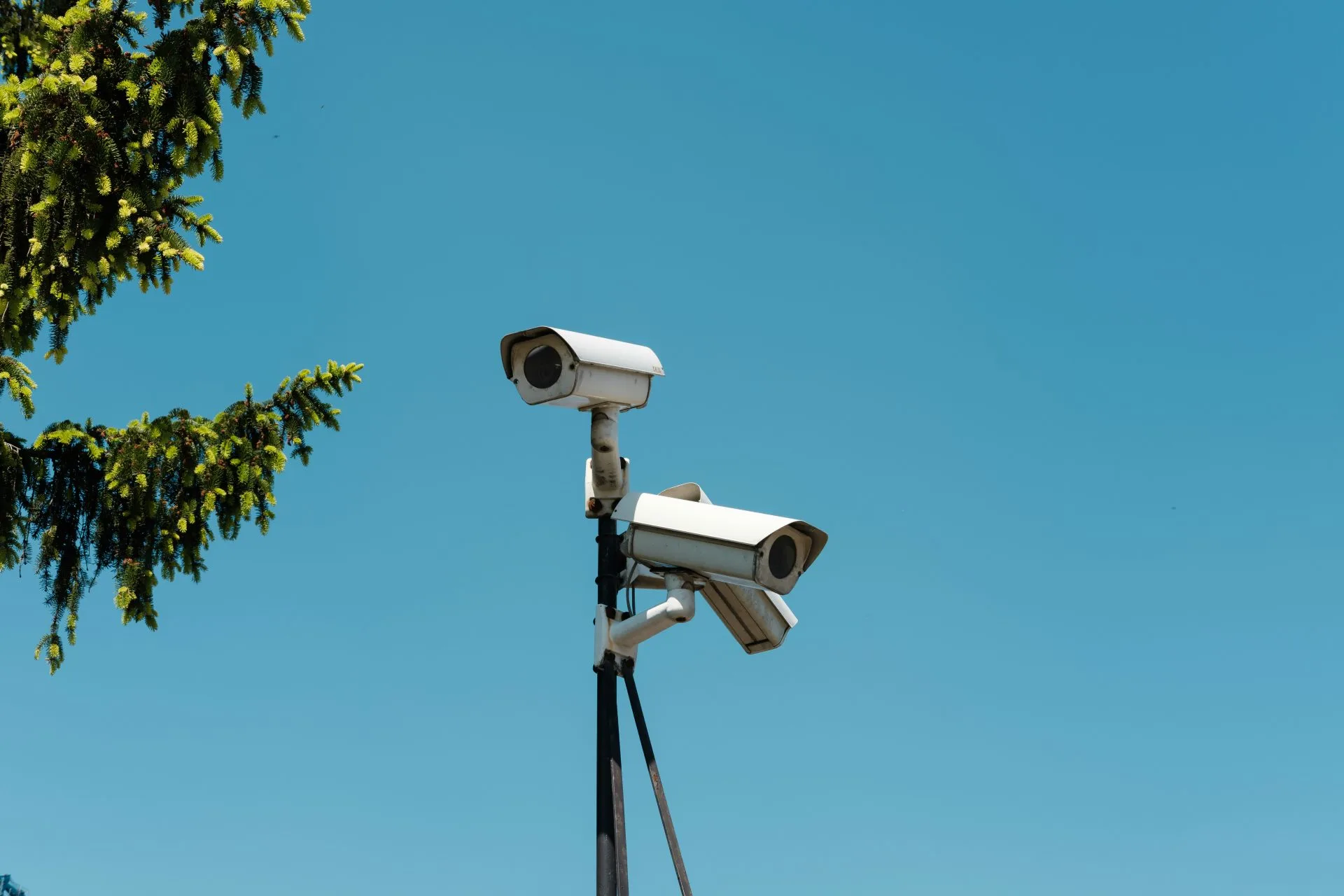
Reportedly, since December 2024, state bodies, including the Ministry of Internal Affairs and the Tbilisi municipality have bought surveillance cameras that cost them 1.2 million USD, with 251 advanced cameras being manufactured by Dahua Technology, a Chinese company that has been criticised internationally for its suspected involvement in government surveillance projects in China, specifically those linked to the repression of Uyghur people in Xinjiang. These cameras include AI-powered facial recognition, which is very alarming for the citizens of Georgia. Another report states that most of the cameras are made not only by Dahua Technology but also by Hikvision, another Chinese company, and that both companies are under sanctions by the United States. One of the biggest issues regarding these cameras is that people lack information about who controls these cameras and what they are capable of. Moreover, the rowing number of AI-powered surveillance cameras has increased concerns about privacy and data protection because of the increasingly authoritarian trends and the brutal repression of protests. The Georgian Young Lawyers Association (GYLA), which is a prominent legal watchdog in Georgia stated that “the use of such cameras, in practice, for human rights violations is widespread in autocratic and totalitarian regimes and the use of such technologies violates not only the right to privacy, but also the freedoms of expression and association.” Authorities have actively been using the footage of these AI-powered surveillance cameras to fine protesters.
To this day, there is no clear explanation from the government of Georgia about the technical specifications of these surveillance cameras, who can access the footage, or how the collected data is processed. There is a serious lack of transparency and a very tense political environment, which creates an atmosphere of fear and mistrust in Georgia. However, one thing is clear, instead of aligning with EU principles and democratic standards, the Georgian government has chosen to use AI-assisted surveillance systems to monitor, intimidate, and silence people, just like other authoritarian regimes do. They punish peaceful protesters for defending their future.
Human Rights Violations
When we talk about human rights violations, we should take into consideration not only the Constitution of Georgia but also international human rights treaties. For example, as a member of the Council of Europe, Georgia is bound by the European Convention on Human Rights (ECHR). Georgia has also ratified the International Covenant on Civil and Political Rights (ICCPR). This chapter aims to explore how unregulated AI surveillance threatens the basic rights enshrined in these treaties.
To start with, one of the most obvious rights that is being violated is the right to privacy. The right to privacy is protected under Article 8 of the ECHR and Article 17 of the ICCPR. It can be said that the use of AI-powered surveillance technologies with facial recognition features in public spaces directly interferes with private lives, especially if there is no transparency and no effective control over how this data is collected or used. As mentioned above, there is no clear explanation from the Georgian government on how they collect and use this data, how long the data is stored, who has access to it, or whether individuals can request the deletion of their personal information. Citizens of Georgia are identified by AI systems without their knowledge or consent. According to international human rights standards, any interference with this right should be in accordance with the law and must be necessary in a democratic society in the interests of national security, public safety, and also for the protection of the rights and freedoms of others. Interestingly, the United Nations (UN) working group on business and human rights stated that the procurement and deployment of AI systems by states and businesses must comply with international human rights standards. According to the UN, the use of AI could affect human rights, privacy violations, discrimination, and free speech restrictions if there is no adequate legal framework and due diligence.
The second important right that can be under threat is the right to freedom of peaceful assembly, which is guaranteed by Article 11 of the ECHR and Article 21 of the ICCPR. The existence of AI-powered surveillance systems during protests creates what is called a “chilling effect”. According to the Open Society Foundation, the chilling effect may be defined “as a negative effect any state action has on natural and/or legal persons, and which results in pre-emptively dissuading them from exercising their rights or fulfilling their professional obligations, for fear of being subject to formal state proceeding switch could lead to sanctions or informal consequences such as threats, attacks or smear campaigns.” In this case, it means that people who usually gather together and protest together are discouraged from participating in the demonstrations because they are scared of being watched, identified, and then fined or arrested. This fear is real because hundreds of protesters have already been fined based on footage from the AI surveillance systems.
Another fundamental right that is being violated is the right to freedom of expression. This right is protected under Article 10 of the ECHR and Article 19 of the ICCPR. Both of the articles state that people must be able to express their political opinions, including through protests, and they should not be afraid to be monitored and then punished just because they are exercising their basic rights. AI-powered surveillance systems have a huge impact on protesters in a way that they are scared of coming out and expressing their opinions about government wrongdoings. It is clear that when governments use such technologies to control the people, they undermine democratic principles and violate human rights in general, meaning that people cannot speak up peacefully.
Additionally, it can be said that this selective and politically motivated use of surveillance footage may result in discrimination between the people who support the government and their opponents. It is clear that this particular technology is used mainly to punish everyone who dares to criticise the regime and its actions.
Conclusion
Georgia has many challenges nowadays, and the rise of AI-powered surveillance technologies is one of the most serious threats to democracy and human rights. The current use of AI-powered surveillance systems in Georgia does not meet international human rights standards. It clearly violates some basic human rights, such as the right to privacy, peaceful assembly, expression, and arguably, the right to a fair trial, as protesters are being fined through an automated system, with the primary evidence used against them often consisting solely of camera footage. AI could be used in many different ways, for example, to promote public order in the country, but instead, the Georgian government has decided to use AI as a tool of repression, to monitor, intimidate, and punish anyone who speaks up and dares to protest.
As it is shown in the article, even though Georgia has committed to European values and is legally bound by international treaties like the ECHR or ICCPR, the government has chosen to follow the practices of authoritarian regimes, punish peaceful protesters with camera footage, and use fear as a method of total control. In this era of emerging technology, governments should not use AI systems to silence people, on the contrary, it should be used to strengthen transparency or build trust between society and the state. Unfortunately, in Georgia, AI systems are doing the exact opposite, and as a result, they are undermining public trust and pushing the country further away from democratic values and its European future.
Bibliography
Al Jazeera, ‘Tens of Thousands of Pro-EU Protesters Rally in Georgia’ (Al Jazeera, 2 December 2024) https://www.aljazeera.com/gallery/2024/12/2/tens-of-thousands-of-pro-eu-protesters-rally-in-georgia accessed 12 July 2025.
Carnegie Endowment for International Peace, Feldstein S The Global Expansion of AI Surveillance (2019).
Civil Georgia, ‘GYLA: Fines imposed on protesters- Severe violation of Freedom of Assembly’ (March 19, 2025). https://civil.ge/archives/670184 accessed July 12, 2025.
Civil Georgia, ‘GD elected president Kavelashvili signs into law repressive legislation’ (December 30, 2024). https://civil.ge/archives/649022 accessed July 12, 2025.
Civil Georgia, ‘RFE/RL’s Investigation explores concerns over Georgia’s expanding surveillance system,’ (February 7, 2025). https://civil.ge/archives/660527 accessed July 12, 2025.
Civil Georgia, ‘GYLA calls for probe into MIA’s expanding use of facial recognition,’ (February 10, 2025). https://civil.ge/archives/661416 accessed July 12, 2025.
CNN, ‘Georgia is being rocked by growing protests,’ (December 3, 2024). https://edition.cnn.com/2024/12/02/europe/georgia-tbilisi-eu-protests-intl-hnk accessed July 12, 2025.
CNN, ‘As Georgia slides into authoritarianism, protesters vow to keep fighting Russian pivot,’ (February 15, 2025). https://edition.cnn.com/2025/02/15/europe/georgia-protests-authoritarianism-fears-intl-cmd accessed July 12, 2025.
Convention for the Protection of Human Rights and Fundamental Freedoms (European Convention on Human Rights, as amended) (ECHR).
Euronews, ‘Georgia jails opposition figures as ruling party denies arrests are politically motivated,’ (June 24, 2025). https://www.euronews.com/my-europe/2025/06/24/georgia-jails-opposition-figures-as-ruling-party-denies-arrests-are-politically-motivated accessed July 12, 2025.
Euronews, ‘Thousands of Georgians march in Tbilisi to protest against suspension of EU bid,’ (November 29, 2024). https://www.euronews.com/my-europe/2024/11/29/thousands-of-georgians-march-in-tbilisi-to-protest-against-suspension-of-eu-bid accessed July 12, 2025.
European Council, ‘Georgia.’ https://www.consilium.europa.eu/en/policies/georgia/ accessed July 12, 2025.
France 24, ‘Georgia cracks down on pro-EU protests with crippling fines,’ (March 23, 2025). https://www.france24.com/en/live-news/20250323-georgia-cracks-down-on-pro-eu-protests-with-crippling-fines accessed July 12, 2025.
International Covenant on Civil and Political Rights (December 16, 1966). https://www.ohchr.org/en/instruments-mechanisms/instruments/international-covenant-civil-and-political-rights accessed July 12, 2025.
IDTech Wire, ‘Georgia expands surveillance network amid privacy and security concerns,’ (February 7, 2025). https://idtechwire.com/georgia-expands-surveillance-network-amid-privacy-and-security-concerns/ accessed July 12, 2025.
Jam News, ‘Fines issued to protesters in Georgia reach 2 million lari,’ (March 19, 2025). https://jam-news.net/fines-issued-to-protesters-in-georgia-reach-2-million-lari/ accessed July 12, 2025.
Jurist News, ‘UN says use of artificial intelligence must comply with international human rights,’ (June 19, 2025). https://www.jurist.org/news/2025/06/un-says-use-of-artificial-intelligence-must-comply-with-international-human-rights/ accessed July 12, 2025.
The New Union post, ‘Georgian Dream holds EU membership ambitions hostage until the end of 2028,’ (November 29, 2024). https://newunionpost.eu/2024/11/29/georgian-dream-stop-eu-membership-2028/ accessed July 12, 2025.
OC Media, ‘Georgian Dream is watching: how AI-powered surveillance is used against Tbilisi protesters,’ (May 29, 2025). https://oc-media.org/georgian-dream-is-watching-how-ai-powered-surveillance-is-used-against-tbilisi-protesters/?fbclid=IwY2xjawKnol5leHRuA2FlbQIxMABicmlkETFiQW9rNnVoam0yYVNhdjZCAR5OrXvKY3YQoXhT6y-xmL9_o95CPZLxV-Zsoqpzvvki8gJNK-xonON_M32kYg_aem_nIr6iyugNZDLM_dLIYaTNg accessed July 12, 2025.
OCCRP, ‘Georgia’s surveillance surge: Chinese cameras spark protest crackdown fears,’ (March 28, 2025). https://www.occrp.org/en/news/georgias-surveillance-surge-chinese-cameras-spark-protest-crackdown-fears accessed July 12, 2025.
Open Society Foundations, ‘The concept of Chilling Effect,’ (March, 2021).
Politico, ‘Georgia hits brakes on EU accession bid,’ (November 28, 2024). https://www.politico.eu/article/georgia-pause-eu-accession-bid-until-2028-irakli-kobakhidze/ accessed July 12, 2025.
VOLT, ‘How Artificial Intelligence Surveillance redefines security,’ (February 28, 2025). https://volt.ai/blog/artificial-intelligence-surveillance accessed July 12, 2025.