
Global Human Rights Defence attended the 63rd session of the United Nations Human Rights Council, where the Council held its general debate under Item 4 on Human rights situations that require the Council’s attention. The debate brought together a wide range of human rights concerns from different regions, with particular attention to the situation of minorities, refugees, religious communities and other groups facing discrimination, persecution and displacement.
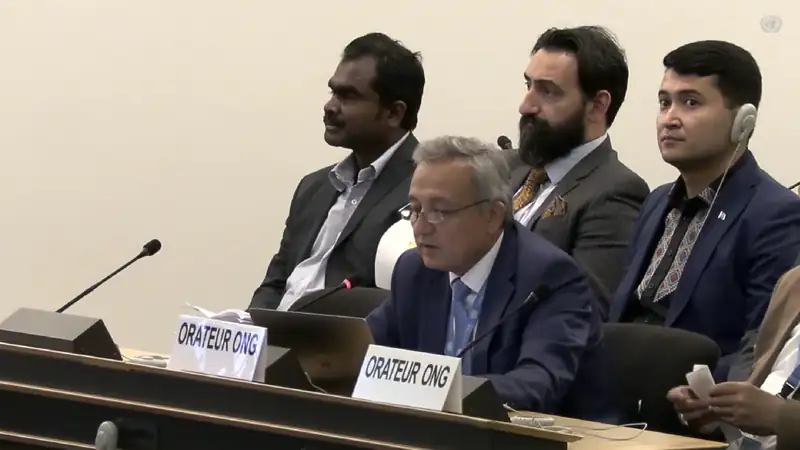
Among the interventions, Dolkun Isa, Vice President of the World Uyghur Congress, drew attention to the situation of Uyghur refugees and asylum seekers and the risks of refoulement and transnational repression. His statement highlighted the importance of the principle of non-refoulement and the responsibility of States to ensure that individuals fleeing persecution are not returned to situations where they may face serious human rights violations.
More broadly, the debate highlighted the continued vulnerability of ethnic and religious minorities in different parts of the world. Speakers raised concerns surrounding restrictions on religious freedom, threats to cultural and religious identity, discrimination, forced displacement and the persecution of individuals because of their religious or ethnic background. These concerns included the situation of Uyghur and Tibetan communities, as well as religious minorities in Pakistan and Ukraine, among others. The discussion also drew attention to the particular vulnerabilities faced by minority women and girls, including risks of abduction, forced religious conversion and forced marriage.
Beyond minority-specific concerns, the debate addressed broader human rights situations involving civilians, refugees, and human rights defenders. Statements referred to allegations of excessive use of force, arbitrary detention, targeted killings, destruction of property and restrictions on access to information and humanitarian assistance.
The debate further addressed the human rights and humanitarian situation of Palestinians, including concerns relating to civilian protection, humanitarian assistance, the destruction and seizure of property and the protection of United Nations personnel. These discussions formed part of the broader calls for accountability and respect for international human rights and humanitarian law raised during the general debate.
Across the different interventions, speakers emphasized the need to protect individuals and communities facing persecution and discrimination, uphold fundamental freedoms, prevent refoulement and ensure effective access to international human rights protection mechanisms.
The situation of religious minorities in Pakistan also featured prominently. Ravee Singh Ahluwalia of the Patiala Foundation noted that few Hindu temples remain functional across the country, pointing to sustained neglect by the Evacuee Trust Property Board, and recalled the 2024 warning by UN human rights experts that Christian and Hindu girls remain vulnerable to abduction, forced religious conversion and forced marriage. Govind Singh Rathore of the Sambhali Trust spoke on behalf of Hindu families who have left Pakistan, stressing that they “did not leave home lightly” and calling on the UN to ensure fair investigation of forced conversions.
Concerns regarding China were also raised beyond the Uyghur region. Speaking for the Helsinki Foundation for Human Rights, Tenzing Gyatso called for the repeal of China’s Law on Promoting Ethnic Unity and Progress, warning that it extends state control over the education, religion and identity of Tibetans, and urged unrestricted access to Tibet and accountability.
Global Human Rights Defence reaffirms the importance of ensuring that the voices and experiences of vulnerable and marginalized communities remain at the center of international human rights discussions. Continued engagement by the Human Rights Council and its mechanisms remains essential to addressing violations, strengthening protection and promoting accountability across different human rights situations.