
At a recent exchange of views, representatives from the UN Human Rights Office, civil society and NGOs, the European External Action Service, and Members of the European Parliament addressed the growing criminalisation, violence, and exclusion faced by LGBTIQ+ people across Africa and beyond. The discussion highlighted both legal backsliding and the shrinking space for civil society, while stressing the need for sustained EU engagement, locally grounded partnerships, and stronger protection mechanisms for displaced LGBTIQ+ people.
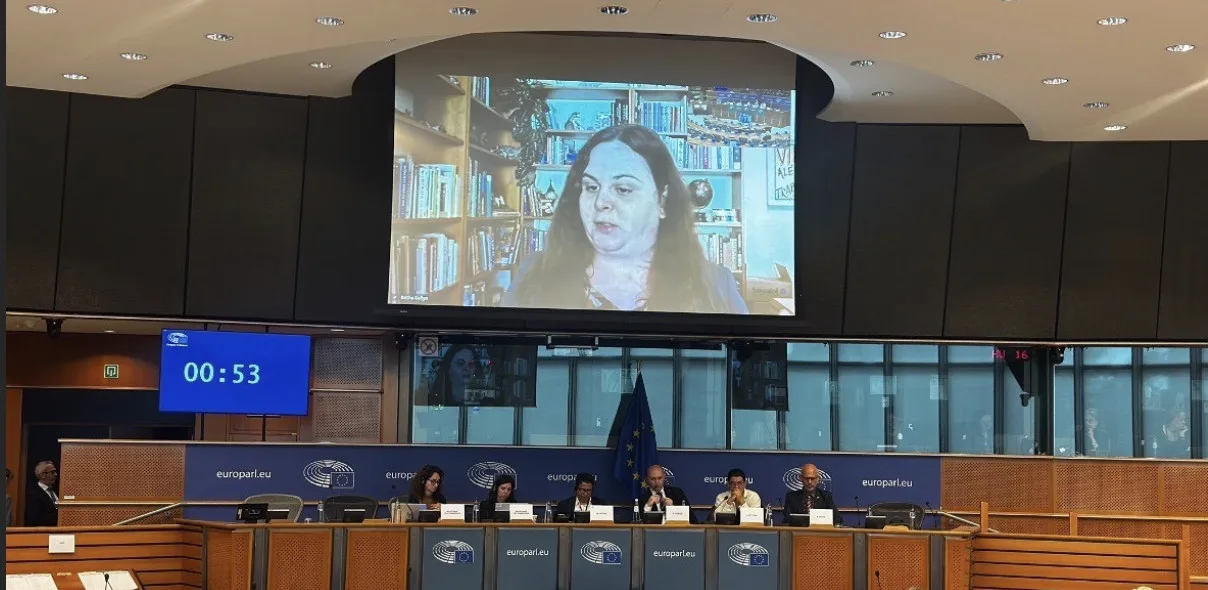
Today, the European Parliament’s Subcommittee on Human Rights (DROI) organised an exchange of views on the escalating criminalisation, violence, and discrimination faced by LGBTIQ+ persons, with a particular focus on developments across Africa and the situation of displaced LGBTIQ+ communities. The topic is especially relevant as criminalisation remains widespread globally, with more than 60 UN Member States still criminalising consensual same-sex relations, while several countries are expanding legal restrictions beyond private conduct to target identity, expression, advocacy, healthcare access, and civil society organising. The exchange therefore underlined the need for sustained EU diplomatic engagement, stronger support for local human rights defenders, and a shift from framing LGBTIQ+ rights as “Western values” toward recognising them as universal human rights.
Criminalisation and Anti-Rights Movements Continue to Expand
Gabriel Alves de Faria, speaking on behalf of the UN Human Rights Office, recalled the words of UN Secretary-General António Guterres that violence and discrimination remain a daily reality for many LGBTIQ+ people. In 2025, same-sex relations were still criminalised in 65 UN Member States, with further restrictions on freedom of assembly, expression, and association emerging both within and beyond the European Union.
While some developments offer cautious hope, including Botswana’s removal of criminalisation from its Penal Code and Zimbabwe’s commitment to assess legal gaps concerning the rights of intersex people, the broader global trend remains deeply concerning. Anti-rights movements continue to gain momentum, particularly through legislation that targets not only conduct but also identity, public discussion, healthcare, advocacy, and community organising.
Gabriel Alves de Faria urged continued support for initiatives rooted in African communities, particularly as civic space continues to shrink. He also called for stronger EU emergency response mechanisms to protect LGBTIQ+ people and human rights defenders at immediate risk.
Displaced LGBTIQ+ People Face Extreme Violence and Abandonment
Michael Bruce, Founder and Executive Director of Pride Center, described the lived reality of displaced LGBTIQ+ people in Africa, particularly queer refugees from the Democratic Republic of Congo living in refugee settlements in Uganda. He shared the case of a trans refugee woman who survived extreme sexual violence and abuse, only to face further barriers when seeking medical care and protection.
Bruce stressed that queer communities are often resilient and organised in their home contexts, but displacement removes critical safety nets. According to Pride Center’s work, between 60 and 70 percent of queer refugees may resort to sex work in order tosurvive. Many are unable to safely access food banks, shelters, health services, or aid programmes because being identified as LGBTIQ+ exposes them to further violence.
The discussion also underlined serious gaps in humanitarian response. Speakers noted that many NGOs and UN agencies do not systematically collect data on queer refugees, while homophobia and transphobia can also exist within institutions meant to provide protection. In some cases, queer refugees have reportedly been discouraged from contacting UN offices for shelter, food, and medical support.
Legal Backsliding Is Being Used to Control Identity, Advocacy, and Public Life
Kellyn Botha, researcher and activist at ILGA World, presented recent legal and media monitoring developments across Africa, warning that current trends are “dire” despite progress in some countries. The issue, she explained, is no longer limited to the criminalisation of same-sex relations. Criminal law is increasingly being weaponised to regulate identity expression, association, public debate, healthcare provision, and advocacy. The scope of criminalisation is also expanding from public conduct into private life. Uganda’s Anti-Homosexuality Act was cited as one of the most severe examples, imposing life imprisonment for same-sex acts and the death penalty in cases of “aggravated homosexuality.”
At the same time, the uneven nature of developments across the continent was also acknowledged, including Kenya’s Children Act, which provides progressive protections for intersex children. Botha stressed that gains in one area have not yet translated into broader regional change. She also linked legal backsliding to funding cuts, noting that civil society organisations and UN offices have played an essential role in providing HIV-related support, community education, and public information campaigns. When funding disappears, protection structures weaken.
EU Engagement Must Be Principled, Context-Sensitive, and Locally Grounded
The European External Action Service reaffirmed that criminalisation is incompatible with international human rights principles. Speakers emphasised that protections for LGBTIQ+ people should not be framed as “European values”, but as universal human rights standards.
The EEAS described the EU’s approach as both principled and specific, taking into account the sensitivity of engagement in different national contexts. This includes diplomatic engagement, support for human rights defenders, attendance at court hearings, and funding through partnership instruments that promote equality, inclusion, and non-discrimination. The principle of “do no harm” was repeatedly stressed as essential, particularly where external pressure may be used by anti-rights actors to reinforce the false claim that LGBTIQ+ rights are a foreign imposition.
Speakers also called for stronger engagement with the African Union and for deeper support to civil society organisations operating in increasingly restricted environments. Shrinking civic space directly affects LGBTIQ+ people and those defending their rights.
Parliamentarians Call for Dialogue, Protection, and a Shift in Framing
Members of the European Parliament reflected on the political and historical dynamics behind the current backlash. DROI Chair Mounir Satouri suggested the need for interparliamentary dialogue with African parliamentarians to better understand and challenge support for the criminalisation of same-sex relations.
MEP Francisco Assis proposed that the issue be included in the agenda of the first session of the EU-Africa Parliamentary Assembly coming up later this year. He noted that democratic regression is visible in several African countries that had previously shown promising developments. He also underlined the importance of colonial history in understanding current debates, while warning that minority rights are also under pressure in the West.
MEP Catarina Vieira stressed that the situation in Africa should not be treated as an isolated phenomenon. She raised concern over the role of hardline Christian ideology and the possible influence of US evangelical groups in promoting backsliding against women’s rights and LGBTIQ+ rights. She called for stronger partnerships with local communities, support for activists, and improvements to EU asylum procedures for people facing persecution on the basis of sexual orientation, gender identity, gender expression, or sex characteristics.
Sustained Funding and Protection Are Essential
Speakers repeatedly warned that funding cuts are already weakening the ability of UN offices and civil society organisations to respond to discrimination, violence, and legal backsliding. The UN Human Rights Office noted that its work has already been seriously affected by cuts in 2025, with further reductions expected in 2026. Despite these constraints, public information campaigns remain a key tool, with one 2025 campaign reaching 112 million people.
GHRD echoes the concerns raised during the exchange of views. Legal criminalisation, social exclusion, humanitarian neglect, and shrinking civic space cannot be addressed through symbolic commitments alone. Effective protection requires sustained diplomatic engagement, reliable funding, community-led partnerships, improved asylum safeguards, and careful monitoring of laws that corrode human rights protections.