
Introduction
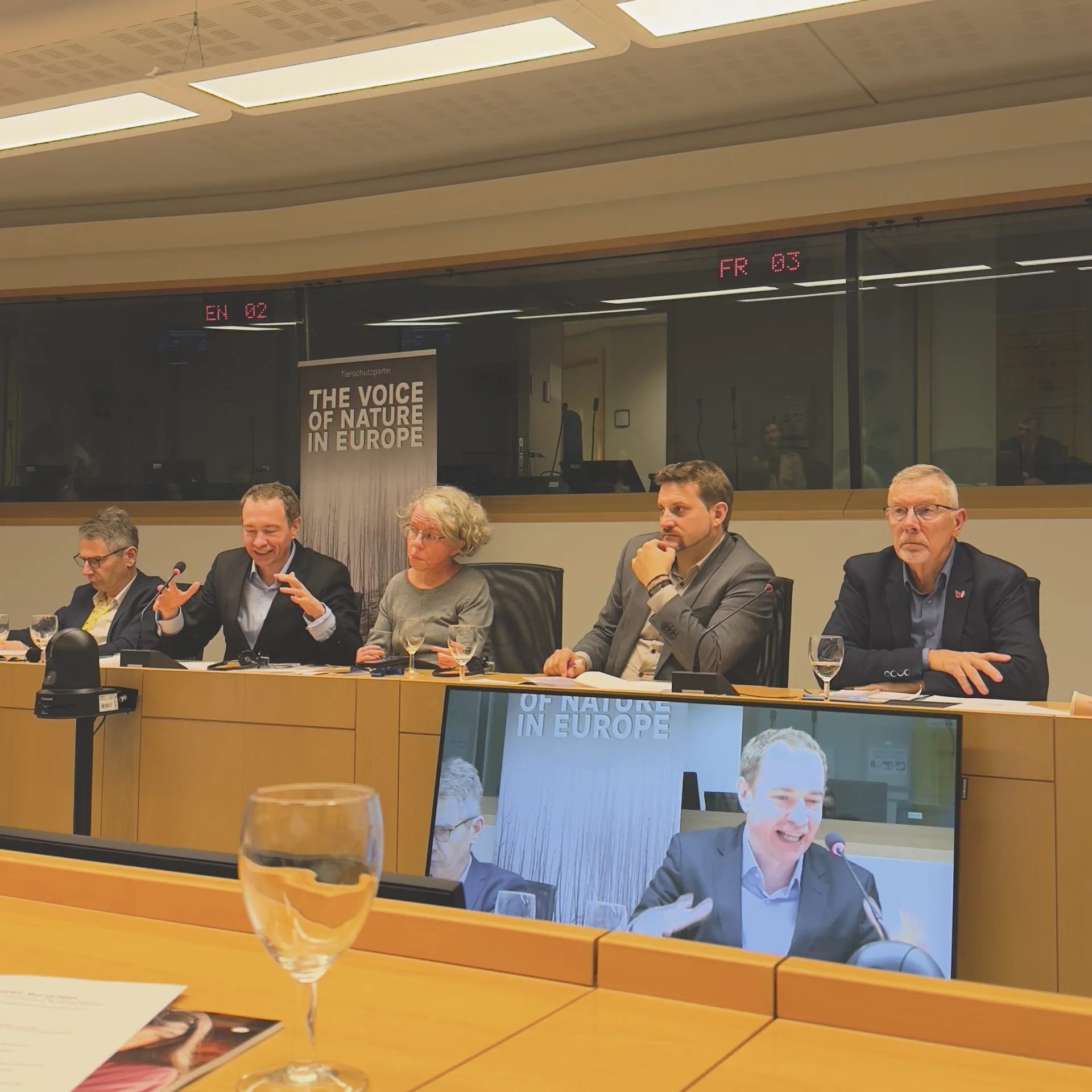
On 12 November 2025, Global Human Rights Defence (GHRD) attended Keep Me Posted EU’s event at the European Parliament, titled “Inclusive Communication for All.” The discussion brought together Members of the European Parliament (MEPs), representatives of PostEurop, ANEC, and civil society to examine the growing challenge of digital exclusion in Europe and the urgent need for inclusive communication policies that leave no one behind.
Opening the event, MEP Sebastian Everding questioned whether Europe’s digitalisation agenda has gone too far, noting that many citizens and social groups are being left behind in an increasingly digital world. To find an answer, the event delved into Keep Me Posted EU’s “Why Choice Matters” report, which explores the crucial issue of maintaining a balance between digital and physical communication methods. The findings of the report, along with the ideas elaborated during the event, will be used in the forthcoming “Dear Ursula” initiative, placing an emphasis on equal access to information as a core guiding principle of EU policy.
PostEurop’s Call for Balanced Policy
Presenting the report’s findings, Botond Szebeny, Secretary General of PostEurop, underscored that digital information must go hand in hand with choice. Citing Eurostat data, he noted that nearly 44% of EU adults lack basic digital skills, a figure that highlights the growing risk of exclusion in a rapidly digitalising society. Szebeny reminded participants that print is not an obstacle to progress and called for a balanced policy approach ensuring that public authorities provide both printed and digital communications.
Among the report’s recommendations were the protection and modernisation of postal networks as essential infrastructure, and the obligation for public institutions and utilities to offer citizens information in the format that best suits their needs. Szebeny also drew attention to the continuing relevance of postal services in times of crisis, from the COVID-19 pandemic to armed conflicts and natural disasters, urging governments to maintain them as a resilient and indispensable network.
Citizens’ Voices: Accessibility, Security, and Dignity
Representing ANEC, Michela Vuerich shared testimonies from European citizens expressing their preferences in how they receive information. Many continue to value printed materials for reasons of comfort, information retention, or data security, while others rely on digital communications to accommodate disabilities and ensure accessibility. For those living with visual or mobility impairments, digital communication has opened doors to autonomy and inclusion. Vuerich also pointed to families who print digital documents to assist elderly relatives unfamiliar with online systems, an illustration of how inclusivity must take many forms.
A Question of Fundamental Rights
During the panel discussion, MEP Rudy Kennes, a Belgian trade unionist, warned that Europe risks creating a digitally disadvantaged class at the bottom of society, those unable to access essential information or services due to a lack of digital tools or skills. Drawing a parallel with the transition from cash to digital payments, he insisted that citizens’ right to choose how they communicate must be respected just as their right to choose how they pay has been.
Steven Russell, Director-General of ANEC echoed this concern, framing digital exclusion as a fundamental rights issue. He called for greater public engagement in shaping EU digital policy, reminding participants that “lawmakers act when citizens speak.”
Digitalisation with Humanity
MEP Katrin Langensiepen stressed the importance of maintaining accessibility as a pillar of digital progress. While acknowledging the opportunities digitalisation creates, she urged for a realistic and inclusive approach that considers those with disabilities and limited access.
Referring to the misconception that printed communication irreversibly harms the environment, she argued that “the internet does not come from the skies” and that citizens must be better informed about the environmental and social costs of online communication.
A Shared Responsibility for an Inclusive Europe
The Keep Me Posted EU initiative stands out as a timely and essential reminder that digitalisation must serve people, not the other way around. As Europe advances in its technological transformation, the right to access information in one’s chosen format remains central to equality, participation, and human dignity.
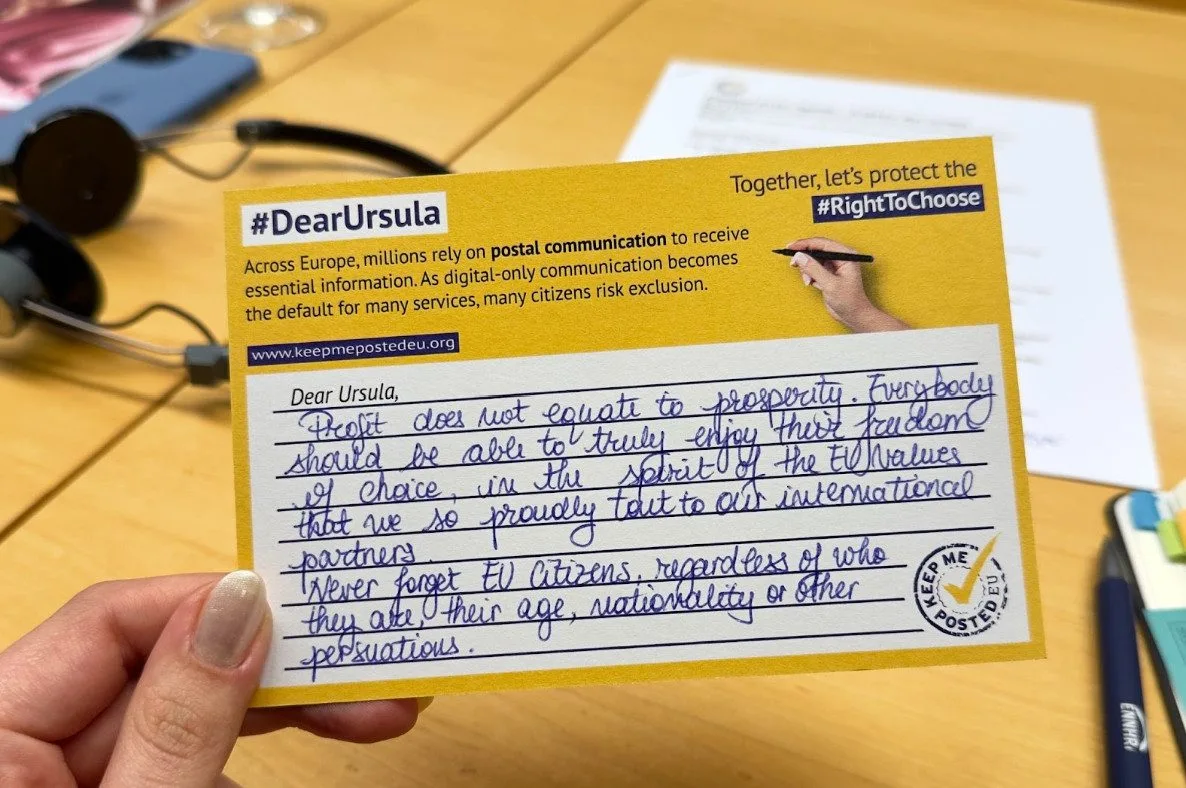
The launch of the Dear Ursula campaign adds a compelling and hopeful dimension to this work. Keep Me Posted EU’s commitment to ensuring that every postcard written during the event reaches President Ursula von der Leyen is an exciting step toward a more inclusive conversation on digitalisation and a concrete reminder that citizens’ voices must remain at the heart of Europe’s digital future.
Conclusion
Global Human Rights Defence is grateful to have participated in an event that brought together industry expertise and a substantive discussion on fundamental rights and freedoms. Events like this reaffirm the need to place people at the centre of Europe’s digital transition. True progress lies not in speed or technology alone, but in ensuring that every citizen, regardless of age, ability, or access, can participate equally in our shared digital future. As this conversation continues to evolve, it remains essential to keep the human impact of digitalisation firmly in view.