
Introduction
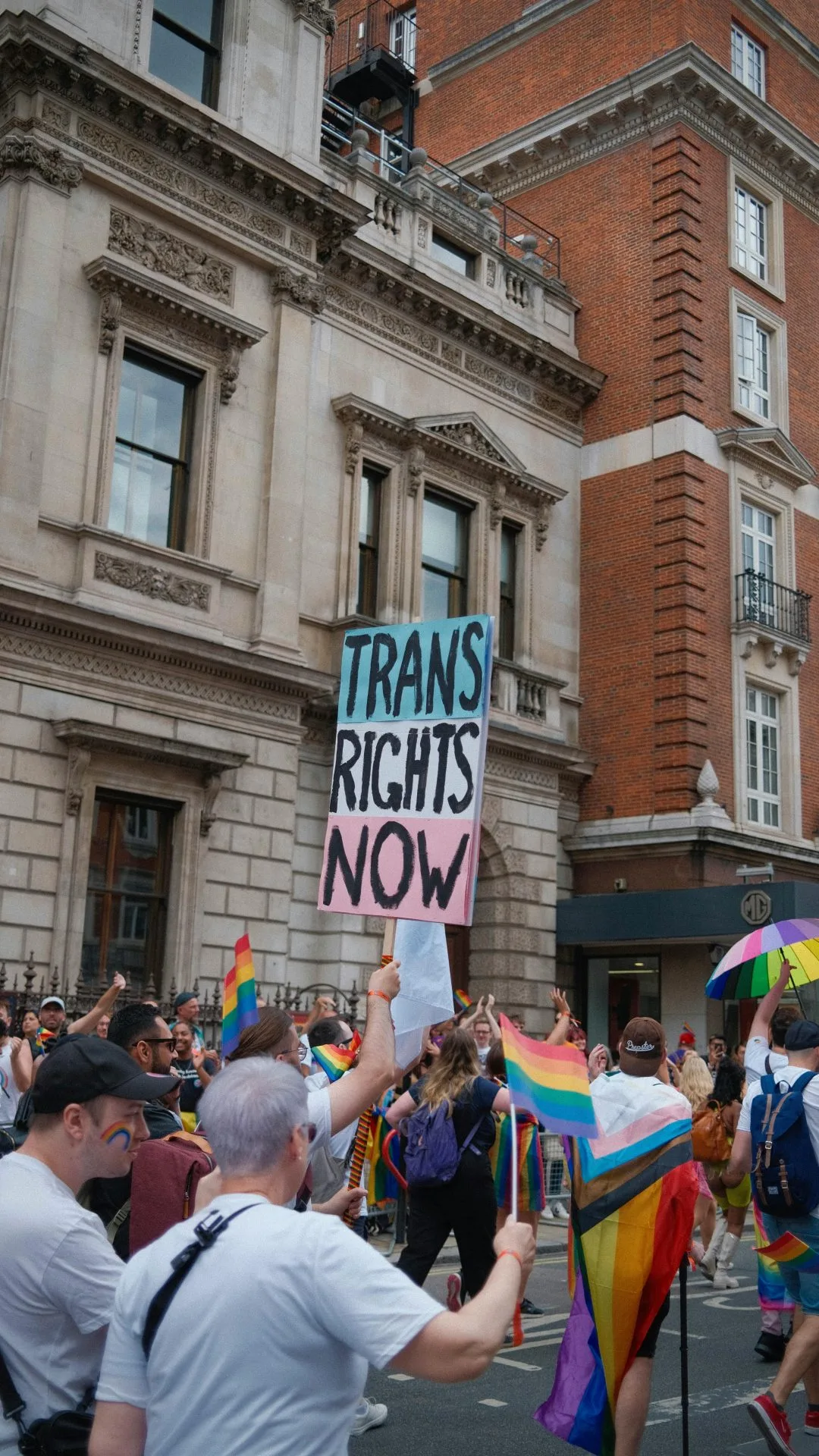
The manifestation of transphobia in Europe differs among countries and social, political, and cultural situations. While some European nations have made gains towards trans rights and inclusion, others have seen backlash, legal regression, and increased cultural hostility. Most anti-trans remarks instrumentalise children, utilising scare tactics to create resistance to trans minors’ access to healthcare and limits on education. This is a broader trend we observe in the usage of children, with politicians across Europe stating that limiting access to information about LGBTIQ+ persons protects minors from harm. Trans issues are often misunderstood or sensationalised in the media, especially in nations like the United Kingdom, where media outlets routinely describe trans rights arguments as controversial or damaging to children. The analysis also demonstrates that social media platforms are riddled with transphobic hate speech, typically targeting public trans people, activists, and everyday people. In addition, anti-trans language is increasingly employed by far-right parties (e.g., PiS in Poland, Fidesz in Hungary) to generate conservative support, typically presenting trans rights as dangers to “traditional values”.
Legal and Policy Discrimination: Transphobic tool
In certain European nations, transphobia still exists, utilising laws and policies that do not permit transgender individuals to be fully legally recognised. Certain nations, such as Malta and Ireland, permit legal gender recognition via self-determination. Others (e.g., Hungary, Czech Republic) require sterilisation, psychiatric diagnosis, or restrict gender marker modifications altogether. Hungary approved legislation in 2020 abolishing legal gender recognition. Similarly, several countries have moved to restrict access to gender-affirming care or gender identity recognition. Particularly in Belarus, to change gender markers on passports, trans persons must endure an 8 to 21-day detention at a psychiatric clinic, consult both a sexologist and a psychologist for a minimum of one year, and undergo unnecessary and degrading medical examinations. The wait for the first medical appointment alone can extend up to six months.
In Russia, transgender individuals face systemic prejudice and violence from both governmental institutions and society at large. In 2013, legislation restricting the propaganda of homosexuality amongst minors, official known as the For the “Purpose of Protecting Children from Information Advocating for a Denial of Traditional Family Values”, was implemented, which also pertains to “propaganda of transgenderism” (Transmag,n.d.). This law deems everything linked to the instruction of minors on sexual orientation and gender identity, as propaganda. As a result, young people are denied access to credible information concerning gender identity and sexual orientation. In the autonomous province of Chechnya, the persecution of gay people is ongoing. The media has reported on “internment camps”, and the government urges families to kill their own homosexual children. Religion is the major reason for this persecution; queer offspring are considered a disgrace to the family (Transmag n.d).
In Armenia and neighbouring Georgia, transsexuality is viewed as a hereditary disorder. Transgender people are commonly associated with aberrant behaviour and “sins”, such as prostitution and child abuse. Because of this, they are seen as a problem and a threat to society. In Armenia, there is a notion that gay and transsexual individuals are the main causes of immunodeficiency viruses (AIDS and HIV), and other sexually transmitted diseases (STDs). In Georgia, negative stereotyping of transgender people, particularly trans women by the media, is frequent. From a social point of view, they hold a weak position and often encounter injustice at the hands of institutions, such as the police force (Trans Magazine, 2025).
Furthermore, to comprehend the equivocal condition of transgender persons in Serbia, one must remember that most of the population is Serbian Orthodox. Church rules and beliefs have a major influence on daily life. Trans men and women are recognised as members of the church after undergoing gender confirmation surgery, on the condition that their orientation is heterosexual. Transsexuals can lawfully get married by the Orthodox church, but only if they provide medical documents from their sex reassignment procedure and possess a modified passport.
Access to health Care for transgender persons
In numerous European states, transgender individuals encounter extensive waiting periods, a lack of informed consent frameworks, or outright refusal of gender-affirming healthcare services. In countries like Cyprus, trans individuals still face difficulties in receiving hormone therapy. In a review conducted by the International Lesbian, Gay, Bisexual, Trans, and Intersex Association (ILGA)-Europe in 2025, the report indicated that some transgender persons mentioned that endocrinologists were unwilling to help adjust their dosage, and many were battling depression (ILGA-Europe, 2024).
In June, the Russian government introduced a restriction on a trans-specific healthcare provision by revising the Federal Law on the Fundamentals of Protecting the Health of Citizens. The measure was put into effect by President Putin in July. The Ministry of Health expressed concern over the legislation, and several rallies were held in protest (Knight, 2023). However, the Deputy Minister of Health argued that the legislation did not contravene the Constitution. The ban garnered substantial attention from international non-governmental organisations (INGOs) and human rights bodies due to its transphobic nature and its infringement of the right to bodily autonomy for transgender individuals.
Accessing trans-affirming care in Belarus is exceedingly problematic, with recurring hormone shortages and a minimum two-year wait for prescriptions. Medical practitioners typically lack knowledge of trans matters, resulting in biased treatment (Euroradio, 2023). Activists continue to offer free psychological consultations, support groups, and gatherings for trans and LGBTQ+ persons. According to a study by anonymous initiatives, 62 percent of trans and non-binary respondents reported needing hormone treatment, and the health status of 64 percent of respondents was rated as below average (ILGA-Europe, 2024).
In Bosnia and Herzegovina, trans activists and the Sarajevo Open Centre (SOC) continued to campaign for access to gender-affirming healthcare and for insurance coverage. SOC launched a policy brief on trans-specific healthcare, developed a healthcare guide for medical professionals, and conducted training for providers. In January, a law came into force that made gender-affirming healthcare less affordable and more difficult to access. The new legislation designates certain procedures as ineligible for funding through mandated health insurance, framing them as aesthetic rather than essential medical interventions. Additionally, this year’s antiretroviral drug stock consists of earlier-generation products.
In Denmark, trans individuals continue to report rigorous gatekeeping, medicalisation, pathologisation, racism, binary gender regimes, and structures that are heteronormative, anti-migrant, and anti-sex workers, further obstructing access to trans healthcare. Access to trans-specific healthcare (TSH) continues to be withheld or indefinitely delayed for those with specific psychiatric illnesses or who have experienced extreme trauma. Coupled with waiting periods that remain prolonged, many trans persons with the financial means resort to purchasing hormones abroad (ILGA-Europe, 2024).
Transphobic coverage in the media and Hate Speech
Transphobic coverage in the media continues unabated across Europe. For example, according to the ILGA evaluation report of 2024, the Belarusian state media continues to preach hostility towards transgender individuals in newspapers, online, and on television. Government authorities often deploy hate speech against trans activists, including calls for their imprisonment. Societal and political rhetoric continues to be anti-LGBTIQ+ and chauvinistic. In his annual speech to the country in March, President Aleksandr Lukashenko declared that the ideas encouraging childless families should be banned and that non-conventional and childless families threaten the state. Lukashenko also stated that there was no explanation for men to engage in a same-sex relationship, which he branded a “despicable perversion”. The Minister of Labor and Social Protection later called for a nationwide effort for large conventional families (ILGA Europe, 2025)
The Bulgarian Helsinki Committee’s media monitoring report highlighted the issue of anti-LGBTIQ+ content, documenting the use of terms such as “brutal gender fraud”, “locusts of Sodom”, “Brussel’s obsession with gender ideology”, “revision of biology and normal”, “gender worshippers, defenders of paedophilia”, and others in the media (Behar, n.d). In addition, hate speech remained popular among politicians. In June, civil society urged punishment for hateful speech in the Parliament. During the debate about the new domestic violence law, Member of Parliament Kornelia Ninova of the Bulgarian Socialist Party, for instance, stated that it was “dangerous” for children to be “poisoned” with information about LGBTIQ+ minorities and said, “We will never sign and agree to have a third gender in Bulgaria” (ILGA Europea, 2024).
The same may also be said about Turkiye, where countless politicians have continued to make harsh statements and religious leaders have continued to preach anti-LGBTIQ+ bigotry. President Erdogan was again one of the most vocal speakers against LGBTIQ+ persons, particularly during the campaign leading up to the elections in May. Banning LGBTIQ+ organisations and the promotion of traditional family values were significant components of campaigning this year. Two groups, the New Welfare Party and HÜDA-PAR, entered parliament for the first time, both advocating for radical anti-LGBTIQ+ and anti-gender beliefs. Civil society claims that even the opposition alliance has been cautious to push for LGBTIQ+ rights. Ahead of the elections, the Council of Europe Commissioner for Human Rights called on Turkey to stop its unprecedented harsh speech against LGBTIQ+ persons.
According to ILGA-Europe (2024), it is critical to note that Russian type anti-LGBTIQ+ laws are being imitated by other countries aiming to establish controls on civil society, which is substantially impacting the freedom of association. In Belarus and Georgia proposed: propaganda laws remained on the menu, while Bosnia and Herzegovina enacted a Russian-style Foreign Agents Bill. The Lithuanian Parliament rejected a repeal of its propaganda law, Romania introduced a plan to outlaw LGBT-oriented audiovisual products, and Moldova accepted a LGBT propaganda ban (ILGA-Europe,2024). In Russia, the Supreme Court ruled that the LGBT international movement is extremist, and LGBT activism is criminal, while the 2022 propaganda law continued to have a detrimental effect, with LGBT people fired, expelled from schools, arrested and deported, websites blocked, and bloggers persecuted. In Hungary, bookshops that carried LGBTIQ+ materials were penalised under the propaganda statute. Literature was exploited by the far-right to attempt the restriction of LGBTIQ+ expression and information in Ireland and Portugal
Conclusion
Transphobia is a big problem in Europe, which shows that transgender rights and acceptance are still quite divided and often going backwards. Some countries have better legal protections and healthcare that include everyone, whereas others have laws that discriminate against trans people, hate speech that is more common, and state-sponsored repression and hatred toward trans people. This article illustrates that transphobia is sustained not just by physical violence and explicit prejudice but also by systemic negligence, medical gatekeeping, political rhetoric, and deceptive narratives, particularly those concerning children.
Far-right populism, religious conservatism, and anti-gender movements are still hurting human rights in many parts of Europe. For example, Russia, Hungary, Belarus, and Turkiye have put very strict limits on legal recognition, healthcare access, and freedom of speech. Trans people in Western European countries that are known for being open-minded, nonetheless, must deal with red tape, medicalisation, and moral panic driven by the media.
Civil society groups, human rights advocates, and trans activists have all worked hard to fight this wave of prejudice. Their work has led to wins in the legislature, more visibility, and support networks at the grassroots level in places where they are not welcome. But without the strong implementation of human rights standards in each region, the rights of transgender individuals in Europe are still unsafe and equal.
European institutions, national governments, media organisations, and civil society must all work together to uphold the values of dignity, equality, and inclusion in order to fight transphobia. This means getting rid of laws that are unfair, making sure that healthcare is available and supportive, safeguarding freedom of speech, and dealing with hate speech and violence. Most crucially, it means putting trans voices at the heart of government and social conversation so that everyone, no matter what their gender identity is, can live safely and authentically on the continent.
Bibliography
Amnesty International. (2014). VIOLATION OF THE RIGHT TO FREEDOM OF EXPRESSION, ASSOCIATION AND ASSEMBLY IN RUSSIA.
Behar, A. (n.d.). BCNL Report on Hate Speech in Bulgaria.
euro radio. (2023). Belarus: The Right to Transition. Retrieved June 11, 2025, from Euroradio.fm website: https://amp.euroradio.fm/en/belarus-right-transition
ILGA-Europe. (2024). ANNUAL REVIEW 2024 OF THE HUMAN RIGHTS SITUATION OF LESBIAN, GAY, BISEXUAL, TRANS AND INTERSEX PEOPLE IN EUROPE AND CENTRAL ASIA WWW.RAINBOW-EUROPE.ORG FIND THIS REPORT ONLINE: WWW.ILGA-EUROPE.ORG.
Knight, K. (2023, June 2). Russia Moves to Ban Trans Health Care. Retrieved from Human Rights Watch website: https://www.hrw.org/news/2023/06/02/russia-moves-ban-trans-health-care
Medvedev, D. (2024, August 30). Federal Law “On the Fundamentals of Health Protection of Citizens in the Russian Federation” – P4H Network. Retrieved June 11, 2025, from P4H Network website: https://p4h.world/en/documents/federal-law-on-the-fundamentals-of-health-protection-of-citizens-in-the-russian-federation/